

Take a corner of the fabric, grip it tightly in your palm, count slowly to ten, then let go. That is the simplest test a master tailor does before saying anything about a roll of cloth. Whether the fabric springs back flat or keeps its creases will tell you more than the label. This is how to tell high-quality suit fabric with your own hands and eyes, right in the showroom, with no equipment.
Quick answer
High-quality suit fabric is recognized through six tests: crumpling and releasing (creases recover on their own), drape (soft, rounded folds), elasticity (springs when squeezed and returns to shape), the reverse side (evenly woven, tidy), the selvedge (carries the mill's name and specifications), and inspection in natural light (even color, no plastic sheen). The tests only screen; you should still ask about the composition.
Six tests at the showroom
1. Crumple: grip and release
Grip a corner of the fabric tightly in your palm for about five to ten seconds, then release. Good wool typically springs back almost flat, with the creases fading within several tens of seconds to a few minutes. Poor fabric, or fabric with a lot of blended fiber, tends to hold a crease for a long time, or the opposite: it is rigid and springs back like plastic. Note: linen and cotton wrinkle naturally and cannot be judged by this test.
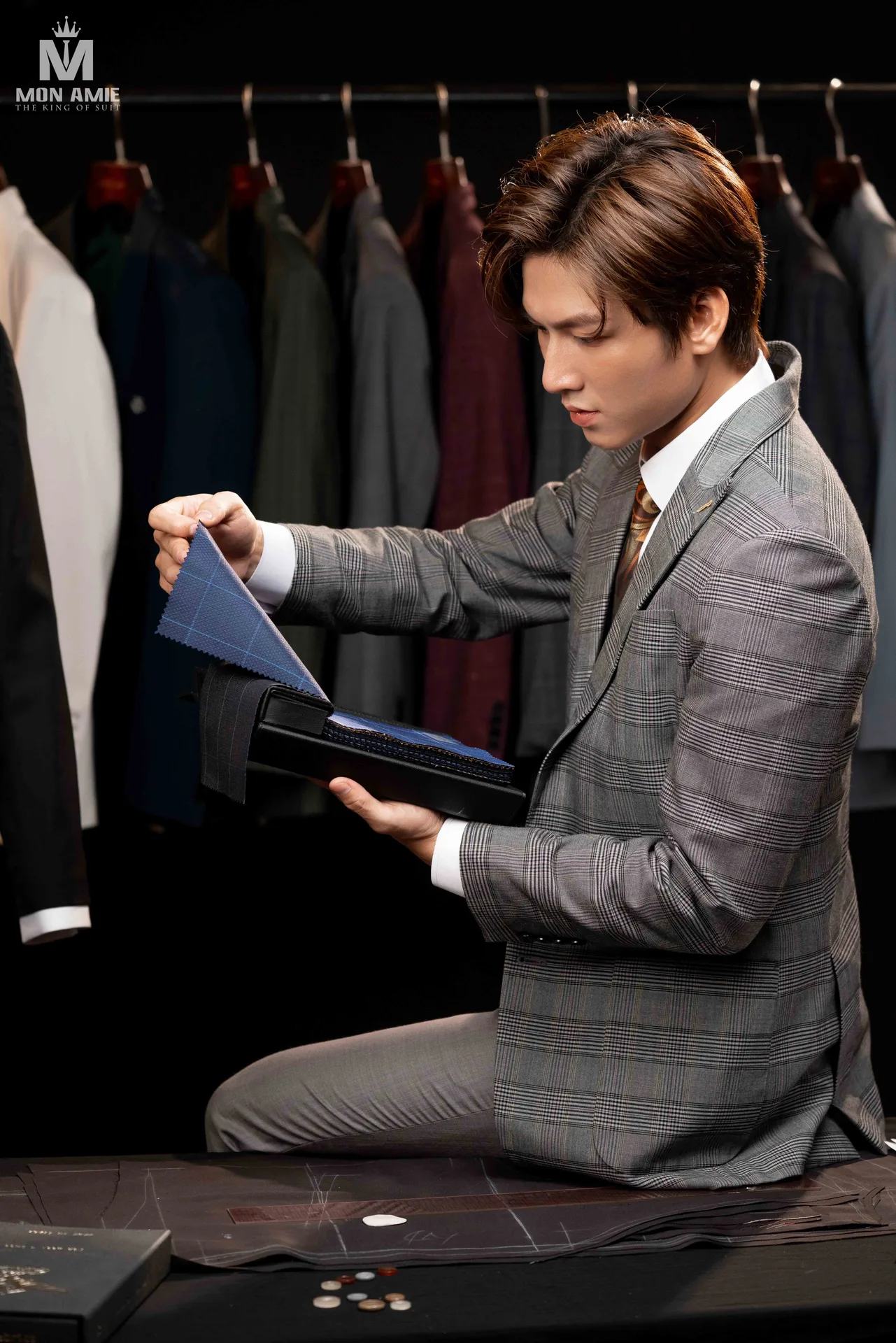
2. Drape: let the cloth fall across your hand
Pinch a corner of the cloth between two fingers and let the rest hang, or drape the cloth over your forearm. Good fabric drapes soft, with rounded folds, flowing evenly, without sharp corners. Stiff cloth, thick spongy cloth or fabric with a lot of thick polyester falls into straight folds that break at the edge, producing a jacket that is stiff and "stands" on the body.
3. Elasticity: squeeze and pull lightly
Squeeze the cloth lightly in your palm: good wool has a spring (loft), like a small cushion. Pull lightly on the bias and release: the cloth returns to its old shape and does not stretch out limp. This elasticity is the reason a suit jacket keeps its shape after many hours of wear.
4. Reverse side: where the cloth gives itself away
Turn the fabric over. High-quality cloth has a tidy, evenly woven reverse, with consistent yarn texture, no slubs or loose fibers. Poor cloth often shows sparse yarns, uneven weave, many joins or clinging fluff. Once the suit is made, these show up in how durable and how flat the jacket is.
5. Selvedge: the mill's name and specifications
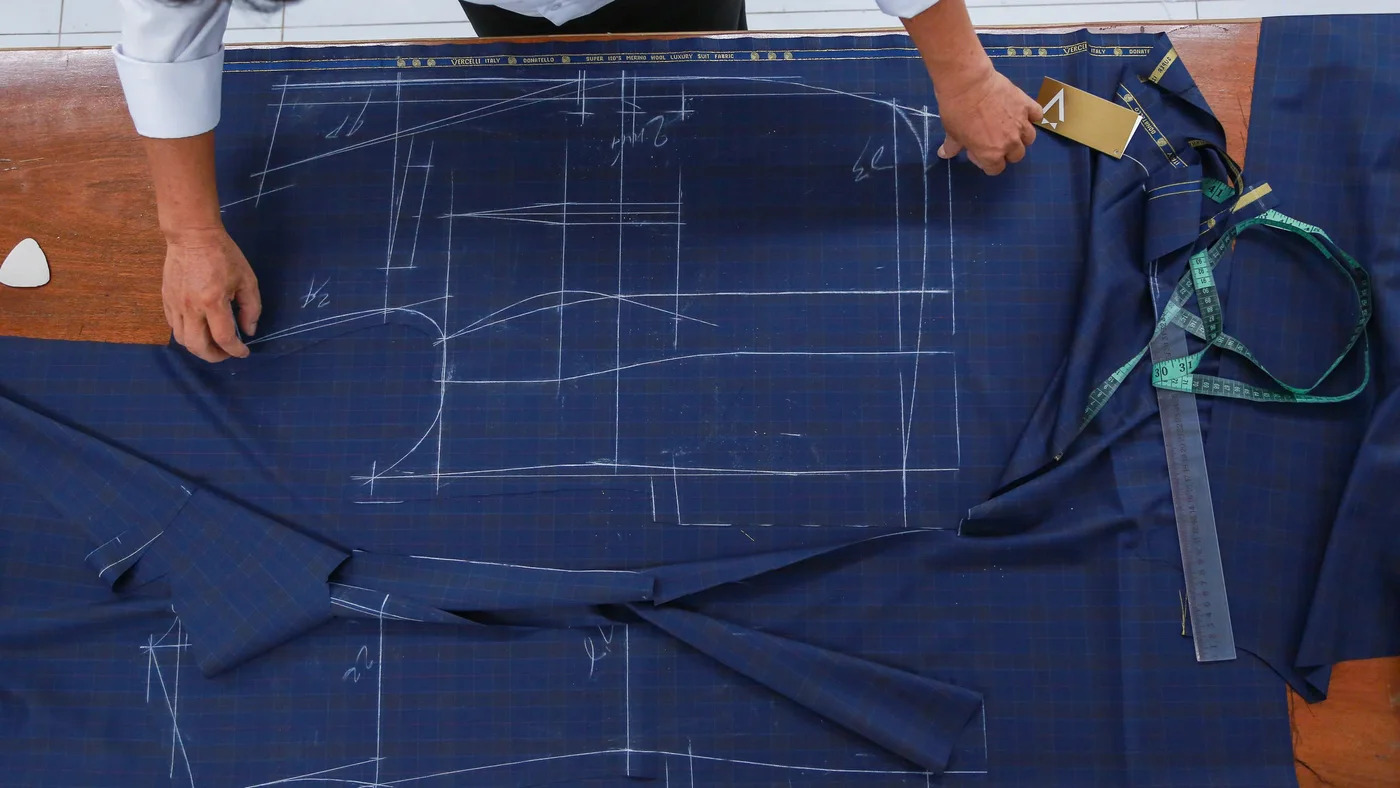
Along the edge of the roll is the selvedge. Cloth from a reputable mill usually carries the mill name, cloth code, composition and sometimes the Super number right on the selvedge, woven in or printed on. A clear, consistent selvedge is an easily verified sign. Cloth with nothing on it, or with smudged print, calls for questions about its origin. You can read more in the article suit fabric prices about how the mill and the Super number affect the price.
6. Light: inspect near a window
Take the cloth near a window or natural light. Look at three things:
- Is the color even? Poor cloth often varies in color between areas.
- Is there a plastic sheen? A strange glitter on the surface is a sign of high polyester. Good wool has a soft, deep sheen.
- Thread density. Hold the cloth up against the light: dense, even threads with few gaps mean a substantial cloth; sparse threads that let light holes through mean a thin cloth.
Summary table of tests
| Test | How | Good fabric | Poor fabric |
|---|---|---|---|
| Crumple | Grip for 5–10 seconds, release | Creases spring back, fade gradually | Deep creases or stiff as plastic |
| Drape | Drape over the hand | Soft, rounded folds | Stiff, sharp-cornered |
| Elasticity | Squeeze and pull lightly | Springy, returns to shape | Flat or limply stretched |
| Reverse side | Turn the cloth over | Tidy, even, few slubs | Sparse, fluffy, uneven |
| Selvedge | Read the text at the edge | Mill name, composition | Blank, faint, misprinted |
| Light | Inspect near a window | Even color, soft sheen | Uneven color, plastic sheen |
What the tests cannot tell you
The six tests help screen out poor cloth, but they cannot replace information. Ask further:
- Composition in percent: how much wool, how much blended fiber.
- Super number and weight (grams per meter).
- Mill name and origin.
- Intended use: cloth for daily wear needs to be durable; ultra-fine cloth suits a suit worn in rotation.
Also remember that each material has its own standard: linen or cotton wrinkling is normal; the brushed texture of flannel is natural; stretch cloth gets its elasticity from blended fibers. Do not use the ruler of one type to measure another.
Tips from Mon Amie's master tailors
- Feel the cloth with both sides of your hand (inner and outer), because the skin on the inside is more sensitive.
- Look at at least three samples side by side rather than one at a time. Comparison reveals the difference.
- Do not choose cloth just because it is soft. Soft but without body will quickly lose its shape.
- Look at the cloth in the setting where you plan to wear it: office light, outdoors, an evening party.
- Ask the master tailor how this cloth suits the construction. The same cloth with different structure gives a different cut.
You can see more fabric groups in the article types of suit fabric, or how to recognize a high-quality suit as a whole in how to recognize a premium men's suit: 10 details.

Frequently asked questions
What are the characteristics of premium men's suit fabric?
High wool content or 100% wool, fine and even yarns, a tight weave, soft drape, creases that recover on their own, a tidy reverse side, and a selvedge that names the mill. Mon Amie has a library of Italian and English fabrics so you can check these characteristics by hand.
How does fabric made for suits differ from ordinary fabric?
Suit fabric is usually wool or a wool blend, woven denser, drapes and holds its shape well, and is suited to building structure. Ordinary fabric is soft but lacks body and easily loses its shape.
Does good men's suit fabric at a gentle price exist?
Yes, in wool blends that hold their crease well and wear durably for daily use. What matters is knowing what you are paying for: composition, Super number, mill, or only the brand. You can compare three fabric lines in the price list.
How do you tell real wool from a polyester blend when there is no label?
Combine the tests: cloth with a lot of polyester usually has a faint plastic shine, creases that spring back stiffly, and feels hot to wear; real wool drapes softly, has a gentle sheen and breathes. To be sure, ask for the composition in percent.
Choose fabric by hand before you choose by eye
Fabric that looks lovely in a photo is not necessarily lovely on the body. Once you know the six tests, your fabric-choosing session will go much more smoothly. You can preview the fabric library, then visit the showroom, or look into the Bespoke tailoring service to choose fabric from the Italian and English fabric library together with an artisan.