
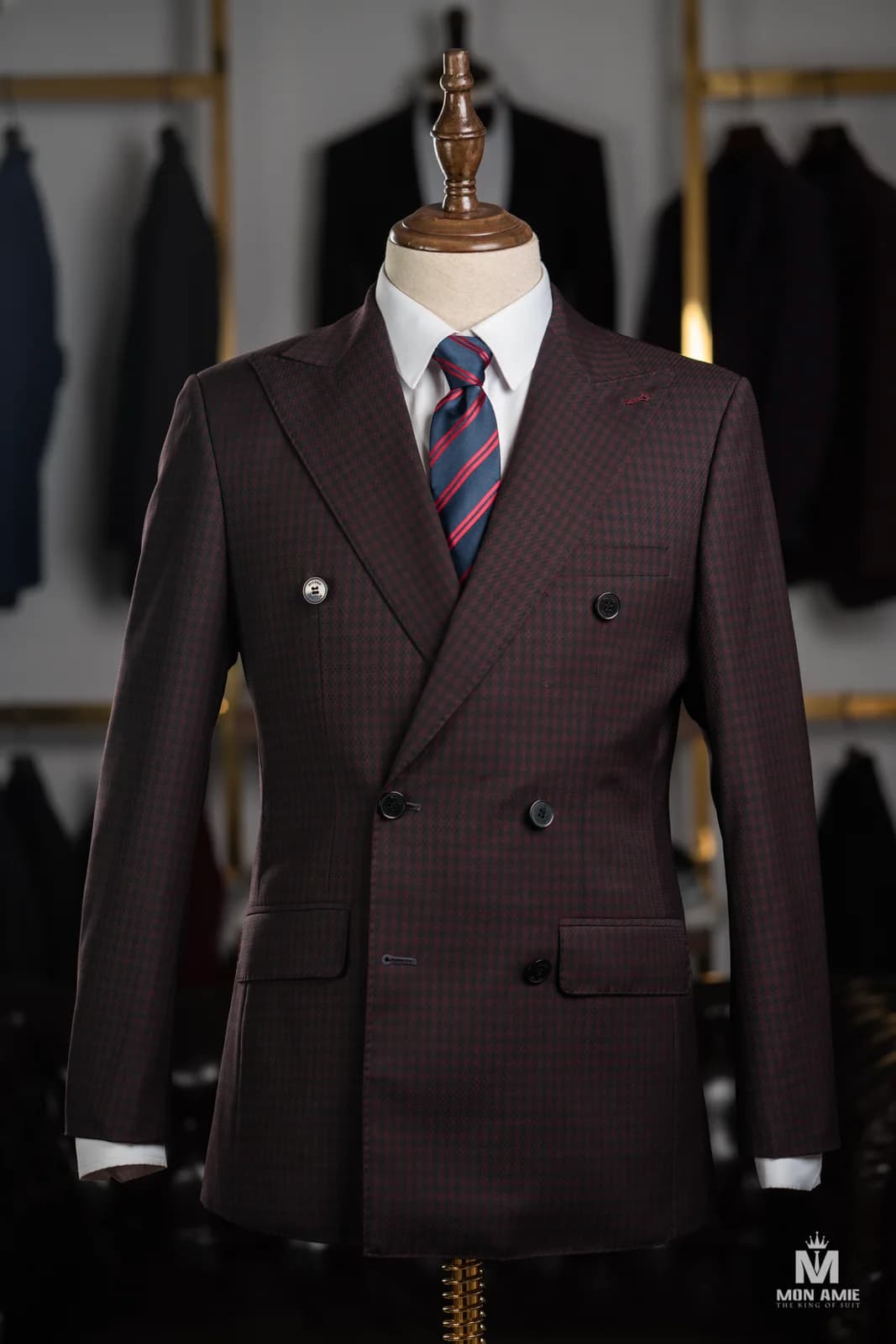
Open a suit swatch book and you will see the mill's name printed on the cover or on the spine of each volume, while the tailor's name rarely appears. The reason is simple: with the same cut and the same master tailor's hands, change only the cloth and the suit becomes a different suit. The five famous suit cloth mills below are names you will meet often when choosing cloth for a made-to-measure suit, along with how to read each name so you don't get lost among the numbers in the swatch book.
Quick answer
The five famous suit cloth mills are Vitale Barberis Canonico (Italy, 1663), Holland & Sherry (England, 1836), Dormeuil (France, 1842), Loro Piana (Italy, 1924) and Scabal (Belgium, 1938). Choose by the specific cloth and the occasion, not by the mill's name alone.
1. Vitale Barberis Canonico: Biella wool since 1663
Canonico is headquartered in Biella, Italy's long-established wool-weaving region, and dates its founding to 1663. In the swatch books of made-to-measure tailors, this is a name you meet early because of its wide range: from plain navy and grey for the office to stripes and light checks for more formal occasions. The cloth surface is usually neat, clean and moderately structured, suited to a suit worn regularly every week.
The thing to remember is that a mill's name doesn't tell the whole story about quality. From the same mill, a 100s sample and a 150s sample feel very different in the hand, so ask also about the wool composition, fibre fineness and weight. At Mon Amie, Canonico is in the Bespoke cloth library and the Heritage line. The article on Vitale Barberis Canonico tells more about this mill.
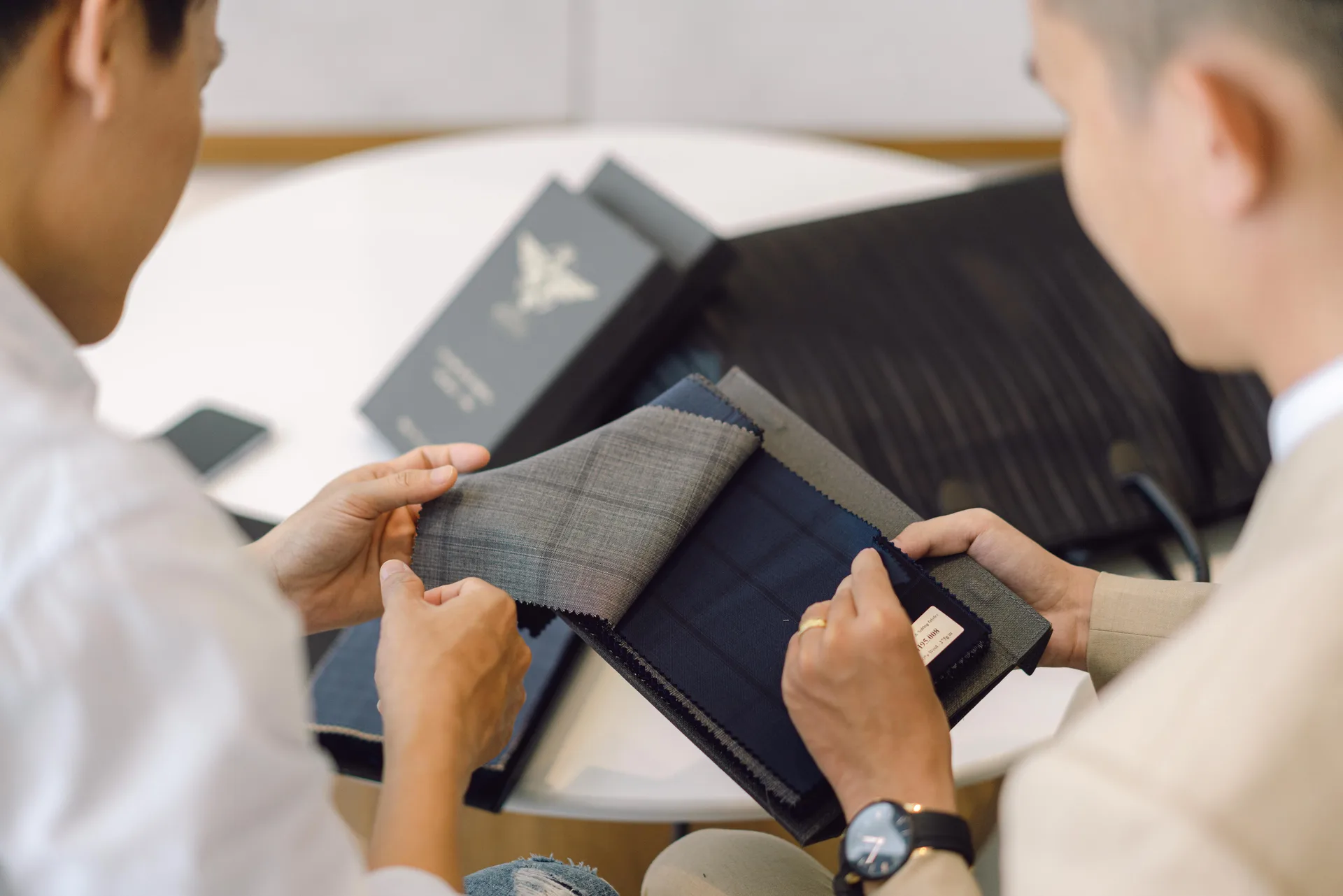
2. Holland & Sherry: the English school of cloth from London, 1836
Holland & Sherry began in London in 1836, which is why the name is often cited as a representative of English cloth: firmly woven, with a structured surface that holds its shape clearly on the jacket. This kind of cloth keeps the shoulder line and lapels neat, and suits you if you like a serious, classic suit silhouette.
A note for Saigon: many English cloths were born for a cool climate, so if you wear it daily out in the heat, ask for a lighter-weight sample from the same mill rather than taking a heavy one just because the name is attractive. This is a common mistake: buying the name and forgetting the climate. Conversely, if you work many hours in an air-conditioned room, a substantial cloth makes perfect sense. The article on suit cloth weaves helps you tell a plain weave from a twill the moment you pick up a swatch.
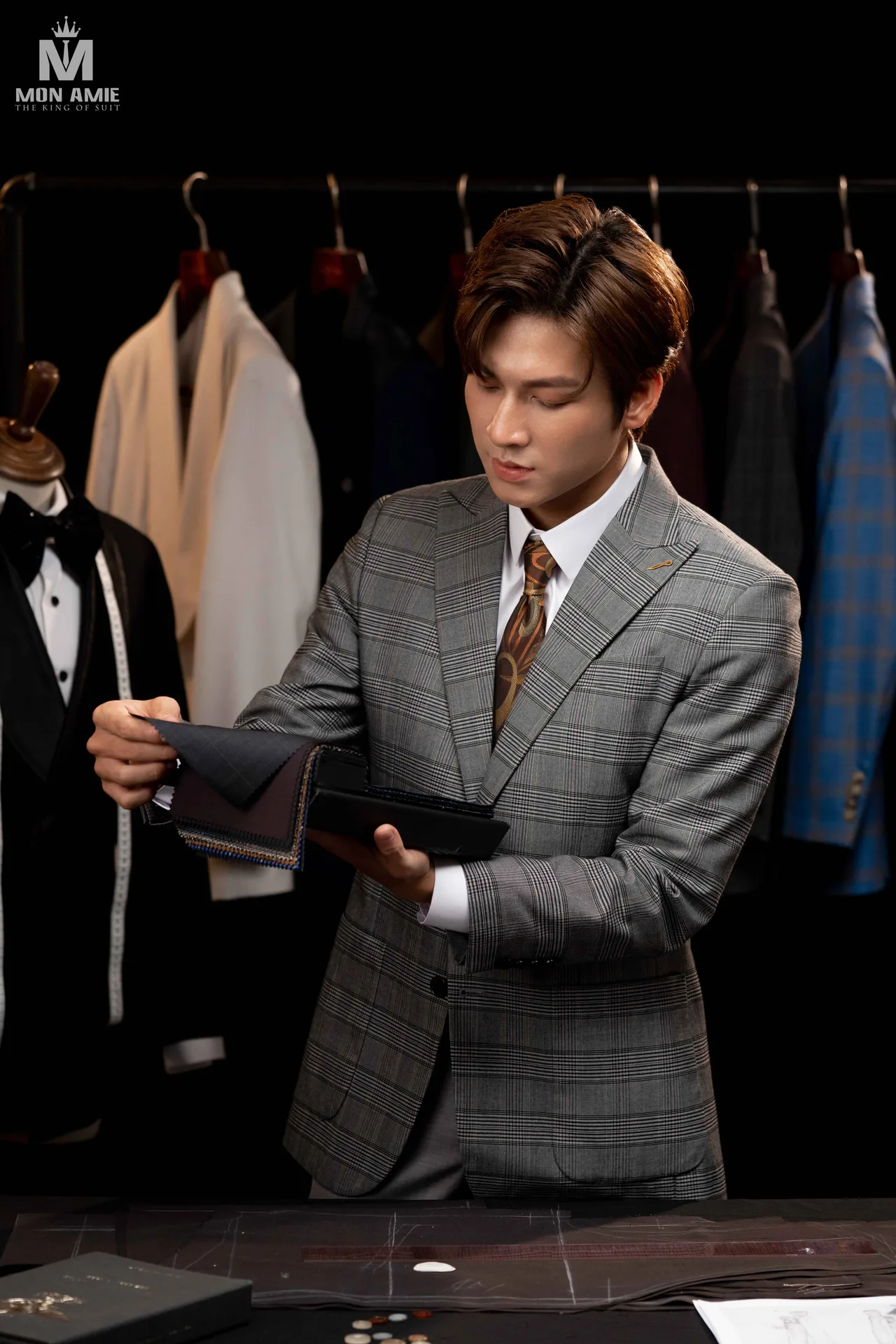
3. Dormeuil: a Paris mill since 1842
Dormeuil started in Paris in 1842, is the French name on this list, and stands alongside Canonico, Holland & Sherry and Scabal in Mon Amie's Heritage line. In a premium group like this, the fibres are usually very fine, so what is worth paying attention to is the feel in the hand, not the label.
When you pick up a swatch, try four things: feel the surface to see whether it is evenly smooth; hold it in your palm for about five seconds, then release to see how the cloth springs back; hang the sample to check how it falls; and turn it under window light to see how the sheen changes with the angle. These four checks apply to every mill. A solid plain colour suits big occasions like signings and award ceremonies; a sample with a subtle woven pattern gives you just enough distinction.

4. Loro Piana: rare fibres from Italy, 1924
Loro Piana is an Italian mill dating from 1924, known for rare fibres such as cashmere and vicuña. If you wonder why a metre of cloth can cost many times more than a metre of ordinary wool, the article on vicuña fibre explains it quite clearly: scarce fibre supply and very painstaking processing.
Something to weigh: rare fibre feels soft and weightless, but that very fineness makes the cloth less resistant to abrasion in daily wear. That is why this cloth suits a suit for select occasions more than a suit for the office five days a week. Loro Piana is not among the four names Mon Amie cites for its Heritage line; if you are interested, ask a stylist which samples in the current cloth library belong to a similar fine-fibre group.
5. Scabal: Brussels, 1938
Scabal was founded in Brussels in 1938, later than the other four names but still nearly nine decades old. This name sits in Mon Amie's Heritage line, where a jacket + trousers set costs above VND 20 million and up to VND 60 million per suit depending on the cloth.
Such a wide price gap comes mainly from the fibre and the weave: finer fibre, more carefully selected wool, sometimes with a rare fibre blended in. Before deciding, ask yourself two questions: on which occasions will you wear this suit, and how many times a week. Premium cloth can still be worn daily if you rotate your suits, giving each one a day or two of rest on a wooden hanger so the cloth springs back into shape.
Quick summary table
| Mill | Best for | Key point |
|---|---|---|
| 1. Vitale Barberis Canonico (Italy, 1663) | Office suits worn regularly | Ask about fibre fineness and weight |
| 2. Holland & Sherry (England, 1836) | A serious, classic suit silhouette | Choose a light sample for Saigon's climate |
| 3. Dormeuil (France, 1842) | Important occasions, fine-fibre cloth | Test smoothness, spring-back, drape and sheen |
| 4. Loro Piana (Italy, 1924) | A suit for select occasions | Rare fibre is soft but less resistant to abrasion |
| 5. Scabal (Belgium, 1938) | A premium suit in the Heritage line | Above VND 20 million, up to VND 60 million per suit |
Tips from Mon Amie's master tailors
- Ask for the cloth code, not just the name. The cloth code, together with composition and weight, tells you how the suit will actually wear.
- Look at the cloth by a window. Showroom lighting leans yellow and makes navy and blue-grey look different; in daylight you see the true colour. This is also why Mon Amie artisans bring swatches to your home or office.
- Don't buy the name and forget the fit. Expensive cloth on a drooping shoulder line still ruins the whole suit. At Mon Amie, you get more than 30 measurements taken and a baste fitting, adjusted until it fits.
- Start with a plain navy or grey suit. If this is your first premium suit, a basic colour that works for many occasions lets you feel the cloth's quality clearly without worrying about going out of fashion.
- Your measurements are kept for life. Next time you only need to choose a new cloth, not be measured again from scratch.

Frequently asked questions
Are famous suit cloth mills always expensive?
No. Price follows each individual cloth: fibre type, fineness, weight and finishing. For a full jacket + trousers set at Mon Amie, the Essential line is VND 4.8 to 10 million, Signature VND 10 to 20 million, Heritage above VND 20 million. See details on the made-to-measure price list; a stylist confirms the exact price at the measuring.
What do Super 100s and 150s mean in a swatch book?
The number indicates the fineness of the wool fibre: the higher the number, the finer the fibre, so the cloth is softer and lighter. But finer doesn't mean more durable. For an everyday suit, samples in the range of roughly 100s to 130s are usually the balance point between softness and wearability.
How do Italian cloth and English cloth differ?
Broadly, Italian cloth (such as from the Biella region) leans soft, light and smooth-falling; English cloth leans substantial, structured and shape-holding. This is only a general tendency, since every mill has both light and heavy samples.
Closing thoughts
A mill's name is the map; the specific cloth is the destination. Beyond the five names above, you will meet many other mills worth mentioning, such as Zegna (Trivero, Italy, 1910). When you are ready, you can preview in the cloth library, then book an appointment so a Mon Amie stylist can put each swatch in your hands.