
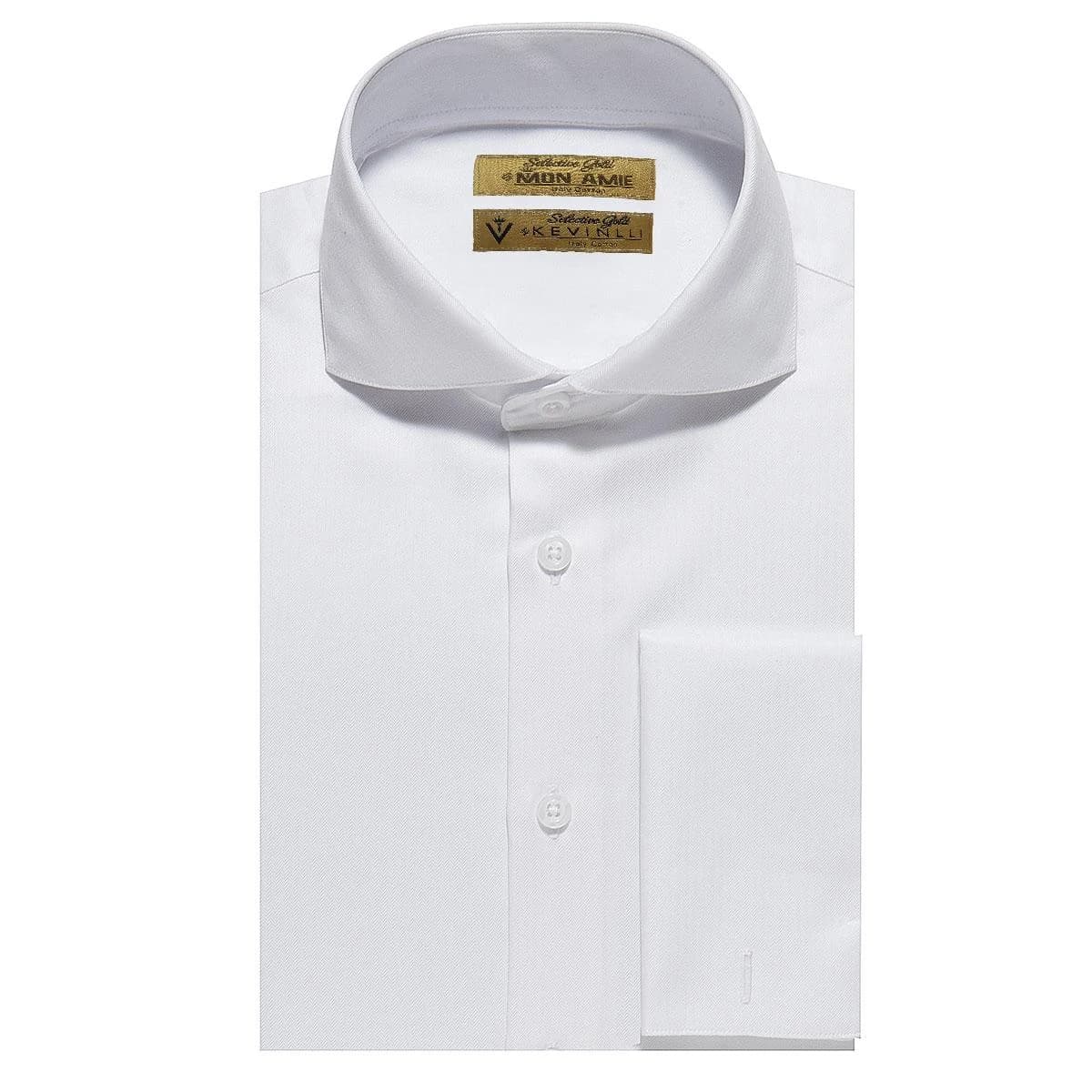
Many people think “cotton” settles it, that every white shirt is the same fabric. In fact cotton only tells you the raw material, while poplin, oxford or twill is the weave, and it is the weave that decides whether a shirt feels cool or warm, wrinkles or stays smooth, suits a suit or suits a weekend. Once you grasp this, the question of what a men's shirt is made of has a much clearer answer.
The quick answer
Men's shirt fabric is usually cotton or cotton blended with synthetic fibre (CVC, TC), then woven as poplin (thin, smooth), oxford (thick, with a grain), twill (diagonal weave, soft, wrinkle-resistant) or pinpoint (fine, elegant). Worn with a suit in Saigon, poplin or pinpoint cotton is the most comfortable choice.
Two layers to the question: what fibre, and what weave
To read a shirt cloth correctly, you need to separate two layers of information:
- Fibre: pure cotton, cotton blended with polyester, linen, bamboo fibre, silk. This is the “raw material”.
- Weave: poplin, oxford, twill, pinpoint, herringbone. This is the “recipe” for cooking that same raw material.
Within cotton, a long, well-spun fibre gives a smooth, durable surface that pills little. Within the poplin weave, a coarse yarn is stiff and wrinkles easily, while a fine yarn is soft and cool. That is why a label saying “100% cotton” is not enough to conclude that a shirt is good.
Poplin, oxford, twill, pinpoint: how they differ
| Weave | Surface | How it feels | Wrinkling | Suited to |
|---|---|---|---|---|
| Poplin | Plain weave, tight, flat and smooth, slightly cool to the touch | Thin, light, airy | Light creases, flattens quickly | Office, worn under a suit |
| Oxford | Basketweave, small grain on the surface, thick | Firm, durable, slightly warmer | Creases show little | Button-down collars, smart casual |
| Twill | Diagonal weave, faint raised diagonal lines, slight sheen | Soft, drapes well, slightly warm | Wrinkles little | Cooler season, air-conditioned rooms |
| Pinpoint | Fine-yarn oxford, smoother surface | Elegant, moderately substantial | Wrinkles little | With a suit, parties |
| Herringbone | A variation of twill with a small V-shaped pattern | Has depth, slightly thick | Wrinkles little | Occasions that need a touch of interest |
Americans call poplin “broadcloth”, so if you see the two names side by side in a fabric book, don't be confused; they are usually the same family.
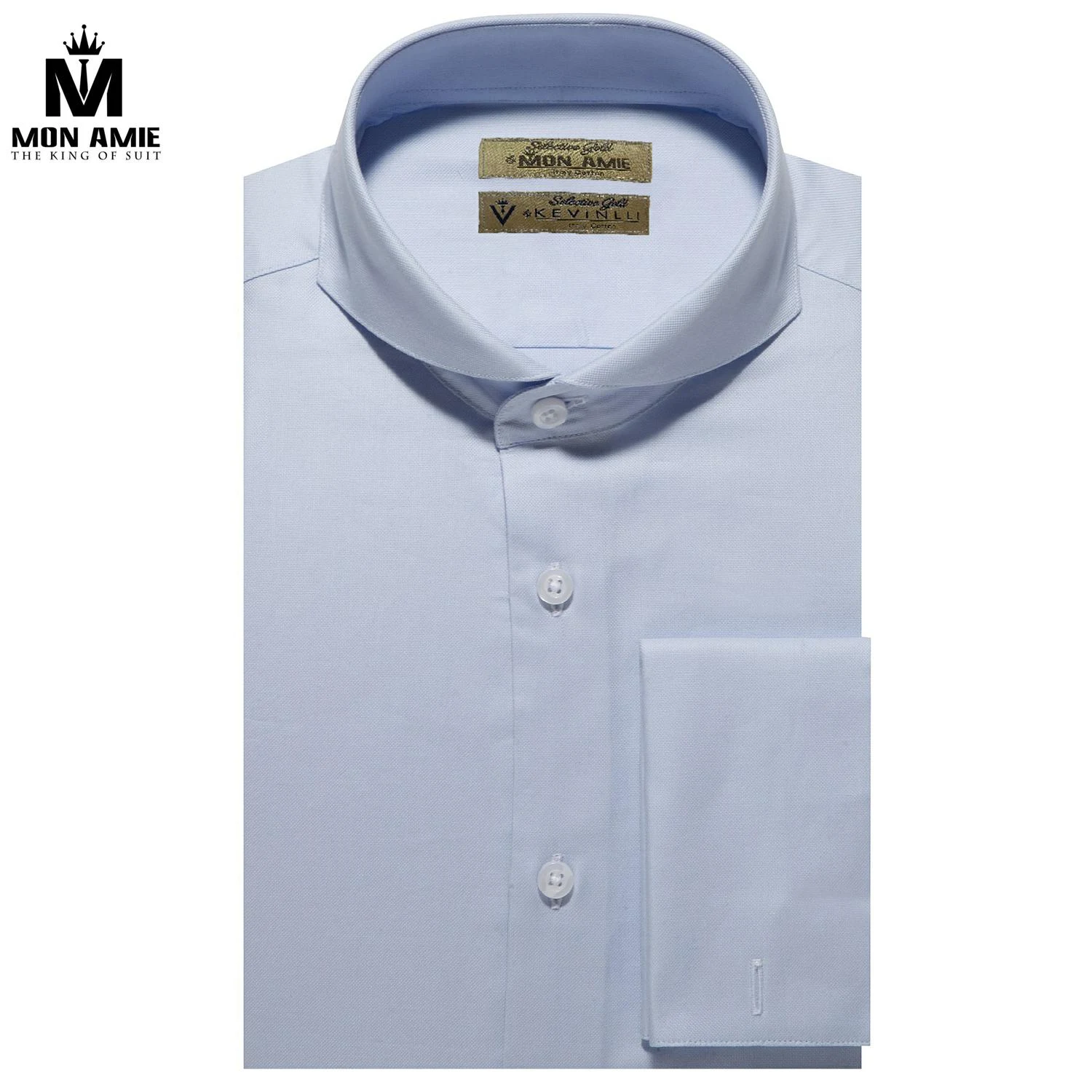
What a men's shirt is made of: reading the label correctly
The label inside the collar or on the bolt of cloth usually carries three pieces of information worth reading:
- Composition: for example “100% cotton” or “cotton 65, polyester 35”. This tells you the raw material.
- Yarn count: numbers such as 80s, 100s, 120s. The higher the number, the finer the yarn and the smoother the cloth, but also the more it wrinkles and the less durable it is than a thicker yarn.
- Ply: “2-ply” means the yarn is twisted from two strands, giving a more even, firmer surface that pills less than a single yarn.
A good men's shirt fabric is not necessarily the one with the biggest number. Worn every day, a yarn that is too fine frays quickly at the cuffs and collar. For people who work in an office, a moderate yarn count, 2-ply and tightly woven is usually the most durable balance.
Are CVC and TC blends bad?
Not bad, they just have their own purpose. In the garment trade, CVC is usually mostly cotton with some polyester added so the shirt wrinkles less and keeps its colour. TC is mostly polyester, so it wrinkles very little but breathes poorly.
For Saigon's climate, you can choose:
- All day in an air-conditioned office: cotton or CVC in poplin, which holds its shape and needs less ironing.
- Moving around a lot in the sun: thin pure cotton, or a linen-cotton blend.
- Business trips with little time to iron: CVC or wrinkle-treated cotton, choosing a small polyester proportion so it still breathes.
What is “coarse cotton” in a men's white shirt?
In Vietnam, people commonly call a tightly woven, slightly rough and thick cotton “coarse cotton”. In shirts, this name usually refers to cloth close to oxford or a thick cotton that holds its form and lasts. It suits weekend shirts, uniforms and shirts worn untucked. Few people choose it to wear under a formal suit, because its thickness makes the cuffs bulge under the jacket sleeve.
Choosing men's shirt fabric to wear under a suit in a hot climate
Under a suit, the shirt must be thin, smooth and must not catch or drag against the lining. You can apply four criteria:
- Opacity: a white shirt must be opaque enough not to show an undershirt or skin tone, especially under studio lights.
- Coolness: poplin or pinpoint cotton with a breathable weave.
- Structure: a tightly woven cloth and a well-interfaced collar will keep the collar upright and snug around the tie.
- Colour fastness: avoid cloth that is too cheap, because the underarms and collar yellow after a few washes.
If you want to go deeper on white shirts, you can read how to choose a men's white shirt.
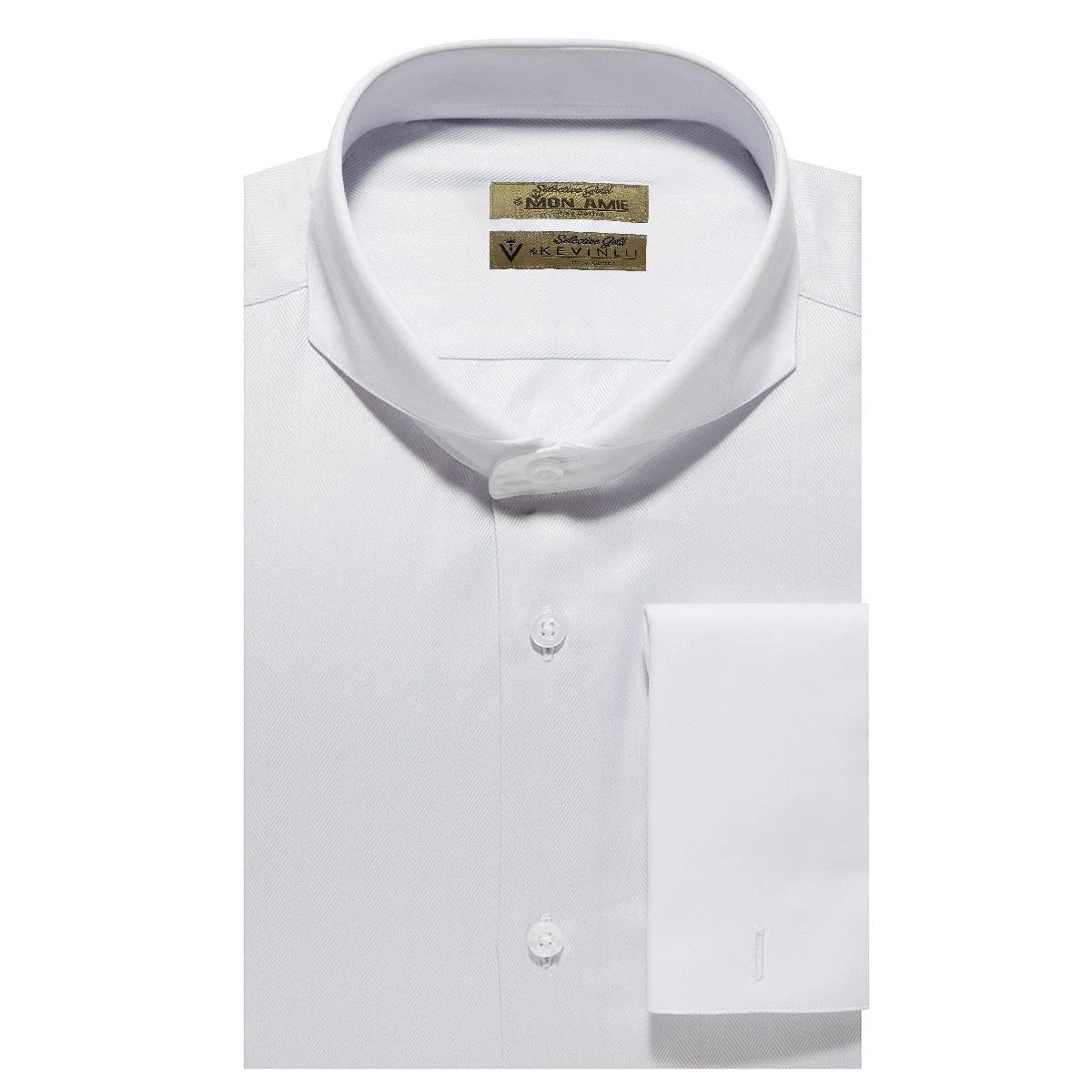
How much fabric does a men's shirt need?
A reference figure: a long-sleeved shirt usually needs about 1.6 to 2.2 metres for a fabric width of 1.4 to 1.5 metres. The amount varies with height, sleeve length and whether stripes or checks have to be matched. Patterned cloth needs extra so the stripes line up on the body and sleeves. The showroom will give you the exact allowance when measuring, so you don't need to work it out yourself. There are more details in the article on fabric allowance for a made-to-measure men's shirt.
A tip from Mon Amie's master tailors
Tailors choose shirt fabric with three simple “hand tests” that you can do right in the store:
- Squeeze the cloth firmly in your palm for a few seconds, then release it. If the creases fade gradually, the cloth recovers well.
- Hold the cloth up to the light. If it is too sheer, a white shirt shows through; if it is too opaque, the shirt feels stuffy.
- Feel the reverse side. A clean reverse with no pilling and evenly running threads is a sign of good yarn.
Common mistakes
- Choosing by the “100% cotton” label and ignoring the weave and thickness.
- Wearing a thick oxford under a thin suit, so the sleeves bulge.
- Thinking that a polyester blend is bad. A small proportion helps reduce wrinkles; the problem is only with a high proportion.
- Forgetting that the collar is where the whole shirt “holds its shape”; good cloth with a poorly interfaced collar still ends up a slack garment.
Frequently asked questions
Is a white cotton men's shirt good?
It is, if it is long-staple cotton and tightly woven. Fine cotton absorbs sweat well and feels pleasant on the skin, but it wrinkles more than cloth blended with synthetic fibre. Choose a poplin or pinpoint weave for wearing with a suit.
How is a white men's shirt in coarse cotton different from ordinary cloth?
“Coarse cotton” is usually tightly woven, thick and slightly rough. It is sturdy and durable, suited to wearing outside or as a uniform, and less suited to wearing under a formal suit.
How much fabric does a made-to-measure men's shirt need?
About 1.6 to 2.2 metres for a width of 1.4 to 1.5 metres, depending on build and pattern. The showroom will give you the specific figure when measuring.
Which fabric is coolest for a shirt worn with a suit?
Thin cotton poplin, a linen-cotton blend or bamboo fibre. Avoid high polyester content, because it releases heat poorly when there is a suit layer on top.
Does a twill shirt suit a suit?
It does, especially in cooler seasons or in a cold air-conditioned room. Twill is soft, drapes well and wrinkles little, but it is slightly warmer than poplin.
Feel the fabric before you choose
Knowing what a men's shirt is made of is only half the journey; the other half lies in how it feels on the skin. If you would like to try several weaves side by side, visit the fabric library or make an appointment through the booking page. Showroom staff will let you touch each cloth so you can feel the differences that a label can't tell you.