

A swatch of grey cloth no bigger than your palm looks wonderfully elegant under the showroom lights. By the time the suit arrives, you find it paler, bluer or more “characterful” than you expected. That is nobody's fault. It is the common experience of people who look at a suit fabric colour chart at small size and expect it to stay the same once it becomes a whole suit.
Quick answer
Colour on a small swatch shifts once it becomes a suit because a large area looks brighter and clearer, each place's light changes the tone of the cloth, and the drape creates shadows. To avoid this: view the swatch under at least two light sources, at the largest size possible, and place it beside the shirt you plan to wear. Begin with navy, charcoal and mid-grey.
Why the colour of a small swatch differs once it is a suit
There are four common causes:
- Area effect: a large patch of colour always looks lighter and more vivid than a small piece of the same colour. A light grey swatch will be paler as a suit than you imagine, and a deep blue will be deeper.
- Light: cool white fluorescent light, warm yellow light and daylight give three different colours on the same cloth.
- Drape and surface: when worn, the cloth folds, and each fold casts a different shadow. The colour seems deeper and more multi-toned than the flat swatch.
- Surroundings: a swatch beside another swatch looks different when it stands alone. The eye always compares with whatever is nearest.
One more reason for those choosing cloth through a screen: colour on screen is always slightly off, because of display settings and cameras. So with online made-to-measure, discuss carefully with your stylist during the video call the lighting in the place where you will wear the suit.
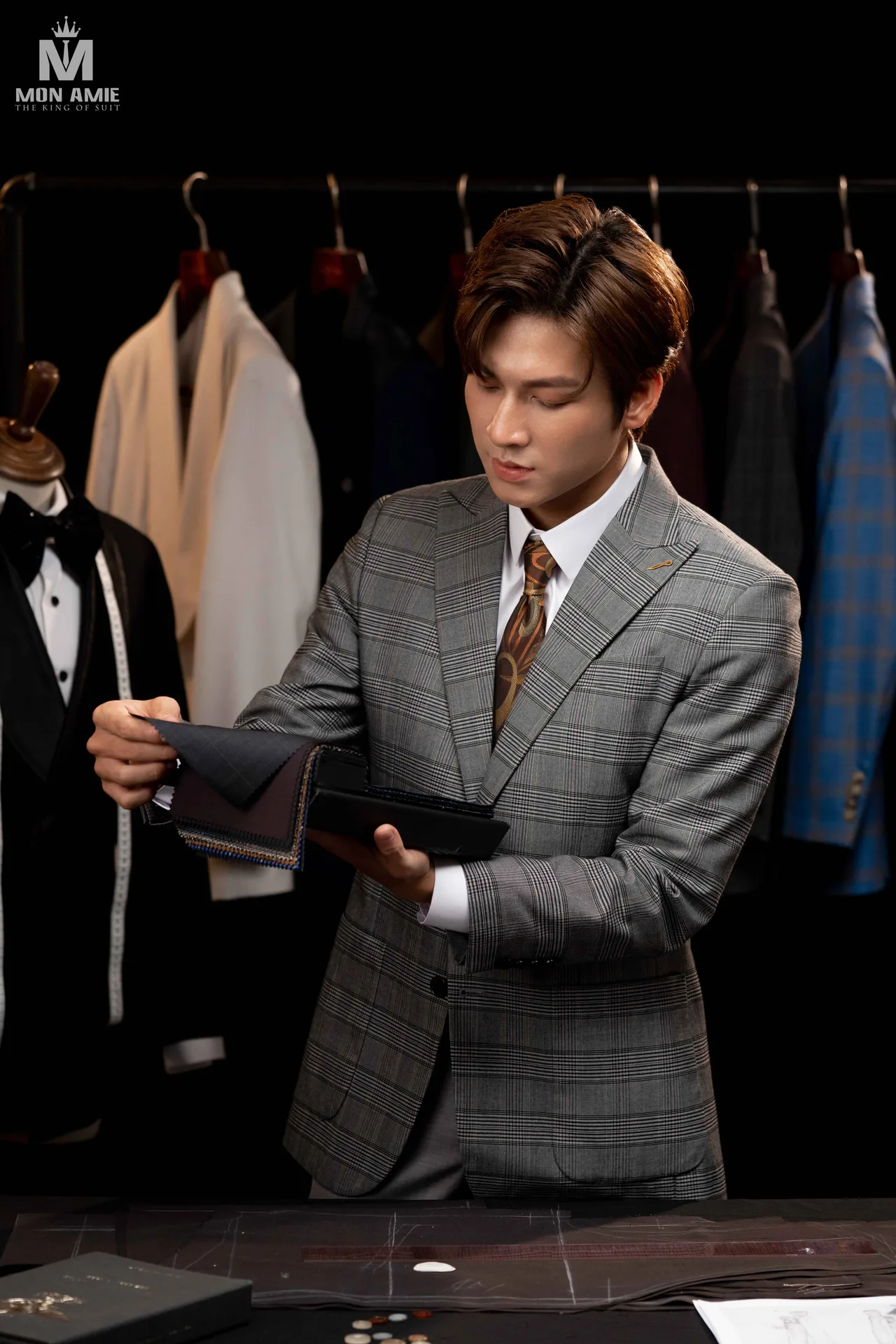
What light to view the cloth in
Apply the three-light rule: daylight, your workplace lighting and evening lighting. The colour you choose should look good in all three.
- Indirect daylight: stand next to a window, without direct sun. This is the most honest light source.
- Indoor lights: yellow bulbs warm the colour, white bulbs cool it. View the cloth under the same type of lighting where you usually wear the suit.
- Night lighting or a banquet hall: if the suit is for a party, try it under light close to the venue's.
A good habit: lay the swatch across your lap or hang it vertically, and step back one to two metres to look. Do not hold it right up to your face, because your skin tone reflects into the swatch.
Suit fabric colour chart: eight base colours in order of priority
| Priority | Colour | Suits | Notes when choosing a swatch |
|---|---|---|---|
| 1 | Navy | Office, parties, weddings | Choose a navy that is deep enough; avoid one leaning purple or too blue |
| 2 | Charcoal grey | Office, meetings | Easily mistaken for black on a small swatch |
| 3 | Mid-grey | Office, daytime | Can lean blue or brown depending on the light |
| 4 | Black | Evenings, formal occasions | View under strong light to tell true black |
| 5 | Coffee brown | Smart casual, cool days | Warm, suits fair and medium skin |
| 6 | Moss green, olive | Relaxed, weekends | Too dark looks like black, too light looks like khaki |
| 7 | Beige, cream | Sunny days, outdoor parties | Shows stains and creases easily |
| 8 | Petrol blue, blue-grey | When you want a slight difference | Check carefully under white light |
The first three colours are the foundation of a suit wardrobe. From there you add the rest as needed.
Grey and black: the two colours easiest to get wrong
Grey suit cloth comes in dozens of shades: charcoal, mid-grey, light grey, blue-grey, brown-grey. On a small swatch they look almost identical, but as a suit the difference is obvious. A trick is to hold the swatch beside a white shirt: a light grey will read as cream, and a dark grey will read as charcoal.
Black suit cloth is the opposite: the swatch looks jet black, but as a suit it catches the light and reveals a hint of grey or blue. Some tightly woven black wool gives a very beautiful depth, while poor-quality black leans brown or collects lint. Black is for evenings or formal occasions; for daytime, consider navy or charcoal.

Choosing colour by occasion and skin tone
- Formal occasions, the office: navy, charcoal, mid-grey.
- Evenings, parties: black, deep navy, deep petrol blue.
- Sunny days, outdoors: beige, cream, light grey, light blue.
- Fair skin: most colours suit, especially navy and charcoal.
- Yellow or medium skin: navy, charcoal, coffee brown, moss green.
- Dark skin: beige, cream and light grey make a nice contrast; a deep navy is also very handsome.
For more suggestions, you can read the article on choosing flattering colours for men's suits.
A tip from Mon Amie's master tailors
The master tailor always says one thing: look at the cloth where you will wear it. That is why Mon Amie's home tailoring service suits choosing colour so well: an artisan brings a selected set of cloth swatches to your home, office or hotel, so you can see them under that very light. If you live far away, online made-to-measure helps you choose cloth through detailed images with a video-call consultation. And at the showroom, you can take a swatch to the window and look at it right there in the cloth library. Ask to see the cloth at the largest size possible, rather than relying on a small swatch alone.
Common mistakes
- Choosing colour under a single light source, usually showroom lighting.
- Not placing the swatch beside the shirt and tie you plan to wear.
- Choosing colour from an on-screen photo without seeing the real swatch.
- Choosing a light grey and then being surprised that the suit comes out a very pale grey.
- Choosing black for daytime office wear even though the dress code allows other colours.
Frequently asked questions
Which suit fabric colour is easiest to pair?
Navy and charcoal are the two easiest. Both suit white, light blue and pale pink shirts and most ties.
Why does the cloth colour at tailoring time differ from the small swatch?
Because of area effect, light and drape. A large piece of cloth is always brighter and clearer than a small piece, so you need to see it at a large size.
What shades does grey suit cloth come in?
Charcoal, mid-grey, light grey, blue-grey and brown-grey. Choose by placing it beside a white shirt in daylight.
Should I have a black suit made for everyday office wear?
Not if the dress code allows other colours. Black suits evenings and formal occasions. For daily office wear, navy or charcoal is more versatile.
Is choosing suit cloth colour online accurate?
It can be off because of the screen. Talk it through with a stylist by video call and, if you can, see the real swatch before you decide.
Choose colour with your eyes, your hands and the light
Reading a suit fabric colour chart is only the first step; the other is looking at the real cloth in real light. If you already have two or three colours in mind, bring along the shirt or tie you plan to wear when you visit a showroom. The master tailor will show you the cloth beside them under several light sources. You can make an appointment through the booking page and say where you wear a suit most often, and the master tailor will choose the matching light when showing you cloth.