
Run your hand against the grain of a piece of velvet and the colour changes before your eyes: where you've stroked it darkens, where you haven't it stays light. That is what gives a velvet suit its pull, and also what makes many people hesitant, because velvet looks wonderful when it's good and, if cared for wrongly, crushes and goes patchy. This article helps you tell the types of velvet apart and choose the right one for your suit.
Quick answer
Velvet suits come in three main groups: cotton velvet (matte, thick, durable, easy to wear), silk velvet (sleek sheen, soft, delicate, expensive) and wool velvet (warm, thick, holds its shape, suits cold seasons). Choose by occasion, weather and how much care you are willing to give. Store it by hanging, steam it from the reverse side, and never iron directly on the pile.
What is velvet? Why it differs from ordinary suit cloth
Velvet is a cloth with a short, fine, upright pile on the surface, called the “pile” or “nap”. This pile catches and reflects light, creating depth of colour and a characteristic soft sheen. Because the pile runs in a set direction, the tailor must cut every panel of the jacket with the pile running the same way; otherwise the colours of the panels will not match.
Ordinary suit cloth (flat-woven wool) has no such pile. So the surface of velvet is both more beautiful in low light and more sensitive to friction and pressure.
The three main types of velvet for suits
| Type | Characteristics | Sheen | Thickness | Durability | Suits |
|---|---|---|---|---|---|
| Cotton velvet | Short pile, matte surface | Matte, soft | Medium to thick | Durable, easy to care for | Weekend blazers, cosy evenings |
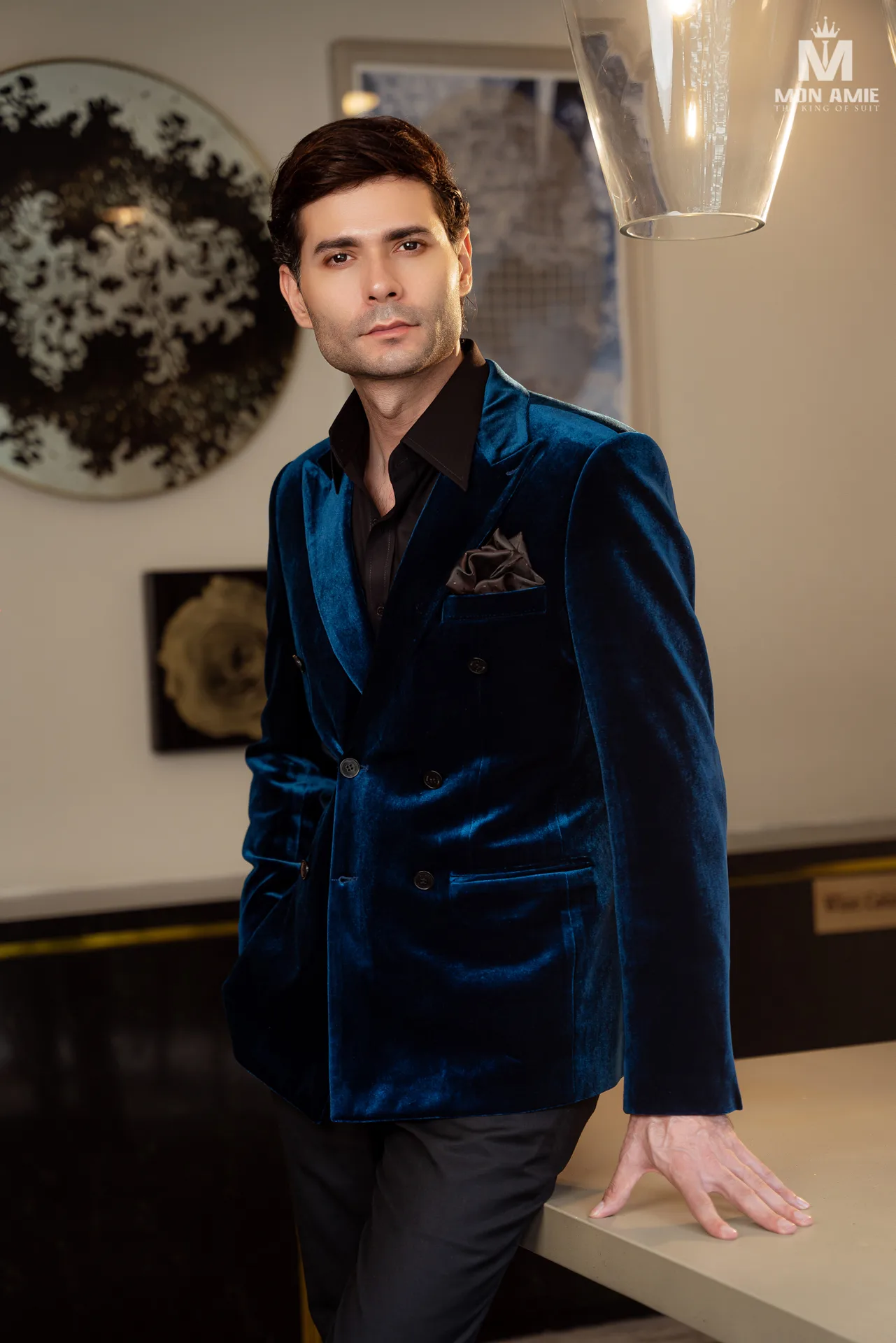
| Silk velvet | Fine pile, soft fibres, drapes beautifully | Sleek sheen, colour shifts with the light | Thin to medium | Delicate, crushes easily | Evening parties, formal events |
| Wool velvet | Wool blend, firm, thick | Matte, warm | Thick | Durable, holds its shape | Cold seasons, cool climates |
Cotton velvet
This is the most accessible type. The pile is short and the surface matte, so it is less flashy and suits a blazer worn on its own. The cloth is thick, holds its shape, is durable and can be dry-cleaned, and its price is usually gentler than silk velvet. The drawback is that it is a little heavy and warmer than light wool.
Silk velvet
Silk or silk-blend fibres give the most attractive drape and sheen: light passing over the cloth makes the colour seem to move. This is the material often seen in evening jackets and tuxedo jackets. In return, silk velvet is delicate, the pile crushes easily at the elbows and jacket skirts, and it is expensive. It suits occasions you wear it rarely but want to make an impression.
Wool velvet
The phrase “wool velvet” is understood in several ways. Two common cases: velvet woven from wool yarn (short, thick, warm pile), or wool with a brushed, fuzzy-soft surface that feels like velvet. Both are thick, warm and hold their shape, suited to cold seasons or trips to cool places. If you come across this name on a label or in a fabric sample, ask clearly about the composition and the weave structure.
Beyond these three groups there is also synthetic velvet (viscose, polyester). Low price, even sheen, but less breathable, prone to static and quick to lose its good looks.
When should you wear a velvet suit?
Velvet works best in soft light and a slightly warm atmosphere:
- Evening parties, year-end events: warm lamplight brings out velvet's colour beautifully.
- Christmas parties, company parties: wine red, moss green and deep navy are the familiar colours.
- Groom and groomsmen: a black or navy velvet suit with satin lapels has a classic, elegant air.
- Cold seasons or trips to cool places: cotton velvet or wool velvet keeps you warm.
- Weekends, restaurant dinners: a velvet blazer with dark trousers and a plain shirt.
Velvet is less suited to very formal daytime meetings, places with harsh sun, or occasions with a lot of outdoor walking. In Ho Chi Minh City, choose a thin velvet, half-lined, and wear it mainly in air-conditioned places.
Colour and how to pair
- Wine red, plum: alluring, suits evening parties. Pair with a black shirt and black trousers.
- Deep navy, moss green: the easiest to wear, the least glaring. Pair with a white or cream shirt.
- Black: classic, suits tuxedos, satin lapels.
- Smoky purple, dark brown: more individual, suits confident wearers.
One principle: velvet is already the statement, so keep the rest simple. A plain shirt, wool or dark trousers, clean leather shoes. If you want to wear a velvet blazer with a tuxedo or to a more formal party, the article can a tuxedo blazer be worn for formal occasions discusses the line between a blazer and a tuxedo in detail.
How to keep the velvet pile from crushing
This is the part many people fear most, but if you remember a few principles, velvet is very durable:
- Hang it on a shoulder hanger, don't fold it and don't cram it into a tight wardrobe. Velvet folded for a long time presses the pile into creases.
- Steam it from the reverse side, holding the iron slightly away from the cloth. Never iron directly on the pile.
- Brush it gently with the pile using a soft brush so the pile stands up again and dust is removed.
- Avoid prolonged friction: bag straps and seats that rub continually crush the pile and make the sheen patchy.
- Use professional dry cleaning, choosing a cleaner experienced with velvet. No hand washing or machine washing.
- Let it dry in the open air, and don't keep it in a sealed plastic bag, because damp can cause mould.
To learn more about choosing and wearing cold-season fabrics, the article tweed suits worn in Vietnam has similar notes on thickness and climate.
Is a velvet suit hot?
Yes, velvet is usually warmer than wool of the same thickness because the pile traps heat. In a tropical climate, you should:
- Choose a thin velvet, preferring light cotton velvet or silk-blend velvet.
- Choose a half lining or a thin, breathable lining.
- Wear it in the evening or in air-conditioned places.
- Bring a shoulder hanger to hang it on while travelling.

Common mistakes
- Choosing velvet that is too shiny for daytime. Glaring and easily garish.
- Choosing cheap synthetic velvet and waiting for it to look elegant. Harsh sheen, hot, quick to crush.
- Folding a velvet jacket in a suitcase. Creases pressed into the pile are hard to recover.
- Ironing directly. The pile gets flattened and the sheen goes patchy.
- Choosing velvet for someone who must wear it many hours in the sun. Too hot, uncomfortable.
Tips from a Mon Amie master tailor
The master tailor has a habit: before cutting velvet, he strokes the whole piece of cloth in one direction and marks it with chalk, so that every panel, lapel, sleeve and pocket lies with the pile running the same way. After sewing, the seams in velvet also need light pressing from the reverse side, never from the right side. That is why a made-to-measure velvet blazer is usually more even in colour and more elegant than a ready-to-wear one. If you are weighing up the cloth, feel it in person at the fabric library to sense its real thickness and sheen.
Frequently asked questions
Can I wear a men's velvet suit to work?
Yes, if the environment allows a relaxed style. Choose a matte cotton velvet in navy or moss green, worn with a plain shirt and dark trousers. For formal meetings, choose wool.
What should a men's velvet blazer be paired with?
A plain black or white shirt, dark wool trousers and clean leather shoes. If the velvet blazer already stands out, avoid patterned ties and patterned trousers.
What is wool velvet?
It is a general name for cloth with wool content and a velvet or soft brushed surface, thick and warm. The name isn't standardised, so when buying, ask clearly about the composition and the weave structure.
Can a velvet suit be washed?
Don't wash it by hand or in a machine. Use professional dry cleaning, and occasionally steam it from the reverse side to lift the pile.
Conclusion
A velvet suit is a choice for occasions when you want a touch of the warmth and elegance of low lamplight: cotton velvet for ease of wearing, silk velvet for beautiful sheen, wool velvet for cold seasons. Choose the right fabric, care for it properly, and your velvet suit will keep you company through many party seasons. If you would like one made just for you, book a fitting or find out about Mon Amie's bespoke tailoring service.