
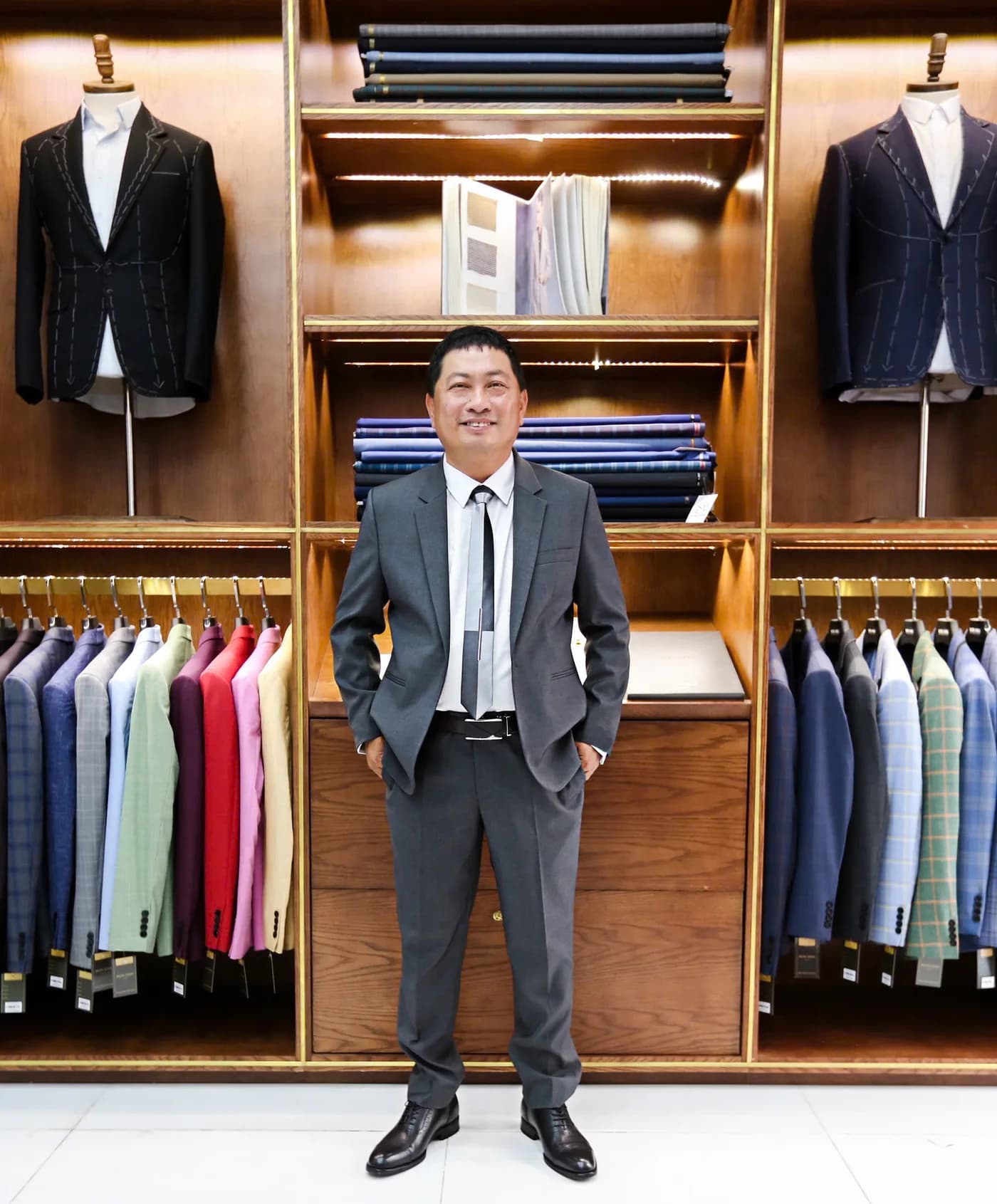
In the swatch book in front of you are two cuts that look almost identical in colour and weave. One is labelled “120s”, the other “180s”. The price gap is considerable. Is the more expensive one really better, and better for whom? Understanding how the wool industry grades premium wool fabric will keep you from paying for a number your suit doesn't need.
The short answer
Premium wool fabric is judged on three criteria: micron (the fineness of the fibre), the Super number (how micron is converted into a figure such as 100s or 150s) and fibre length. The finer the fibre, the softer, lighter and more lustrous the cloth. But the higher the Super number, the more delicate the cloth, so it is not always suited to everyday wear.
Criterion 1: micron, the fineness of the fibre
The micron is the unit for measuring the diameter of a wool fibre: one thousandth of a millimetre. The finer the fibre, the smaller the micron number. A fine fibre bends more easily, so against the skin it feels soft and does not prickle. A coarse fibre, by contrast, is stiffer and tends to itch.
That is why, although all of them are wool, some feel as smooth as silk and others you want to take off right away. The difference lies not in the word “wool” but in the micron count.
Criterion 2: the Super number (100s, 120s, 150s…)
The Super number is the wool industry's way of turning micron into an easy-to-compare figure. The higher the number, the finer the fibre. The usual convention:
| Super number | Fibre diameter (approximate, maximum) | General feel |
|---|---|---|
| Super 100s | about 18.5 microns | Durable, moderately soft, suits daily wear |
| Super 120s | about 17.5 microns | Softer, still durable, common for work suits |
| Super 150s | about 16 microns | Smooth, light, a slight sheen, needs more careful care |
| Super 180s | about 14.5 microns | Very fine and thin, suits special occasions, rarely worn daily |
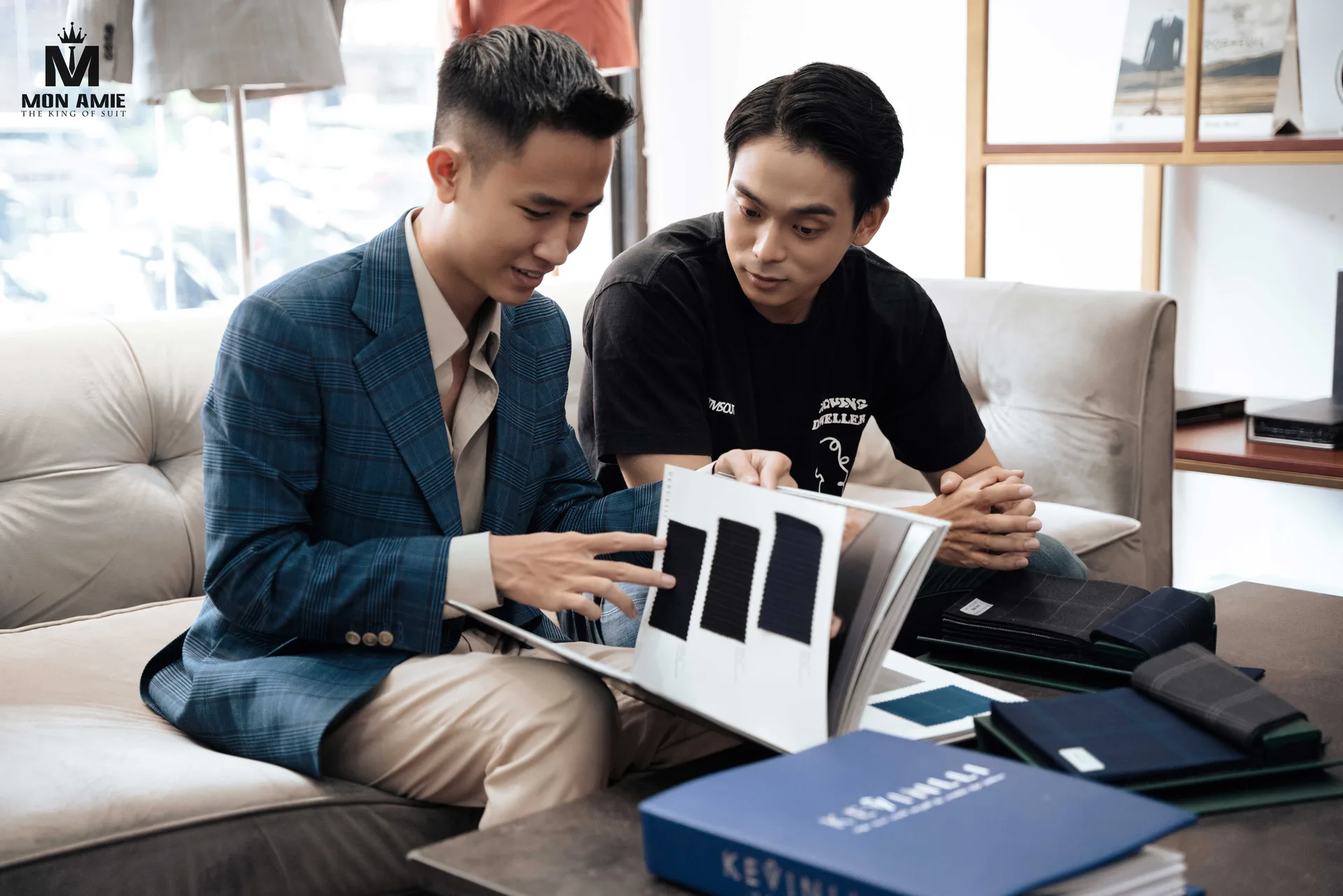
The figures above are industry reference points. A quick way to read them: each step of ten in the Super number corresponds to a fibre roughly half a micron finer. The cloths Mon Amie uses span a fairly wide range: Essential uses Kevinlli 40–70% wool at 100s–140s, while Signature uses Kevinlli 80–100% wool at 140s–150s along with mills such as Dolce & Taylor, Luciano, Salford and Vercelli.
Criterion 3: fibre length
Two cloths with the same micron but different fibre lengths will give different results. Long fibres, carefully combed and then spun into a smooth, strong yarn (the worsted method), give a cloth that is durable, smooth and resistant to pilling, suited to suits. Short fibres, loosely carded and spun into a bulky yarn (the woollen method), give a cloth that is springy, warm and soft and fuzzy on the surface, suited to tweed and flannel.
That is why some cloths with a not-so-high Super number are more durable and better looking than a high-Super cloth made with short fibres.
Why a high Super number isn't necessarily right for daily wear
The finer the fibre, the softer it is, but also the less able it is to withstand friction. In a work suit, you sit a lot, rub against chairs and walk about, so points such as the knees, seat and elbows are worn down continuously. Very-high-Super cloth goes shiny and thin quickly in those places.
- Daily wear, lots of sitting: cloth in the 100s to 140s range is usually the most balanced between softness and durability.
- Rotating wear, important meetings, events: 140s to 150s and above give a smooth look with a slight sheen.
- Special occasions, rarely worn: very fine cloth such as 180s and above can suit you if you accept careful maintenance.
- Trousers: choose a cloth a little more durable than the jacket's, because trousers take more friction.
Understood this way, you will see that premium wool fabric does not mean “the highest Super number”, but the kind that fits the way you wear it.
Merino wool, merino cloth, fine wool: what do they mean?
Shoppers often search for “merino wool fabric”, “merino wool cloth” or “fine wool fabric”. These three phrases describe the same group: wool from the merino breed of sheep, famous for its fine, soft fibre. Two things to remember:
- Merino is a breed of sheep, not a quality grade. Within the same breed, the micron still varies by region and by individual animal.
- Merino is much finer than ordinary wool, but not necessarily finer than another wool whose fibre has been carefully selected.
So when you see a “merino” label, you should still ask for the Super number or the micron count. If you need to compare virgin wool labels, the article what is virgin wool fabric explains it in more detail.
What does origin tell you?
The origin of a wool cloth has two layers, and they are often confused:
- Where the sheep are raised and the fleece is taken: usually regions with large-scale sheep farming such as Australia and New Zealand.
- Where the yarn is spun and the cloth is woven and finished: for example Italian and English mills. This is what determines the surface, the drape and the durability.
A label that says “woven in Italy” or “woven in England” usually speaks about the second layer. In Mon Amie's Heritage line (over VND 20 million, up to VND 60 million per suit), the cloth comes from Italian and English mills such as Canonico, Holland Sherry, Dormeuil and Scabal. Names such as Loro Piana, Zegna and Vitale Barberis Canonico also belong to the group of well-known suit-cloth mills in the trade. Italy has many traditional wool-weaving regions, among which Biella is often mentioned as a long-established centre.
How to choose premium wool fabric by need
| Need | Suggestion | Reason |
|---|---|---|
| A suit for daily office wear | Mid-range Super, tight weave, subdued colour | Durable, low shine, holds its shape |
| A suit for important meetings | Higher Super, smooth surface | Handsome, light, elegant |
| A suit for parties and weddings | Smooth cloth with a nice drape, may have a slight sheen | A formal look |
| A summer suit | Lightweight open-weave cloth, suitable Super | Breathable, not stuffy |
| A winter suit | Thicker cloth, flannel or tweed | Warm, holds its shape |
Common mistakes
- Thinking the higher the Super number, the better. A high Super number means fine, not durable.
- Ignoring the weave. Two cloths with the same Super number but a different weave feel completely different.
- Looking only at origin and not at composition. Cloth woven in Italy can still be blended with plenty of synthetic fibre.
- Not touching the real cloth. A number on paper cannot replace the feel in your hand.
- Using premium cloth for the whole daily work suit, without rotating. Fine cloth needs rest between wearings.
A tip from Mon Amie's master tailor
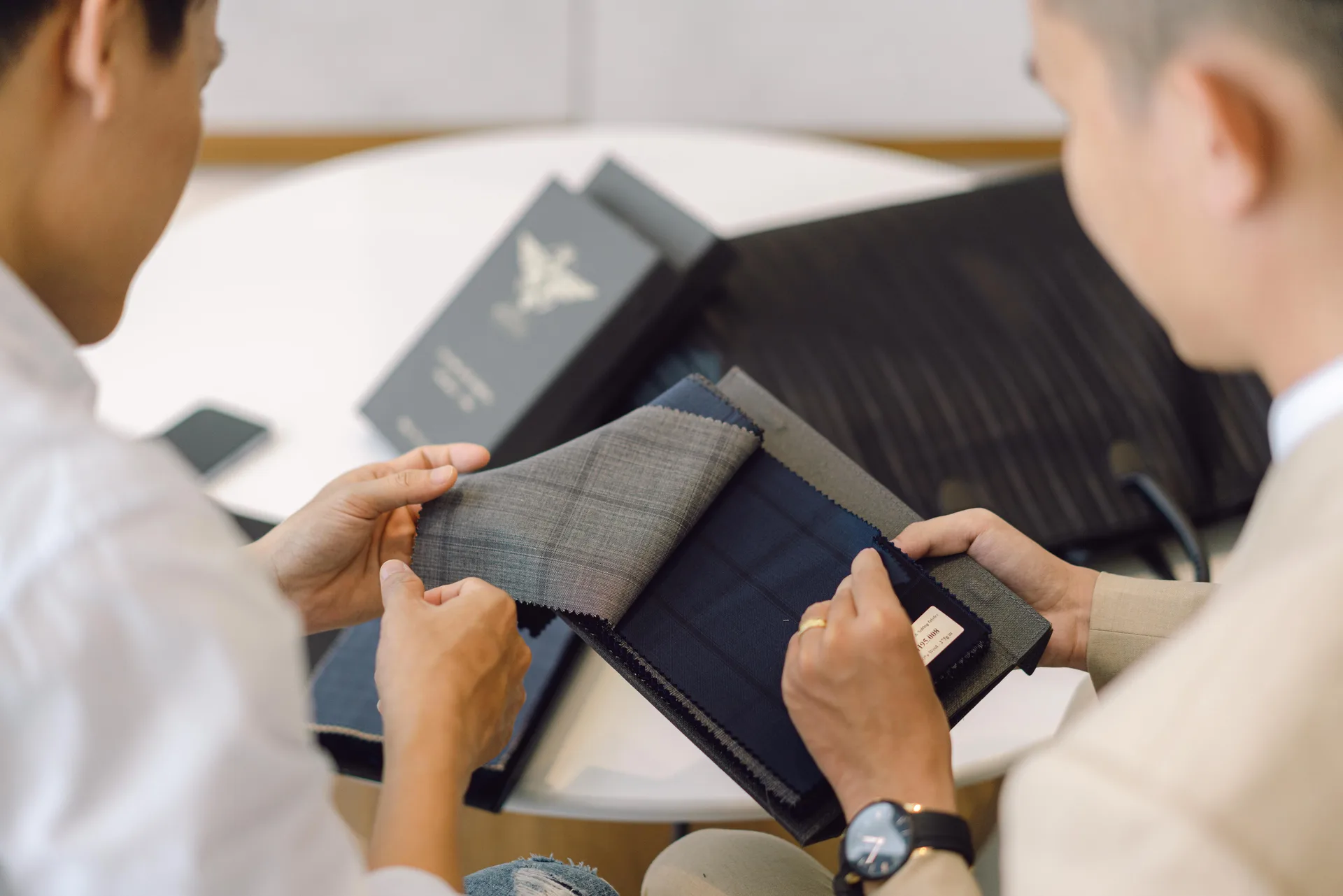
The master tailor always tells customers to do three things when choosing cloth: touch it, crush it, and look at it in natural light. Touch it to know whether it is soft or coarse. Crush a corner of the cloth tightly for ten seconds to see how the crease springs out. Look at it in daylight so that the colour and weave show true, because showroom lighting often makes cloth look better than it really is. And remember you are choosing cloth for a person, not for a number: someone who sits a lot, walks a lot and sweats a lot needs a different cloth from someone who wears a suit only a few times a year. To touch the materials in person, you can visit Mon Amie's fabric library. If you want to compare further, the article is wool fabric good has a few useful criteria.
Frequently asked questions
How does premium wool differ from ordinary wool?
It differs in fibre fineness (micron), fibre length, weave and finishing. Premium wool is usually smoother, drapes better and has a more even surface, but it also needs more careful care.
Is merino wool itchy?
Much less itchy than ordinary wool because the fibre is fine. Even so, the degree also depends on the micron and the lining. A lined suit generally does not itch because the cloth does not touch the skin directly.
Is merino wool fabric hot?
Not as hot as many people think. Wool absorbs moisture and releases vapour well, especially lightweight merino. A thin merino wool suit can still be worn in Ho Chi Minh City if the lining is breathable.
What Super number should I choose for a work suit in fine wool?
For daily office wear, many people choose about 100s to 140s because it is durable. If you prefer something finer and accept rotating your suits, 140s to 150s is a rather sweet spot. You can see the prices of each line on the price list.
Closing thoughts
Premium wool fabric is a balance between smoothness, durability and suitability to the way you wear it, not a race of numbers. Understand micron, Super number and fibre length, and you will choose a beautiful cloth without paying for something you don't need. If you want to touch real cloth and hear personal advice, book a fitting at Mon Amie.