
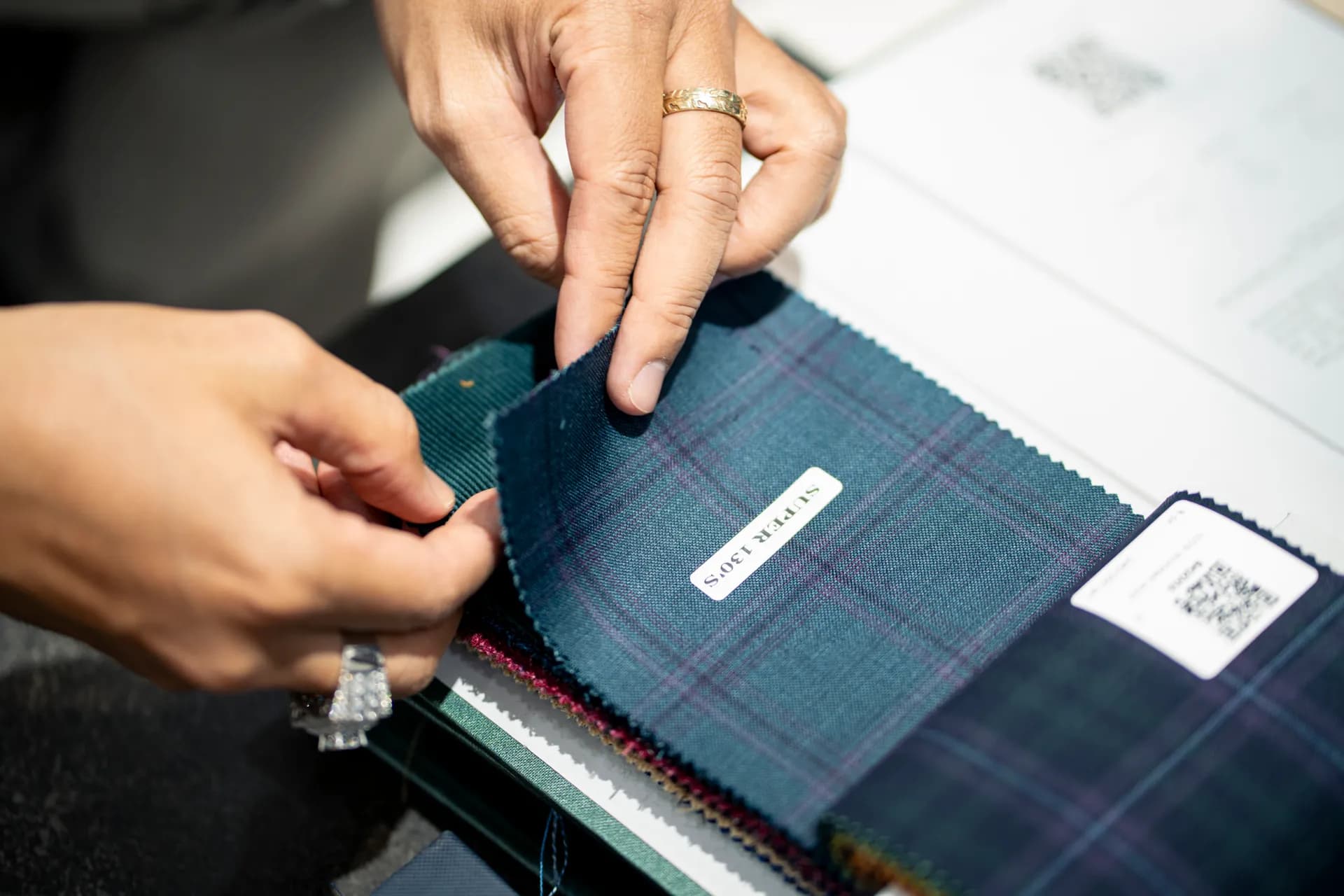
In the Kevinlli price list, going from 40% up to 70% wool adds only about a million dong to a two-piece suit at each step. From 70% to 80%, one step adds VND 2.7 million. That jump is the place to stop and ask: what does the next grade give me, and will I use it?
The short answer
For a suit worn a few times a year, 40–50% wool is enough. For work 1–2 days a week, choose 50–60%. From 3 days a week, sitting long hours or standing in the sun, go up to 60–70%. Choose 80–100% only if you like a smooth cloth and already have several suits to rotate, because smoother does not mean more durable for daily wear.
Wool grade and price, Kevinlli range
Prices exclude 8% VAT. The last column is how much more the two-piece costs than the grade directly above it in the table.
| Wool percentage | Super number | Jacket | Trousers | Two-piece | Extra per step (suit) |
|---|---|---|---|---|---|
| 40% | — | VND 3.6 million | VND 1.2 million | VND 4.8 million | — |
| 50% | Super 100s, 110s | VND 4.35 million | VND 1.45 million | VND 5.8 million | +1.0 million |
| 50% | Super 120s | VND 4.95 million | VND 1.65 million | VND 6.6 million | +0.8 million |
| 60% | Super 120s | VND 5.6 million | VND 1.9 million | VND 7.5 million | +0.9 million |
| 70% | Super 140s | VND 6.35 million | VND 2.15 million | VND 8.5 million | +1.0 million |
| 80% | Super 140s | VND 8.4 million | VND 2.8 million | VND 11.2 million | +2.7 million |
| 90% | Super 150s | VND 10.2 million | VND 3.4 million | VND 13.6 million | +2.4 million |
| 100% | Super 150s | VND 12 million | VND 4 million | VND 16 million | +2.4 million |
Two things you can read from the table. The first five grades rise evenly, about a million per step. From the 80% grade on, each step rises two to three times as much, while the Super number at 80% is still 140s, the same as at 70%.
What each group of wool gives you
| Criterion | 40–50% wool | 60–70% wool | 80–100% wool |
|---|---|---|---|
| Breathability | Stuffier in hot weather and on a motorbike | Clearly more breathable | The most breathable of the three groups |
| Creasing and recovery | Creases little in wear, but a deep fold is hard to shake out on its own | Moderate creasing, usually recovers after a night on the hanger | A fine cloth easily marks when you sit long, usually recovers after a night on the hanger |
| Surface | Firm, slightly stiff to the hand | Softer, better drape | Smooth, drapey, with a natural sheen |
| Standing up to daily rubbing | Fair | Good | Weaker, wearing at the elbows, the rise and where a bag is carried |
| Suits | Wearing on occasions | Regular work wear | People with many suits to rotate who like a smooth cloth |
| Kevinlli two-piece | VND 4.8 – 6.6 million | VND 7.5 – 8.5 million | VND 11.2 – 16 million |
In general, the higher the wool percentage, the more breathable the cloth usually is and the better it recovers from creases. A higher Super number means finer wool yarn and a smoother surface, but not more durable for daily wear. Mix the two up and you may pay for 100% wool and then see the elbows wear faster than you expected, if you wear it every day on a motorbike.
Choose 40–50% when
- You wear a suit a few times a year: weddings, graduations, company events.
- It is your first suit and you aren't sure you will wear it much.
- You need a suit that holds its shape well when it hangs for a long time in the wardrobe between wears.
Within this group, if the budget allows another VND 0.8 million, the 50% Super 120s grade has a smoother surface than 50% Super 100s without a big jump in price.
Choose 60–70% when
- You wear a suit to work 3 or more days a week.
- You sit in long meetings, or have to stand outdoors for part of the day.
- You want a suit you can wear all year in Ho Chi Minh City, from air-conditioned rooms to the midday sun.
This group gives most of the breathability and recovery of wool, while still standing up to the rubbing of daily wear. From 60% to 70% adds only about a million for a two-piece, and the Super number rises to 140s.
Choose 80–100% when
- You already have at least two or three work suits to rotate.
- You like the feel of a smooth, drapey cloth, and spend most of your time in cars and air-conditioned rooms.
- The suit is for important occasions, worn rarely, but you want the cloth to look its best.
If you have only one suit to wear all week, don't choose this group. A fine cloth worn continuously with no days off will wear down faster than a 70% cloth.
Beyond the wool percentage, three things change how a suit feels as much
- The lining. A light lining or a partial lining makes the jacket more breathable. Which lining suits the cloth you choose, the stylist will advise at the measuring.
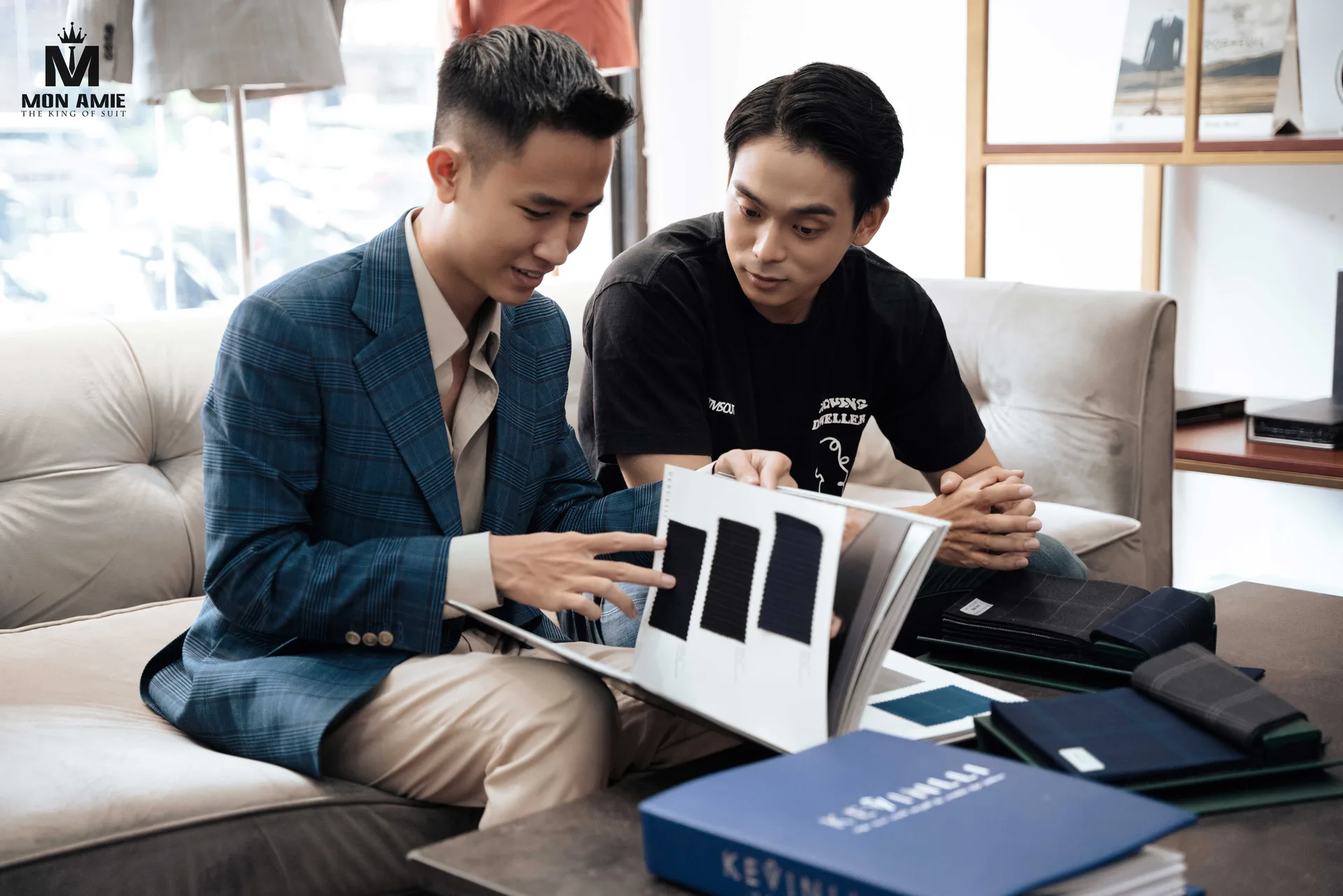
- The weight of the cloth. At the same 70% wool, a heavy cloth and a light one feel clearly different at midday. When choosing, pick the cloth up and hold it to the light to compare.
- Rotation. Let each suit rest at least one night after wearing it, and if you wear it often, rotate so the jacket rests for a day. Two suits at 70% cost VND 17 million, close to one at 100% (VND 16 million), and each one gets a day's rest between wears.
Where Mon Amie's tailors usually advise stopping
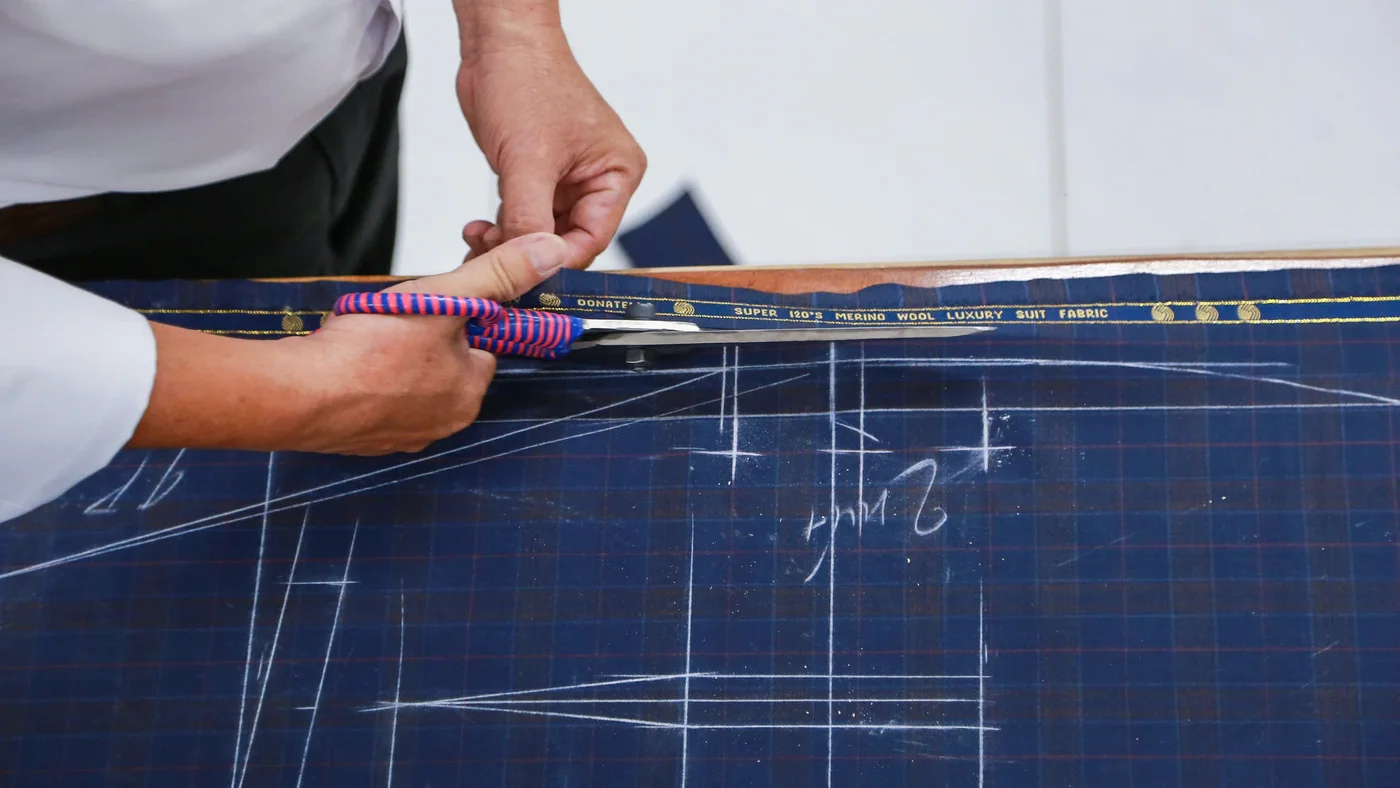
For someone who wears a suit to work, Mon Amie usually advises stopping at 60–70% wool. That is the last grade before the price jump, and the grade that copes with wearing it 3–5 days a week. The difference between a 70% suit and a 100% suit is VND 7.5 million, exactly the price of a 60% suit for rotation.
If you wear it rarely, 40–50% is enough, and you don't need to go higher. If you want to try a still smoother cloth, besides Kevinlli there are imported ranges such as Vercelli 95% wool Super 180s, Vitale Barberis Canonico, Holland & Sherry, Dormeuil and Scabal; the price of each range is on the price list and the samples are in the cloth library. The final price of each suit is confirmed by the stylist after measuring and choosing cloth.
If you are weighing a wool and polyester blend, the article on wool and polyester blends: which ratio looks good and lasts compares each kind of blend closely. And if you are worried about creasing on business trips, read does wool cloth crease too.
Frequently asked questions
What is the non-wool part of the cloth?
Usually a synthetic fibre such as polyester, sometimes with viscose or a little stretch fibre. The exact composition differs from cloth to cloth, so ask the stylist or look at the composition label before you decide.
How do Super 120s and Super 140s differ when worn?
Super 140s is woven from finer yarn, so the surface feels smoother and drapes better to the touch. In exchange, it resists rubbing slightly less. To the eye of someone facing you at a normal distance, the difference between the two grades is not as large as the difference in how well the jacket fits.
Is a 100% wool suit hot in Ho Chi Minh City?
100% wool does not make a jacket hot in itself. Wool breathes and absorbs moisture better than synthetic fibre. A jacket is hot usually because of heavy cloth, a full lining or too close a fit, so those three need to be chosen correctly at the same time as the wool percentage.
How can I tell what percentage of wool is in a suit I already own?
Look at the composition label sewn on the inside of the jacket, usually at the inside pocket or the lining side seam. There is no home test that measures the blend, so the label and the seller's word are the two most reliable sources.
Stop at the grade you will really wear
What wool percentage is enough depends on the days you wear it: for little use, 40–50%; for regular work, 60–70%; and go higher only when the wardrobe already has suits to rotate. If you want to hold the grades side by side, book an appointment at a showroom.