
What does the word “like” in “wool like” mean? It means “resembling”. As in: looks like wool, but isn't wool. Reading this, many people will nod, but at the fabric market or on a sales page the two words often sit side by side in a very gentle tone, as if it were just a variant of wool. If you are asking yourself what wool-like fabric is and whether to have a suit made from it, this article gathers what tailors tend to say to clients right at the cutting table.
The short answer
Wool-like fabric is usually polyester or another synthetic fibre woven and treated to look and feel like wool, but containing no real wool or very little. “Tuyết mưa” (literally “snow rain”) is the commercial name for this group of polyester fabrics. It is acceptable for occasional wear and best avoided for an everyday suit in Saigon.
What is wool-like fabric in practice?
Naming in the fabric market can be confusing. The table below separates the terms quickly:
| Name | What it is | Notes |
|---|---|---|
| Wool | Wool fibre from sheep or other animals; 100% wool | Breathable, warm when it's cold, cool when it's hot if woven thin |
| Wool blend | Wool mixed with polyester, viscose, nylon… | Wool percentage stated on the label; balances price and durability |
| Wool like (imitation wool) | Polyester or synthetic fibre with a wool-like surface | Not wool; feels and behaves differently from real wool |
| Tuyết mưa | Commercial name for polyester fabric with a fine grainy surface | The name can vary depending on the seller |
| Wool-look polyester | Polyester treated to look like wool | Close to “wool like” |
One point to remember: “wool like” and “tuyết mưa” are commercial names, not standard technical terms. To know exactly what you are getting, ask for the composition printed on the label or on the supplier's sheet.
Spotting wool-like fabric by four signs
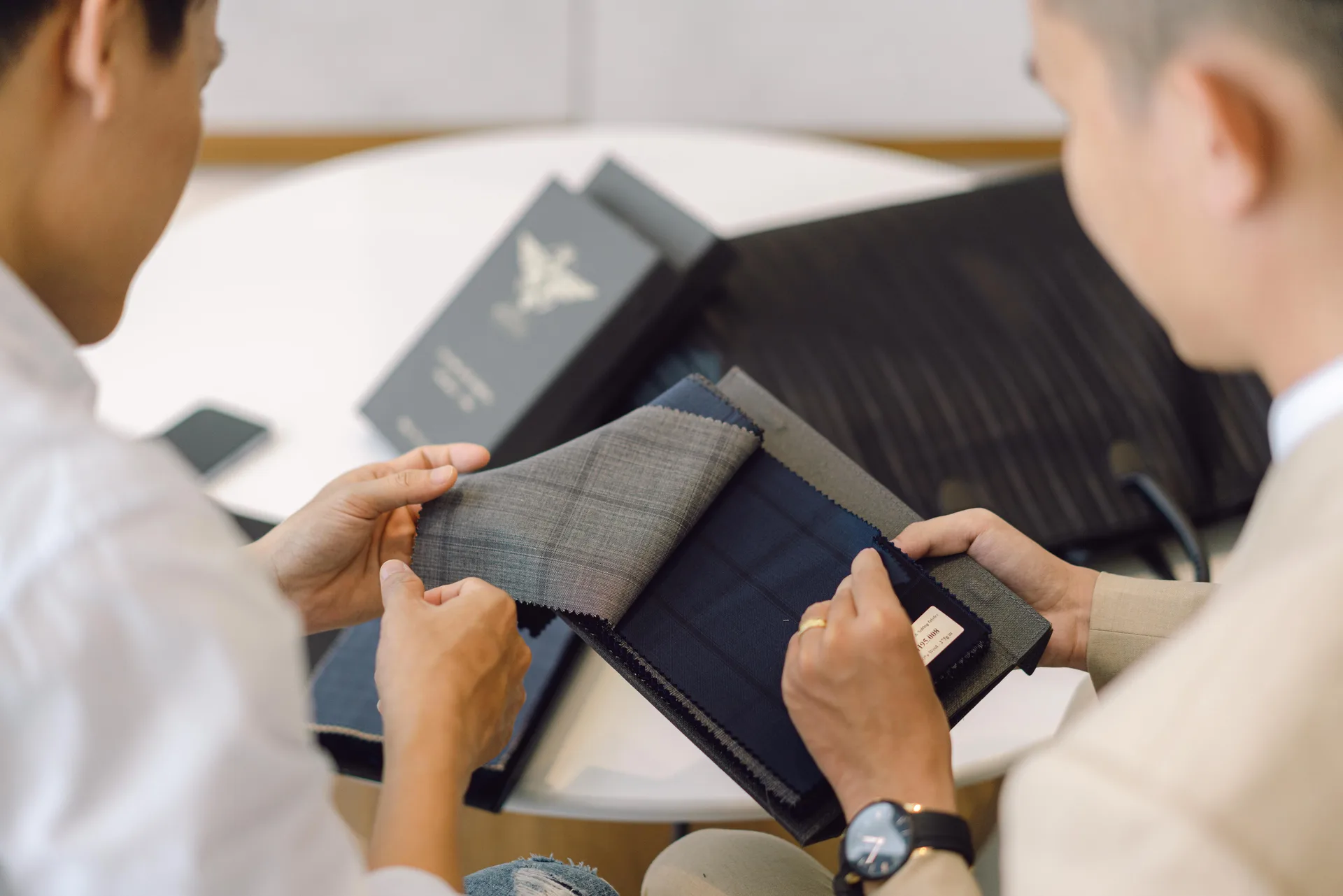
- Sheen. Real wool has a soft, matte glow, gentle and slightly “dry”. Polyester usually has an even sheen that looks slightly “plastic” under lights, especially at the elbows and knees after a few wears.
- Static. Fabric with a lot of polyester attracts dust and lint and makes a crackling sound when you take off a jacket in the dry season. Good wool shows this far less.
- Breathability. Hold the swatch for a few dozen seconds, then hold it to your cheek. Real wool feels warm and “breathes”. Polyester usually feels cool at first, then gradually stuffy. Trying it on in a room at ordinary temperature for about half an hour gives the clearest result.
- Burn test with a few small threads. Pull threads from the edge of the cloth and burn them somewhere safe. Wool burns slowly, smells like burnt hair and leaves a black ash that crumbles easily. Polyester melts and forms hard beads, with an acrid smell. For blends, you still need to check the composition label.
For more certainty, read how to interpret the specifications on the selvedge in the article Suit fabric: reading the composition, Super number and gram weight.
Comparing wool like with wool blend and real wool
| Criterion | Wool like (polyester imitation wool) | Clearly labelled wool blend (e.g. Essential line) | Wool 80–100% (e.g. Signature line) |
|---|---|---|---|
| Composition | Mostly polyester | E.g. Kevinlli fabric 40–70% wool | E.g. Kevinlli 80–100% wool, Vercelli |
| Breathability | Poor, tends to be stuffy | Fair | Good |
| Static | Prone | Less | Low |
| Drape and shape retention | Tends to be stiff, stubborn creases | Holds shape well if properly interlined | Drapes well, durable shape |
| Surface after a few seasons | Tends to shine and pill | Stable | Looks good for a long time if cared for properly |
| Full-suit made-to-measure price | Hard to estimate; the fabric isn't uniform | VND 4.8 – 10 million | VND 10 – 20 million |
The two right-hand columns come from Mon Amie's made-to-measure price list. You can review each line in detail on the price list page.
When it is acceptable, when to avoid it
Acceptable when:
- You need a suit worn very few times, such as a one-off event, a yearbook photo shoot or a role in a performance.
- You want to try a new style before investing in good fabric.
- It is a short-term need on a minimal budget, and you know clearly that the fabric is polyester.
Best avoided when:
- You wear a suit three or four days a week in Saigon: a fabric that doesn't breathe makes you sweat, and the jacket quickly goes shiny and dull.
- It is a suit for an important occasion such as a wedding, a big interview or a partner meeting. The difference in drape and feel on the body shows when you stand beside good wool suits.
- You sweat easily, or you move a lot between the outdoors and air-conditioned rooms.
If the budget is limited, what should you choose?
Instead of a wool-like fabric of unclear composition, consider a clearly labelled wool blend with a specific wool percentage. At Mon Amie, for example, the Essential line uses Kevinlli fabric with 40–70% wool, a fineness of 100s–140s, a full-suit price of VND 4.8 to 10 million and Mon Amie's standard fit. These figures tell you exactly what you are buying, rather than a vague name. To understand how the proportions affect durability and breathability, you can read Wool-polyester blend fabric: which ratio is durable and good-looking or What is Korean wool fabric.
Common mistakes when buying imitation wool
- Trusting the word “wool” in the name without reading the label. “Wool like”, “wool touch” or “wool-look polyester” are all different from wool.
- Only feeling the corner of the roll. A “smooth” feel in the hand won't necessarily hold after sewing, wearing and dry cleaning.
- Comparing price before comparing composition. A low price reflects low wool content accurately; the problem is that the buyer doesn't know it.
- Ignoring the climate. Saigon is hot and humid all year; stuffy fabric is what you will find most uncomfortable after a week.
- Polyester for the whole suit and polyester lining too. Two stuffy layers stacked make the jacket a “raincoat”.
Tips from Mon Amie's master tailors
When looking at fabric, do a simple test: squeeze the swatch tightly in your palm for about half a minute, then release it. Good wool usually recovers from creasing faster and your palm doesn't feel stuffy. Polyester tends to leave hard creases or make the hand hot and damp. The test doesn't replace the composition label, but it gives you an honest impression within minutes. You can try it with real swatches in the Mon Amie fabric library to compare directly.
Frequently asked questions
Is tuyết mưa fabric good for making suits?
Tuyết mưa is usually a polyester fabric with a fine grainy surface, low-priced and crease-resistant. It suits a suit worn rarely or temporary uniforms, but it isn't as breathable as wool and tends to shine over a long time. If you wear suits often, a wool blend or wool is the more durable choice.
How does wool-look polyester differ from real wool?
Wool-look polyester is a synthetic fibre treated to resemble wool. It is durable and crease-resistant and low-priced, but less breathable, prone to static and prone to shine. Real wool has better breathability, drape and crease recovery, but needs careful care.
Is wool-like fabric hot?
Usually yes, especially when it is high in polyester and the lining is polyester too. In Saigon, stuffiness and heat after a few hours is the common feel of a suit in imitation wool, especially when you move around outdoors.
Can wool-like fabric be washed?
Technically, polyester withstands washing better than wool, but a suit has interlining and lining, so it still needs professional dry cleaning to avoid deforming. You shouldn't machine-wash a suit jacket.
In closing
What is wool-like fabric? Not a “bad” fabric, just a different one from wool, and the price you pay is in breathability and durability. Read the composition, ask for the proportions, then choose according to how you will wear the suit. If you would like to put two fabrics side by side to feel the difference yourself, visit the Mon Amie showroom or see the advice in the bespoke tailoring journey.