
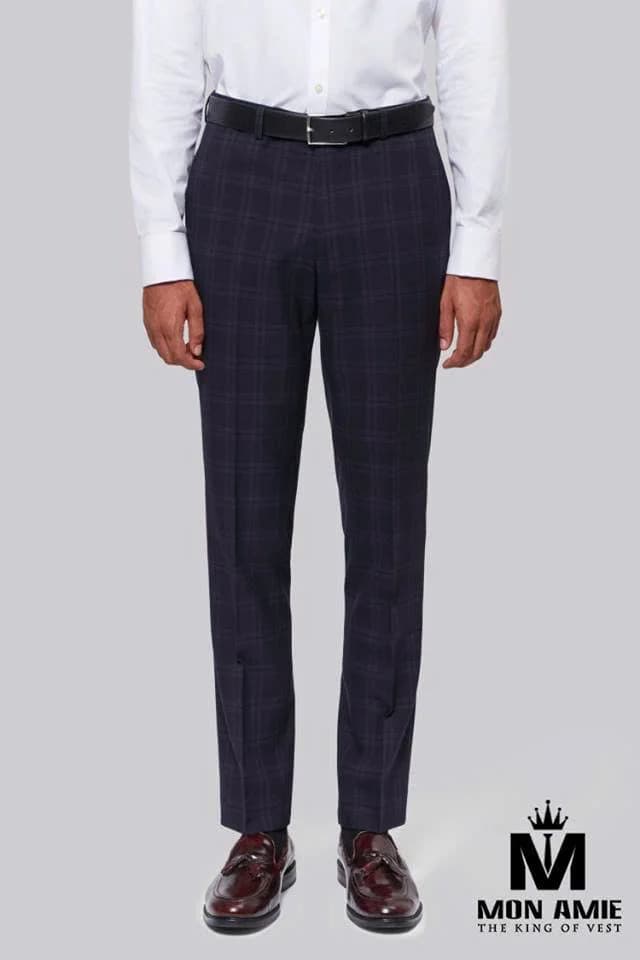
Trousers are the most honest garment. Standing in front of a mirror, a bad pair can still pass. But when you sit down in a meeting, the waistband starts to dig in, the rise pulls tight, the hems ride up to the ankle, and every flaw shows at once. That is why made-to-measure trousers focus on numbers very different from those of a jacket, and it is also why master tailors give the trousers as much time as the jacket.
The short answer
Made-to-measure trousers need these main measurements: waist, seat, rise, thigh, knee, leg opening and length. Wool cloth with a 1.5-metre width usually needs about 1.3 to 1.6 metres per pair. Have at least one fitting at the baste stage, and make two pairs of trousers for one jacket.
Measurements specific to trousers
| Measurement | What it is | Why it matters |
|---|---|---|
| Waist | Measured around where the waistband will sit, usually at the natural waist or a little lower | Decides whether the trousers slip or dig in |
| Seat | Measured at the fullest part of the seat | So the trousers do not pull when you sit |
| Rise | The length from the front waistband, through between the legs, to the back waistband | The most important factor in comfort |
| Thigh | Measured at the widest part of the thigh | So the leg does not bind or crease at the thigh |
| Knee | Measured around the knee | Decides how tapered the leg is |
| Leg opening (hem width) | The width at the bottom of the trouser leg | Creates a slim or a straight line |
| Length | From the waistband down to the hem, measured with shoes on | Decides whether the trousers hang true and break nicely on the shoe |
The rise: the measurement few people remember, and the most important
The rise decides comfort. A short rise pulls the trousers inward at the crotch, and walking becomes uncomfortable. A long rise creates excess folds and the trousers look sloppy. This is the measurement that ready-to-wear trousers find hardest to meet, because everyone has different upper-body and lower-body proportions. For people who sit a lot, the rise is the measurement that decides whether the trousers are worth wearing at all.
Style options
Beyond the measurements, you will choose some style details together with the master tailor:
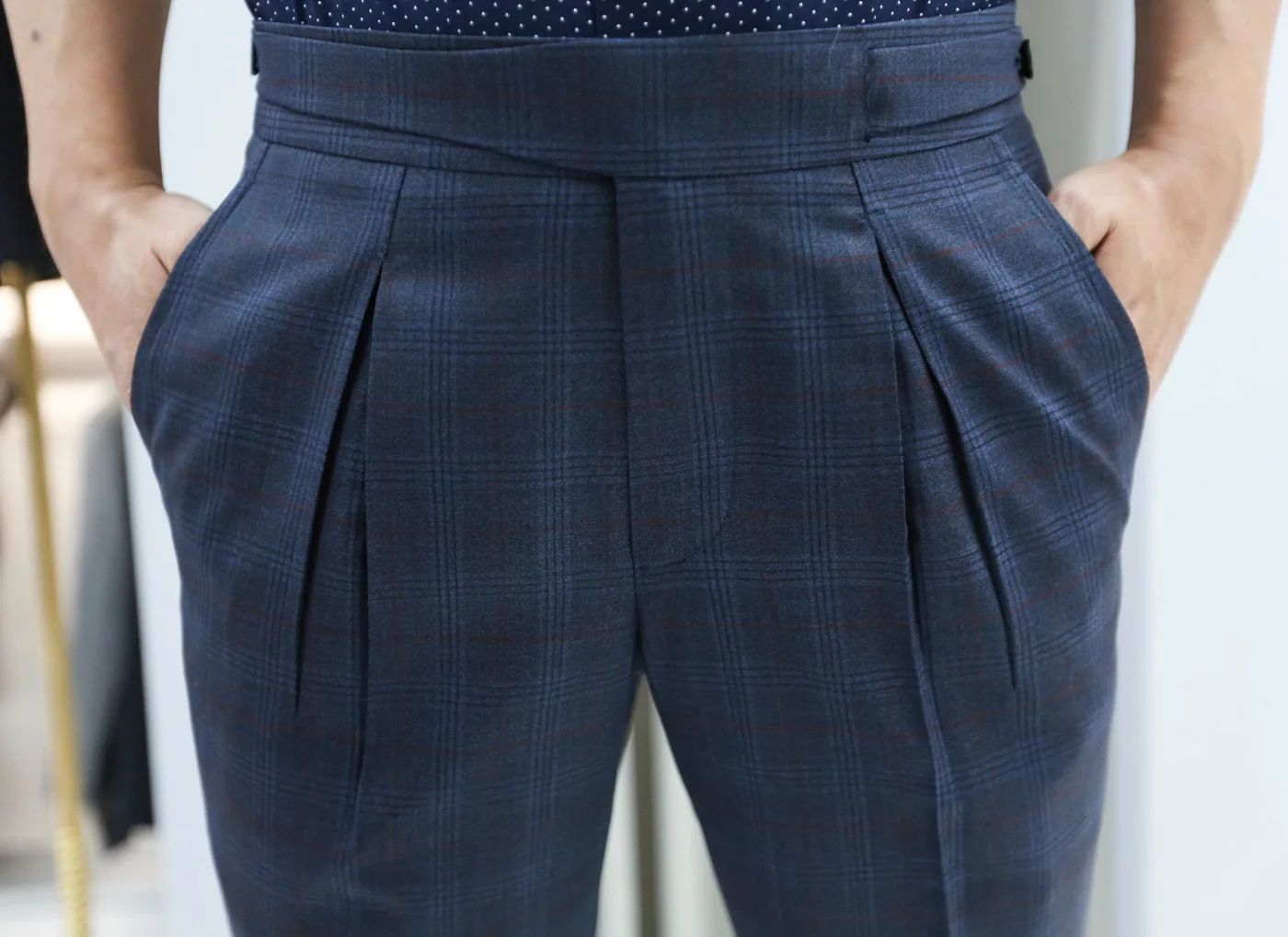
- Pleats: no pleats (flat and clean), one pleat or two pleats (roomy and classic). Pleats let people with a belly or large thighs move more comfortably.
- Waistband: a standard or a higher waistband, fastened with a button or with side adjusters in place of a belt.
- Leg shape: straight, tapered or wide. People with large thighs usually suit a wide or a straight leg.
- Hem: cuffed (turn-up) or plain. A cuff makes the trousers hang heavier and the crease fall straighter.
To learn more about the styles, you can read men's trouser styles.
Choosing cloth: why does wool suit trousers?
The question "wool for trousers" comes up often because wool really is a familiar choice:
- It holds its crease: wool is naturally elastic, so the crease lasts.
- It breathes and regulates temperature: you can wear it all day without the stuffiness of fully synthetic cloth.
- It recovers from creases: hang it overnight and it is nearly flat again.
- It drapes well: wool of moderate weight lets the trousers fall straight.
A trade principle: trousers take more friction than a jacket, from sitting, walking and bending the knee, so choose cloth with good durability and do not choose anything too thin and light. If the trousers go with a jacket as one suit, take them from the same bolt so that the colour and drape match exactly. Mon Amie has a cloth library ranging from Kevinlli to Canonico, Holland Sherry and Dormeuil; you can view and choose in the cloth library.
Cloth quantity for a pair of trousers
For cloth with a 1.5-metre width, the reference amounts are as follows:
| Case | Quantity (approx.) |
|---|---|
| Average build, flat-front trousers, no cuff | 1.3 – 1.4 metres |
| Height over 1.75 metres, or trousers with pleats | 1.4 – 1.6 metres |
| Two deep pleats, cuffed hem, wide leg | 1.6 – 1.8 metres |
| Striped or checked cloth that needs pattern matching | Add 10 – 20 cm |
You can use this as a reference if you need to buy cloth separately, but if you are made to measure at Mon Amie, the stylist will calculate the exact quantity from your measurements. The question "how many metres of cloth for men's trousers" therefore has no general answer: the answer lies in each person's measurements.
The fittings: why they matter
Trousers are rarely perfect the first time, and that is normal. A sensible process usually consists of:
- Baste fitting: check the waistband, rise, thigh width and leg opening. This is the easiest moment to adjust.
- Finishing fitting: check the length, the hem and the feel when sitting and walking.
When trying on, wear the exact shoes you will wear with the trousers, and remember to sit down, take a few steps and bend your knees. Trousers that look good standing but pull at the thigh when sitting need adjusting right at this fitting.
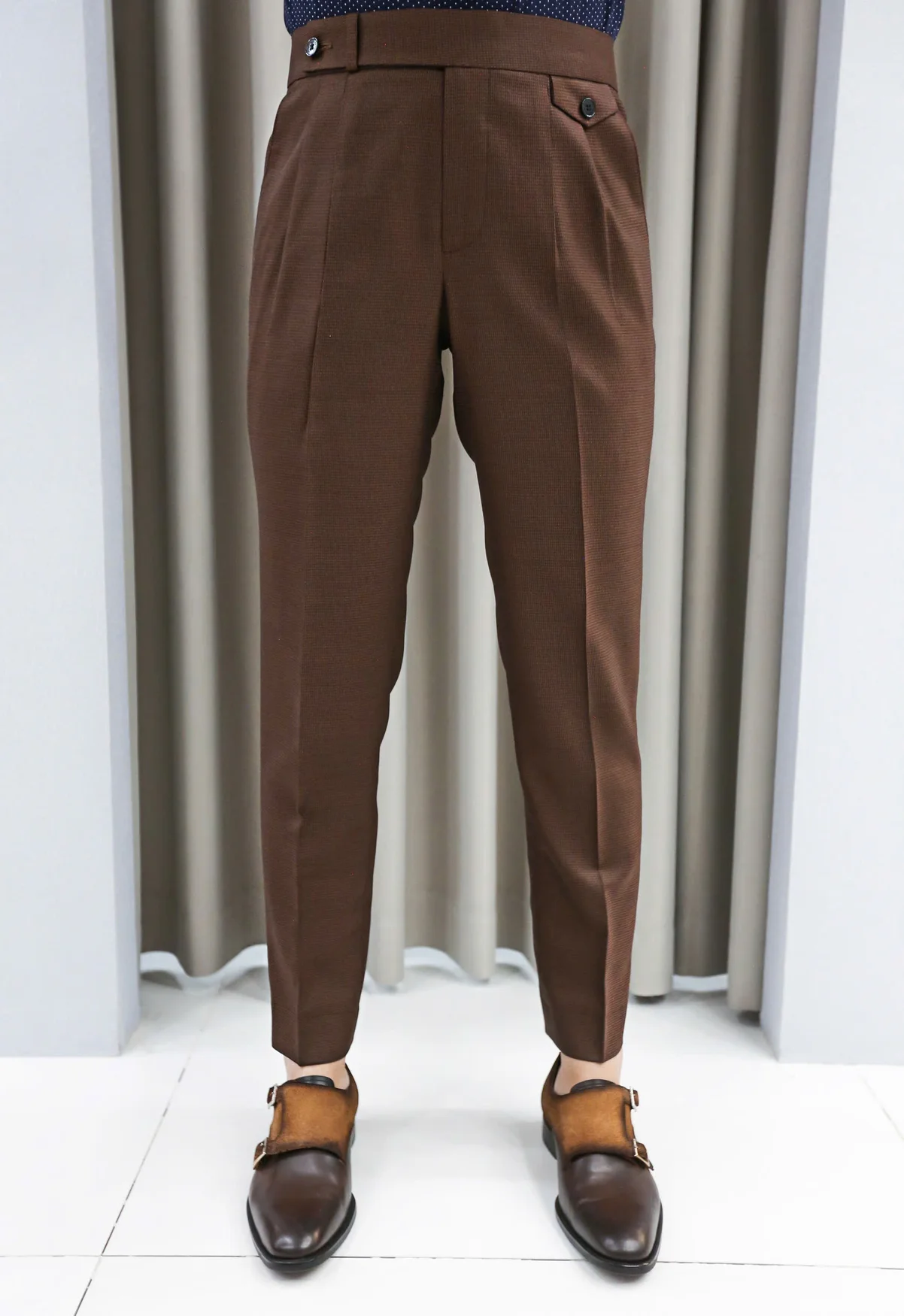
Why make two pairs of trousers for one jacket?
This is classic advice that tailors everywhere keep giving, and there are very practical reasons for it:
- Trousers wear out faster than jackets. Sitting and standing, and friction at the rise, knee and thigh, cause trousers to deteriorate before the jacket.
- Rotating lets the cloth rest. Wool needs time to regain its elasticity; wearing it continuously makes the crease and the shape deteriorate faster.
- The jacket lasts longer. When the first pair wears out, you already have a second pair in the same cloth, and the suit is still intact.
- Flexibility in pairing. A spare pair in the same cloth can be paired with another blazer.
Of course, this is your choice according to your budget and needs, but for someone who wears a suit every day, two pairs of trousers for one jacket is usually the most reasonable investment.
Common mistakes when having trousers made
- Measuring the waist from the waistband of your old trousers. Measure at the place where the new waistband will sit.
- Not telling the tailor if you sit a lot or have a belly. The rise and the pleats need adjusting.
- Choosing a leg that is too tight. A tight leg looks modern but is uncomfortable when sitting.
- Trousers that are too short. When you sit, the hem rides up and shows the ankle.
- Cloth that is too thin for everyday trousers. It quickly frays at the crotch and the knees.
A tip from Mon Amie's master tailors
A good pair of trousers is one you forget you are wearing. Check with three movements: sit down, step up a stair and bend down to pick something up. If the trousers do not get in the way, you have the right pair. If you want to look at costs first, you can read how much do men's trousers cost to have made, or learn about trouser construction in the article suit trousers.
Frequently asked questions
What measurements are needed to make suit trousers?
Waist, seat, rise, thigh, knee, leg opening and length. In addition, the master tailor will observe your standing posture to adjust the pleats, the crotch curve and the fall of the leg.
How many metres of cloth do men's trousers need?
For cloth with a 1.5-metre width, usually 1.3 to 1.6 metres, depending on height and style. Trousers with deep pleats, cuffs or checked cloth need more.
How much cloth do tall men need for trousers?
A man over 1.75 metres usually needs a few tens of centimetres more than an average build, around 1.5 to 1.7 metres. The exact figure will be determined by the cutter according to the trouser length and the hem style.
Is wool good for trousers?
Yes. Wool holds its crease, breathes and recovers from creases well. Choose a moderate weight so that the trousers keep their shape and stand up to the friction of sitting.
An invitation
If you want a pair of trousers that stay comfortable sitting all day, book a measuring appointment so that Mon Amie can take full measurements, including the rise. With the bespoke tailoring service, you get baste fittings and adjustments until the trousers truly fit.