

The grey suit that has fitted you perfectly all year, after one “convenient” wash-and-dry cycle, suddenly feels tight across the shoulders and a little shorter in the sleeves. You try pulling the front, but it does not give back. That is not the jacket ageing; it is the familiar result of throwing a suit into the dryer. How to go about washing and drying a suit, or rather whether to tumble dry it at all, is a question most suit wearers ask only after they have lost a jacket.
The short answer
Don't tumble dry a wool suit: heat, moisture and the spinning drum make wool fibres shrink and the fusible interfacing lift. Dry it on a wide shoulder hanger, in a breezy place and in the shade. Only cloth with a high polyester content, without fusible interfacing and with a label that allows it can be tumble dried briefly on low heat, then hung until completely dry.
Why does dryer heat shrink a suit and make it bubble?
Three parts of a suit react differently to the dryer, but all in a bad direction:
- Wool fibres: the surface of a wool fibre has tiny scales. Under heat, moisture and the tumbling of the drum, these scales hook into one another, the cloth felts and shrinks, and it cannot recover.
- Fusible interfacing: many suit jackets use a fused interfacing on the chest and lapels. High heat softens the adhesive, and the vibration and rubbing of the drum make the interfacing lift, leaving bubble-like patches on the chest and lapels.
- Lining: synthetic lining (polyester, acetate) shrinks differently from the outer cloth. When the lining shrinks and the outer cloth does not, the jacket twists, wrinkles inside and the sleeves grow shorter.
In addition, the trouser crease is erased and the shape of the shoulder is distorted, something no pressing machine can fully restore.
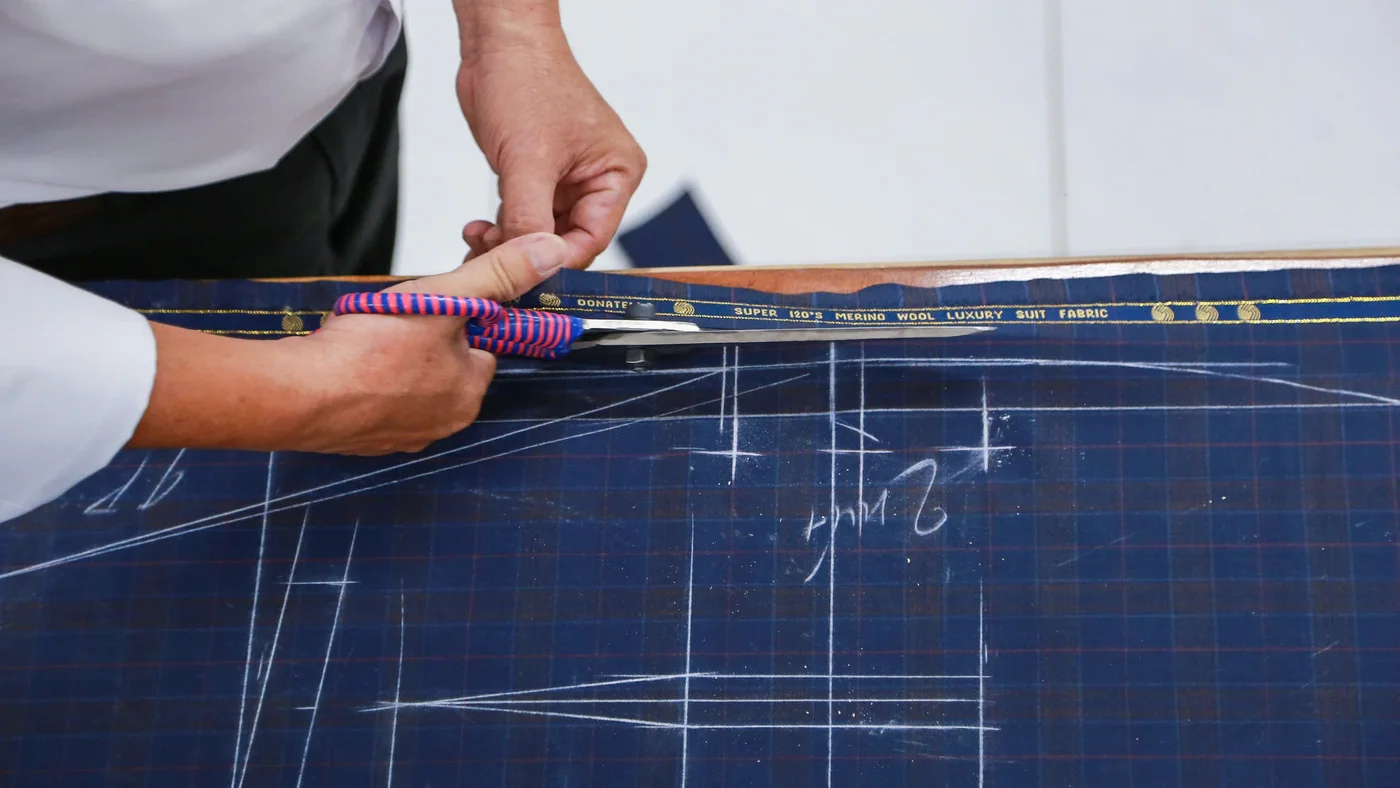
Can wool be machine washed? Can it be tumble dried?
These are the two most common searches, and the answer depends on the material:
| Material | Machine wash | Tumble dry | How to dry |
|---|---|---|---|
| Pure wool | No, dry-clean it; or the wool cycle in a mesh bag if the label allows | No | Shoulder hanger, in the shade |
| Wool with a little polyester | Hand wash, or a gentle machine wool cycle | No | Shoulder hanger, press the water out with a towel |
| High polyester blend | Gentle machine, cold water | Low heat for a short time, if the label allows | Shoulder hanger, take out while still slightly damp |
| Cotton, khaki | Gentle machine, cold water | Low heat, short; may shrink | Shoulder hanger, smooth flat |
| Linen | Hand wash or dry-clean | No | In the shade, shoulder hanger |
As for can wool be machine washed, the practical answer for a suit jacket is “almost never”, because the spinning and friction felt the fibres and shift the interfacing. A made-to-measure jacket with a canvas is all the more reason to avoid it. See more in can a suit be machine washed.
Washing a suit in a machine: when is it acceptable?
Only when all of the following conditions are met:
- The label does not forbid washing in water.
- The jacket has no canvas or large areas of fusible interfacing, and the cloth is not too thin.
- Use a large mesh bag, the wool or delicate cycle, cold water, and a low spin speed.
- Wash it on its own, without stuffing in other items.
Suit trousers are easier to machine wash than jackets, because they have no shoulder or lapel structure. Even so, wool trousers are better hand washed or dry-cleaned.
Drying a suit properly after washing: eight steps
- Press the water out with a bath towel, don't wring. Roll the jacket in the towel and press gently so the towel absorbs the water.
- Use a wide shoulder hanger shaped to the shoulder. Don't use wire hangers, clip hangers or the thin plastic hangers from laundries, because they leave marks on the shoulders.
- Fasten the top button so the front keeps its shape.
- Smooth the lapels, shoulders and front edges by hand before hanging.
- Dry in a breezy place, in the shade, avoiding harsh sun, which fades colour and leaves the cloth dry and brittle.
- Keep it away from heat sources: heaters, stoves, space heaters.
- Trousers: fold in half along the crease and drape over a padded bar, or use a clip hanger with padding at the waistband; avoid clipping the legs directly, which leaves marks.
- Steam lightly when nearly dry so the cloth relaxes and the crease sharpens.
Drying time depends on the weather, so don't try to hurry it with a dryer or a hair dryer. In Saigon's rainy season, dry it in a well-ventilated room, turn on a fan at a gentle setting or use a dehumidifier, and avoid leaving the jacket damp for long, because it will smell and grow mould.
When can you tumble dry gently?
Only when all three of these are true:
- The label shows the symbol of a square with a circle inside (tumble drying allowed), with one or two dots meaning low heat.
- The cloth is a high polyester blend or cotton, with no large fusible interfacing.
- Tumble briefly on low heat, take it out while still slightly damp and hang it on a shoulder hanger to dry completely.
If one of the three is unclear, skip the dryer. Dry cleaning and air drying are always safer.
Reading care label symbols quickly
- A crossed-out wash tub: do not wash in water. A wash tub with a hand: hand wash only.
- A circle: dry clean. A crossed-out circle: do not dry clean.
- A square with a circle: tumble drying allowed. Crossed out: do not tumble dry.
- A crossed-out triangle: do not use bleach.
Tips from Mon Amie's master tailors
- A made-to-measure suit with a canvas hates the tumble dryer. The canvas of horsehair and cloth holds the shape of the shoulder, lapel and chest; high heat and friction shift it, and that is the hardest part to repair.
- Prefer dry care. Brushing, steaming and hanging where air can reach it solve most needs. Dry cleaning at the end of the season is enough. See how to hand wash a suit: 7 steps if your suit is of the washable kind.
- Already shrunk? Slight shrinkage can be steamed and eased gently along the grain. Wool that has felted is almost impossible to reverse. The article wool fabric shrunk or stretched after washing covers this in detail.
- The hanger matters as much as the washing machine. For details, see suit hanging accessories: choosing a shoulder hanger.
Common mistakes
- Putting a suit in the dryer “for a few minutes to dry”.
- Drying a suit in harsh sun, on a line or a small hanger.
- Wringing a wet jacket.
- Hanging a wet jacket straight onto a hanger without pressing the water out, so its weight stretches the shoulders.
- Using a hair dryer close up to dry it quickly.
Frequently asked questions
Can wool be tumble dried?
It should not be. Heat and tumbling felt the wool fibres and shrink them irreversibly. Only a high polyester blend, if the label allows, can be tumbled briefly on low heat.
Can wool be machine washed?
For a suit jacket, almost never. If the label allows a machine wool cycle, use cold water, a mesh bag and a low spin speed. Dry cleaning is still the safest, especially for a made-to-measure jacket with a canvas.
Which cycle should you choose to machine wash a suit?
The wool or delicate cycle, cold water, a low spin speed, with a mesh bag. Never use hot water, a dryer or a hard spin.
Can you dry a suit in the sun?
It should not be. Harsh sun fades colour, leaves the cloth dry and brittle and marks the shoulders. Dry it in a breezy place, in the shade, on a wide shoulder hanger.
Closing thoughts
When it comes to washing and drying a suit, durability comes not from how you wash it but from avoiding unnecessary heat, water and friction. Dry it in the right place, hang it on the right hanger and steam it at the right moment, and your suit will keep its shape for many years. If you are still unsure about a particular suit, we invite you to bring it to a showroom so a master tailor can look at it in person, or find out more about Mon Amie's bespoke made-to-measure service.