

A coffee cup tips for just one second, and a brown stain spreads across the sleeve of your grey suit jacket, minutes before a meeting. You have two instincts: scrub hard with a paper tissue, or dunk the whole sleeve in water. Both are the worst thing you can do. Knowing how to clean a suit jacket properly comes down to three very simple things: be quick, be gentle and follow the right order.
Quick answer
Clean a suit jacket by blotting, not rubbing, treating stains early, testing in a hidden spot and working from the reverse side of the fabric. Use cold water or alcohol, dabbed lightly, on coffee and ink; sprinkle absorbent powder on grease; for sweat, wipe the lining and air the jacket. Old stains, large stains, or wool jackets with canvas interlining should go to a dry cleaner.
Five golden rules for treating stains on a suit jacket
- Blot, don't rub. Rubbing fuzzes the fibers, spreads the stain and drives it deeper.
- Treat early. A wet stain is many times easier to remove than one that has dried and set.
- Work from the reverse side, or from the outside in. This pushes the dirt outward rather than pressing it deeper, and the ring doesn't widen.
- Use cold water on coffee, milk and blood stains; hot water sets the stain.
- Test in a hidden spot (the inner edge of the hem) before using any solution, and absolutely avoid harsh cleaners and chlorine bleach.
A “first-aid” kit every suit jacket should have
You don't need much, just a small box to keep in your wardrobe or office drawer:
- White cotton cloth or plain white tissues without prints.
- A soft-bristle brush and a lint roller.
- Rubbing alcohol or isopropyl alcohol and cotton swabs.
- Cornstarch or talcum powder.
- White vinegar and a neutral detergent.
- A steam iron or handheld steamer.
How to treat each type of stain
Coffee stains
- Blot immediately with a dry cloth, pressing lightly so the fabric absorbs the excess liquid.
- Drip a few drops of cold water from the reverse side and keep blotting with a damp cloth.
- If a mark remains, pat gently with a damp cloth with a drop of neutral detergent, then wipe again with a clean damp cloth.
- Let it dry naturally and steam it so the fabric lifts.
Coffee with milk contains both protein and oil, so use cold water first and never hot water.
Ink stains
- Ballpoint ink: put a white cloth behind the fabric, dip a cotton swab in alcohol and dab lightly from the outside in, changing the swab as soon as it picks up color. Do not rub.
- Marker or printing ink: spreads very fast and is hard to treat at home. Send it to a dry cleaner rather than trying again and again.
Grease stains
- Blot away any oil still sitting on the surface with paper.
- Sprinkle cornstarch or talcum powder thickly over the stain and leave it for about 15 to 30 minutes so the powder draws out the oil.
- Brush off lightly with a soft brush. Repeat if needed.
- If a faint mark remains, pat with a very diluted detergent solution, then wipe again with a clean damp cloth.
Old grease stains are almost impossible to treat yourself; send them to the dry cleaner.
Sweat stains
Sweat tends to build up at the underarms, the collar and the back lining, causing yellowing and lingering odor.
- Wipe the inside, especially the lining, with a damp cloth with a little diluted white vinegar (about a spoonful of vinegar to a cup of water). Test in a hidden spot first.
- Let it dry in the open air, avoiding harsh sunlight.
- Hang it in a breeze overnight before putting it away in the wardrobe.
If you sweat a lot, changing into a moisture-wicking undershirt and washing your shirts regularly also helps keep your jacket less affected.
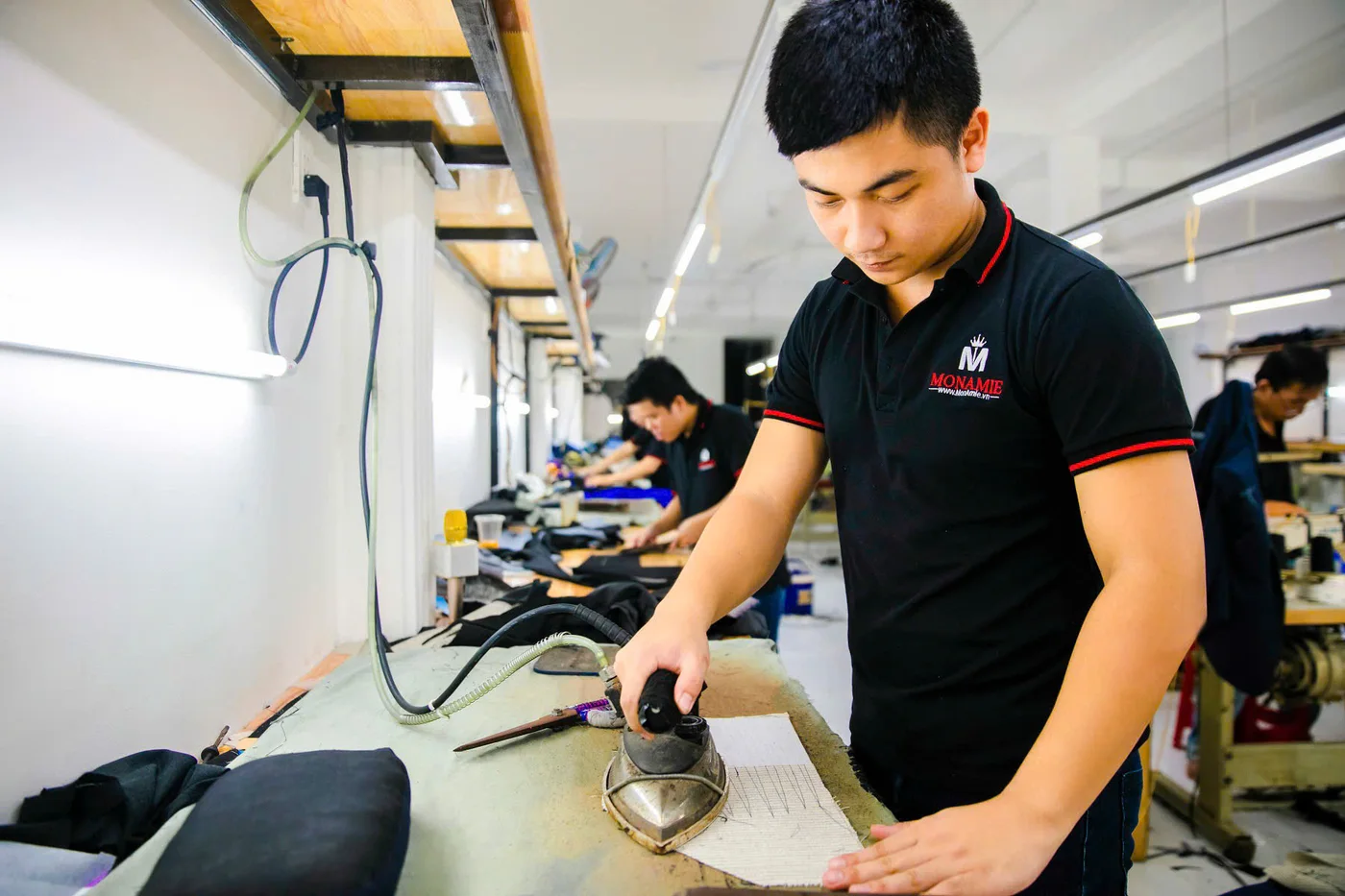
Brushing and deodorizing after every wear
It's a small job, but done consistently it keeps a suit jacket clean far longer:
- Brush off dust with a soft-bristle brush, along the grain of the fabric, from shoulder to hem, especially the collar and the pocket openings. For dark fabric, add a lint roller.
- Hang it to air for at least one night on a wide-shouldered hanger before putting it in the wardrobe. Don't stuff a jacket that is still damp into a garment bag.
- Deodorize naturally with activated charcoal bags, baking soda sachets or dried tea bags hung in the wardrobe. Avoid spraying perfume directly on the fabric, as it can stain the color and harm the lining.
- Steam lightly whenever you see creases, instead of pressing directly with an iron.
The articles on suit hanging accessories: choosing the right hanger and moisture-proof suit storage bags help you choose the tools for this.

A suggested suit jacket cleaning schedule
Rather than wait until the jacket shows a problem, you can pace the work:
- After every wear: hang it to air, brush lightly, and check the sleeves, collar and pocket openings for any new marks.
- Every week or after several wears: steam lightly, wipe the underarm lining with a damp cloth, and replace the moisture-absorbing sachet in the wardrobe.
- Every season: do an overall check, store the jacket in a breathable cloth bag, and send it to the dry cleaner if it has been worn a lot or has old stains.
This rhythm is just enough to keep the jacket clean without over-washing the fabric. Suit trousers should be cared for the same way, especially the hems and the crotch, where dust and sweat collect most.
When should you send it to the dry cleaner?
- Old, dried stains, or stains larger than the palm of your hand.
- Marker ink, red wine stains, spreading oil stains.
- Wool jackets with canvas interlining, or dark colors that bleed easily.
- You've tried twice and the stain is still there.
Read more in can you dry-clean a suit jacket at home to understand the limits of treating it yourself, and should you wash a suit jacket for a sensible frequency.
Tips from Mon Amie's master tailors
- Always steam after treating a stain. Steam lets the fibers relax, softens the ring and brings the fabric back to its shape.
- The underarm lining is the first place to fail. If the lining is yellowed or torn, don't try to wash it; ask a tailor.
- Don't wait for the stains to pile up. Cleaning small marks as they happen is far better than one “total clean.”
- If after cleaning you see signs that the jacket has lost its shape, bring it to a showroom for a master tailor to look at. Mon Amie's bespoke service includes a long-term alteration warranty after you receive your garment.
Frequently asked questions
How should a suit jacket be washed?
A suit jacket should be washed rarely, and dry cleaning is preferred over washing in water. Day to day, just brush it, air it and steam it. Hand-wash only when the label allows it and the fabric is a blend with little wool.
What is the right way to store a suit?
Hang it on a wide-shouldered hanger, keep it in a ventilated place, use a breathable cloth bag instead of a sealed plastic one, and add moisture-absorbing packs or activated charcoal in the wardrobe. Don't cram too many jackets together.
Can I wash a suit jacket at home?
Yes for cotton or blended jackets whose label allows it, hand-washed in cold water. Wool jackets and jackets with a canvas interlining should go to a dry cleaner, because water makes the interlining shift out of place.
Can a dried stain on a suit jacket still be treated?
It can, but it is harder and carries a risk of spreading. Try dabbing lightly in a hidden spot first. For a large or long-standing stain, send it to the dry cleaner.
Final thoughts
Cleaning a suit jacket isn't complicated; it takes a little patience and a small kit within reach. Keep up the rhythm of brushing, airing and steaming, and your suit will stay clean and hold its shape for longer. For more advice on fabric or care, message a showroom or book a visit.