
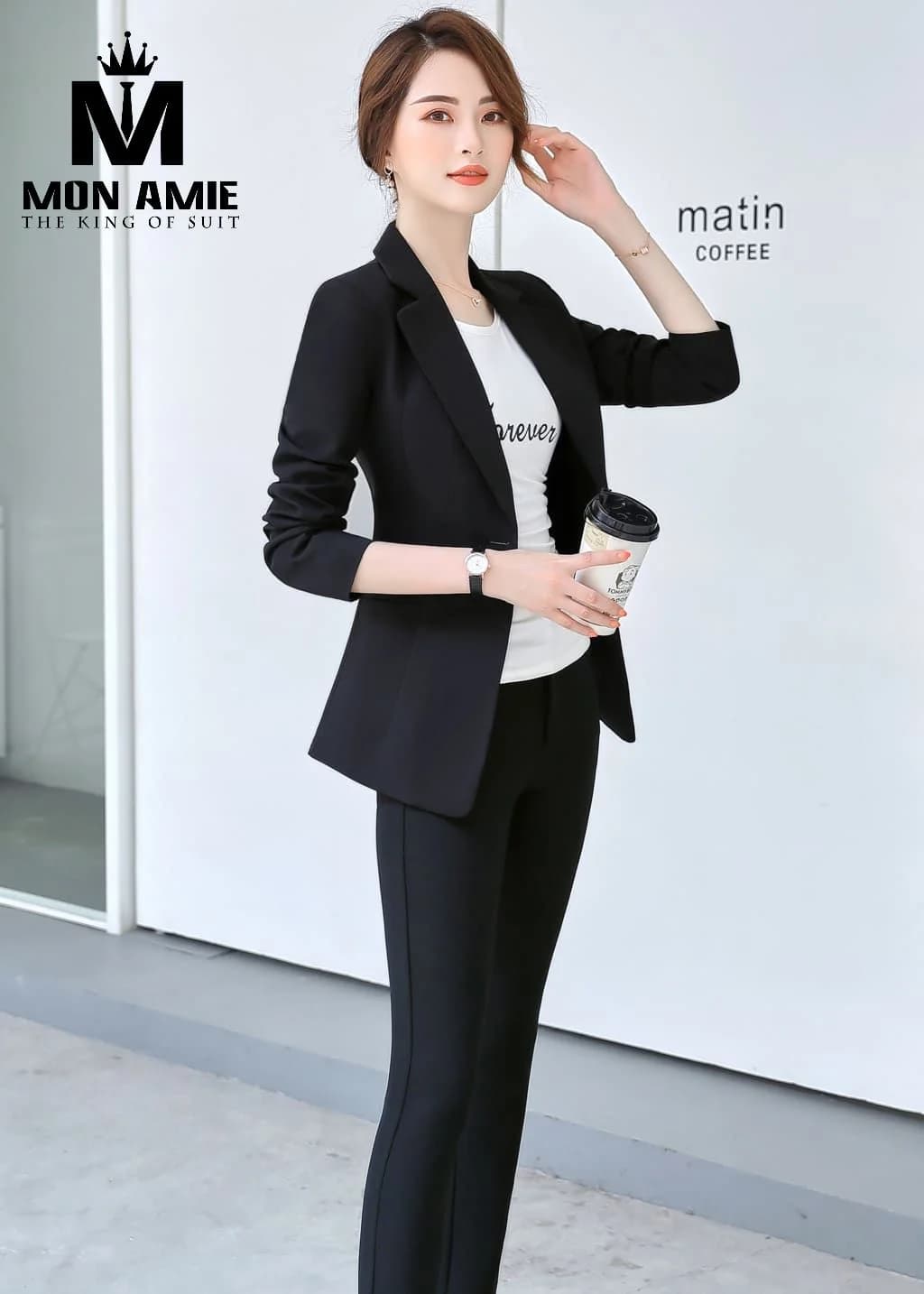
A shiny mark on a lapel almost never disappears. Neither does a waist dart pressed flat, because then the suit jacket no longer follows the curves of your figure. How to iron a women's suit jacket is therefore quite different from ironing a shirt: it is about preserving a three-dimensional structure, detail by detail.
Quick answer
Iron a women's suit jacket with a steam iron, using a press cloth and working from the wrong side on sensitive areas. Follow the order sleeves, shoulders, body, lapels, skirt. Press darts and puffed shoulders over a rounded cushion or a rolled towel to keep the curve. Temperature by fabric: wool about 150°C, coarse-weave cloth 180–200, taffeta and thin cloth 110–130.
Equipment you need to iron a women's suit jacket
- A steam iron with a clean soleplate and a strong steam button.
- A press cloth of thin cotton or organza, slightly damp.
- A rolled bath towel or a round pressing cushion to support the shoulders and darts.
- A sleeve board or a long rolled towel.
- A spray bottle and a wide-shoulder hanger.
If you don't have a dedicated pressing cushion, you can tightly roll a bath towel, tie both ends with string, and make a quite effective support.
Iron temperature for each fabric
Always read the label first. When there is no label, the table below is a safe starting point:
| Material | Suggested temperature | How to iron |
|---|---|---|
| Coarse-weave cloth (rough cotton, tweed, linen) | 180–200°C | Strong steam, damp press cloth |
| Wool, wool blend | About 150°C | Steam, damp cloth, lift and press |
| Heavy woollen coating (thick felted wool) | About 140–150°C | Thick damp cloth, light pressure, no sliding |
| Taffeta, silk, thin polyester | 110–130°C | Dry iron on the wrong side, thin dry press cloth |
| Crepe, voile | 110°C | Light steam, hang to dry |
The general rule: start from low heat and raise it gradually. Test on a hidden spot, such as the inner edge of a sleeve, before ironing across the whole jacket.
The order for ironing a women's suit jacket
- Check the label and any stains. A stain that is ironed before it is treated is set, and very hard to remove.
- Sleeves. Iron on a sleeve board or a rolled towel, from the wrist upwards, along the seam.
- Shoulders. Place the shoulder over the rolled towel and press lightly from the outside in, keeping the natural curve.
- Front body and darts. See the details below.
- Lapels. Iron from the wrong side, following the roll line.
- Skirt and peplum. Lay flat and iron along the grain, lifting and pressing.
- Hang immediately on a wide-shoulder hanger and let it cool completely.
This order runs from small details to large ones, so the parts already ironed don't crease again when you move the jacket around.

Handling lapels: don't press them flat
The lapel is a suit jacket's most distinctive detail, and it has a natural roll from the collar down to the button. The biggest mistake is pressing the lapel flat. The jacket then loses its roll and looks like an ordinary coat.
- Iron from the wrong side, with a press cloth.
- Use a rolled towel or cushion underneath to hold the curve.
- Press only the edge of the lapel lightly, letting the body of the lapel roll by itself.
- With K-shaped or peak lapels, take care not to press a crease into the lapel corner.
Waist darts: keep the curve, don't flatten
Waist darts create the fitted shape of a women's suit jacket. If they are ironed flat, the darts are pressed dull, lose their curve and leave a crease.
- Turn the jacket inside out and lay the dart over a round cushion.
- Iron along the dart, pressing to one side, not to both sides.
- Then turn it back to the right side, apply a light steam and smooth it by hand so the waist sits naturally.
Puffed shoulders: use steam, don't press
Many women's suit jackets have puffed or lightly padded shoulders. This is the detail most easily ruined by wrong ironing:
- Place the shoulder over a round rolled towel, never on a flat tabletop.
- Hold steam a few centimetres from the cloth to soften it, then shape it by hand.
- Press very lightly at the shoulder seam. Do not push hard on the puffed part.
- When storing the jacket, tuck tissue paper into the shoulders so they hold their shape.
Peplum and pleats
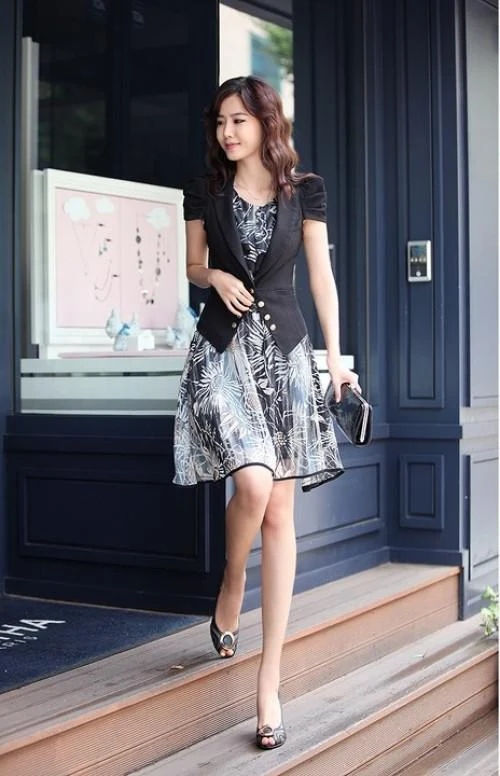
The peplum, the flared skirt around the waist, usually has pleats or bias cuts. Each pleat is a small structure:
- Iron one pleat at a time, following the direction of the pleating.
- Use a press cloth, lift and press, and never drag, since dragging easily distorts bias-cut cloth.
- With a thin-cloth peplum, lower the heat and use light steam.
Ironing a women's suit jacket by fabric
Women's suit jacket in coarse-weave cloth
Coarse-weave cloth and tweed withstand high heat and have a thick structure. Iron with strong steam and a damp press cloth, pressing short sections at a time. Coarse-weave cloth shows fold marks easily, so treat creases with steam before pressing.
Women's suit jacket in heavy woollen coating
Thick, fluffy felted wool is sensitive to pressure. Steam through a thick damp cloth, press lightly, and brush the surface along the grain with a soft brush afterwards. Don't press hard, because this cloth takes a shine immediately.
Taffeta suit jacket
Taffeta is shiny, thin, and sensitive to both water and heat. Iron it dry, from the wrong side, at low heat, with a thin dry press cloth. Avoid spraying water, since taffeta easily leaves watermarks. Hanging it outside the bathroom after a hot shower is also a gentle way to smooth it.
To learn more about women's suiting fabrics, read the article on what fabric is used for women's suits.
Common mistakes
- Pressing the lapels flat. The roll is lost.
- Ironing directly onto the face of the cloth. The cloth shines, especially wool and heavy felted wool.
- Pressing darts to both sides. The dart goes flat and leaves a crease.
- Placing the shoulders on a flat table. Puffed shoulders get pressed flat.
- Using high heat on thin cloth. Taffeta and voile melt or shine.
- Ironing while the jacket still has stains. Heat sets the stain.
A tip from Mon Amie's master tailor
When clients ask how to iron a women's suit jacket without ruining the shape, the master tailor treats the lapel as the "signature" of the jacket: a beautiful lapel, and the wearer has the shape. So the first rule is to iron the lapel from the wrong side and let it roll by itself rather than pressing it down. The master tailor also advises: if a new suit jacket is only lightly creased, try steam and hanging it overnight before thinking of the iron. Most light creases disappear without pressing. For ironing women's and men's suit jackets alike, the foundation principle is the same, and you can read more in how to iron a suit without shiny shoulders.
Frequently asked questions
How do you iron a women's suit jacket in coarse-weave cloth?
Use a heat of about 180–200°C, strong steam and a damp press cloth. Press short sections, lifting and pressing, never dragging. For lapel and dart details, iron as described above.
Can a women's suit jacket in heavy woollen coating be ironed?
Yes, but with a light hand. Use a thick damp cloth at about 140–150°C, press lightly, then brush the surface. If the cloth is very thick or has a pile, ask a dry cleaner to handle it.
How do you iron a taffeta suit jacket without leaving watermarks?
Iron it dry, from the wrong side, at a low heat of 110–130°C with a dry press cloth. Don't spray water. Hanging it in the steam of a bathroom is a gentle way to smooth it.
Should I take a women's suit jacket to be dry cleaned and pressed instead of ironing it myself?
For a jacket with a complicated peplum, heavy felted wool or delicate material, taking it to a professional dry cleaner is safer. For everyday care, a light steam is enough.
Closing thoughts
Knowing how to iron a women's suit jacket means protecting the curves that the tailor worked so carefully to create. Each correct ironing keeps the jacket in shape a little longer. If you need a women's suit that fits your figure, see the women's suits in the collection or book a measuring appointment at a Mon Amie showroom.