

The small label sewn into the underarm seam of a suit jacket usually says something few people read: a row of symbols, a washtub, a circle, sometimes with a cross through it. People only notice the label after the jacket has shrunk. The question of whether you can machine-wash a suit has a fairly clear answer: mostly no, with a few exceptions worth knowing before you press the button.
Quick answer
Do not machine-wash a wool suit jacket or any jacket with an interlining, because the drum makes wool fibres felt and the interlining detach, distorting the shoulders. Only cotton blazers and polyester-blend cloths without stiff interlining, with a label that permits it, can go in the machine, using a mesh bag, cold water, a gentle cycle and no tumble drying.
Why interlining and wool fail in the washing drum
A suit jacket is not a single piece of cloth but a structure of several layers: outer cloth, interlining, shoulder pads, lining. In the drum, each layer reacts in its own way:
- Wool fibres felt. Wool fibres have very small scales. Water, heat and friction make those scales hook into one another, the fibres tangle and the cloth shrinks tight. This is called felting, and it cannot be reversed.
- Interlining peels or wrinkles. Many jackets use a fused (glued) interlining; water and the spin make the adhesive separate into small bubbles on the surface of the cloth. A hand-stitched interlining shrinks differently from the outer cloth, warping the jacket.
- Shoulder pads distort. The twisting force of the spin drags the shoulder pads out of position and the shoulders lose their shape.
- Lining and seams. Silk or thin linings shrink differently from the outer cloth, pulling the seams into puckers.
- Buttons and thread. Knocking about in the drum cracks buttons or pops the stitching.
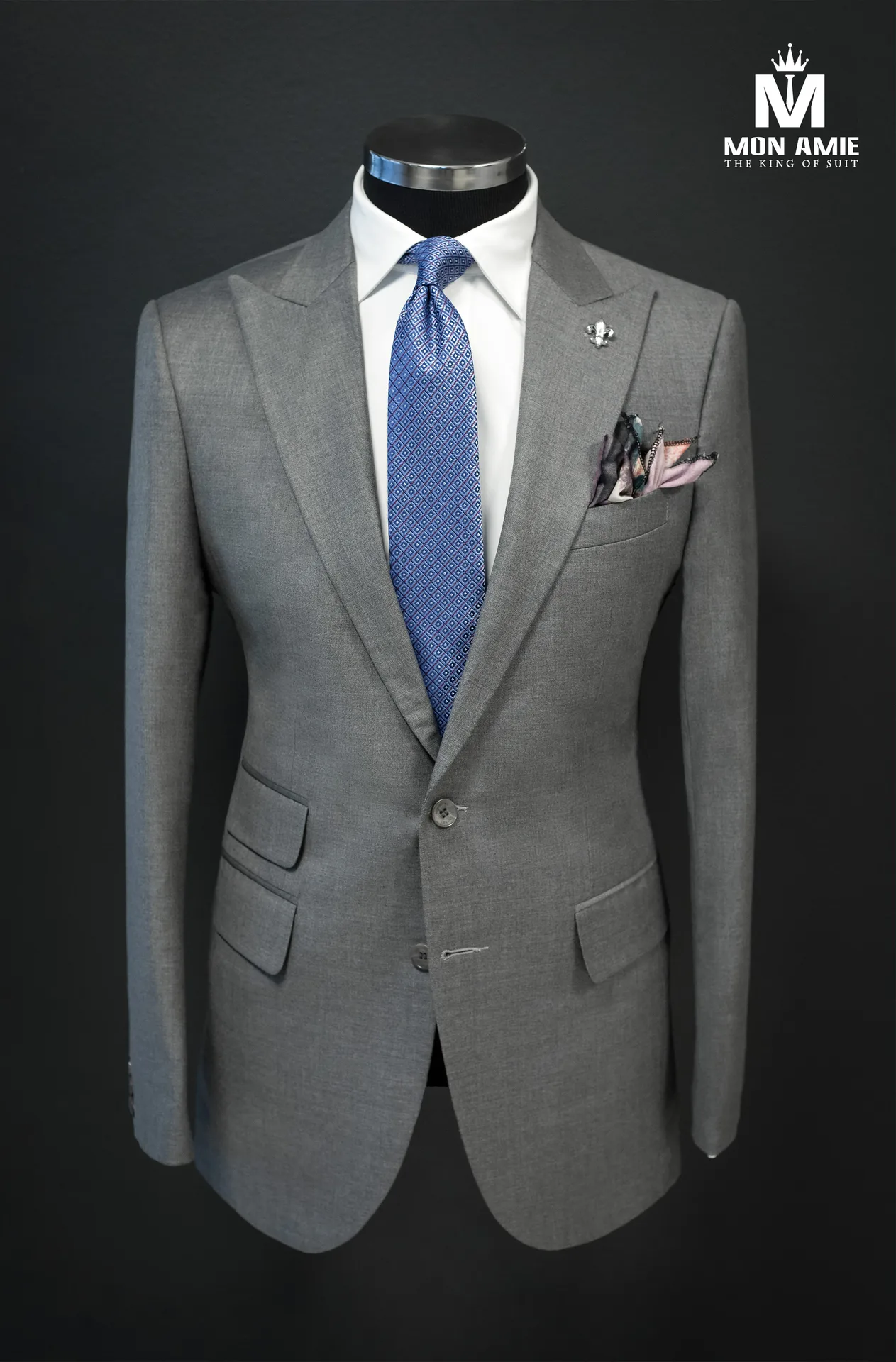
Quick table: which suits can be machine-washed
| Suit type | Machine wash? | Notes |
|---|---|---|
| Pure wool, with interlining | No | Dry-clean; at home use only steam and a brush |
| Wool blend, with interlining, three-piece suit | Not advised | The interlining and lining are the weak points |
| “Washable” wool cloth | Only if the label says so | Still use a mesh bag and cold water |
| Cotton blazer, no shoulder pads, no stiff interlining | Possibly, if the label allows | Gentle cycle, no tumble drying |
| Thick polyester-blend cloth, no interlining | Possibly, if the label allows | Gentle cycle, dry on a shoulder hanger |
| Cotton waistcoat | Usually fine | Wash separately, inside out |
| Blended trousers | Usually fine | Wash separately, inside out, hang to dry |
Exceptions: when a suit can go in the machine
So can you machine-wash a suit in the exceptional cases? There are three common ones:
- A soft cotton or linen blazer with no interlining. Simple construction, a material that tolerates water well. Suits a relaxed style.
- A thick polyester-blend suit with no stiff interlining. A material that shrinks and wrinkles little.
- “Washable” wool cloth. Some wools are treated to tolerate water; but the accompanying conditions are that the label says so explicitly and the jacket has no stiff interlining.
What they share: the care label allows it. If the label says hand wash or dry clean, do not be more confident than the manufacturer.
Reading a care label in one minute
The international symbols you will meet most often:
- Washtub: water wash. The number in the tub is the maximum temperature. A hand in the tub means hand wash.
- Crossed-out washtub: do not wash in water.
- Circle: dry clean. The letter inside indicates the type of solvent; show it to the cleaner.
- Triangle: bleach; crossed out means no bleach.
- Square with a circle: tumble drying; crossed out means do not tumble dry.
- Iron: ironing; the number of dots is the heat level.
A safe machine-wash routine if the label allows
- Use a large mesh laundry bag so the garment is not twisted or caught on the drum.
- Turn it inside out and fasten the buttons.
- Choose a gentle or wool cycle, cold water, around 30 °C or below.
- Use a neutral detergent, and go easy on strong fabric softener and bleach.
- Turn off the spin or spin very gently. A hard spin distorts the shoulders.
- Do not tumble dry. The dryer is the greatest enemy of wool and interlining.
- Dry on a wide shoulder hanger, in a ventilated place, out of harsh sun.
- Press lightly while still slightly damp, at low heat, using a pressing cloth.
What to do if you have already machine-washed it
- Stop everything. No drying, no hot ironing.
- Dry it into shape. Hang it on a shoulder hanger and smooth the shoulders and lapels by hand while still damp.
- Use steam. Warm steam helps the fibres relax; do not press the iron against the cloth surface.
- Take it to someone with expertise. If the suit is made to measure and it has not been long since the wash, you can ask the master tailor at the showroom whether it can still be saved.
- Understand the limits. Wool that has felted or interlining that has detached cannot be fully restored.
Trousers and waistcoat: which piece is more forgiving
Not every piece of a suit is equally fussy. Trousers and waistcoats are usually easier to wash than the jacket because their construction is simpler, but they still have their own cautions:
- Cotton or blended trousers: wash separately, inside out, with the zip closed and the waist hook fastened so they do not snag other items. Hang to dry by clipping at the waistband so the pressed crease is not lost.
- Wool trousers: should be dry-cleaned like the jacket, because the crease and drape are set with specialist steam pressing.
- Wool or lined waistcoats: dry-clean. A cotton waistcoat can be gently hand-washed or machine-washed according to the label.
- A whole suit in the same cloth: should be dry-cleaned in the same batch so that colour and softness stay even between jacket and trousers.
One last important point: if you machine-wash only the trousers and dry-clean the jacket, the cloth of the two pieces will differ in shade after a few cycles, and the suit loses its matched look.
Common mistakes and tips from Mon Amie's master tailors
- Trusting the machine's “delicates” cycle. Gentle does not mean safe for a jacket with interlining.
- Washing the suit together with other clothes. Buttons and zips on other garments can scratch the suit.
- Tumble drying to dry faster. This is the surest way to shrink a jacket.
- Washing when it is not needed. Many suits only need hanging, brushing and steaming. Wash less and the jacket lasts longer.
A master tailor's tip: if you are unsure, do not guess. A made-to-measure suit jacket is the product of many hours of handwork, and one wrong wash can ruin the whole suit. With a Mon Amie made-to-measure suit, you can visit a showroom to ask how to care for the cloth you chose, and remember that the bespoke service includes a long-term alteration warranty after delivery for changes in fit.
Frequently asked questions
Can a suit jacket be machine-washed?
Mostly no, especially a wool suit or one with interlining. Only a cotton blazer or a blend without stiff interlining, with a label that allows it, can be machine-washed, on a gentle setting.
Does washing a suit in a washing machine shrink it?
It can, especially wool. Water, heat and friction make wool fibres felt, and the interlining and lining shrink differently from the outer cloth, warping the jacket.
Should a suit jacket be machine-washed if you only use a gentle setting?
Not a suit with interlining, nor a wool suit. A gentle setting reduces the risk but does not remove the danger of distorted shoulders and detached interlining.
Can wool cloth be machine-washed?
Only if the wool has been treated to tolerate water and the label says so clearly. For an ordinary wool suit, dry-clean it and only spot-clean at home.
Conclusion
Can you machine-wash a suit? For a jacket you value, it is almost always no, and the care label is the most trustworthy answer. When you need to wash at home a type that allows it, the article how to wash a suit at home walks you through it step by step; and when you need to hand it to a cleaner, what is dry-cleaning a suit will help you understand the process. Understanding the cloth when you choose it in the fabric library also makes a suit easier to look after later.