
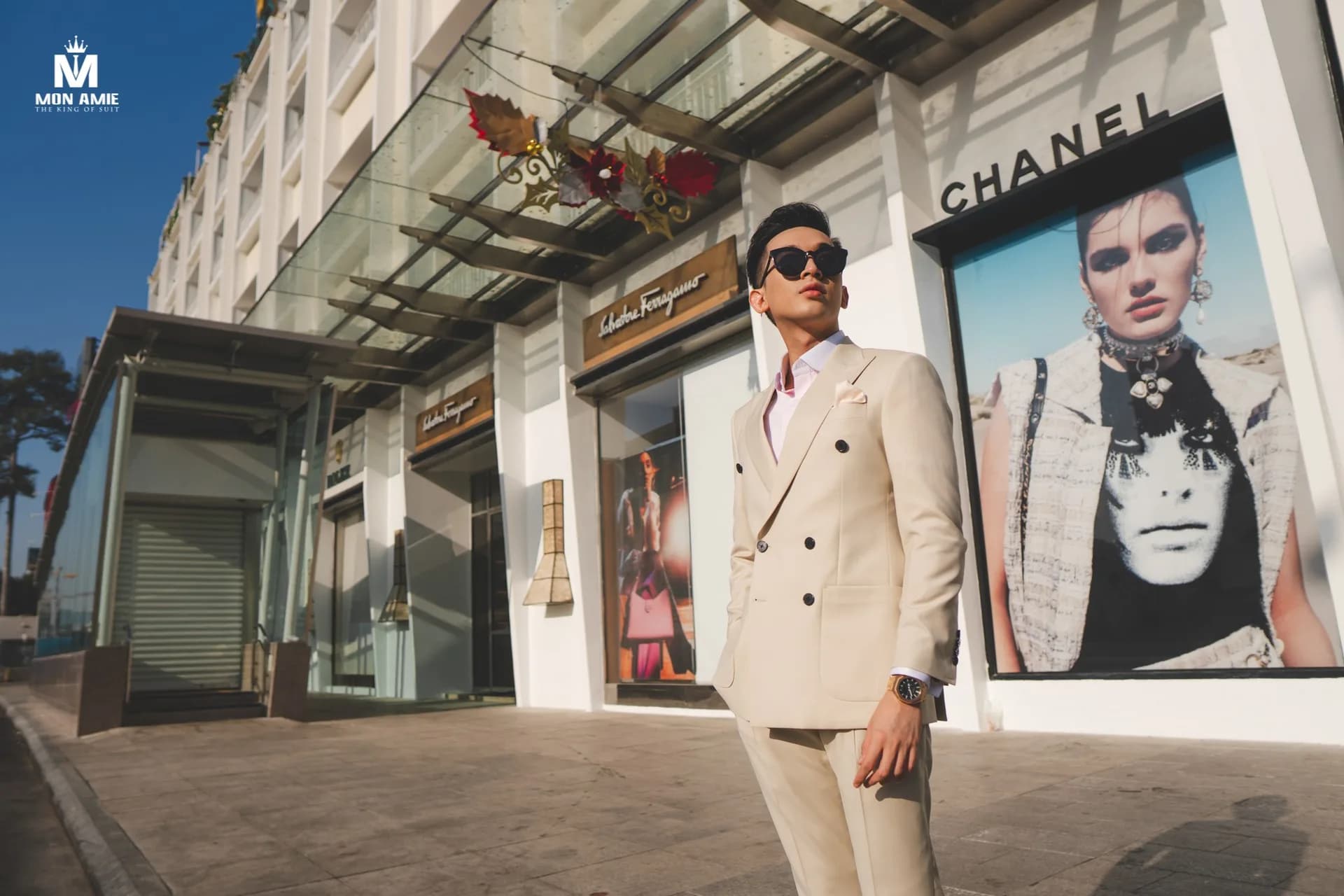
It is eleven in the morning and more than thirty degrees Celsius outside. You have a meeting with a partner at twelve. A taxi drops you at the lobby, you cross a stretch of sunbaked pavement and then step into an ice-cold air-conditioned room. A heavy suit jacket leaves your back soaked and your shoulders chilled. Wearing a suit in summer in Saigon is a concrete problem like that, and it has a solution, without giving up the suit.
Quick answer
To wear a suit in summer without overheating, choose light colours (beige, cream, light grey, pale blue), lightweight open-weave wool, linen or a linen blend, a thin or half lining, and a breathable cotton shirt. Keep the fit comfortable, not tight. When moving about in the sun, carry or hang the jacket; put it on only when you enter an air-conditioned room.
1. Choose breathable cloth first, colour second
In the heat, cloth matters more than style. Three groups of cloth to consider:
- Light open-weave wool (tropical wool, hopsack, fresco): tightly twisted wool yarn woven with tiny gaps so air circulates. Still holds its shape and resists creasing.
- Linen or wool-linen: the most breathable, with a “holiday” look, and it accepts creasing. Wool-linen keeps its shape better than pure linen.
- Breathable cotton or seersucker: better for weekends and outdoor parties than for the meeting room.
Avoid heavy cloth, dense weaves, or cloth with a lot of synthetic fibre: they trap heat and moisture. If you want to see each one in person, drop by Mon Amie's fabric library and choose a light one to suit the weather.
2. Light colours reflect heat, dark colours absorb it
Light colours reflect sunlight, so out in the open the jacket is noticeably cooler. Suggestions in order of ease:
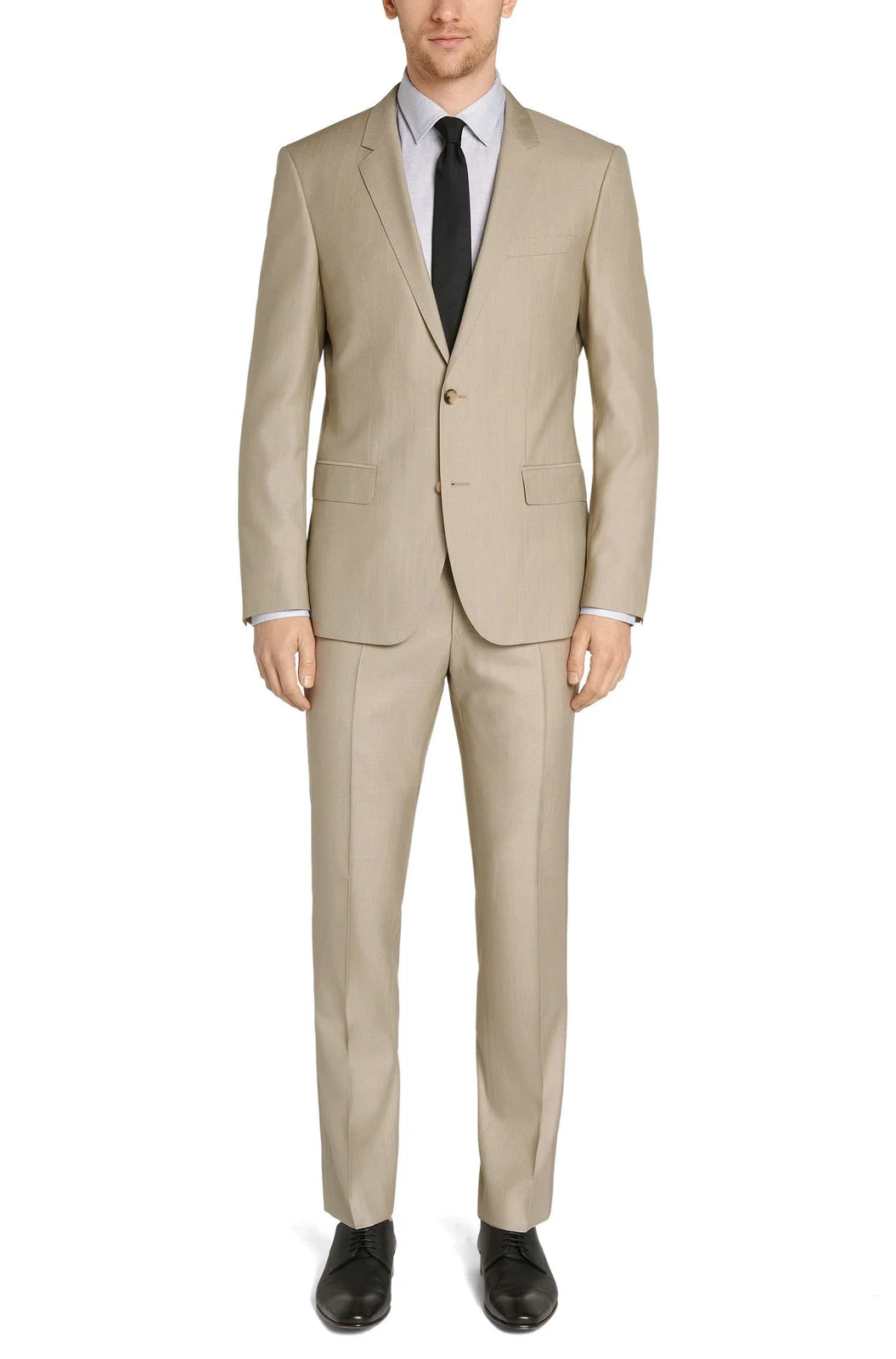
- Beige, cream, sandstone: the classic “summer” colours, going with white, pale blue and pale pink shirts.
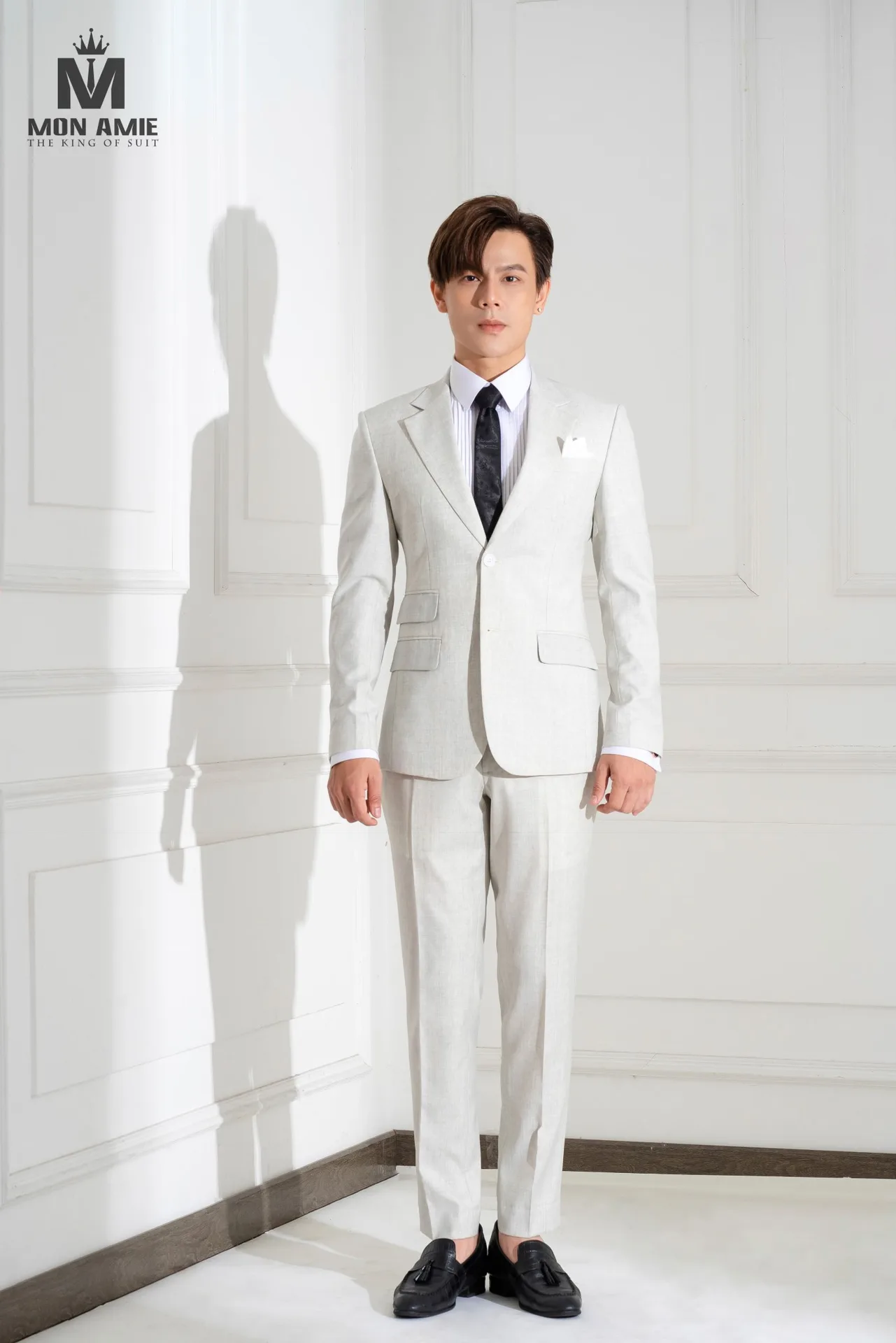
- Light grey, silver grey: more serious, right for work.
- Pale blue, smoky blue: elegant, with a cooling look.
Dark colours can still be worn if you are mostly indoors. If you are in the sun a lot, avoid pure black.
3. A thin lining, a half lining or none
The lining is a “blanket” between your body and the outer cloth. For summer you have three choices:
| Lining | Feel | Suits |
|---|---|---|
| Unlined | Lightest and most breathable | Blazers, weekend suits, plenty of walking |
| Half-lined | Breathable, still neat at the shoulders and chest | Everyday office suits |
| Full lining, thin | Still formal | Meeting suits, ceremonies |
The lining material matters as well: thin cupro or viscose lining breathes better than polyester. The master tailor often says: “It's a waste to buy a suit with light outer cloth but a heavy lining in summer.”
4. A comfortable fit, not tight
A tight jacket makes you feel stifled and hotter. A comfortable cut leaves a little air between cloth and body, letting air circulate. Shoulders fit, chest comfortable, trousers with a light pleat. Don't choose a close-fitting cut just because it “looks neat”.
5. A cotton or linen shirt, and the right undershirt
Under the jacket, the shirt is the layer that touches the skin directly. Choose thin cotton, light poplin or linen. Avoid shiny polyester shirts because they hold sweat. A cotton V-neck undershirt in a skin-like colour keeps sweat from soaking through a light-coloured shirt and the jacket.
6. How to wear and remove the jacket while moving about
A small but effective rule: wear the suit jacket only when you need to. If you have to walk in the sun, fold the jacket properly and drape it over your arm with the lining facing out, or hang it on a shaped hanger in the car. Put it on outside the meeting room door, straighten the collar, pull the sleeves into place and walk in. During the meeting, if the host says “please make yourself comfortable”, you may take off the jacket and drape it over the chair. If not, keep it on.
7. Handling the swing between sun and air-conditioning
Saigon's difficulty is not only the heat, but heat then cold. A light jacket that is fine outdoors can leave your shoulders cold in an air-conditioned room. The solution is to think of the suit jacket as a flexible outer layer: off in the sun, on when you go into the room. If you spend all day in air-conditioning, a slightly heavier cloth drapes well and feels less cold. The article unlined or half-lined suit jacket compares the lining options in more detail.
8. Light trousers that breathe
Don't forget the trousers. Summer suit trousers should be in the same light cloth, and can be half-lined to mid-thigh or to the knee, with a comfortable waist and legs that are not too tight. Stuffy trousers make you as hot as a heavy suit jacket.
9. Care so the suit doesn't smell heavy after a hot season
Sweat is the silent enemy of a suit. You should:
- Rotate two or three suits, and don't wear one suit two days in a row.
- Hang it on a shaped hanger, in a breezy place, not in direct sun.
- Steam lightly to flatten it rather than washing in water.
- Keep the collar and underarms clean, because the lining here is where sweat accumulates most.
To learn more about choosing a cool cloth in particular, read the article on linen suits for men in the hot season.
Common mistakes
- Choosing a dark, heavy-cloth suit because it is “formal”. Hot and stuffy, while a light-coloured suit is still very polished.
- Wearing a thick undershirt or a polyester shirt. Sweat soaks through at once.
- Folding the jacket carelessly. It creases, the lapel breaks, and the shape is lost.
- Wearing it all day without taking it off. Even a light suit jacket is still a layer.
- Not rotating. A suit worn every day quickly turns stuffy and loses its shape.
A tip from Mon Amie's master tailor
The master tailor always tells clients to start with the “weight of the cloth” before choosing colour. Lift two cloths in the same hand: the lighter one is usually cooler. Hold the cloth up to the light: if you see tiny gaps between the yarns, the cloth will breathe. And for those who move around a lot, don't hesitate to choose an unlined blazer for weekends, alongside a half-lined suit for work. If you are reluctant to go to a showroom in the midday sun, Mon Amie's mobile tailoring team can make your suit to measure at home or at your office in Ho Chi Minh City, bringing cloth samples for you to choose from on the spot.
Frequently asked questions
What colour should a summer suit be?
Beige, cream, light grey and pale blue are the four easiest colours to wear. They reflect heat well and pair with many shirt colours.
What cloth should a summer suit be made of to avoid the heat?
Light open-weave wool, wool-linen or linen. With the made-to-measure line, you can choose the light fabrics in the fabric library and a breathable lining. Reference prices by line are in Mon Amie's price list.
Does a men's summer suit need a lining?
Not necessarily. A half lining is a balanced choice between breathability and a neat shape. Unlined is lighter still, but suits a blazer better than a meeting suit.
Does a thin summer suit wear out quickly?
Not if you care for it properly: rotate, hang in the open air, steam lightly. Thin cloth doesn't mean weak. Many light, tightly woven wools are very durable.
Closing thoughts
Wearing a suit in summer in Saigon isn't a matter of endurance. A few small changes: light colours, breathable cloth, a thin lining and wearing it at the right moment, and the suit is still the most comfortable outfit you own. If you'd like a summer suit made to measure for you and for the weather, book a fitting at one of Mon Amie's five showrooms.