
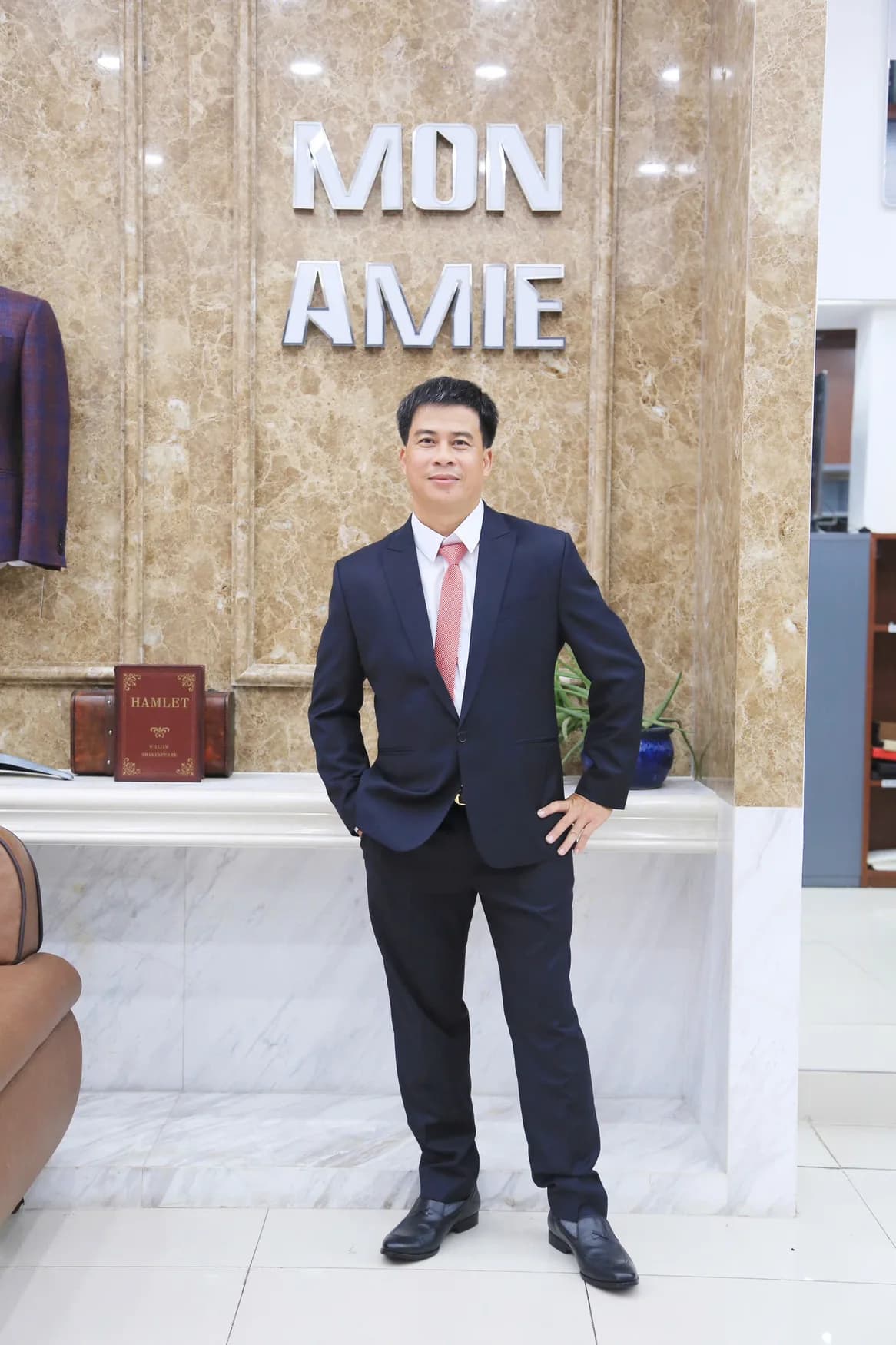
Once the button is fastened, the jacket skirt pulls taut across the hips, the pockets gape like two half-open doors, and the shoulders turn out slightly too wide. For a pear-shaped body this is almost a certainty when a jacket is chosen in a single size for both shoulders and hips. To have a suit for wide hips that fits properly, you have to address the body of the jacket, the skirt and the trousers, not just the shoulders. Mon Amie has picked the five styles below to rebalance the upper and lower proportions.
Quick answer
A pear shape with wide hips suits a jacket long enough to cover the hips, side vents, structured shoulders or a wide lapel to balance the lower half, and straight trousers that don't hug the thighs. Five styles to consider: a single-breasted longer jacket, a wide peak lapel, a double-breasted 6-on-2, a dark three-piece, and a matching suit with straight trousers.
A pear shape is when the shoulders and chest are smaller than the hips and thighs. The goal of the suit is not to hide the hips, but to add "volume" to the upper half and let the lower half fall straight, not hugged.
1. Single-breasted, jacket long over the hips, side vents: the skirt falls straight
A common mistake is to choose a short jacket whose skirt ends right at the widest part of the hips, so the eye stops exactly where you want to hide. Let the skirt cover the seat: with your arms relaxed, the hem should touch about the knuckle of the thumb. Choose side vents rather than a center vent; two side vents let the skirt fall straight, while a center vent easily gapes open when the hips are full. Flat jetted pockets (no patch pockets, no big flaps) avoid adding another layer of fabric right at the hip. A single-breasted two-button style, fastening only the top button, suits office workers who wear a suit every day. Note: don't stuff a wallet or phone into the outer pockets; a bulging pocket adds width.
2. Wide peak lapel, structured shoulders: rebalancing top and bottom
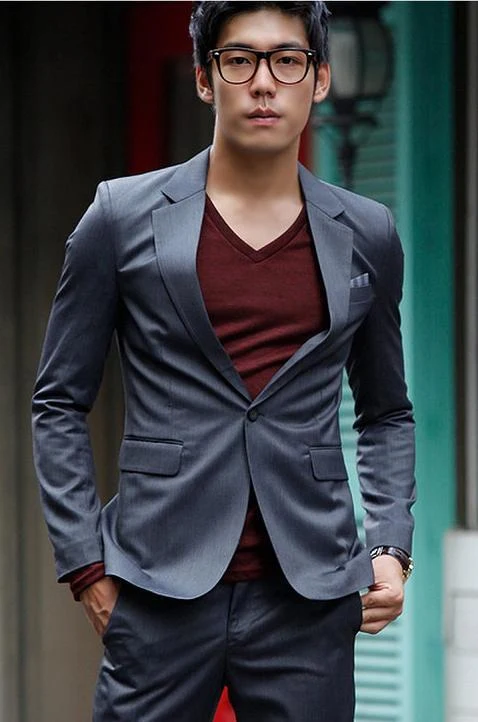
When the hips and thighs are full, the shoulders need extra "volume" to balance the whole. A wide peak lapel (about 9–10 cm, depending on height) broadens the upper body horizontally; medium shoulder padding with the shoulder tip lifted slightly gives the shoulder a frame. The graphite grey wide-lapel suit is an easy example to picture. Pair it with a light-colored shirt and a white pocket square to concentrate the accent on the chest. Note: a wide lapel needs a jacket body that is long enough; a short jacket with a wide lapel becomes "big head, short body". When made to measure, the tailor balances the lapel width to your actual shoulder width, not a common template.
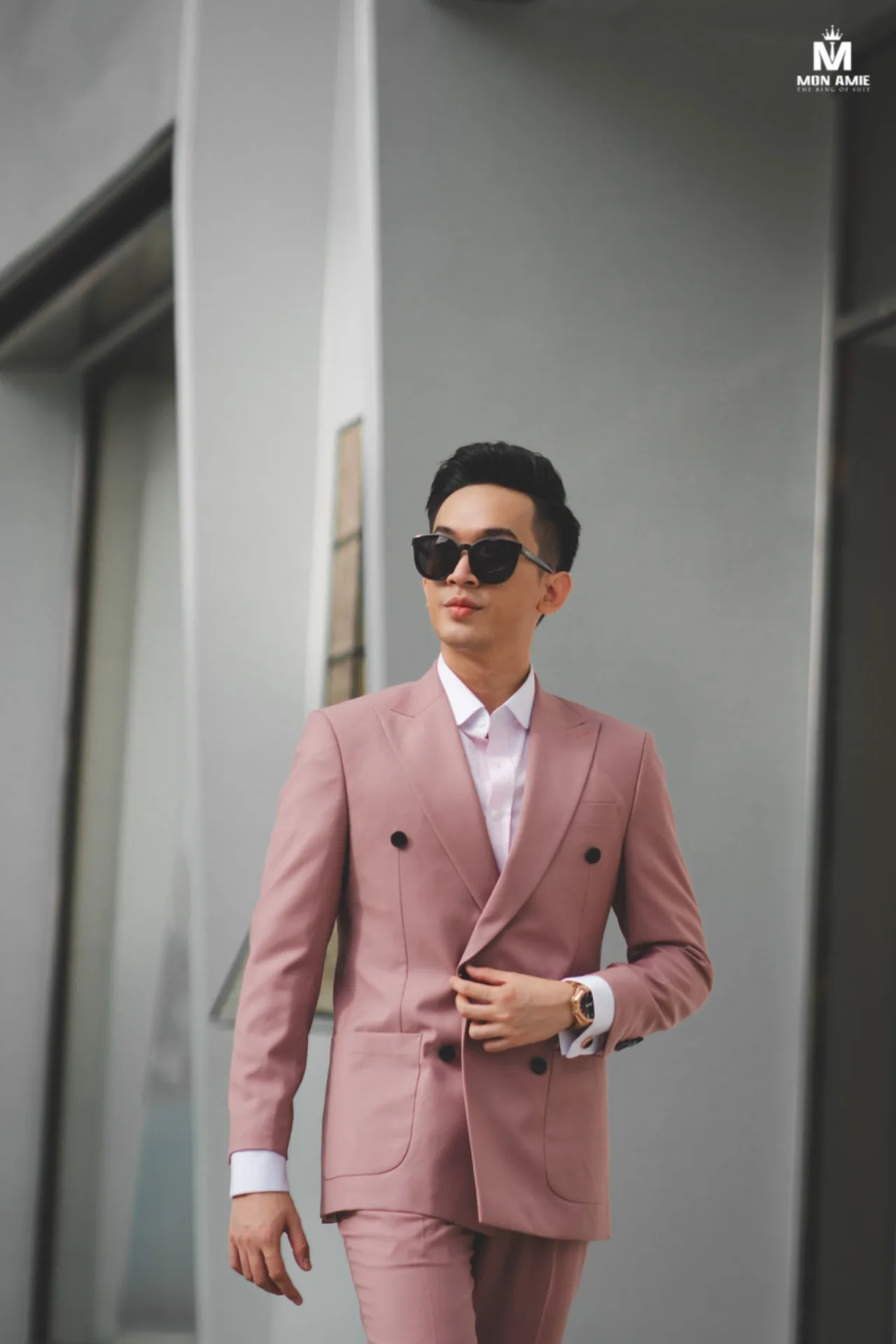
3. Double-breasted 6-on-2: adding width to the upper body
Two rows of buttons stacked on the front panel add width to the chest, so the hips stand out less. The 6-button, 2-to-fasten style (six buttons, only two fastened) has its fastening point at the waist and a long V, suiting men who are tall or of average height. Pair it with a peak lapel, a white shirt and a medium-width tie. Note: a double-breasted jacket must be fastened while standing; if the body is fitted to the chest but tight at the hips, the front panel will be pulled into wrinkles, so the allowance at the hips must be built in from the pattern. When sitting, unfasten it so the skirt falls naturally.
4. Dark three-piece: a waistcoat that defines the waist, the eye following a vertical line
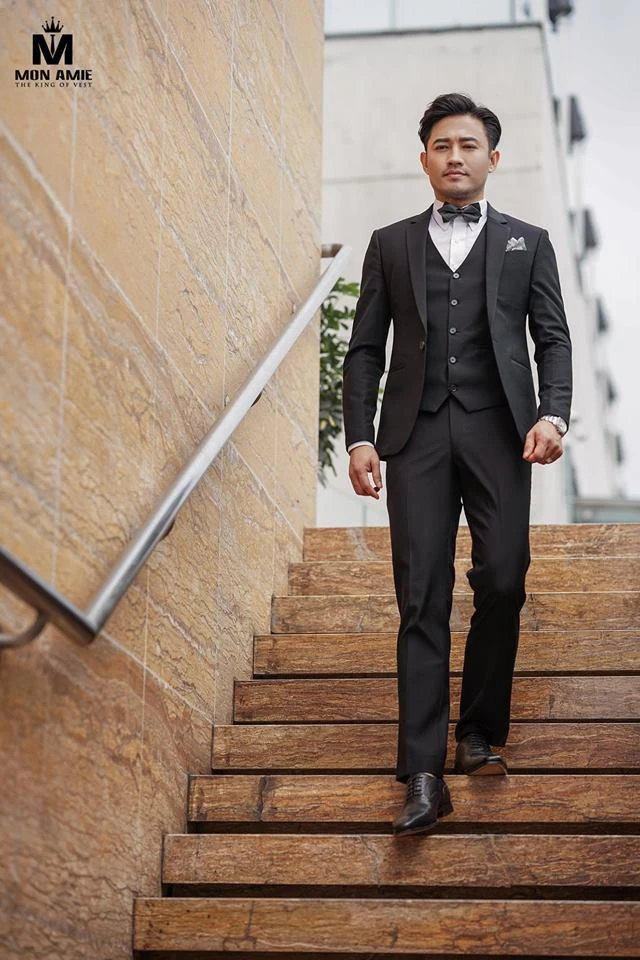
A three-piece in charcoal, smoky black or deep navy turns the upper body into one continuous block from collar to waistband. A waistcoat that lightly hugs the waist draws the eye vertically, so the hips stand out less than with a jacket alone. The elegant black three-piece suit paired with a powder-pink shirt is a way of bringing a lighter shade up to the top half. Note: the waistcoat must be long enough to cover the waistband and not ride up when you sit; a short waistcoat reveals the dividing line between the torso and the hips. In hot weather, choose a light fabric and a waistcoat with a light back lining.
5. Matching suit, straight trousers with a medium rise: room for the hips and thighs to breathe
On a pear shape, the trousers decide more than the jacket. They need enough room at the hips and thighs, then fall straight to the hem, not tapered and tight. A medium rise, at the navel or slightly above, helps gather the hip area. A soft single pleat or no pleat depends on how full the thighs are. If the trouser pockets gape when you stand, it is a sign that more room is needed in the pattern, not that you should force it. Choose a dark matching suit in navy or charcoal so the eye isn't pulled down to the hips; if you want something lighter, put it in the shirt, pocket square and tie. See men's trouser styles to choose the leg that suits your height.
Quick summary table
| Style | Suited to | Key point |
|---|---|---|
| 1. Single-breasted, jacket long over the hips | Everyday suit wearers | Side vents, flat jetted pockets |
| 2. Wide peak lapel, structured shoulders | Shoulders smaller than hips | Lapel 9–10 cm, jacket not too short |
| 3. Double-breasted 6-on-2 | Tall or average height | The hips must be given enough room |
| 4. Dark three-piece | Formal occasions | Waistcoat covers the waistband, light fabric |
| 5. Matching suit, straight trousers | Full thighs and hips | Medium rise, avoid tapered legs |
Tips from Mon Amie's master tailors
- Measure the hips at the widest point, standing relaxed with your feet apart. The tailor also measures the seat and thigh so the trousers and the jacket skirt get the right allowance in the right places.
- At the baste fitting, look from the side and from behind, not just in the mirror from the front. Whether the skirt pulls only shows at these angles.
- Choose fabric with drape and a matte surface. Shiny fabric reflects light right at the hips, and stiff fabric makes the skirt flare out.
- Limit horizontal stripes, large checks and patch pockets on the lower half of the body.
- Don't choose a larger size to fit the hips and then let the shoulders be loose. That gap must be dealt with in the pattern, and it is one of the signs of an oversized suit.
Frequently asked questions
Should a pear shape wear a slim-fit suit?
Fitted, not tight. The jacket should fit at the shoulders and waist, then ease out at the hips; a tight fit over the whole body makes the skirt flare out to the sides. "Slim" should be understood as streamlined at the shoulders and chest, while the hips need extra ease.
What trousers should someone with wide hips choose?
Straight legs, wide enough at the thigh, with a medium rise. Avoid tapered, tight legs and shallow trouser pockets that gape when you stand. Try them both standing and sitting before you decide.
How should women with a pear shape choose a suit?
A women's jacket that is long over the hips, with lightly structured shoulders and a medium to wide lapel, worn with straight trousers or an A-line skirt. The powder-pink single-button women's blazer paired with a cream chiffon dress is one reference in the collection.
What should I keep in mind about wide hips when having a suit made at Mon Amie?
Tell the tailor at the measuring about where it tends to feel tight, your habit of keeping things in your pockets, and where you often sit. Mon Amie takes more than 30 measurements, does a baste fitting and adjusts until it fits; the measurements are saved for life for future orders.
A pear shape doesn't need to be hidden under a loose jacket; it needs a suit with the right proportions. If you would like to try one of the five styles above, you can book a measuring appointment at a showroom or find out about Mon Amie's bespoke tailoring journey.