
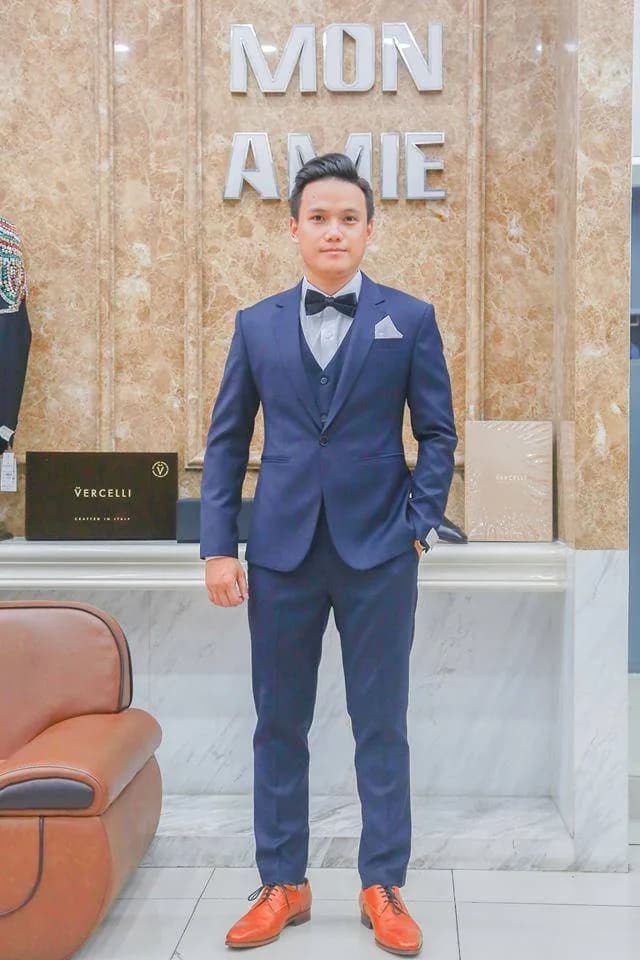
A square of silk or cotton about 30–33 cm across, showing only one or two centimetres above the pocket opening, and yet the person facing you knows at a glance whether you take care over your suit. There are only a few main ways to fold a pocket square for a suit jacket; learn the five below and you can dress from a business meeting to a wedding reception without having to look it up again.
Quick answer
Five ways to fold a pocket square: the straight fold (presidential) for ceremonies, one-point for the office, two-point for evening events, three-point for truly formal occasions, and the puff for relaxed days. Use a 30–33 cm square, show 1–2 cm, and choose one that differs from the tie.
1. The straight fold (presidential): the ceremonial horizontal line
Fold the square in half, then in half once more, then fold it to fit the width of the pocket opening. Tuck it so that the horizontal edge shows about 1–1.5 cm, straight as a ruled line. A white square in linen or cotton is the standard for this fold: tuxedo, groom’s suit, a black suit for a formal meeting.
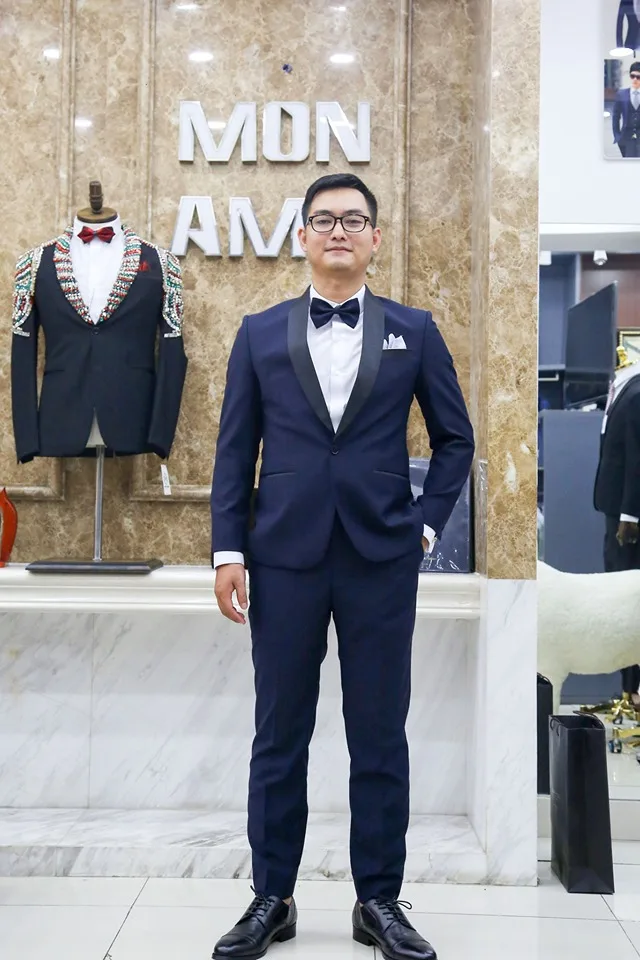
This is the low-risk way: rarely wrong, rarely noticed, in keeping with the spirit of formalwear such as the tuxedo in the photo above. If you are looking for a suit like that, you can see Mon Amie’s made-to-measure tuxedos. A common mistake is folding too thick: the square bulges and the breast pocket juts out as if it were holding a wallet. Choose thin cotton or thin silk so the folded edge is crisp.
2. The one-point fold: a neat triangle for the office
Fold the square diagonally into a triangle; fold the left corner into the middle, the right corner into the middle, then fold the base up to match the width of the pocket opening. Place it with the point facing up; a slight tilt is fine. Compared with the straight fold, this has more intention but is still not showy, so it suits businesspeople, meetings and cocktail parties.
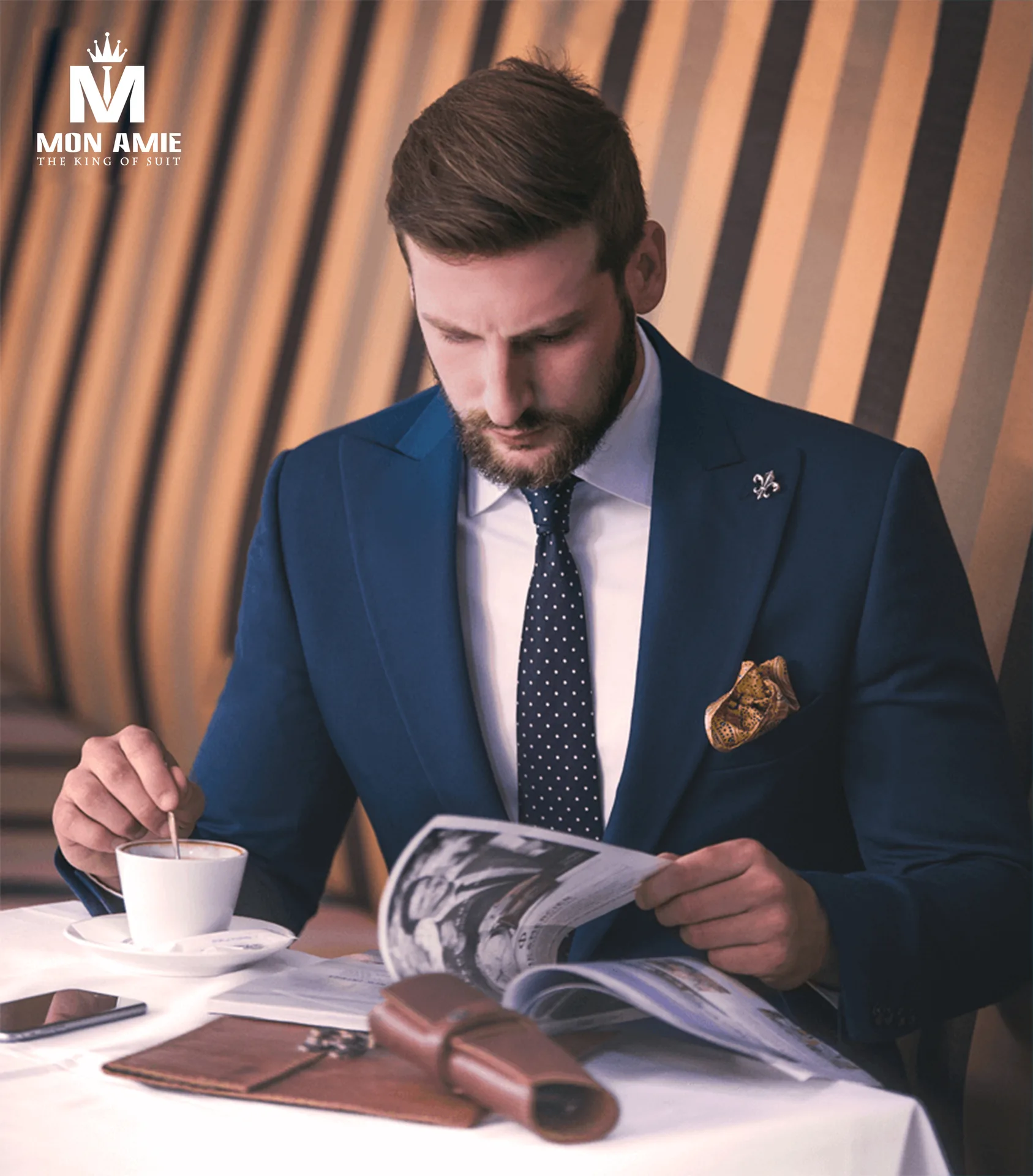
A yellow square on navy with a polka dot tie, as in the photo above, is a good pairing: the square’s colour differs from the tie’s but has the same brightness. Plain silk or a small pattern holds the point; fabric that is too thick makes the point blunt. See what a pocket square is, how to fold and match it to learn how to choose colour.
3. The two-point fold: two beats for an evening event
Fold diagonally into a triangle, fold the left corner up and then the right corner up so that the two points are offset, one higher and one lower, then fold the base to fit the pocket opening. The two sharp beats give a sense of layers and look good on dark suits: navy, black, charcoal. A silk square with some drape suits this fold; choose a colour in gentle contrast to the tie.

With the grey striped suit, wine-red waistcoat and patterned tie in the photo, the pocket square should stand on its own: the same colour family but a different material or a different pattern, not a copy of the tie. A note: the two points look good only when they differ by about one centimetre; more than that looks messy.
4. The three-point fold: steps for formal occasions
Fold diagonally into a triangle, then fold the two base corners up in turn at two offset steps so that the three points are arranged like a staircase, then fold the base to fit the pocket opening. This suits wedding ceremonies, galas and three-piece suits, when you want the breast pocket to have a little something to look at.
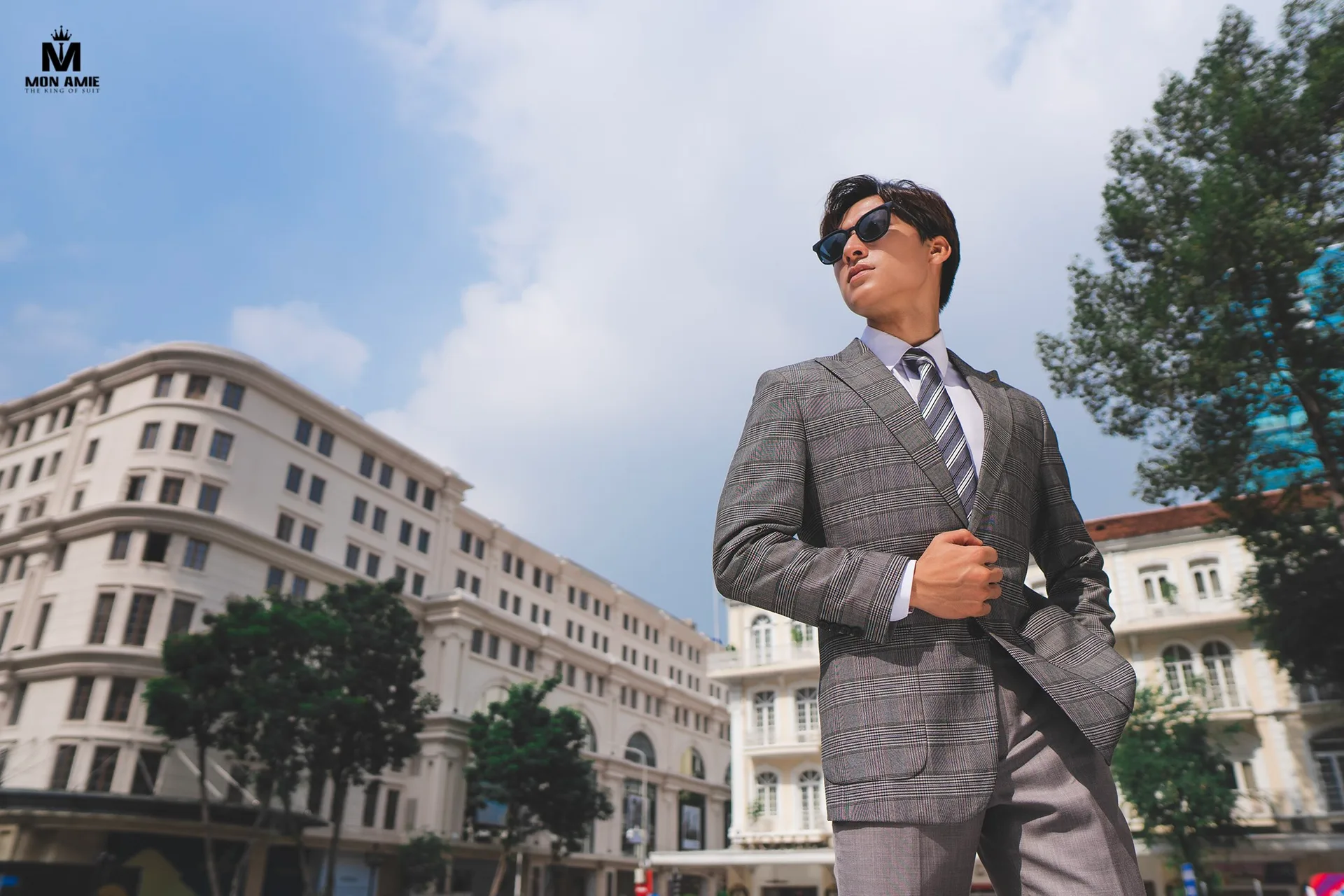
Three layers are three layers of fabric: it needs a silk of moderate thickness and a pocket opening wide enough, usually about 10–11 cm on a made-to-measure jacket. With the close-up of a black tuxedo in the photo, the bow tie, pocket square and cufflinks must share the same level of formality; one overly flashy piece is enough to turn the rest into background. If you want to add a small piece on the lapel, read lapel pin: how to choose and wear a lapel pin on a suit before wearing both.
5. The puff: relaxed, no measuring needed
Lay the square flat, lift it in the middle, loosely gather it into a bunch, then tuck the base into the pocket and let the corners spread naturally. This suits outdoor weddings, daytime parties, blazers and coloured suits. A silk or cotton square in polka dot, paisley or small flowers puffs up beautifully.
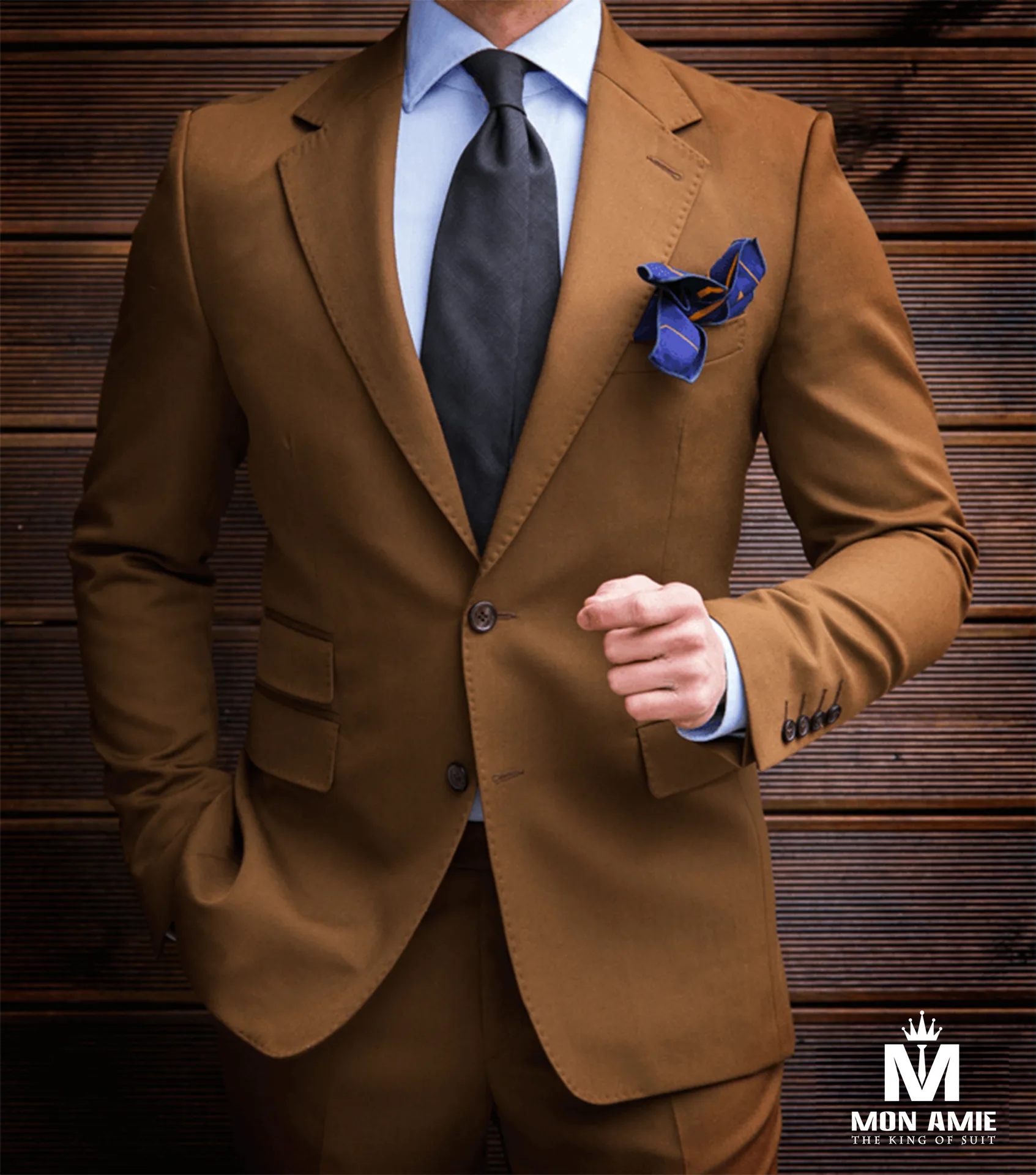
The caramel brown suit with a blue square in the photo is an example of a square whose colour departs clearly from the suit and is still easy on the eye. The puff does not mean careless: the corners should sit at different heights, and the puffed part should not spill over by more than about three centimetres. The article breast pocket: the suit’s breast pocket and how to use a pocket square says more about pocket-opening sizes.
Quick summary table
| Item | Suits | Remember |
|---|---|---|
| 1. Straight fold | Tuxedo, groom’s suit, formal meeting | Thin white square, show 1–1.5 cm |
| 2. One-point | Businesspeople, cocktail | Point up, plain silk |
| 3. Two-point | Evening, deep-coloured suit | The two points differ by about one centimetre |
| 4. Three-point | Wedding ceremony, gala | Needs silk of moderate thickness and a wide pocket opening |
| 5. Puff | Outdoor wedding, everyday | No more than three centimetres; corners offset |
Tips from the Mon Amie master tailors
- A square different from the tie. Do not choose a square with the same colour and pattern as the tie; take the same colour family, with a different shade or a different fabric.
- A 30–33 cm square is just right. Larger, and the pocket opening bulges; smaller, and the square slips down to the bottom of the pocket.
- The left breast pocket. This is the place for the square; do not put it in another pocket.
- Check in the mirror, then bend over. A square that is in the right place does not shift when you bend to shake hands or pick up a glass.
- One lead piece at the chest. A pocket square and a lapel pin both standing out will compete with each other.
Frequently asked questions
What material should a men’s pocket square be?
Silk for evening events, because it has drape and a soft sheen; cotton or linen for daytime, because the folded edge is crisp. Light wool and flannel suit cold-season blazers. The thicker the fabric, the harder it is to keep a straight fold.
Does a pocket square have to match the colour of the tie?
No, and it is usually better to avoid it. A square and a tie of the same colour look like a matching set sold together. Choose a different shade or a different pattern, but in the same colour family as the suit or the shirt.
Which pocket-square fold should a groom choose?
The straight fold with a white square is the classic choice. If you want a little rhythm, fold one or two points. When coordinating a whole party of groomsmen, Mon Amie’s Groom Styling service matches pocket squares with ties, bow ties and cufflinks according to the wedding concept.
How do I wear a pocket square on a jacket with no breast pocket?
If there is no breast pocket, do not wear a square. A square pinned or stuck onto the chest easily spoils the cut and looks awkward. You can move the accent to the tie or a lapel pin.
Folding a square takes a few tries to master, but a jacket with a breast pocket sewn in exactly the right place needs a tailor’s hands. You can book a measuring appointment to find out about the breast pocket and the accessories that go with your own made-to-measure suit.