
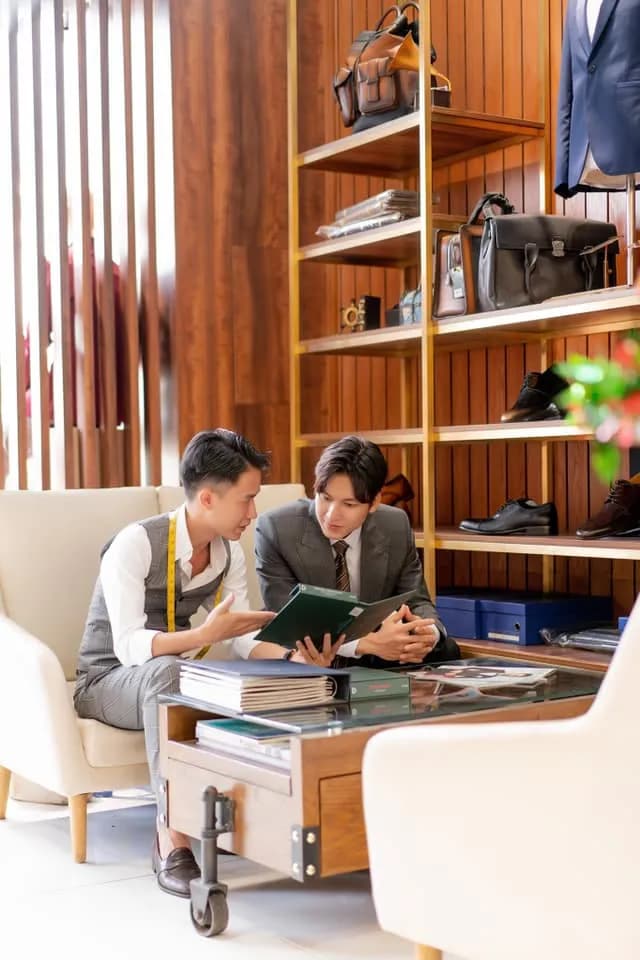
The sign above the door, the photos posted online and the numbers on the price list don't tell you how well the people inside can cut and sew. Skill shows in smaller places: the inside of a sample jacket, the way you are measured, the questions asked before anyone offers you cloth. Fifteen minutes is enough to read those places, even on your first visit to a men's suit tailor.
The short answer
A tailor with real skill shows it in three places. The sample jacket: sleeve heads that are round and smooth, lapels that roll softly, stripes that match at the pocket and back, a lining with some give. The fitting: the tailor studies how you stand, your shoulders and your back before picking up the tape. The answers: they can point out what is difficult about your build.
Reading skill on a sample jacket
A jacket hanging in the shop is an exam paper the tailor has already handed in. Ask to try it on or pick it up and check the seven points below. Each takes a few seconds.
| What to look at | Well-made jacket | Rushed jacket |
|---|---|---|
| 1. Sleeve head | The sleeve is set in round and smooth, and hangs straight down | Rippled, puckered at the top of the shoulder |
| 2. Lapel | Rolls softly from the top button to the collar, both lapels symmetrical | Pressed flat like paper, the edge curling up |
| 3. Stripes and checks | Matched at the centre back, hip pockets and flaps | Check off by half a line at the pocket, the two sides of the back don't align |
| 4. Collar | Hugs the neck of the mannequin, no gap | Pops up, with a gap at the nape |
| 5. Inside | Lining has a little extra fold at the back and hem, seams lie flat | Lining pulled tight so the hem rides up, loose threads |
| 6. Buttonholes | Thick, even stitching, tight to the edge | Frayed thread, gaping holes |
| 7. Cloth surface | No shiny patches on the lapel, pockets or front edges | Shine along the edge from an iron pressed directly on the cloth |
Points 3 and 7 tell you the most. Matching stripes costs cloth and time, so a rushed maker often skips it. A shine mark means the iron was pressed straight on the cloth without a pressing cloth, a habit that will be repeated on your own jacket.
When you collect your suit, check the same seven points again, plus the trousers as in 12 signs you can read at a glance.
Reading skill in the measuring session
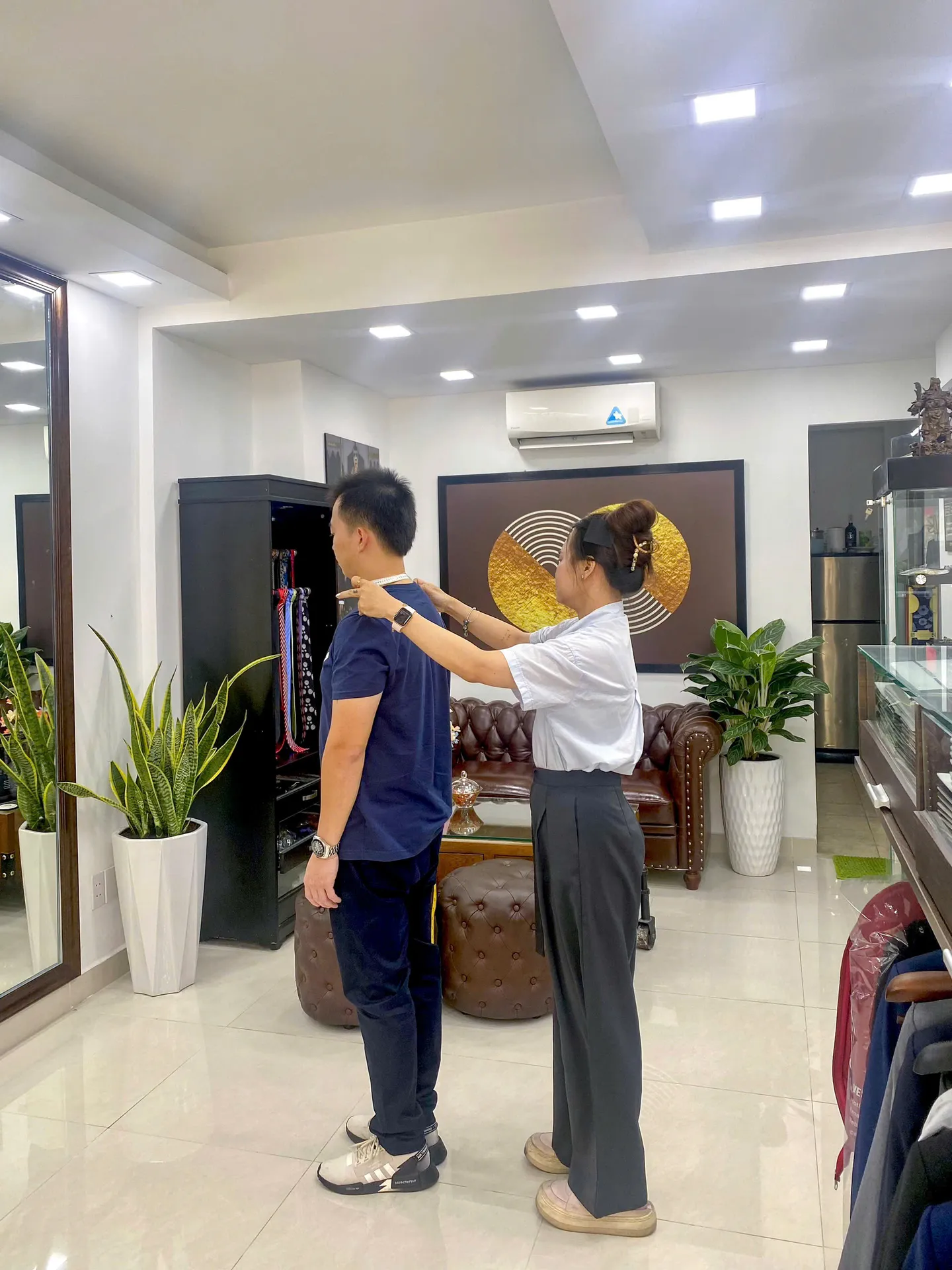
A skilled tailor measures with the eye before the tape. Watch for four things.
- They look at you standing. Standing straight, standing at ease, seen from behind and from the side. Uneven shoulders, a slight stoop, a belly that sits above or below the navel all change how a jacket should be cut, and a number on a form can't record them.
- They ask how you live. Motorbike or car, long meetings or not, how many days a week you wear a suit. Someone who sits a lot needs trousers that don't press in the rise, and someone who raises their arms often needs a neat armhole so the jacket isn't dragged up with them.
- They measure you in the right clothes. A thin shirt, jacket off, phone and wallet out of your pockets. Measuring over thick layers puts you off by a few centimetres from the start.
- They write it down and repeat it back. The measurements go on the form with notes about your posture, and then they tell you which parts of your body will need special handling.
The fitting says even more. A jacket at a fitting usually still has white basting stitches so the tailor can unpick and adjust. A skilled tailor will ask you to button up, raise your arms, sit down, then check the shoulders, collar, sleeve length and back, instead of just asking “does it feel right?”
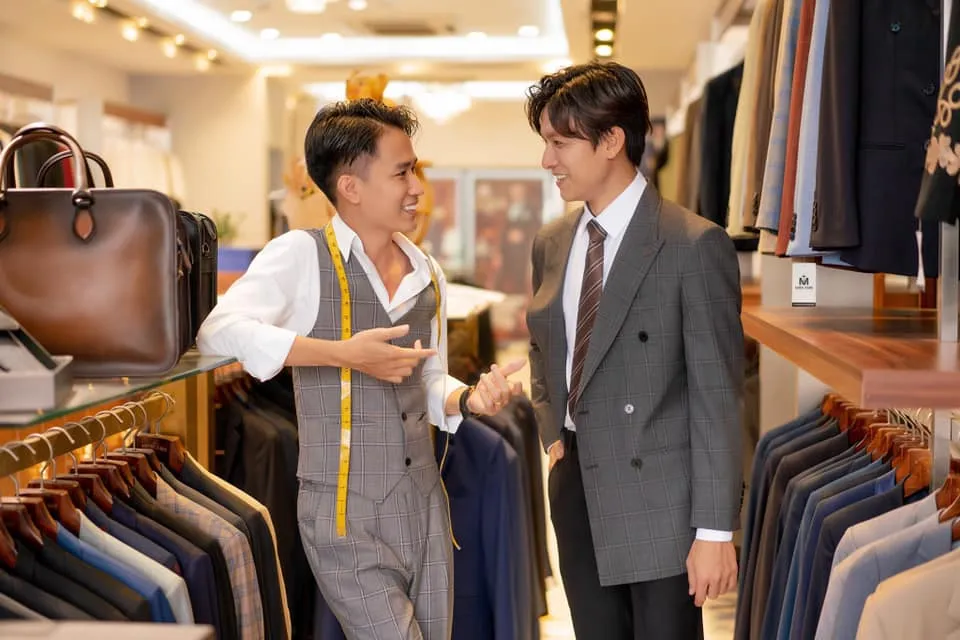
Five questions to hear the skill
Any shop can answer questions about price and timing. The five below go straight to the craft, and someone who really does the work usually answers quickly and specifically.
| Question | What a skilled tailor usually says | An answer to be wary of |
|---|---|---|
| What is hard to make on my build? | Points it out at once: sloping shoulders, belly, curved back, long arms | “Every build is the same” |
| I ride a motorbike and sit a lot. What should the jacket do differently? | Talks about armholes, freedom of movement, cloth that recovers its shape | Only talks about colour and lapel style |
| What will you check at the fitting? | Shoulders, collar, sleeve length, back when buttoned, trousers when seated | “If it feels right when you put it on, that's enough” |
| If I gain or lose a few kilos, where can it be altered? | Body, waist and trousers can be adjusted; shoulders are difficult | Promises that anything can be altered |
| I wear a suit three days a week. Which cloth should I choose? | Suggests by wool percentage and days worn | Immediately offers the most expensive cloth |
The fourth question deserves careful listening. The shoulder is the hardest part of a suit jacket to alter, so anyone who promises to widen or narrow it easily is overstating their own skill.
When to think twice
The signs below don't necessarily mean a poor tailor, but they are enough to look elsewhere before you pay a deposit:
- There is no sample jacket for you to pick up and look inside.
- A few measurements and you're done, with no look at how you stand and no question about the occasion.
- They only say “Italian cloth” or “good cloth” and can't tell you the composition and wool percentage.
- They criticise your old jacket to sell you a new one, but can't point out what is wrong with it.
If you are torn between a tailor you know, a small workshop and a multi-showroom house, compare the three on price, number of fittings and warranty as in where to have a suit made.
How Mon Amie lets you check these things
This article is written by Mon Amie, so this section is Mon Amie's own answer to the criteria above. It began as the Hoàng Vy tailoring house in 1991, the Mon Amie brand has existed since 2011, and today it has more than 50 tailors, with the workshop located at the Đường 3/2 showroom.
- Sample jackets: all 5 showrooms have sample suit jackets and shirts, so turn them inside out and look.
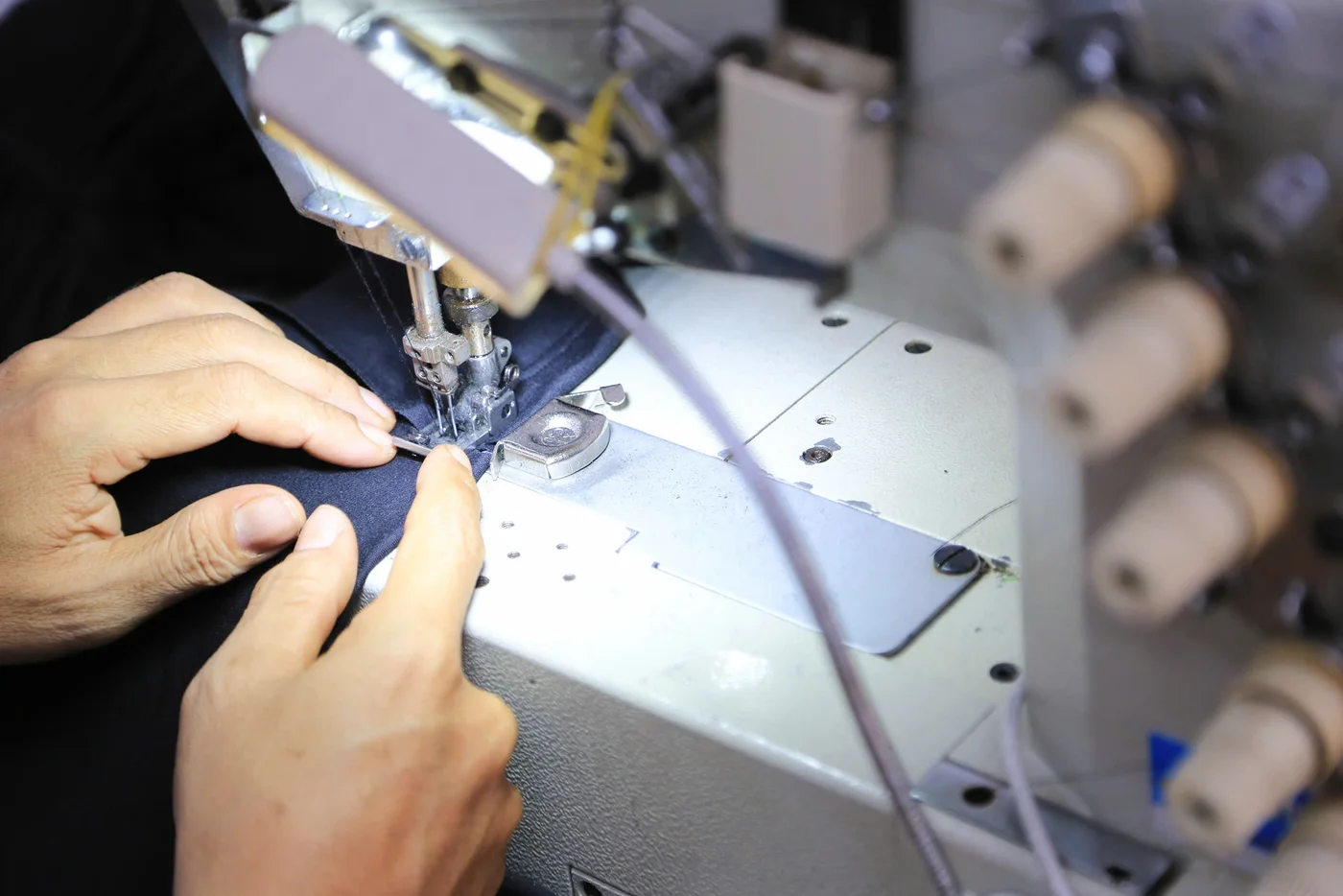
- Workshop: to see tailors cutting and sewing for yourself, visit the Đường 3/2 showroom; guests who ask to see the workshop are always welcome.
- Measuring: a full measurement on an individual measurement form. The steps from measuring to collecting your clothes are on the made-to-measure process page.
- Fitting and adjustments: for a suit, usually 1 fitting, or none if you prefer. If the garment doesn't look good or doesn't match the style agreed, Mon Amie alters it until you are satisfied; if it still falls short, you get a 100% refund.
- The jacket you are wearing: bring a suit jacket you had made elsewhere and a stylist will look at it for free.
The showroom with the workshop is at 80–82–84 Đường 3/2, Hòa Hưng Ward, Ho Chi Minh City (0901.811.116), open 8:30 a.m. – 9:30 p.m. every day. The addresses of the other four, on Nguyễn Trãi, Hồ Văn Huê, at Caravelle Hotel and on Nguyễn Thị Thập, are on the showroom page.
Frequently asked questions
Does a small shop with one tailor sew as well as a large tailoring house?
It can, if that tailor is skilled and you suit their way of working. A small shop depends on one person, so when they are busy or away, the schedule moves with them. A house with many tailors is steadier on timing; in return, you should know who measures and adjusts for you.
Should I bring an old suit jacket to the measuring session?
Yes, especially the one you find most comfortable. From that jacket the person measuring understands how snug, how long and how wide in the shoulder you like it, far faster than from a description. A jacket you dislike is useful too, because it shows what you want to avoid.
How can I tell whether a shop has a real workshop or sends the work out?
Ask where the workshop is and ask to visit. A place with its own workshop can usually tell you who cuts, who sews and what stage your jacket is at. Sending work out isn't necessarily poor, but your wishes have to pass through one more person before they reach the tailor.
What should I order first to test a tailor?
A pair of trousers is the least costly test, because trousers show how the shop measures the rise, waistband and leg; five measurements to take when making trousers is a good yardstick. A suit jacket still says more about skill, because shoulders and lapels can't hide mistakes.
Fifteen minutes before you pay a deposit
Turn the sample jacket inside out, watch how they measure you, ask the five questions in the table, and only then decide. If one of the places you visit is Mon Amie, book an appointment first so the stylist has time to measure and answer properly.