
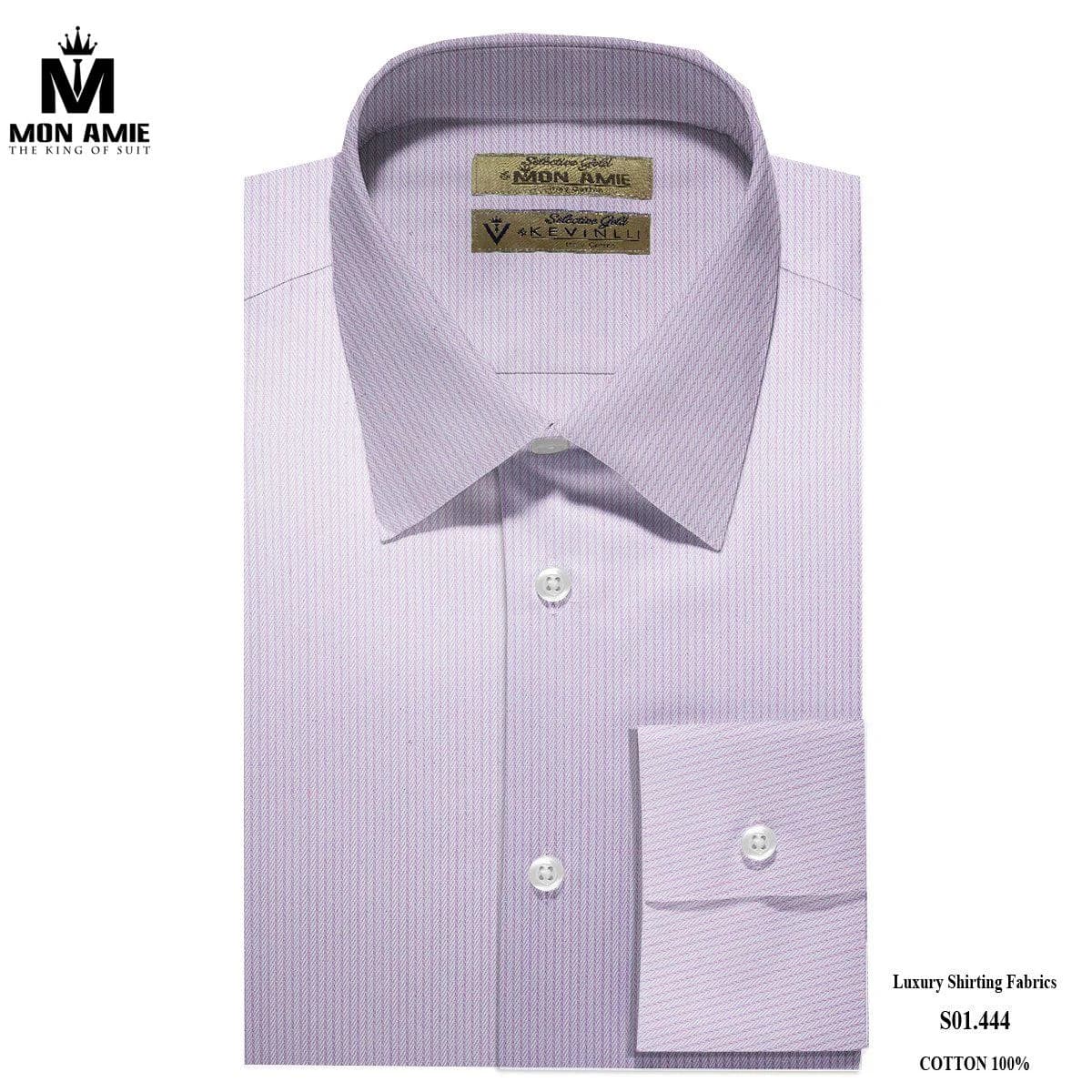
The cloth seller asks “how many metres do you want?”, and you aren't sure. If you take 20 cm too little, the tailor won't have enough to cut the sleeves. If you take half a metre too much, you waste money, especially with expensive cloth. The table below helps you answer before you go to the cloth shop.
The short answer
With cloth about 1.4–1.6 m wide, a long-sleeved men's shirt of average cut needs about 1.8–2.0 m, and a short-sleeved shirt about 1.5–1.7 m. Narrow cloth of about 1.1–1.2 m needs about 2.3–2.5 m for long sleeves. Fine-striped cloth adds about 0.1–0.2 m, and large-check cloth from about 0.3 m.
Table: metres of cloth by width and size
These are guide allowances from the trade's general experience, in metres, not counting the extra for striped, checked or stretch cloth. Sizes follow an ordinary Asian build; if you aren't sure what size you wear, the article on what weight a size L men's shirt suits has a chart to compare.
| Size | 1.4–1.6 m wide, long sleeves | 1.4–1.6 m wide, short sleeves | 1.1–1.2 m wide, long sleeves | 1.1–1.2 m wide, short sleeves |
|---|---|---|---|---|
| S | about 1.6–1.7 | about 1.3–1.4 | about 2.1–2.2 | about 1.8–1.9 |
| M | about 1.7–1.9 | about 1.4–1.6 | about 2.2–2.4 | about 1.9–2.0 |
| L | about 1.8–2.0 | about 1.5–1.7 | about 2.3–2.5 | about 2.0–2.2 |
| XL | about 2.0–2.2 | about 1.7–1.9 | about 2.5–2.7 | about 2.2–2.4 |
| XXL and above | from about 2.2 | from about 1.9 | from about 2.7 | from about 2.4 |
How to read the table
- The width of the cloth matters most. Wide cloth, folded in half lengthwise, still has room to lay the front and back pieces side by side, so it uses only one body length. Narrow cloth needs the front and back laid end to end, using nearly double the body length. That is why narrow cloth needs about half a metre more.
- Long and short sleeves differ by about 0.3 m, which is exactly the extra length of the sleeve tube.
- Going up a size usually adds about 0.1–0.2 m. From XL upward, the body of the shirt is so wide that even wide cloth struggles to lay two pieces side by side, so the increase is larger.
- The width on the label usually includes the selvedge. The usable part is a few centimetres narrower on each side. When buying, ask the seller for the real width after subtracting the selvedge.
The extra: when to buy more
| Case | Add about | Why |
|---|---|---|
| Fine-striped cloth | 0.1–0.2 m | Matching the stripes at the placket, chest pocket and yoke |
| Large-check cloth | 0.3 m or more | The checks have to be matched both across and down |
| Cotton not pre-shrunk | about 0.1 m, or wash before cutting | Cotton can shrink a few per cent after the first wash |
| Cloth with a nap, such as corduroy, or a one-way sheen | about 0.2 m | All pieces must be cut in the same direction, hard to nest |
| Double cuffs, flap pockets, a turned-back placket | about 0.1 m | More details mean more pieces |
| A loose, oversized cut | about 0.2–0.3 m | A wider body is harder to lay side by side |
A safe rule when buying yourself: take the figure from the table, add the relevant extra above, then buy about 10 cm more. Being 10 cm short is usually harder to deal with than having half a metre too much, because cloth from the same lot and the same colour is very hard to find again.
Check the cloth before you pay
- Unroll the whole length you are buying and look at it in daylight: no stains, flawed yarn or faded streaks.
- Striped or checked cloth: the stripes run at right angles to the selvedge, not slanted.
- Ask about the composition and whether it has been pre-shrunk; if the seller can't say, wash a small leftover piece before handing it to the tailor.
- If you are buying for several shirts in one colour, buy at the same time, from the same bolt.
Is it worth buying cloth yourself to take to be made up?
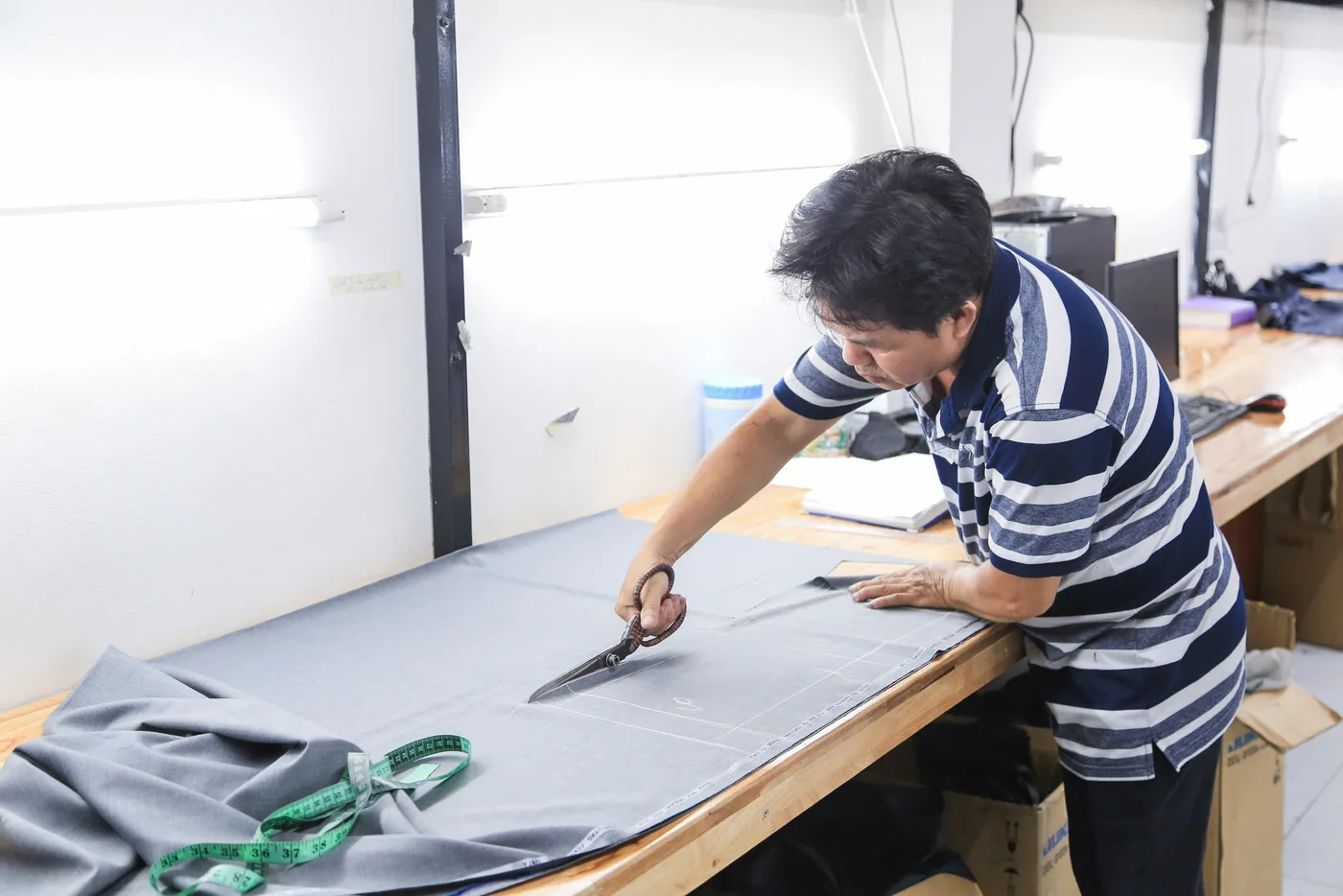
Buying your own cloth is worth it when you already have a special piece: cloth given to you, cloth bought abroad, or a colour or pattern that is hard to find. If it is only to save money, work it out carefully first.
At Mon Amie, the making charge for one shirt when the customer brings cloth is VND 800,000. A complete shirt including the cloth is VND 850,000 in Cotton Modal and VND 1.7 million in 100% Cotton. Both are listed prices excluding 8% VAT.
For an everyday shirt, choosing cloth at the shop is usually simpler: you don't have to work out metres, you don't worry about running short, and the price difference isn't large. The full table is on the price list.
Whether you bring cloth or choose it at the shop, the tailor still needs your measurements to know exactly how much is needed. A single shirt usually takes 3–7 days. To understand more about which measurements affect the amount of cloth, the article on measuring for a made-to-measure shirt: measurements, fabric allowance and fittings goes into more detail; and if you are working out cloth for a whole suit, see how many metres of cloth to make a men's suit.
Frequently asked questions
How much is needed to make two or three shirts from one length?
Usually a little less than doubling or tripling the allowance for one shirt, because the tailor nests the pattern pieces of the shirts into one another. But the saving is not large, so still buy the full amount from the table multiplied by the number of shirts, to be safe.
Should I keep the leftover cloth after making?
Keep one piece. Later, when a shirt needs a patch, a small part replaced, or you want a pocket square in the same colour, a piece from the same lot is the hardest thing to find again.
Does a three-quarter or roll-up sleeve shirt use as much cloth as long sleeves?
Nearly the same if it is a long sleeve made for rolling up. If it is a cut three-quarter sleeve, the amount lies between long and short sleeves.
Buy by the table, with 10 cm extra
How much fabric to make a shirt depends on the cloth width first, then the size: wide cloth about 1.8–2.0 m for a long-sleeved shirt of average cut, narrow cloth about half a metre more. If you don't want to work it out yourself, book an appointment at a showroom to choose cloth that is in stock, and the stylist will measure and take care of the rest.