
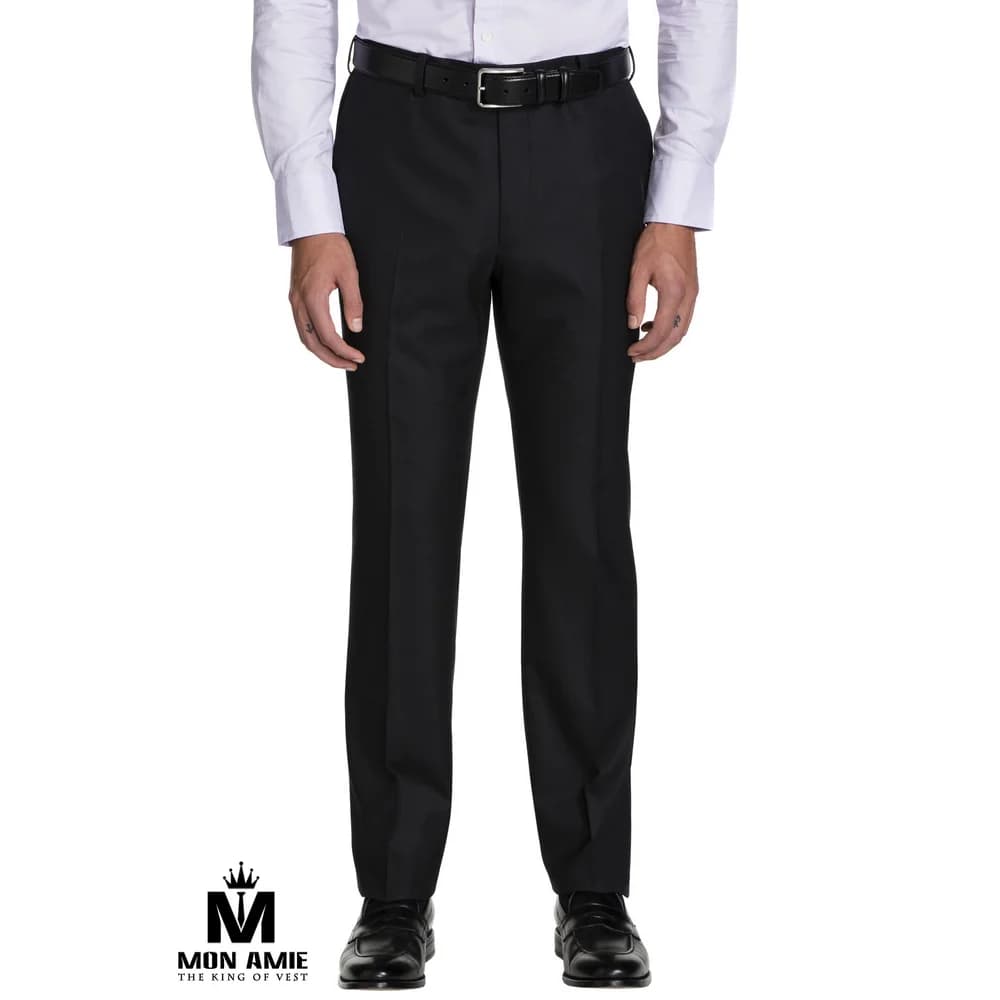
Some places measure trousers by wrapping a tape around your stomach, running one line from the waistband to the heel, and writing down two numbers. Those two numbers are enough for the waistband and the leg length, but they say nothing about the places where trousers usually fail: digging in at the rise when you sit, pulling across the seat when you bend, binding at the thigh when you step onto a bike. So asking where to have trousers made is really asking who measures the upper half carefully for you.
The short answer
Have trousers made where the tailor measures five points carefully: where you like to wear the waistband, the seat, the thigh, the front and back rise, and your standing profile from the side. Before ordering, ask whether you can sit and walk in the trousers at collection, and how they will be adjusted if they don't fit.
Five measuring points that are easily rushed
Stomach and trouser length get measured everywhere. The five points below take a few minutes more, and you can see in the session whether the tailor does them.
| Measuring point | What a careful tailor does | If skipped, trousers tend to |
|---|---|---|
| 1. Waistband position | Asks whether you usually wear trousers at the waist or low under the navel, sometimes has you fasten your belt as you do every day and measures at exactly that spot | Sit away from where you are used to: biting into the stomach when you sit, needing a tug upward when you stand |
| 2. Seat | Asks you to take your wallet and phone out of your pockets, stand with feet together, and measures the fullest point | Pull across the seat, dragging the side pockets open; or leave spare cloth at the back |
| 3. Thigh | Measures the fullest part of the thigh, close to the rise; asks whether you train your legs or ride a motorbike a lot | Bind on a long stride, or when you sit on a saddle |
| 4. Front and back rise | Measures from the front waistband through the legs to the back waistband, noting the front and back portions separately | Dig in when you sit, or sag into a pouch of cloth between the legs |
| 5. Side profile | Steps back and looks at you from the side, noting whether the seat is prominent or flat, whether the stomach protrudes, whether you stand arched or slightly stooped | Show diagonal creases or horizontal creases under the seat; the back of the waistband won't sit still when you bend |
Why the waistband position has to be asked first
Every measurement below it is taken from the waistband. For the same person, trousers worn at the natural waist need a longer rise than trousers worn low under the navel, so measuring the rise before settling the waistband means measuring from a point that doesn't exist yet. Someone with a stomach often suits a higher waistband, sitting above the bulge to hold the stomach in; the tailor needs to know whether you want that or are used to a low waistband.
Measured standing, with allowance for sitting
When you sit, the seat and thighs spread and the rise is pulled tighter. Trousers measured as a perfect fit standing will feel tight when you sit through a two-hour meeting or half an hour on a motorbike. An experienced tailor asks how you live and adds allowance for movement to suit, rather than using a single standard amount for every customer.
Back rise follows the shape of the seat
The more prominent the seat, the longer the back rise needs to be so the back of the waistband isn't dragged down when you bend and sit. Ready-made trousers use a standard proportion, so men with a very prominent or very flat seat often struggle at exactly this point. A horizontal crease under the seat can come from tightness or from excess back rise, and only a tailor looking directly can say for sure.
Questions to ask the shop before ordering
- Which points will the trousers be measured at? A usable answer includes the seat, thigh and rise, not only the stomach and the length.
- Are the measurements written on a sheet and kept for next time?
- If the trousers don't fit at collection, how are they adjusted, and how many days does it take?
- What percentage of wool is this cloth, and is it suitable for wearing to work every day? If this is your first pair, the order of colours for your first five pairs of trousers helps you choose colours.
- How long until the trousers are ready?
Signs to look for another shop
- They only ask what trouser size you wear and then add or subtract from that.
- They only measure the stomach and the length, and never touch the seat, thigh or rise.
- They can't say how they handle trousers that don't fit.
How Mon Amie makes trousers
Mon Amie compiled this article, so the section below doesn't rate itself but only lists what has been published about separate trousers, for you to check against the five measuring points above. For other details, ask the stylist at the measuring.
- Measuring: in full on an individual measurement sheet, and your measurements are kept for life.
- Price: Kevinlli trousers VND 1.2–4 million depending on wool content, excluding 8% VAT; if you bring your own cloth, the making charge is VND 800,000. How to work out the full figure with tax and the larger-size surcharge is in the article on men's trousers prices, and the prices for other cloth ranges are on the price list.
- Time: a single pair of trousers takes 3–7 days, or as little as 24 hours when urgent.
- If the trousers aren't right: if the trousers do not look right or do not match the style agreed, Mon Amie alters them until you are satisfied; if they still fall short, you receive a 100% refund.
Mon Amie's workshop is at the showroom at 80–82–84 Đường 3/2, P. Hòa Hưng, Ho Chi Minh City (0901.811.116), open 8:30 a.m. – 9:30 p.m. every day. The addresses of the other four showrooms are on the showroom page; the price of separate trousers is the same wherever you go.
Frequently asked questions
If a ready-made pair is only too long in the leg, do I need made-to-measure?
No. If the seat, thigh and rise all fit, a hem is enough; at Mon Amie, hemming trousers bought elsewhere is VND 100,000. Made-to-measure is only worth it when the upper part of the trousers doesn't fit.
What should I wear to the measuring?
Wear the trousers you wear most, with the belt where you are used to it and your pockets empty; carry your wallet and phone in your hand. Bring the shoes you plan to wear with them so the tailor can settle the leg length.
I ride a motorbike a lot. What should I tell the tailor?
Say plainly that you ride every day so the tailor leaves enough room at the thigh and rise for the saddle posture. Cloth of 60–70% wool suits trousers worn a lot; cloth of 80% wool and above is smoother but quicker to shine where it rubs.
Should I bring my old pair that fits to the measuring?
Yes. That pair tells the tailor how you like the fit, the length and the waistband position. But you still need to be measured on the body, because the old trousers may have stretched, been altered, or you may have gained or lost weight since you bought them.
Choose who measures first, then the cloth
A shop that measures all five points and says clearly how it adjusts trousers that don't fit is the one to trust with your first pair. If you want to be measured at Mon Amie, book an appointment and come wearing the trousers you wear most.