

The proposal sat on the director's desk for three days and nobody signed it. Not because the idea of uniforms was bad, but because one number was missing: what is the total cost, and who is responsible for measuring, receiving and inspecting? A staff uniform proposal gets approved quickly not because it is eloquent, but because it answers every question the signer will ask. This article gives you a complete framework to write your own.
Quick answer
A staff uniform proposal needs eight parts: rationale, objectives, target group and quantities, product description, budget estimate, measuring and tailoring plan, tailor selection criteria, and recommendation. Once approved, it is issued together with a decision that sets out the rules for wearing the uniform.
Who writes the proposal and who approves it?
Normally the proposer is the head of HR and administration or whoever is in charge of the brand. The approver is the board of directors, or the chief accountant if a large budget is involved. Some companies also need the opinions of the heads of departments whose staff will wear the uniforms.
To make the proposal convincing, the writer should prepare three things before starting: the list of staff covered, the expected budget, and at least two or three tailor options to compare.
What parts does a proposal framework include?
- Title, addressee, reference number. State the subject clearly: “Re: Proposal to make uniforms for employees, year …”.
- Basis and rationale. Why uniforms are needed: building an image, standardising, receiving clients, replacing old uniforms.
- Objectives. A professional and consistent look, brand identity, confidence for the team.
- Target group and quantities. Which departments, how many people, how many sets per person, men and women.
- Product description. Style, colour, fabric, logo, accessories.
- Budget estimate. Broken down by item, with the calculation method.
- Implementation plan. The milestones: choosing the tailor, measuring, making, fitting, delivery.
- Tailor selection criteria and recommendation. The proposed supplier and the approval deadline.
A proposal template for you to fill in
[COMPANY NAME] No.: …/TTr-…
PROPOSAL Re: Proposal to make uniforms for employees, year [year]
To: Board of Directors
1. Rationale. [State the reason: building the company image, current uniforms are worn out, staff expansion, receiving partners…]
2. Objectives. [Consistent identity, a more professional image, confidence for staff…]
3. Target group and quantities. Department [name], [number] employees in total, of which [number] men and [number] women; [number] sets per person.
4. Product description. [Style, colour, fabric, logo, accessories].
5. Budget estimate. Total [amount], covering fabric, tailoring labour, accessories, measuring and alterations. See the appendix for details.
6. Implementation plan. [Milestones for choosing the tailor, measuring, making, fitting, delivery].
7. Recommendation. The Board of Directors is respectfully requested to approve the plan and assign [department] to carry it out.
Respectfully. Proposer: [name]. Head of department: [name]. Approved by the Board of Directors: [name].
Replace everything in square brackets with your company's real information.
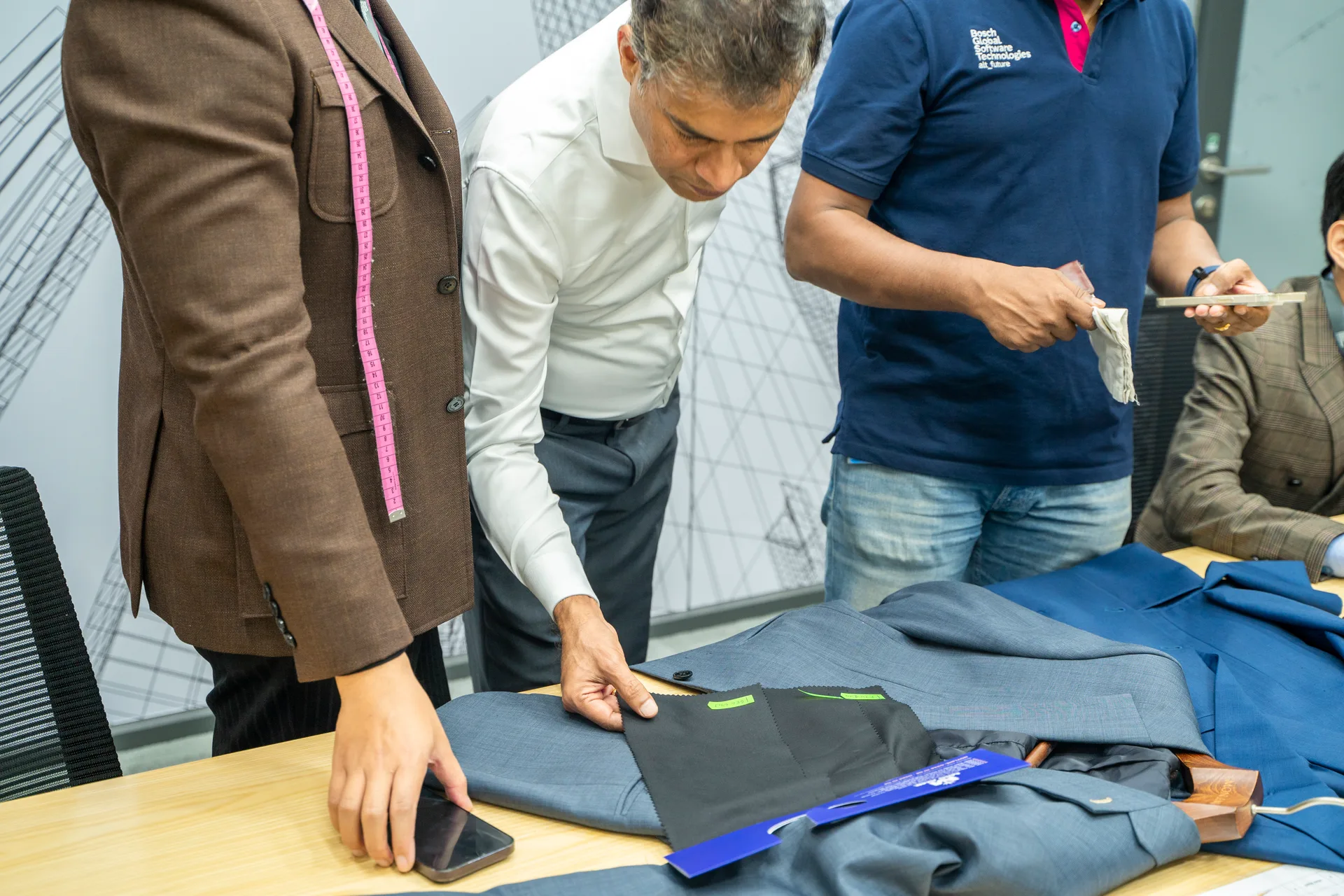
Writing the budget section so the signer feels confident
The budget is the part the approver reads most closely. Break it into items and state how each is calculated, rather than writing a single round number:
| Item | How it is calculated | Note |
|---|---|---|
| Fabric and tailoring | Number of sets × unit price per set, by group | Men's and women's may differ |
| Accessories | Logo, name tag, tie or scarf, if any | State clearly who bears the cost |
| Measuring and fitting | Usually already included in the unit price | Ask the tailor to confirm |
| Alterations | Number of free alteration rounds | Put it in the contract |
| Top-up orders | New staff, replacements | Provision by year |
If you want to understand how tailors quote, the article company uniform quotation: how to read it helps you read each line.
Measuring and tailoring schedule: a sample plan
This is an illustrative framework; the actual timing depends on quantities and on the tailor:
| Phase | Activities | Responsible |
|---|---|---|
| Week 1 | Finalise the plan, sign the contract, choose fabric and style | HR and administration, tailor |
| Week 2 | Measure each person, fill in measurement sheets | Tailor, point person in each department |
| Week 3 | Making, the tailor's internal inspection | Tailor |
| Week 4 | Fitting, alterations | Tailor, employees |
| Afterwards | Delivery, acceptance, storing measurements for top-up orders | HR and administration |
The most important point of this schedule is having a point person in each department to gather staff for the right measuring session so that nobody is missed.
Criteria for choosing a uniform tailor
When recommending a tailor, the proposal should set out clear criteria instead of choosing on low price:
| Criterion | Question to ask |
|---|---|
| Individual measuring | Is each employee measured individually, or given standard sizes? |
| Fabric and construction | What fabric, what composition, and how is the structure built? |
| Measurement records | Are measurements stored so that later top-up orders can be made? |
| Alterations | How many free alterations, and within how long? |
| Experience | Which types of businesses has it served? |
| Schedule and commitment | Does it deliver on time, and is there a penalty or compensation? |
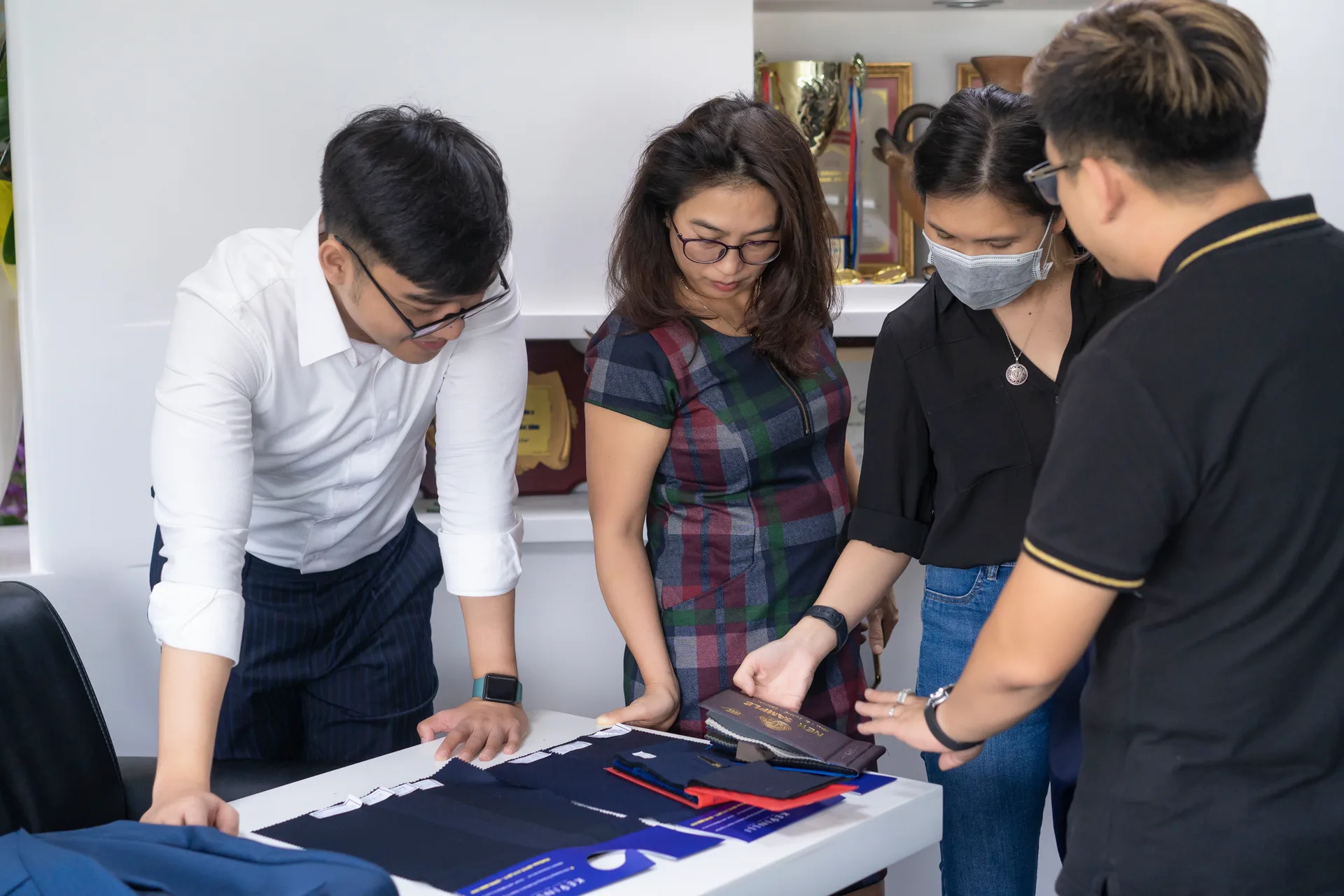
Uniforms are a major area of Mon Amie, in two directions. Suit uniforms and premium uniforms: each team member is measured individually, with no standard sizing, with fabric and construction to the standard of a made-to-measure suit, and with the measurements of the whole team managed for later top-up orders. T-shirt, polo and shirt uniforms in large quantities: Mon Amie handles these through the website maydongphuc.vn. For leadership teams, sales, receptionists and brands that value their image, see the bespoke uniform service below.
A template for the uniform issuance decision
After the proposal is approved, many companies issue a decision to set out the rules for wearing the uniform. Here is a short framework you can adjust:
DECISION on making and using staff uniforms
Article 1. Approve the plan to make uniforms for [target group] in a quantity of [number] sets, with a total budget of [amount].
Article 2. Assign [department] to organise the measuring, making, receiving and handing over of the uniforms according to the attached plan.
Article 3. Rules for wearing the uniform: worn on [days] and at [events]; keep and care for it; procedure for exchange and alteration when body shape changes.
Article 4. The departments concerned are responsible for implementation. The decision takes effect from the date of signing.
If your company does not yet have a general policy on wearing uniforms, the article company uniform policy: a template framework gives a fuller framework.
Common mistakes
- Giving only a total, without itemising. The approver sees no basis and doesn't dare sign.
- Choosing a tailor on the lowest price alone. Uniforms in the wrong size or fit cost far more when they must be redone.
- No point person for measuring. Staff turn up at the wrong times, get missed and have to be measured again.
- Forgetting top-up orders. With new staff and changes in body shape, and no stored measurements, everyone is re-measured from scratch.
- Forgetting the usage rules. You have the uniforms but nobody knows which days to wear them.
Tips from a Mon Amie master tailor
The master tailor often says: “Whether a uniform looks good depends on the person standing at the end of the line.” Meaning, if only the first few people in line fit well and the rest wear “standard sizes”, the whole team looks less polished. That is exactly why suit uniforms are measured person by person. A small tip for whoever is writing the proposal: propose measuring the group in two or three consecutive sessions rather than scattered ones, so the tailor brings enough samples to try and staff remember the schedule. And have a few sets made and tried first, before everything is made at once, so the whole company agrees on the cut and colour. For the detailed measuring process for businesses, see company suit uniforms: the measuring process.
Frequently asked questions
Where should a staff uniform plan start?
Start from the list of people covered and the expected budget, then choose the style and the tailor. Only with clear quantities and budget can a tailor quote accurately.
What should a decision to make staff uniforms contain?
Approval of the plan and budget, assignment of the responsible department, rules for wearing and care, and the effective date. The template above is enough for most companies.
How long does it take to make staff uniforms?
It depends on the quantity, the type of uniform and the tailor's capacity. For suits measured individually, there are extra measuring and fitting steps, so ask the tailor for a specific schedule as soon as you get the quotation.
What should I prepare to make uniforms for company employees?
The list of staff, the style you want, colours following your brand identity, a logo if you have one, and the budget. If you would like to talk with Mon Amie, book an appointment for advice scaled to your company.
Conclusion
A good staff uniform proposal is not long, but it answers everything: why, for whom, how much, when, and whom to choose. When those answers are ready, getting it signed is little more than a formality. If your company needs suit uniforms for leadership, sales and reception teams, see Mon Amie's bespoke uniform service.