
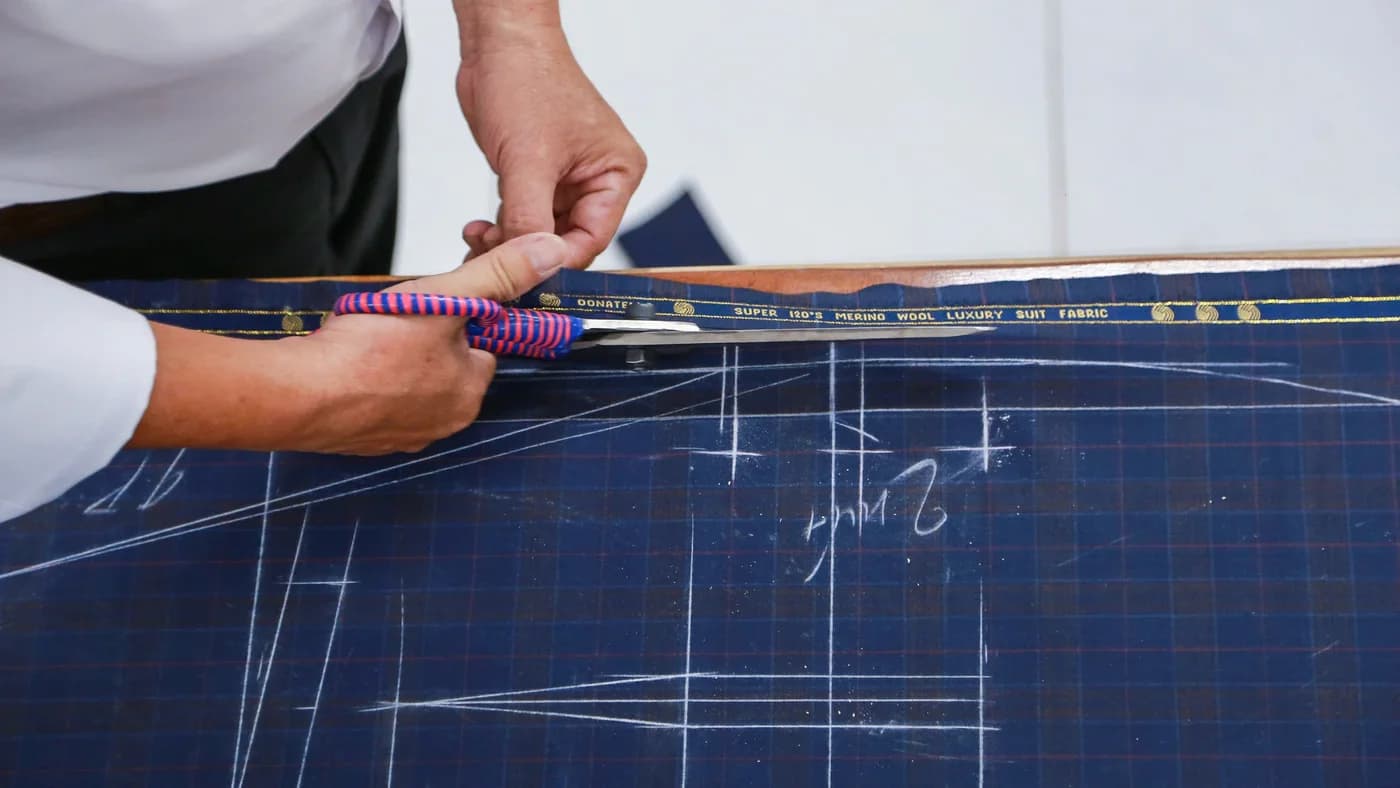
There is a long-held prejudice: wool is a cloth for cold countries, and wearing it in Saigon is self-torment. It sounds reasonable, but it is true for only part of the story. Wool is the fibre from sheep's fleece, and the same word "wool" can mean a thick coat for a Northern European winter or a fine, light, openly woven cloth suited to tropical climates. So is wool fabric good for suits in Vietnam? The answer is yes, provided you choose the right kind.
The short answer
Wool is good for making suits because it breathes, absorbs moisture, holds its shape and lasts. The drawbacks are the higher price, the need for dry cleaning, slight creasing and possible pilling at points of friction. In a hot, humid climate, choose fine wool (Super 100s and above) in a light weight with an open weave; avoid flannel and thick tweed.
What is wool fabric?
What wool fabric is, put simply, is cloth made from sheep's fleece (or from some other animals, such as cashmere goats). When people say wool cloth, they usually mean processed sheep's wool: washed, combed, spun into yarn and then woven. The two common yarn types in suits are worsted (combed yarn, with a smooth surface and a tight weave) and woollen (carded yarn, with a fluffy surface and more warmth). Most office suits use worsted.
In the trade, the fineness of wool fibre is written as "Super" and a number: Super 100s, 120s, 150s. The higher the number, the finer the fibre and the softer, lighter and smoother the cloth, but also the more delicate. If you want to understand this scale in depth, the article what is yarn count explains it thoroughly.
Is wool fabric good? The advantages when making suits
Breathable and temperature regulating. Wool fibre has a slight crimp, so it holds many small pockets of air that let vapour escape while keeping the temperature steady. That is why a lightweight wool suit is usually more comfortable in hot weather than a polyester suit of the same thickness.
Absorbs moisture well. Wool absorbs moisture from the body without feeling wet and clammy, so the jacket feels less stuffy when you perspire lightly.
Elastic, and recovers its creases. Wool fibre has natural elasticity; slight creases usually drop out when the jacket is hung overnight.
Holds its shape well. A tightly woven wool allows the structure of the jacket to be clearly built, with sharp shoulders and lapels that stand. That is how a suit still looks good after many wears.
Durable when cared for properly. A good wool suit lasts many years if it is rotated and dry cleaned at the right time.
The drawbacks of wool fabric: a straight talk
It costs more than polyester. Fine, long-fibre wool costs much more than synthetic blends.
It creases slightly when you sit for long. Some loosely woven wools crease at the elbows and behind the knees after a long day. Hanging the suit to rest will recover them.
It can pill. This happens at points of friction such as the underarms and the sides (where a bag is carried), especially with woollen cloth or polyester blends.
It needs dry cleaning. Wool should not be machine washed often, and too much dry cleaning also wears the cloth. Most of the time, airing and steaming is enough.
If it is too thin, it wears out. Super 150s and above is very beautiful, but if it is worn five days a week, the cloth wears faster than the 110s to 130s range.
Wool suit cloth in Vietnam's hot, humid climate
What decides the feel when you wear it is not just the word "wool" but three factors: fineness, weight and weave.
| Factor | Choose for a hot, humid climate | Avoid |
|---|---|---|
| Fineness | Super 100s – 140s, depending on how often you wear it | Wearing Super 160s and above every day |
| Weight | Light, about 200–260 g/m (for reference) | Above 300 g/m, unless used in air-conditioned rooms |
| Weave | Open weave (tropical, hopsack), fine-yarn weave | Flannel, tweed, dense weave |
| Lining | Half lining or unlined | Thick full lining |
Read more in the article what is tropical wool to learn about the thin, openly woven wool made for tropical climates.
Pure wool or a wool blend?
Pure wool (100%) gives the softest hand, the most breathability and the cleanest shape, but costs more and needs careful care. Wool-polyester blends are more durable, crease less and are more affordable, but breathe less and shine easily if ironed too hot. A reasonable blend ratio (around 50–70% wool) is usually the balance for everyday wearers who ride motorbikes and need a suit that resists creasing.
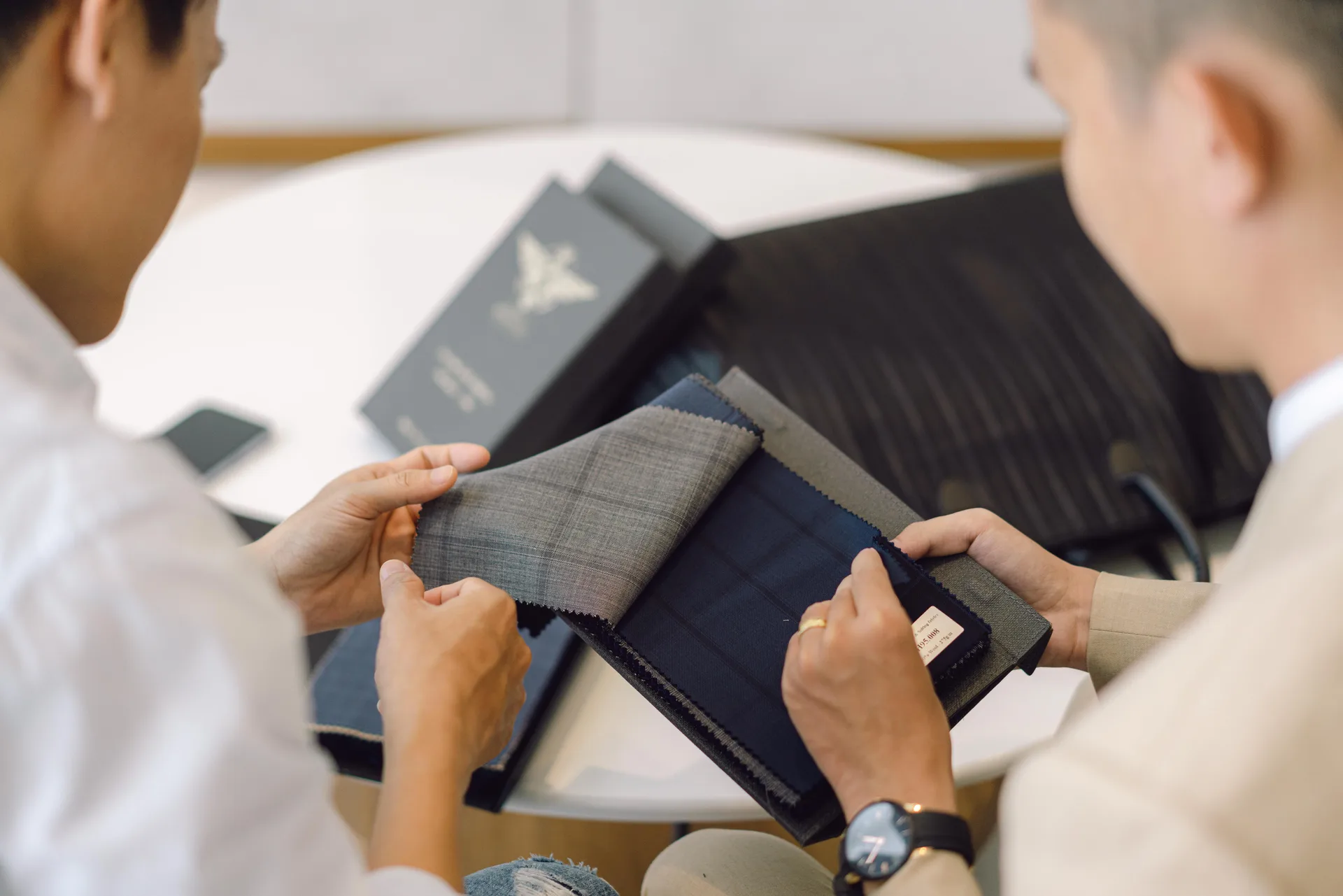
Mon Amie groups its cloths into three lines by composition and mill: Essential uses Kevinlli with 40–70% wool (100s–140s), suitable as a starting point; Signature uses Kevinlli with 80–100% wool (140s–150s) alongside Dolce & Taylor, Luciano, Salford and Vercelli; Heritage is cloth from Italian and English mills such as Canonico, Holland Sherry, Dormeuil and Scabal. You can see these materials in the cloth library.

When to choose wool and when not to
| Situation | Choose wool? | Suggestion |
|---|---|---|
| Air-conditioned office | Yes | Super 110s–130s, moderately light |
| Events, weddings, evening parties | Yes | Super 140s–150s, an elegant drape |
| Riding a motorbike, lots of time outdoors | Consider | Light wool blend, open weave |
| Daily wear, limited budget | Wool blend | Essential, reasonable blend ratio |
| Blazing sun, many hours on the move | Not with heavy cloth | Linen-wool blend, very light wool |
Tips from Mon Amie master tailors
Rotate your suits. Do not wear the same suit two days in a row. Hang it to rest for at least a day so the wool fibres can spring back and the moisture can escape. This does more than anything else to extend a suit's life.
Do not dry clean too often. Cleaning chemicals stiffen the wool fibres. Steaming and a light brushing are enough for most wears.
A half-lined wool jacket is lighter. In Vietnam's climate, a half-lined or lightly lined jacket lets vapour escape better. Tell your tailor clearly when you order. See also the article what is wool, the foundation of a suit to master the basics.
Frequently asked questions
What kind of fabric is wool?
It is cloth made from the wool fibre of sheep's fleece, and it can also come from goats or camels. For suits, mainly worsted wool is used, a combed yarn that gives a smooth surface and a tight weave. It differs from knitting wool in fineness and tightness.
Is wool suit cloth hot to wear?
It depends on the type. Thick wool such as flannel or tweed is hot in Vietnam's climate. Fine wool in a light weight and an open weave breathes much better than synthetic cloth of the same thickness. Choose Super 100s and above, and state your purpose clearly when choosing cloth.
Does wool crease easily?
It creases slightly when you sit for a long time, but the creases usually drop out when the jacket hangs overnight, thanks to the elasticity of the fibre. Wool-polyester blends crease less than pure wool.
Does a wool suit need dry cleaning?
Most wears do not need it. You only need to hang it airily, brush off dust and steam it. Dry clean when there is a stain or a few times a season, and not too often because it wears the cloth faster.
How does wool cloth differ from knitting wool?
In terms of raw material, both are wool. The difference lies in processing and weaving: worsted wool for suits uses fine yarn, a tight weave and a smooth surface, while knitting wool for sweaters is usually thicker, fluffier and warmer.
In closing
Is wool fabric good for suits? Yes, as long as you choose the right fineness, the right weight and the right use, because wool is not the cloth of cold countries alone. If you would like to touch each cloth and choose by budget, see Mon Amie's price list, or book an appointment so a master tailor can advise on wool for your own way of dressing.