
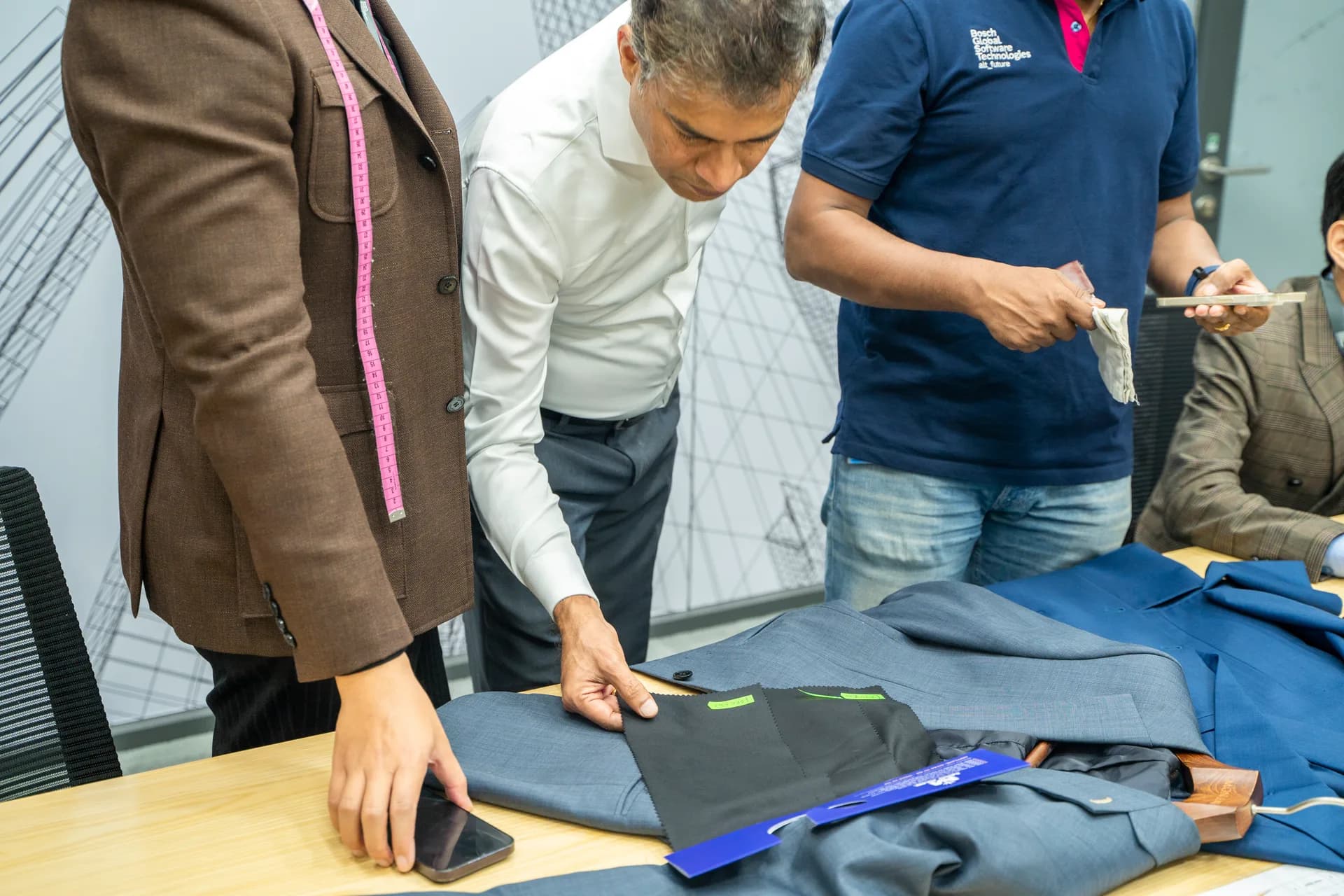
Put two pieces of cloth on a table, one woven in England, one in Italy, then close your eyes and feel them. A tailor of long experience can almost always tell them apart: one feels firm and full in the hand and stands upright when you lift it; the other is thin, light and soft, and flows down like water. Neither is "better". They are two temperaments, and only by understanding English wool fabric will you know when to choose it.
Quick answer
English wool fabric is usually thicker, tightly woven, holds its shape, wears well, creases little and feels slightly "robust". Italian cloth is usually soft and light, with a smooth drape and a gentle sheen on the surface. In Vietnam, English cloth suits air-conditioned rooms, the northern cold season and trips abroad. On hot days outdoors, choose a lighter weight.
Why English cloth is thick and firm
Britain's suiting tradition was born to be worn in a cold, damp and rainy climate. The cloth had to be warm, thick, crease-resistant and able to withstand daily wear. So English cloth is usually tightly woven, high in weight, with a firm surface.
In terms of numbers, traditional English suit cloth is usually heavier, while Italian cloth leans lighter. Each mill has its own weight range, but the general rule is that English cloth leans towards a structured feel and Italian cloth towards a soft one.
Comparison table: English wool fabric vs Italian wool fabric
| Criterion | English wool | Italian wool |
|---|---|---|
| Weight | Usually heavier | Usually lighter |
| Hand feel | Firm, full | Soft, smooth, light |
| Drape | Holds its shape, structured | Flows smoothly, fluid |
| Creasing | Resists creasing, keeps its cut well | Creases slightly, recovers quickly |
| Durability | High, suits daily wear | Beautiful but more delicate in very fine yarns |
| Colour | Subdued, classic | Brighter, more vivid |
| Style | Polished, serious | Light, modern |
| Suits | Air-conditioned rooms, cold seasons, serious businessmen | Warm climates, a soft style |
This is a general tendency, not a hard rule. There are English cloths that are thin and light, and Italian cloths that are dense. But if you ask about the "typical feel", the table above is fairly accurate.
As for mills, Holland Sherry is a familiar English name. On the Italian side, Vitale Barberis Canonico, Loro Piana and Zegna are mentioned often. At Mon Amie, the Heritage line uses cloth from Canonico, Holland Sherry, Dormeuil and Scabal, priced above VND 20 million, with some suits up to VND 60 million.

Thick wool, heavy woollen cloth: thick does not mean hot
Many men hear "thick cloth" and immediately think hot. In fact breathability depends on three things, not just thickness:
- Weave: an open weave breathes better than a tight weave of the same weight.
- Yarn count: a finer yarn makes softer cloth that feels less "heavy".
- Type of yarn: worsted (combed) yarn gives a smooth, more breathable surface than woollen (carded) yarn, which is fluffy and warm.
Heavy woollen cloths such as flannel and tweed usually belong to the woollen group: fluffy, warm, suited to cold seasons. A thick worsted can still be breathable if it is woven properly. For how to tell the two groups apart, read the article on worsted and woollen wool cloth.
When English cloth suits Vietnam's climate
Ho Chi Minh City is hot and humid all year round, so thick English cloth is not a choice for wearing outdoors often. But there are circumstances in which it comes into its own:
| Situation | Thick English cloth | Worth considering |
|---|---|---|
| Air-conditioned office, long closed-door meetings | Suitable | Warm cloth that holds its shape all session |
| Business trips, overseas travel in the cold season | Very suitable | Bring a single thick suit |
| Hanoi, Da Lat, Sa Pa in the cold season | Suitable | Can wear the full three-piece suit |
| Indoor wedding, air-conditioned hall | Suitable | Cloth that holds its shape photographs well |
| Outdoors, lots of walking in Ho Chi Minh City | Not suitable | Choose a lighter weight, open weave |
If you only want one suit to wear all year round in Ho Chi Minh City, a moderate weight, not too thick, is the wisest. For wool and hot climates, see also the article on whether wool fabric is any good.
Imported suit cloth: where it earns its price
"Imported cloth" is a phrase you will see everywhere, but imported does not automatically mean good. Ask for things that can be verified:
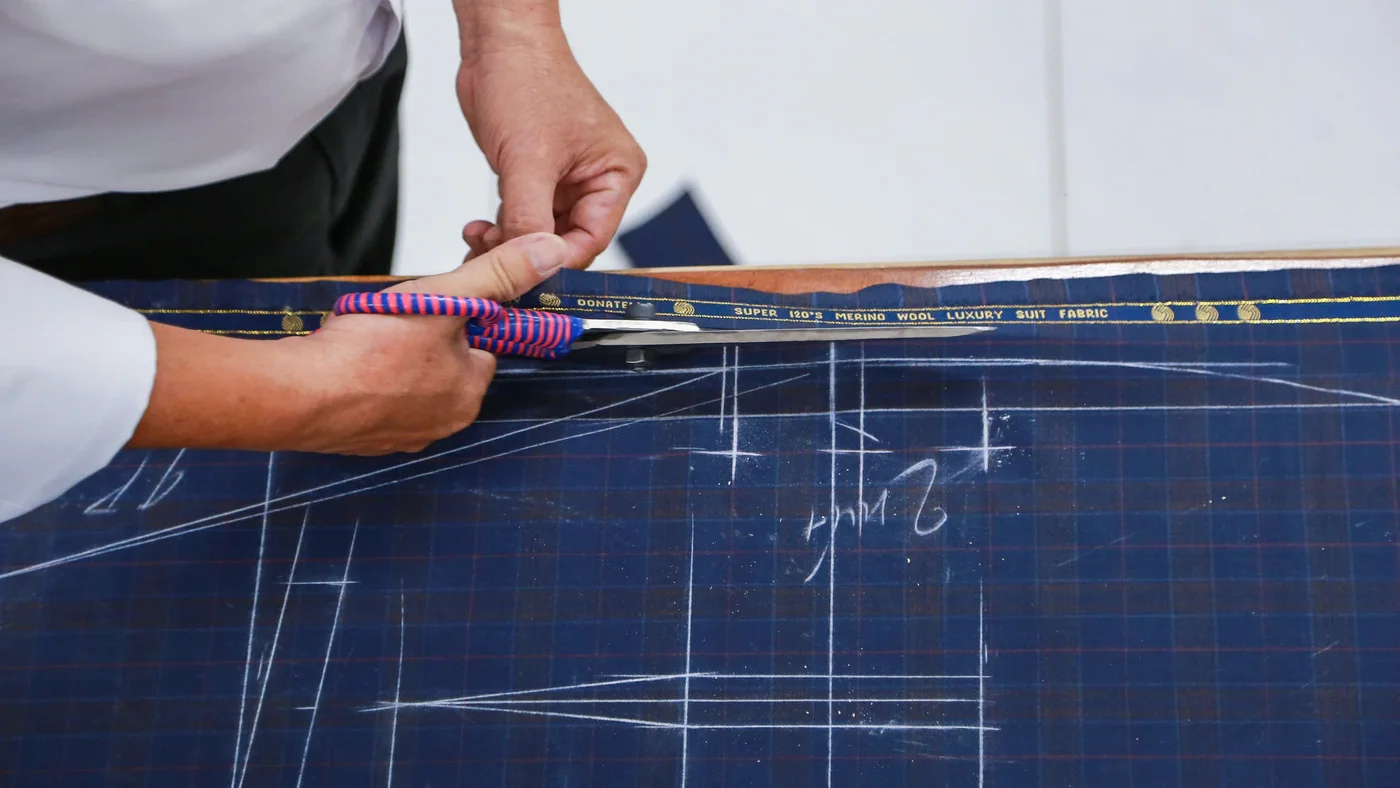
- Mill name. A reputable mill usually names itself openly, printed on the selvedge.
- Composition. 100% wool, or blended with polyester, silk or cashmere?
- Super number. 100s, 120s, 140s, 150s: the higher it is, the finer the yarn and the softer the cloth.
- Cloth weight. This determines warmth and how it feels to wear.
- Where it was woven and finished. This can differ from the brand name.
At Mon Amie, you can touch cloth from Canonico, Dormeuil, Vercelli and other mills in the fabric library, then weigh it against the price list.
How to check a piece of wool yourself
You don't need to be an expert to make a preliminary assessment:
- Touch: good cloth is soft without being limp, with a slight springiness.
- Crumple test: hold the cloth tightly in your hand for 5–10 seconds, then release. Good wool recovers almost flat.
- Look at an angle under the light: the surface is even, with no fuzzy fibres and no harsh shine.
- Check the composition: ask for the label or look at the selvedge.
- Check the drape: lift an edge of the cloth gently; good cloth drapes naturally, not stiff as paper.
Common mistakes
- Thinking thick is good. Thick in the right place is good; thick in the wrong climate is misery.
- Thinking imported means quality. You need to look at the composition and the mill.
- Choosing by mill name without touching the cloth. The same mill still makes different lines.
- Ignoring the climate and how you will use it. A suit for outdoors differs from one for a cold room.
- Choosing cloth that is too thin to beat the heat. Thin cloth creases easily and wears out quickly.
A tip from Mon Amie's master tailor
The master tailor always asks one question before touching a roll of cloth: "Where will you mainly wear this suit, in an air-conditioned room or outdoors?" The answer decides everything. Some people are passionate about thick English cloth but spend all day on the move outdoors, and within a few weeks they are reluctant to wear it. Conversely, someone who sits in a strongly air-conditioned room finds thick English cloth both warm and refined. Choosing cloth is not about picking the most glamorous mill, but about picking the cloth that suits your day.
Frequently asked questions
Is thick wool hot?
It can be, if it is tightly woven and worn outdoors in hot, humid weather. But how hot it feels also depends on the weave and the type of yarn. A thick worsted in an open weave can still breathe. In a cold air-conditioned room, thick cloth is usually comfortable.
How does thick woollen cloth differ from wool fabric?
Wool is the material, while "thick woollen cloth" usually refers to the fluffy woollen group such as flannel and tweed. They are warm and suit the cold season. Worsted wool cloth is smoother and can range from thin and light to thick, depending on the weave.
Is imported suit cloth really worth the money?
It is when you know the mill, composition, count and weight. Being imported alone does not make quality. Holding the cloth in your hand before deciding is always the surest approach.
Does English wool fabric crease easily?
Less than Italian cloth, thanks to its tight weave and its ability to hold its shape. Even so, hang it on a shouldered hanger and rest it between wears so the cloth can recover.
Closing thoughts
English wool fabric is a wonderful choice for those who like a polished, solid look and have the right setting in which to wear it. It does not replace Italian cloth; the two complement each other in the wardrobe of a discerning dresser. If you would like to feel each material for yourself, visit a Mon Amie showroom or book an appointment so a stylist can choose with you.