
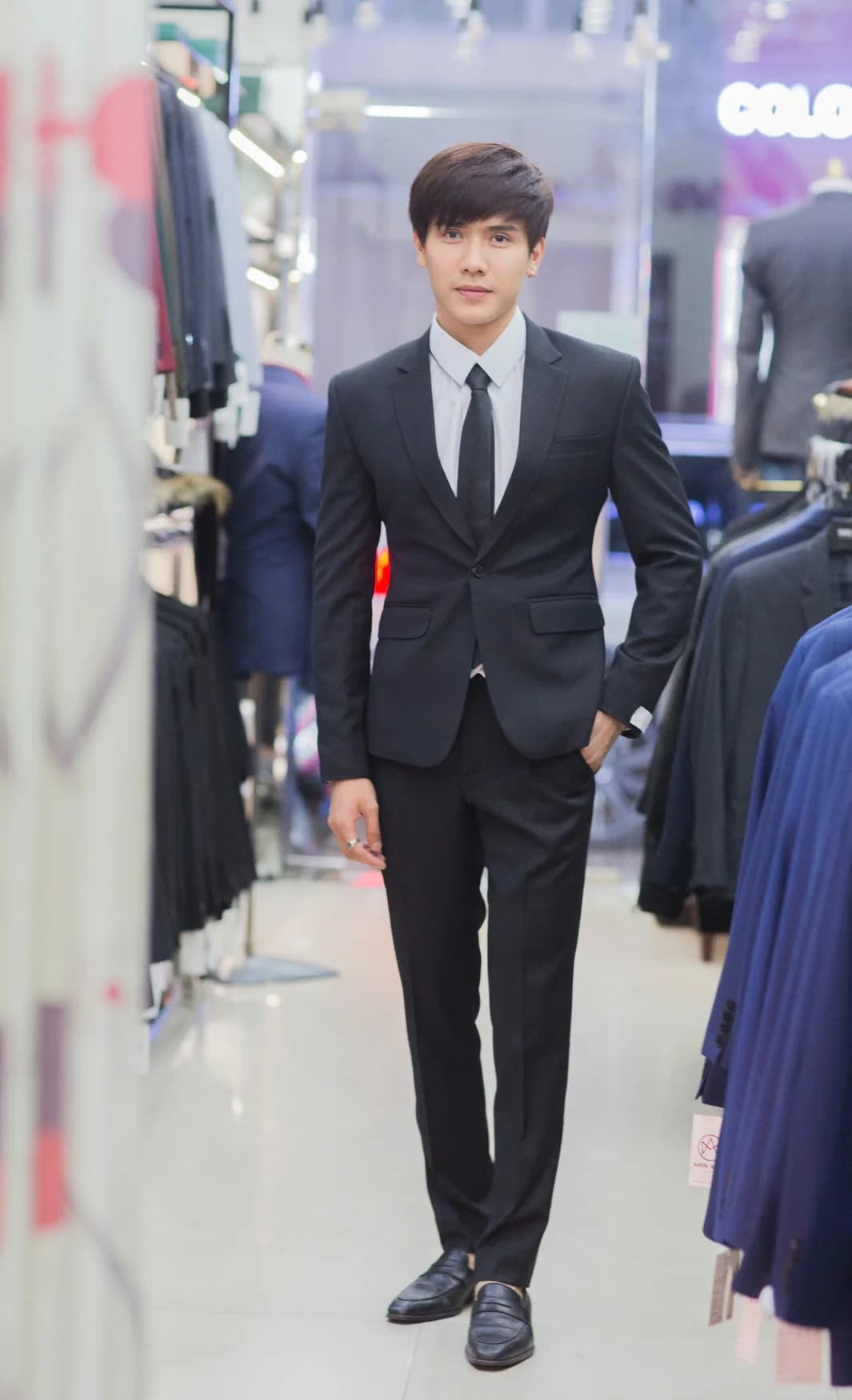
You open your phone and swipe to a photo you saved long ago: a slim young man, a jacket that fits snugly, narrow lapels, trousers cropped just enough to show the ankle. You hand it to the tailor and say, “Make me a suit like this.” This is where many people stall, because the photo looks great but a tailor needs numbers, not a feeling. This article helps you translate the Korean style suit for men into concrete specs to give your tailor.
Quick answer
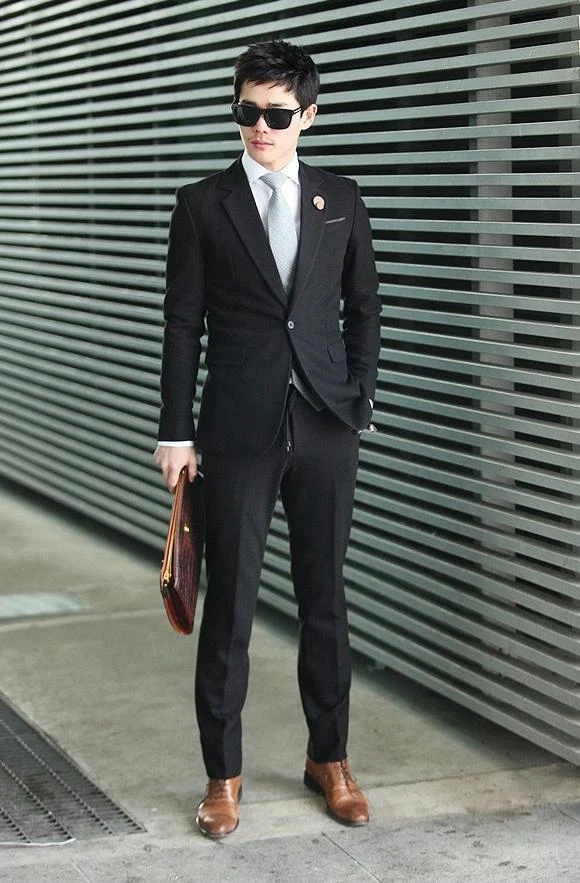
A Korean-style suit has four specs to tell your tailor: a fitted body with a compact shoulder, a jacket shorter than usual (to the middle of the seat), narrow lapels of about 6–7 cm, and tapered trousers cropped at the ankle. For Vietnamese builds, allow a little ease at the chest and upper arm so you can still move comfortably.
How is a Korean-style suit different from a regular suit?
To the eye, it is a feeling of “young and clean-cut”. To a tape measure, it is six small changes that add up, and when you have a Korean-style suit made, these are the changes you tell the tailor. The table below is a reference level; the master tailor will adjust it for each person.
| Spec | Standard office cut | Korean-style cut |
|---|---|---|
| Shoulder | Natural shoulder, moderate padding | Compact shoulder, light padding, close shoulder line |
| Body | Comfortable, roomy enough | Fitted, lightly suppressed waist |
| Jacket length | Covers almost all of the seat | Shorter, to the middle of the seat |
| Lapel | About 8–9 cm | About 6–7 cm |
| Trouser leg | Straight or slightly tapered | Clearly tapered, hem of about 17–18 cm |
| Trouser hem | Touches the top of the shoe, one break | Cropped at the ankle, almost no break |
The fastest way to recognise a Korean-style men’s suit: standing upright, the sleeve ends right at the wrist and shows about 1–1.5 cm of the shirt cuff, and the trouser leg does not rest on the shoe.
Telling your tailor correctly: 7 specs to state clearly
Instead of handing over a photo and waiting, go through each item below. Once the tailor hears them, they know straight away how to cut.
- Shoulder. Say “compact shoulder, light padding, close shoulder line.” The shoulder is the one part that can hardly be altered once the jacket is made, so it is the first place to check at the baste fitting.
- Chest and waist. Say “fitted, but with no diagonal creases when buttoned.” An X-shaped crease around the button is a sign the jacket is too tight.
- Jacket length. Say “a little shorter than usual, but still covering the seat when I sit.” A jacket that is too short looks good in photos but shows the waistband when you bend down.
- Lapel. Say “narrow lapels, about 6–7 cm.” Narrow lapels suit a slim face and a slender frame. With a round face or broad shoulders, lapels that are too narrow make the head look big.
- Buttons and pockets. One button or two are both fine. Flap pockets give an office look; jetted pockets look sleeker and suit parties more easily.
- Sleeves. Say “sleeves moderately narrow, showing 1–1.5 cm of shirt cuff.”
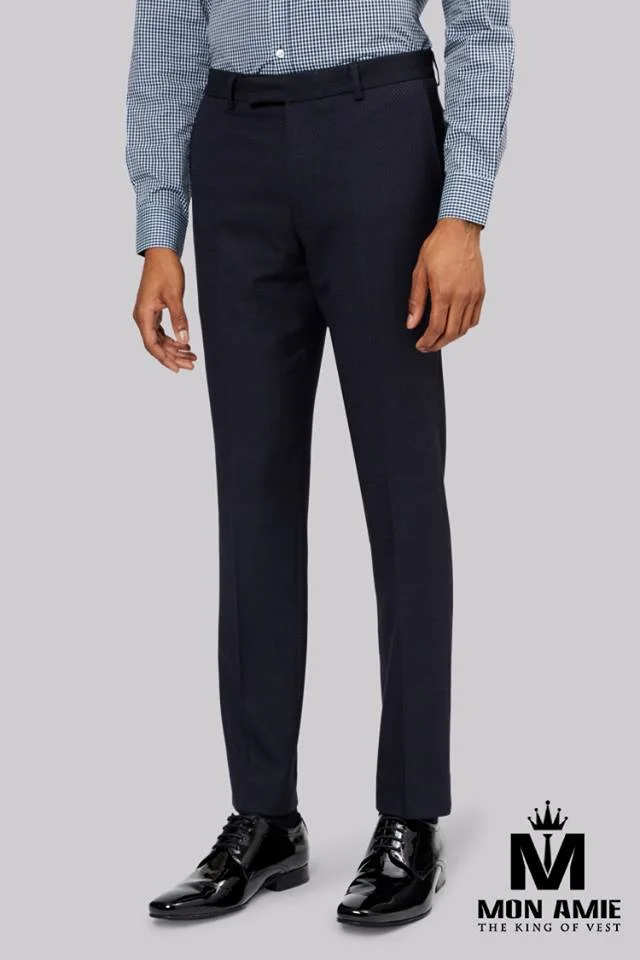
- Trousers. Say “waist sitting right at my waist, few pleats or none, leg tapering toward the hem, length at the ankle.”
A sentence often used in the showroom: “I want a suit that is fitted and clean, narrow lapels, a moderately short jacket, trousers tapered and cropped at the ankle, but I still want to be able to sit through meetings all day.” The last clause matters most, because it tells the tailor where the limit of the fit lies.
Adjusting a Korean-style suit for Vietnamese builds
The models in photos are usually tall, broad-shouldered and lean around the waist. Vietnamese men are more varied than that, so when we move this style onto real measurements, we usually divide clients into three groups.
- Tall and slim. This cut was made for you. It can be fairly close-fitting with a slightly short jacket, as long as the chest still has enough room to breathe and raise your arms.
- Medium build, small shoulders, fuller thighs. Allow a little more room at the thigh and upper arm, and keep the leg tapering gradually toward the hem rather than sharply. Trousers that are too tight at the thigh make sitting uncomfortable and the stitching easily strained.
- Fuller build, with a belly. You can still wear it, but drop the idea of a very short jacket. Choose medium lapels of about 7–8 cm, a jacket long enough to cover the seat, and two buttons sitting at the natural waist so the belly is not pushed up.
One factor specific to Saigon is the climate. A fitted suit needs light, breathable cloth even more, otherwise a close fit plus heat and humidity is very uncomfortable. You can ask the stylist about the thin wool fabrics in our cloth library when choosing the Essential or Signature line.
Choosing fabric and colour for a Korean-style suit
This style favours softer colours with little pattern:
- Common colours: navy, light grey, black, beige or cream. Light grey and beige feel young, while navy and black are more polished.
- Patterns: plain or very fine stripes. Large patterns take away the slender look.
- Cloth surface: smooth, moderately structured, not too stiff.
As for budget, Mon Amie’s made-to-measure price list for a full set (jacket and trousers) is divided into three lines: Essential from VND 4.8 to 10 million, Signature from VND 10 to 20 million and Heritage above VND 20 million. For an everyday suit in a slim cut, many men start with Essential or Signature and add a second suit once they are used to the cut. Details are on the price list page.
Common mistakes when having a Korean-style suit made
- Showing only a model photo, with no numbers. A model who is 1.80 m looking good does not mean that cut suits you. Bring the photo so the tailor understands the direction, then let the tailor convert it to your measurements.
- Too fitted. A jacket so fitted that it creases when buttoned and tears when you raise an arm will leave you stiff through the whole meeting.
- Cropped trousers that show your socks when you sit. Choose socks in the same tone as the trousers, or moderately thick socks, so that no skin shows when you cross your legs.
- Skipping the baste fitting. A fitted jacket depends on its seams, and seams are only right when tried on in person. Mon Amie’s process includes a baste fitting and adjustment step precisely to deal with this; see more on the made-to-measure process page.
A tip from the master tailor: at the fitting, raise both arms to shoulder height, then sit down. If the collar gapes from the neck or the armholes pull tight, fix it right then rather than waiting until you collect the suit.
Frequently asked questions
What is a Korean-style men’s suit?
It is a fitted suit cut with narrow shoulders, narrow lapels, a slightly short jacket and tapered trousers cropped at the ankle. It is a youthful, slender style, unlike the more generously cut traditional office suit.
Can a Korean-style men’s suit be worn to work?
Yes, if you choose navy, grey or black, plain cloth, and keep the fit moderate. In very traditional environments such as banking or law, keep to medium lapels and a slightly longer jacket.
What shoes go with a Korean-style men’s suit?
Round-toe lace-up leather shoes or plain leather loafers give a clean look. Because the trouser hem is cropped, the shoes stand out, so they should be well polished and in a colour that matches the belt.
Does a Korean-style suit suit shorter or heavier men?
Yes, but with adjustments. Shorter men should keep the jacket moderately long and the trouser leg only slightly tapered, so the legs do not look cut off. Heavier men should choose medium lapels, a jacket long enough, and avoid trousers that are too tight.
In closing
A good Korean-style suit is one where the tailor has measured the wearer’s real shape, not one that copies the model photo exactly. If you would like to bring a photo and talk it through in person, we invite you to book a measuring appointment at the showroom. You can also read more about the 6 features of the Korean-style suit cut or how to measure the suit shoulder correctly to know what you need before meeting the tailor.