
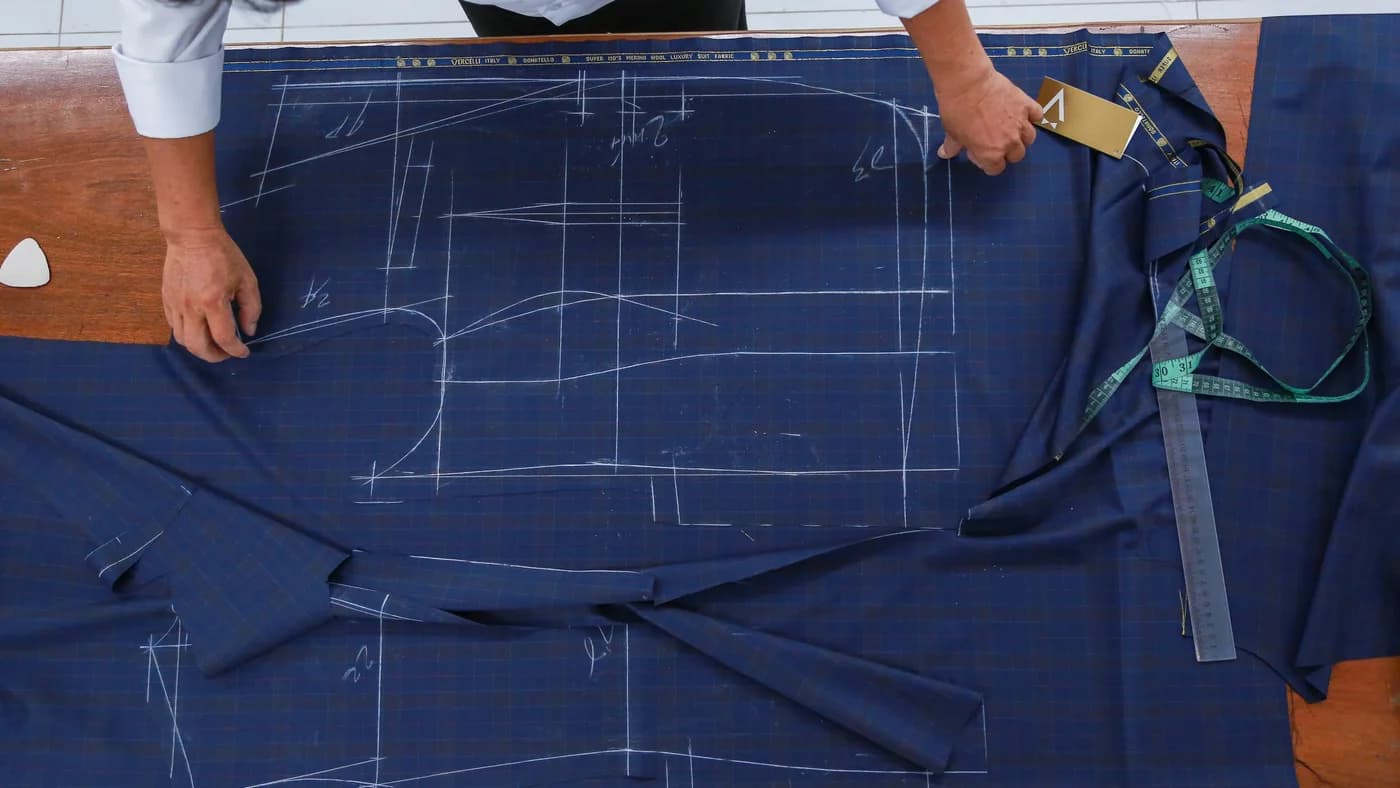
“Is this real wool?” a client asks while holding a swatch labelled 70% wool, 30% polyester. The short answer is yes, but only in part. So what is wool blend fabric? It is wool mixed with other fibres to create a cloth that pure wool cannot make, or can make only at several times the price. This article helps you read the label and understand what you are paying for.
The short answer
Wool blend is cloth woven from wool fibres mixed with one or more other fibres such as polyester, silk, cashmere, elastane, tencel or linen. The added fibres bring durability, stretch, sheen or a gentler price. For suits, the higher the wool content, the more breathable the cloth, the better it drapes and the longer it holds its shape; for a suit you wear often, generally choose 70% wool or more.
What is wool blend fabric and why blend?
Pure wool (100% wool) has many virtues: it is breathable, it drapes well, it recovers from creases by itself and it holds its shape. But pure wool is expensive, wears at friction points, and sometimes creases or shrinks in humidity. Blending in other fibres is how mills balance quality, durability and price.
Picture wool blend as a recipe: wool is the main ingredient and the added fibres are the seasoning. The right dose makes the dish better; too heavy a hand overpowers the flavour.
Common types of wool blend
| Blend | Added fibre | Strengths | Weaknesses | Suited to |
|---|---|---|---|---|
| Wool + polyester | Synthetic fibre | Durable, resists creasing, gentler price | Less breathable, tends to shine and pill | Everyday work suits, uniforms |
| Wool + silk | Silkworm silk | Smooth, soft sheen, beautiful drape | Soft, expensive, needs care | Event suits, parties |
| Wool + cashmere | Cashmere goat hair | Very soft, warm, luxurious | Expensive, pills easily, less durable | Blazers, cold-season suits |
| Wool + elastane | Stretch fibre (2–5%) | Comfortable, shapes to the body | Reduces drape if blended heavily | Slim-fit suits, active wearers |
| Wool + tencel | Cellulose fibre | Cool, smooth, absorbent | Less durable than wool + polyester | Hot-season suits |
| Wool + linen | Linen fibre | Breathable, dry, naturally creased | Creases heavily | Summer suits, outdoor parties |
For the most common type in Vietnam, wool blended with polyester, you can read more in wool-polyester blend fabric: which ratio to choose.

How to read the fabric label and blend ratio
A fabric label lists the composition in descending order. For example, “70% Wool, 28% Polyester, 2% Elastane” means wool is the largest share, polyester is second, and elastane is only 2%. Four things to watch:
- The wool percentage comes first. This is the benchmark for comparing fabrics with one another.
- The type of added fibre, because each gives a different feel. Polyester differs from silk, which differs from linen.
- The word “Super” and the number that goes with it, such as Super 110s, 120s, 150s. This is the fineness of the wool fibre: the higher the number, the finer the fibre and the softer and smoother the cloth, but also the thinner it is and the more easily it creases. At Mon Amie, the Essential line uses Kevinlli cloth with 40–70% wool (100s–140s), while the Signature line uses Kevinlli with 80–100% wool at 140s–150s, together with Dolce & Taylor, Luciano, Salford and Vercelli. The two lines show clearly how the wool content rises as you move up a cloth tier.
- The term “virgin wool” means new wool that has not been recycled. However, it speaks only to the source of the wool, not to the quality of the fibre.
Which wool blend ratio is worth the money for a suit?
There is no absolute number, but a few markers are easy to use:
- 70% wool or more: a clear wool feel, breathable, good drape, holds its shape. Worth the money for a suit worn often.
- 40–70% wool: still a good wool blend, notably durable, resists creasing and is easier on price. It suits a first suit or a uniform. Mon Amie's Essential line sits in this range.
- Below 40% wool: the cloth leans toward synthetic fibres. The price is gentle, but it is less breathable and prone to shine, so think carefully if you wear it a lot for work.
- Elastane at 2–3% is enough for comfort; above 5% it can make the jacket lose its drape and stretch out.
- Cashmere at 5–10% gives a clearly soft feel while remaining durable enough. A higher cashmere content is softer but pills faster.
You can see all the cloths in the cloth library and compare them with the price list: Essential from VND 4.8 to 10 million, Signature from VND 10 to 20 million, and Heritage above VND 20 million with the mills Canonico, Holland Sherry, Dormeuil and Scabal.
Testing cloth in the store: three quick ways
- Squeeze the cloth firmly in your hand for ten seconds, then release. If the creases mostly relax by themselves, it is good wool cloth; if the creases remain clearly visible, the cloth has a lot of synthetic fibre or is poorly woven.
- Touch it with the back of your hand instead of your palm, because the skin on the back of the hand is more sensitive for judging smoothness.
- Look at it in natural light. Cloth with a lot of polyester tends to have an unusually even shine.
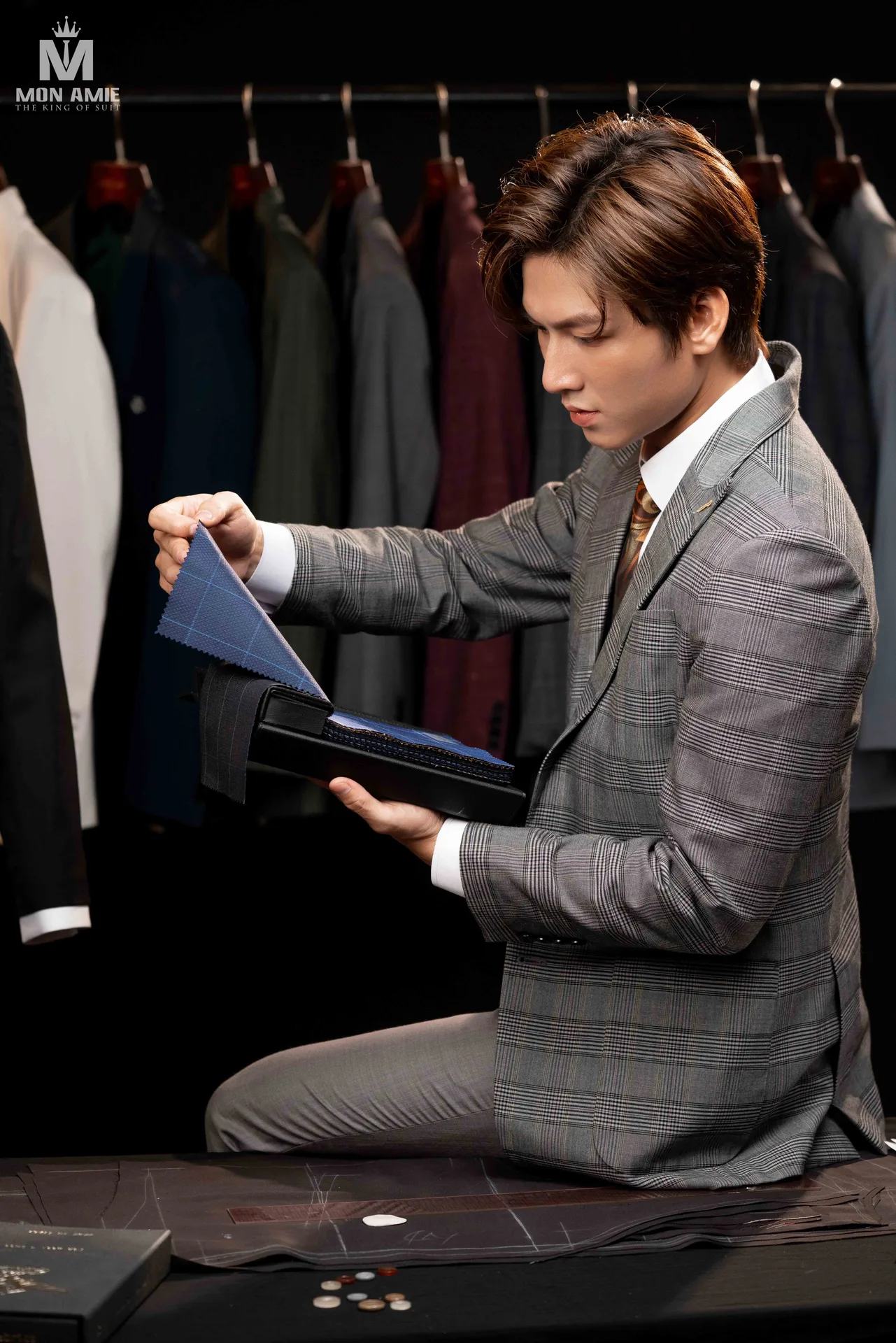
Common mistakes
- Thinking wool blend is inferior cloth. Many very good suits use wool blends, especially for daily wear, because they are more durable than pure wool.
- Looking only at the ratio and forgetting the quality of the wool fibre. 70% wool in Super 150s differs from 70% wool in Super 100s.
- Choosing thin, easily creased cloth because it is “soft”. It feels soft when you try it, but it will crease after a few times sitting down.
- Equating “wool” on the label with the Vietnamese word “len”. Wool is sheep's wool; acrylic yarn and other synthetic “len” are not wool. To tell real wool from synthetic, check the composition label rather than trusting the feel of your hand alone.
Tip from a Mon Amie master tailor: for a suit worn often, a little polyester is not the enemy. Polyester keeps the trouser knees and jacket elbows from wearing out early, so for a suit worn five days a week, a good wool blend often lasts longer than pure wool at a similar price. For a suit worn only occasionally for events, pure wool or a silk blend is truly worth it. So before choosing cloth, ask yourself how many times a week you will wear it; the answer decides the wool ratio you should choose.
Frequently asked questions
What is wool blend fabric?
It is wool mixed with other fibres such as polyester, silk, cashmere, elastane, tencel or linen to increase durability and stretch, or to lower the price.
Is wool blend fabric good quality?
Yes, if the wool content is high enough and the added fibre suits the purpose. Wool blended with polyester is durable for everyday wear; wool blended with silk or cashmere is soft and luxurious for special occasions.
Are “vải wool pha” and “vải len pha” the same thing?
Essentially, yes. Both “vải wool pha” and “vải len pha” refer to cloth in which wool is blended with other fibres. The English name is wool blend.
Is wool blend fabric hot?
Wool is a breathable fibre, so wool blend is still much cooler than many fully synthetic fabrics. For Saigon, choose lightweight wool, half-lined; if the cloth contains a lot of polyester, it will feel hotter.
How do you wash wool blend fabric?
Dry clean it or have it steam-pressed; do not machine wash it repeatedly. Air it in a well-ventilated place, away from direct sunlight. The article is wool fabric good has more detailed guidance on this material.
Conclusion
Wool blend is not second-rate cloth but a deliberate choice: blended correctly, it is more durable, easier on price and more comfortable to wear than pure wool. If you want to hold real swatches and ask about each label, book a measuring appointment and the stylist will show you the whole swatch book and explain the composition of every bolt.