
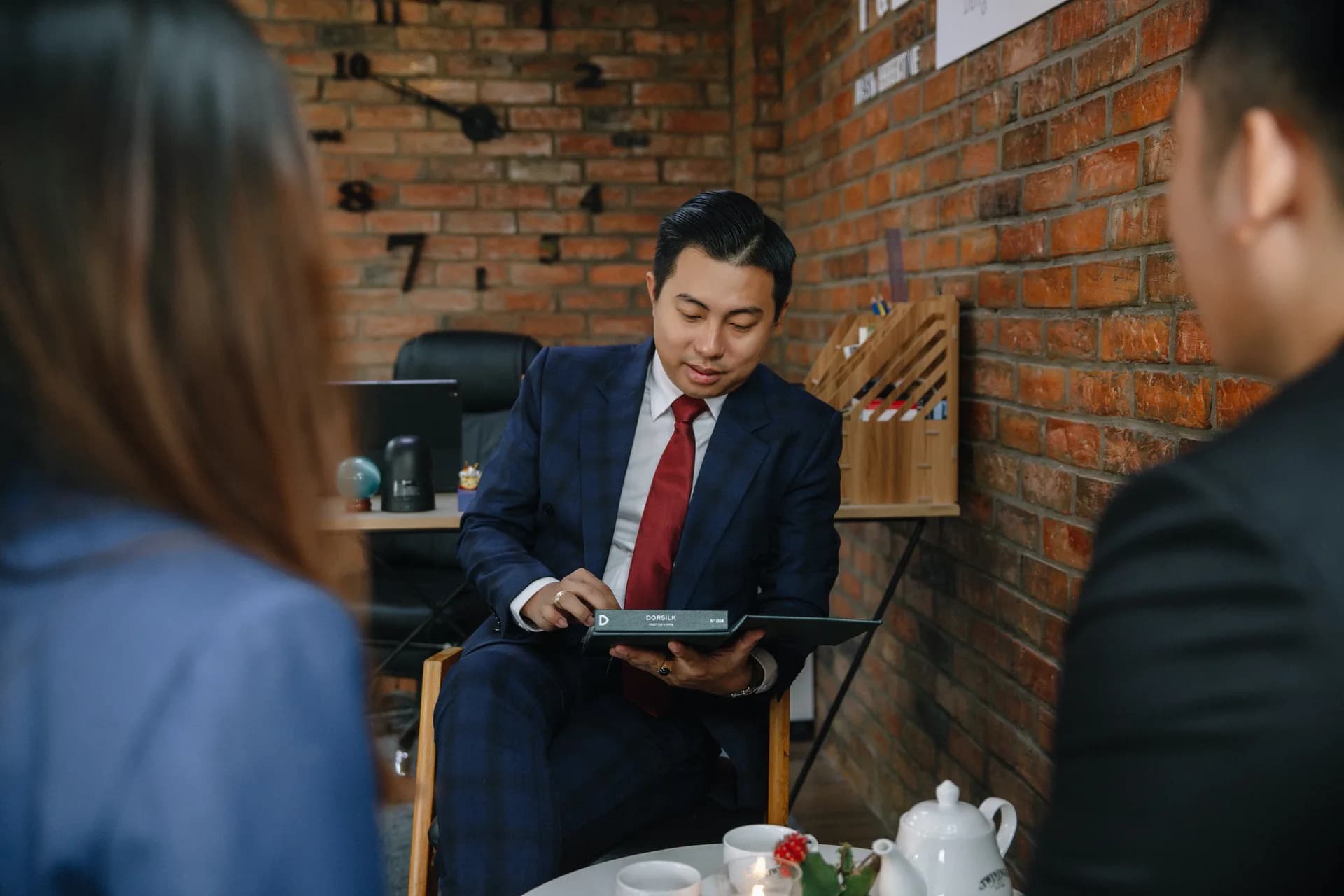
Two suits in the same navy, the same cut, on the same wearer. After two rainy seasons, the first is still flat and drapes softly, while the second has gone shiny at the elbows and creased at the crotch of the trousers. The difference lies not in the tailor but in the cloth. Understanding the types of suit fabric is the simplest way to avoid money spent wrongly, and it is also the most fascinating part of the tailoring craft.
Quick answer
The easiest suit fabric for a newcomer is worsted wool with a high wool content: smooth, breathable, low-crease and durable. In a hot climate, choose a light wool or a linen-wool blend; for warmth and character, choose flannel or tweed. Choose by the occasion you will wear it for, not only by price.
What the “s” number on wool fabric means
When you hear “120s” or “Super 150s”, the number indicates the fineness of the wool fiber: the higher the number, the finer the fiber and the softer and lighter the cloth. But finer does not mean “better for everybody”. The finer the fiber, the more delicate the cloth and the less it resists abrasion, so someone who wears a suit every day is usually better served by 110s–130s than by the ultra-fine kind kept for special occasions.
In Mon Amie’s made-to-measure price list, the fabric lines are divided along these levels: the Essential line uses Kevinlli fabric with 40–70% wool (100s–140s); the Signature line uses Kevinlli with 80–100% wool at 140s–150s together with Dolce & Taylor, Luciano, Salford and Vercelli; and the Heritage line is reserved for Italian and English mills such as Canonico, Holland Sherry, Dormeuil and Scabal.

Comparison of ten types of suit fabric
The “low, medium, high” scale below is relative between the materials, to give you a quick picture; it is not a technical measurement.
| Material | Breathability | Creasing | Durability | Price | Suited to |
|---|---|---|---|---|---|
| Worsted wool | Medium to high | Low | High | Medium to high | Year-round work, meetings, events |
| Wool-polyester blend | Medium | Very low | High | Low to medium | Everyday wear, uniforms, people with little time to care for a suit |
| Wool-silk blend or mohair | High | Medium | Medium | High | Parties, events, hot weather |
| Flannel | Medium | Low | High | Medium to high | Cool season, office, classic style |
| Tweed | Low | Low | Very high | Medium to high | Autumn-winter, outings in the country, separate blazers |
| Gabardine | Medium | Low | High | Medium | Year-round suits, trousers |
| Linen | Very high | Very high | Medium | Medium | Hot season, beach weddings, leisure |
| Cotton, chino | High | High | Medium | Low to medium | Separate blazers, relaxed style |
| Cashmere, wool-cashmere blend | Medium | Medium | Low to medium | High | Overcoats, luxurious blazers |
| Velvet | Low | Medium | Medium | Medium to high | Evening events, tuxedos, statement blazers |
Pros and cons of each group of materials
Worsted wool: the safest choice
Wool fibers are combed so the short fibers fall away and the long, even ones remain, so the cloth is smooth, resists pilling, lasts and drapes well. Its only drawback is a higher price than blends, and pure wool needs dry-cleaning, not machine washing.
Wool-polyester: convenient, but for which purpose
Adding polyester makes the jacket crease less, keeps the price friendly and suits heavy use. In return the breathability is lower and the cloth is usually shinier than pure wool. It suits uniforms, or people who wear a suit every day and do not want the effort of caring for it.
Flannel and tweed: character for the cool season
Flannel is soft, thick and warm, with a slight fuzziness on the surface. Tweed is coarser, as hard-wearing as a travel coat. Both are heavy and hot to wear at midday in Saigon, so they are used mostly for air-conditioned rooms, travel to mountain regions or the rainy season.
Linen and cotton: cool, but accept the creases
Linen is the most breathable, but also the quickest to crease. Someone who wears linen should treat the creases as part of its beauty, not a flaw. Linen blended with wool or silk improves the creasing, and suits a hot-season blazer.
Cashmere and velvet: for occasions that call for an impression
Cashmere is as soft as a baby’s skin but pills easily and is less durable if worn daily, so it is usually blended with wool or used for blazers and coats. Velvet catches the light beautifully at evening parties but is heavy and shows stains easily.
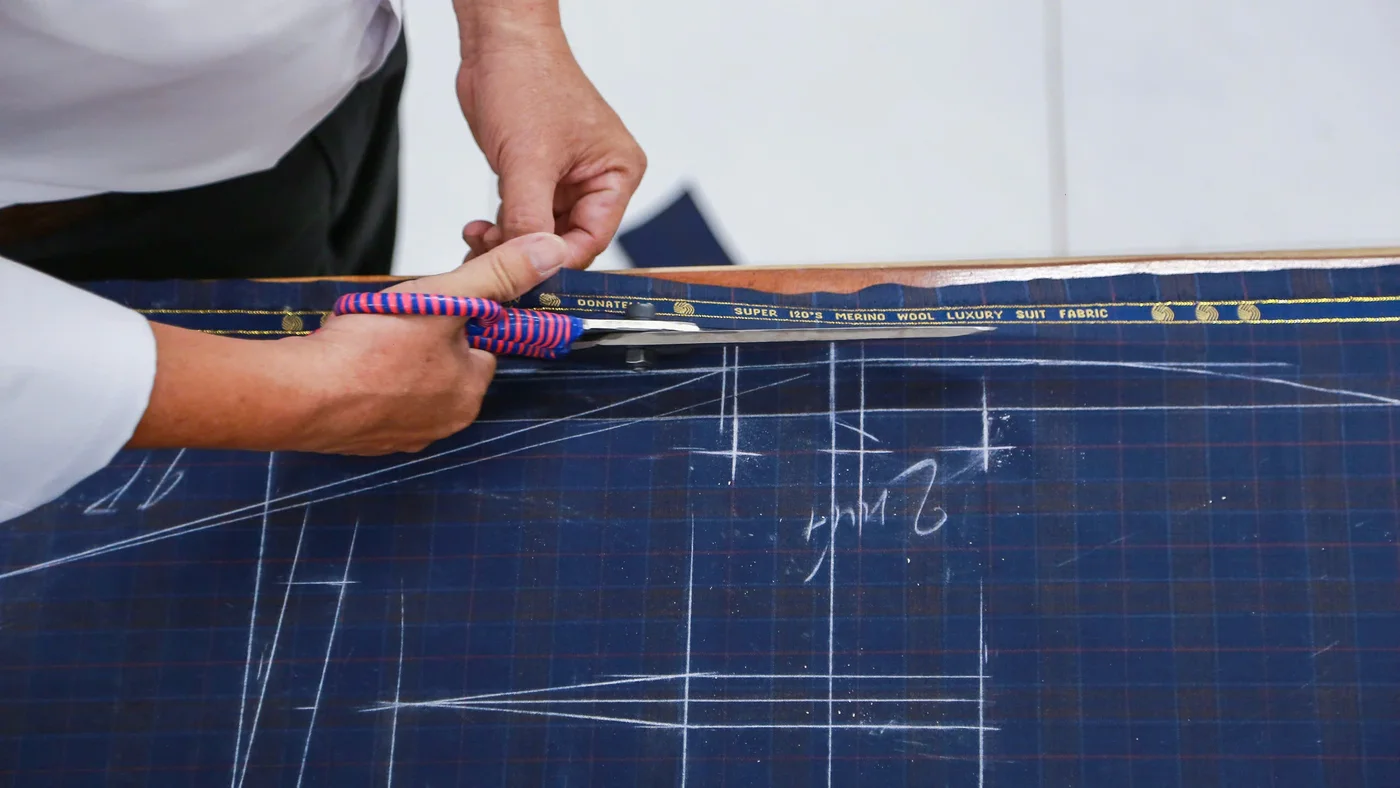
Choosing fabric by occasion and climate
- Daily work in Ho Chi Minh City: worsted wool 100s–130s of moderate weight, or a blend that is easy to care for.
- Important meetings, formal events: pure wool 130s–150s, in navy, charcoal grey or black.
- Hot season, outdoor weddings: linen-wool blend, light breathable wool.
- Autumn-winter, travel: flannel, tweed, heavy wool.
- Evening parties: velvet, wool-silk blend.
You can see samples in person in the Mon Amie fabric library and compare the price of each line in the made-to-measure price list.
What to ask when you hold a swatch book
Standing in front of a swatch book, many people only ask “how much is this fabric”. The four questions below give you far more information:
- What is the wool percentage? 40%, 70% or 100% wool decides the drape, breathability and durability of the cloth.
- What is the “s” number? The number tells you the fineness of the fiber, from which you can guess the softness and the resistance to wear.
- What is the fabric weight? The weight (measured in grams per meter) tells you whether the cloth suits the hot season, year-round wear or the cold season.
- What occasion does this fabric suit? A beautiful roll of cloth that does not suit the occasion you need is still the wrong choice.
These are also the four questions the master tailor will ask you back, so have your answers ready about the occasion and how many times a week you will wear it. For more formal occasions, you can ask about the lining: a light lining is cooler but wears out faster at the underarm, while a heavier lining lasts longer but is hotter. A good suit is a balance of outer cloth, lining and canvas, not just one beautiful roll of cloth.
Common mistakes when choosing suit fabric
- Choosing the highest “s” number. Ultra-fine cloth looks good at a photo shoot but is easily damaged if worn every day.
- Choosing heavy fabric for a hot climate just because it looks luxurious to the touch.
- Choosing a light-colored, thin, unlined cloth and then worrying because the underwear line and the seams show through.
- Ignoring how it feels in the hand. The figures are only half the story; the other half is your hand: hold the cloth in your palm for five seconds, then open it and see whether it creases. That is the master tailor’s quick test.
Frequently asked questions
Which fabric makes the nicest suit?
There is no single “nicest” cloth for everyone, but worsted wool with a high wool content is the most balanced choice: handsome, breathable, low-crease, durable. Choose linen for the hot season, flannel or tweed for the cool season.
What is suit fabric, and is it all wool?
Most office suits use wool or a wool blend. There are also cotton, linen, velvet and silk, depending on the purpose. A high wool content usually gives better drape and durability.
What fabric are suits made of for wearing in Vietnam?
Medium-weight worsted wool, breathable blends or linen-wool suit the hot, humid climate. Prefer a half-lined jacket so it wears cooler.
How do 140s and 150s differ from 100s?
A higher number means a finer fiber, so the cloth is softer and lighter but resists abrasion less. People who wear a suit often choose around 110s–130s, while cloth above 140s is for occasions that call for a luxurious look.
Conclusion
Choosing among the types of suit fabric is like choosing shoes: the fit is the truth, and expensive or cheap comes second. If you want to understand more, the articles is wool fabric good and why suit fabric prices vary so much explain further. Or you can drop by a showroom and touch each roll of cloth in a bespoke consultation with a master tailor.