
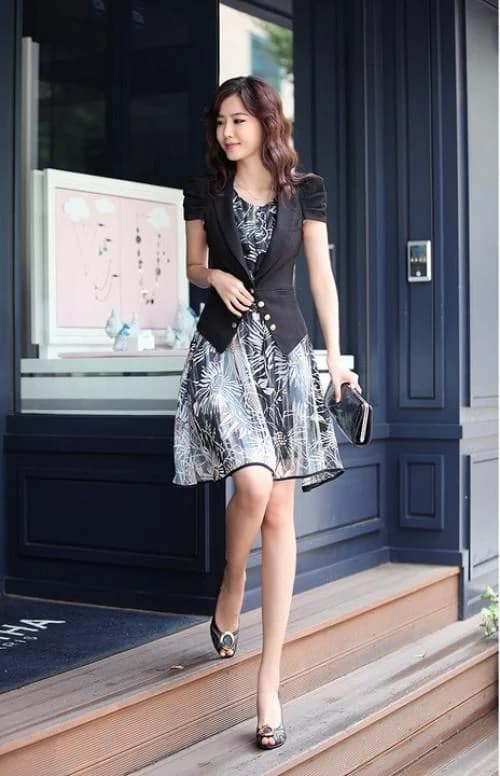
Two women's suits, the same black, the same single-button style, the same price. The first stays smooth from morning to afternoon. The second is already creased at the elbows by 11 o'clock, curling at the front edges and sagging at the shoulders. The difference is not in the tailor, but in the cloth. For a women's suit, the fabric decides more than half the result. So what fabric is used for women's suits, and which one should you choose to hold its shape, resist wrinkles and suit the Ho Chi Minh City climate?
The short answer
The common women's suit fabrics are seven: wool crepe, wool blend, tuytsi (blended twill), tweed, linen blend, silk blend and wool gabardine. For a daily office suit, choose wool crepe, wool blend or gabardine because they hold their shape and resist wrinkles. For events, a silk blend or tweed looks elegant. Linen blend suits hot seasons but wrinkles more.
3 criteria for choosing women's suit fabric
Before going through each material, you need three criteria to compare:
- Holds its shape. The cloth has enough firmness and thickness to hold the shape of the jacket, without collapsing at the shoulders or sagging at the hem. Weight is typically around 250 to 300 g/m² for year-round suits.
- Low wrinkling. The cloth recovers well after sitting, folding arms or carrying a bag. Test it by clenching the cloth in your hand for 5 seconds and releasing: if the creases disappear quickly, it is good cloth.
- Breathable. In Ho Chi Minh City, a suit is worn for many hours both in air conditioning and in the hot, humid outdoors, so the cloth needs to breathe. Thick all-polyester cloth easily gets stuffy.
7 fabrics for women's suits
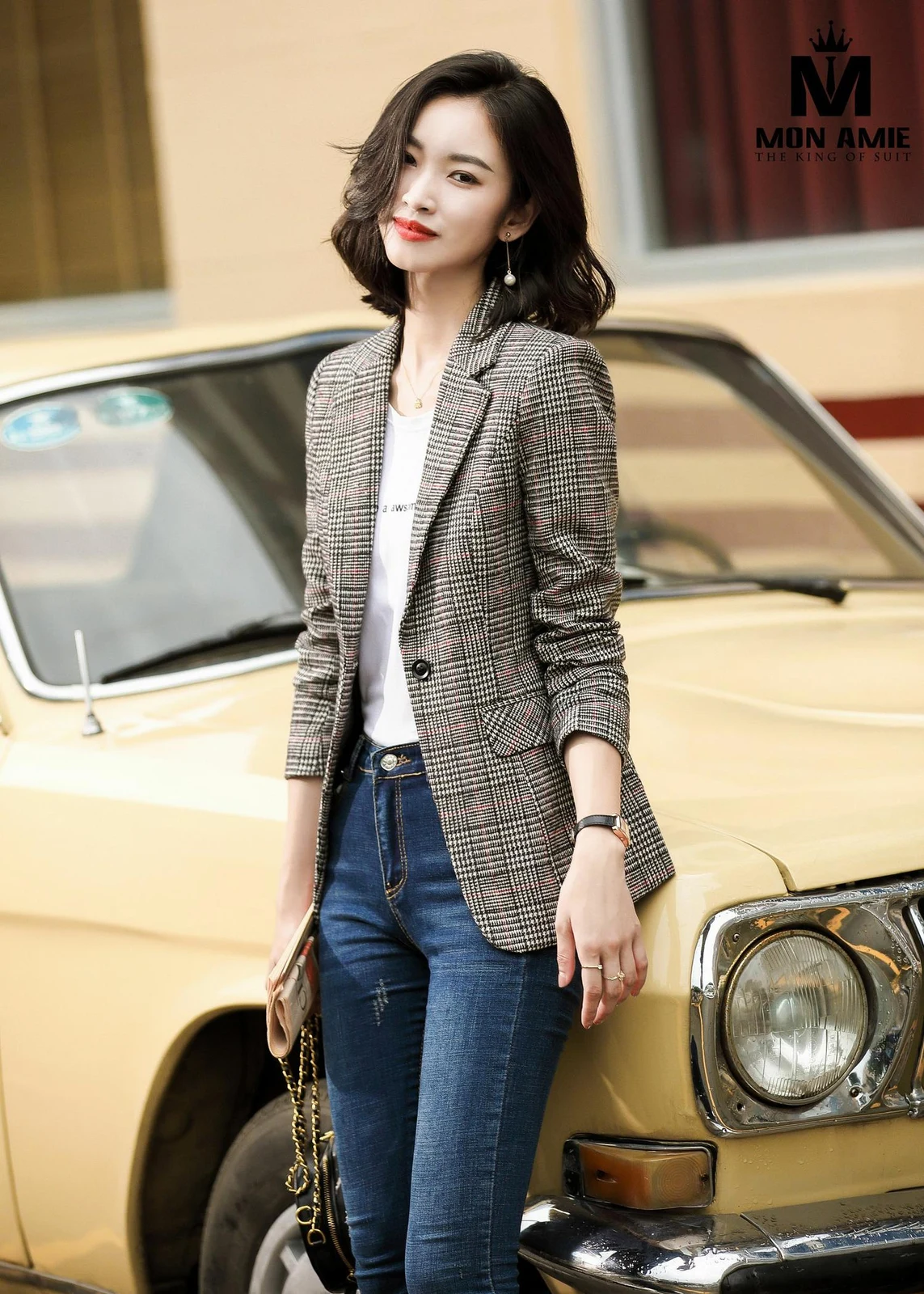
1. Wool crepe
Wool woven in a crepe weave has a slightly rough surface, with lightly twisted yarns, so the cloth drapes very well and resists wrinkles. This is the "golden" material of high-end women's suits: soft, figure-skimming, not shiny, and still neat after a whole day of wear. It suits the office and events. The drawback is a higher price than wool blend. You can read more about wool crepe fabric for women's suits.
2. Wool blend
Wool blended with polyester, viscose or a little spandex. It gives durability, low wrinkling, good shape retention and a gentler price than pure wool. It suits daily office suits. At Mon Amie, the Essential line uses Kevinlli 40 – 70% wool (100s – 140s) for suits that are well structured, durable and easy to care for.
3. Tuytsi (blended twill)
Tuytsi is the familiar Vietnamese name for a twill-weave cloth based on blended synthetic fibres, usually polyester with rayon and spandex. The surface is smooth, holds its shape, resists wrinkles and has an agreeable price, so it is widely used for office women's suits. The weakness is that it breathes less than wool, so it is better kept for air-conditioned settings.
4. Tweed (coarse-woven wool)
Tweed has coarsely woven yarns in interlaced colours, creating a lightly bumpy surface that is very characteristic. A tweed women's suit carries a classic spirit, holds its shape and is warm. It suits cooler seasons and evening events. In Ho Chi Minh City, you should choose a thin tweed or a half-lined one to avoid overheating. The article tuytsi fabric for suits analyses further the difference between tuytsi and tweed.
5. Linen blend
Pure linen is very breathable but wrinkles heavily. So women's suits usually use linen blended with viscose, cotton or wool to reduce wrinkling. It suits hot seasons, outdoor parties and a relaxed style. Accept that the cloth will have its characteristic natural creases; that is also the beauty of linen.
6. Silk blend
Silk blended with wool or viscose gives a soft cloth with a light sheen and a lovely drape. A silk-blend suit carries an elegant look and suits evening parties and events, but it is not the firmest cloth for holding shape. You should choose a lined silk blend to keep the shape.
7. Wool gabardine
Gabardine is a tightly woven twill with a smooth, durable surface. Wool gabardine gives a women's suit that holds its shape, resists wrinkles, can be worn year-round and lasts long. It suits the office and important occasions. The drawback is being slightly heavier in the hand than crepe.
Quick comparison table of the 7 materials
| Material | Holds shape | Low wrinkling | Breathable | Suits |
|---|---|---|---|---|
| Wool crepe | Good | Very good | Good | Office, events |
| Wool blend | Good | Good | Medium to good | Daily office wear |
| Tuytsi | Good | Good | Medium | Air-conditioned offices |
| Tweed | Very good | Good | Medium | Events, cool seasons |
| Linen blend | Medium | Low | Very good | Hot seasons, relaxed wear |
| Silk blend | Medium | Medium | Good | Evening parties, events |
| Wool gabardine | Very good | Good | Medium | Office, year-round |
Choosing fabric by situation
- Daily office: wool crepe, wool blend, gabardine or tuytsi.
- Interviews, important meetings: wool crepe or gabardine in navy, charcoal grey, black.
- Evening parties, events: silk blend, or wool crepe with a light sheen.
- Hot season, outdoor work trips: linen blend or thin lightweight wool.
- Cool season, classic style: tweed.
How to test fabric quickly before having it made
- Clench the cloth for 5 seconds, release it, and see whether the creases disappear.
- Hold the cloth up to the light; good cloth does not show sparse threads.
- Turn it over to the reverse side: the yarns are even, with no fuzzy lumps.
- Pick it up in your hand and feel the drape: good cloth falls softly, not stiff like paper.
- Ask for the specifications: composition, weight, mill.
You can see and touch the materials at the Mon Amie fabric library, where the cloth lines are divided into Essential, Signature and Heritage.
Tips from Mon Amie's master tailors
Do not choose cloth by colour alone. A cloth that looks good as a small swatch can look very different once it is built into a jacket. Ask the tailor to show you a jacket already made from the same cloth, because the way a cloth stands only reveals itself when it becomes a garment. Also, a women's suit usually needs good lining and just enough interfacing. A light interfacing keeps the jacket soft, while a stiff one makes the suit look "boxed in". That is why, for many women, made-to-measure is the easiest way to get both structure and comfort. You can start with Mon Amie's bespoke made-to-measure service: an artisan measures you in person, does a baste fitting and adjusts until it fits.
Common mistakes
- Choosing thin, shiny cloth because it seems "elegant". Thin, shiny cloth wrinkles easily, shows underwear and quickly loses its shape.
- Choosing thick all-polyester cloth. It is hot, stuffy and prone to holding odour in hot weather.
- Choosing pure linen for the office. It wrinkles heavily, beyond your control.
- Not asking about composition. The same cloth name with a different composition means a different price and durability.
- Forgetting the lining. Good lining makes the suit wrinkle less and feel cooler.
Frequently asked questions
What fabric is used for women's suits?
The most common are wool crepe, wool blend, tuytsi, tweed, linen blend, silk blend and wool gabardine. For the office, choose wool crepe or wool blend because they hold their shape and resist wrinkles.
Which fabric wrinkles least for a women's suit jacket?
Wool crepe, wool blend and wool gabardine are the three least-wrinkling choices. Tuytsi also resists wrinkles but breathes less.
Which women's suit fabric should you choose for a good result?
Wool crepe gives an elegant, soft, structured look. If you need a gentler budget, wool blend is a balance between quality and price.
What fabric should a women's suit be made from in hot weather?
Linen blend or thin lightweight wool, half-lined or thinly lined. Avoid thick polyester and heavy tweed.
Conclusion
Choosing the right fabric is already half the job of making a suit. If you are still torn between materials, book a measurement appointment at one of Mon Amie's five showrooms, so a stylist can bring real cloth for you to touch, compare and try before you decide.