

The most beautiful silk ties usually meet their end in the washing machine. One spin cycle and the knot twists like rope, the colour bleeds into patches, and the ends shrink out of shape. It sounds minor, but many men lose several good ties before they realise that how to wash a tie is the real question, and the answer is usually: do not wash the whole thing.
Quick answer
A silk tie should not be washed whole. Spot clean it: blot the stain with a damp cloth, dabbing rather than rubbing, and take heavy stains to a dry cleaner. Smooth it with steam held 10–15 cm from the fabric, never with a pressed iron. Store it hanging vertically or loosely rolled, once the knot has been undone.
How to wash a tie: why the washing machine is the wrong tool
A tie is not a single piece of cloth. It is an outer fabric cut on the bias, assembled from three pieces, with an interlining inside that gives the tie its thickness and spring. When it is washed wet, everything begins to drift out of alignment:
- The interlining shrinks unevenly against the outer fabric, so the tie warps and twists.
- Silk is sensitive to water: it water-spots easily, loses its smooth sheen and sometimes changes colour.
- Bias-cut cloth stretches along the diagonal, so when it is wrung or kneaded the tie grows longer and skews.
- The seam down the back is under tension, which makes the tie lose its straight line.
That is why a premium silk tie, woven so finely to begin with, calls for an even lighter hand. A washing machine, even on its gentlest setting, is still far too violent a blow for this construction.
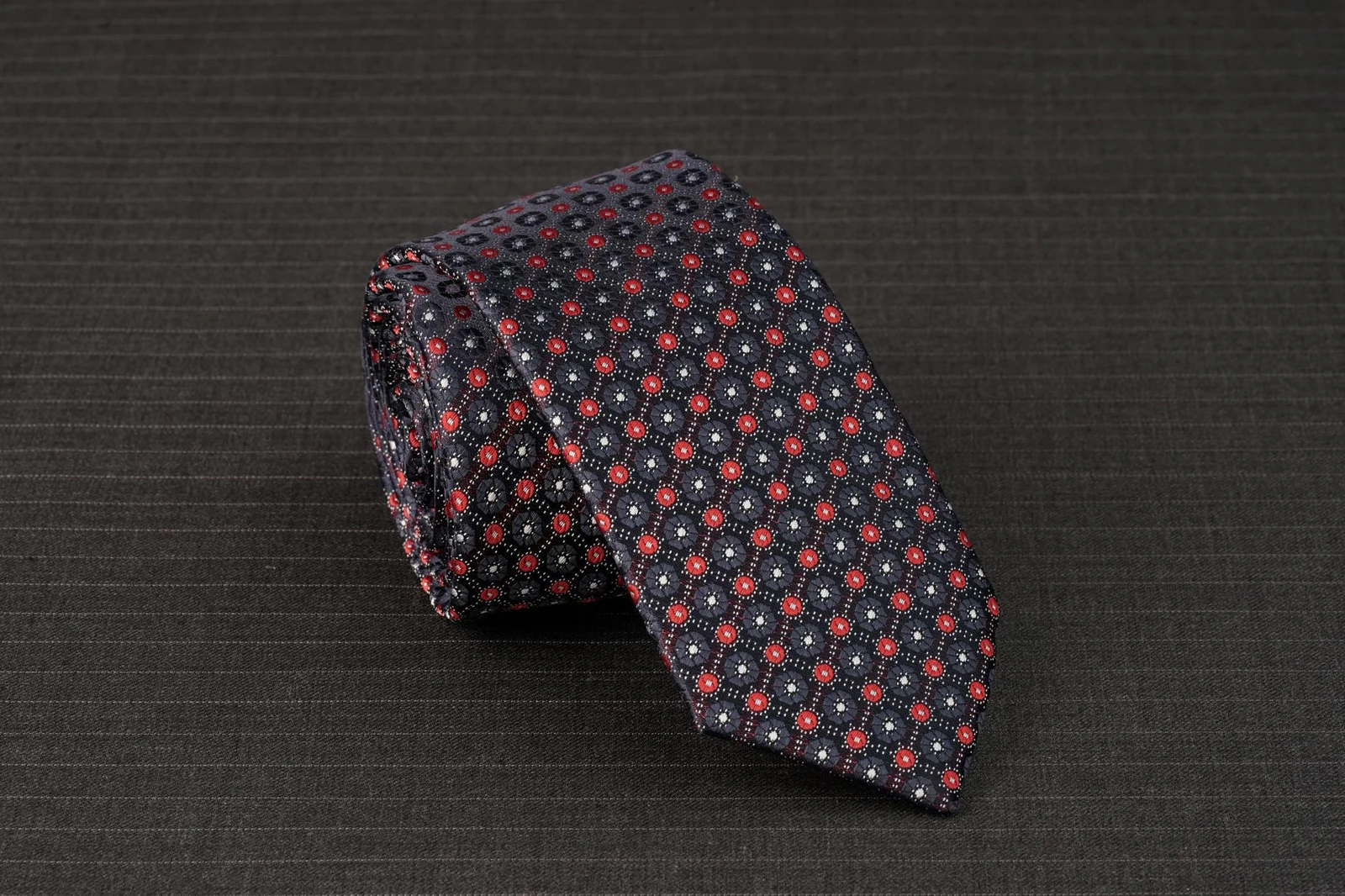
Each tie fabric needs its own treatment
Before you do anything, check the label. Each fabric has its own care:
| Material | How to clean | What to avoid |
|---|---|---|
| Silk tie | Spot clean, dry clean when needed | Washing in water, kneading, rubbing |
| Wool tie | Brush off dust, steam, dry clean when heavily soiled | Warm water, hard wringing |
| Cotton, linen | Gentle hand wash in cool water, only if truly necessary | Washing machine, tumble dryer |
| Polyester, microfibre | Quick hand wash, hang vertically to dry | High-heat ironing |
A wool tie has a thick, matte surface that suits cold weather or a relaxed style. It is less sensitive to water than silk, but it still should not go in the washing machine.
Treating stains on a silk tie on the spot
The earlier a stain is dealt with, the easier it is. The golden rule: dab, don't rub. Rubbing spreads the stain and roughens the fibres.
- Blot straight away. Use a paper tissue or a clean white cloth, pressing lightly to soak up the liquid, never wiping back and forth.
- Oil and grease. Sprinkle a little cornflour or talcum powder on the stain, leave it for an hour or two so the powder draws out the oil, then brush it off gently.
- Water and weak coffee. Dampen a clean cloth with water and dab lightly from the outside in so the stain does not spread, then blot dry and let it dry naturally.
- Heavy stains such as ink, red wine and lipstick. Take the tie to a dry cleaner and say clearly what the stain is, so they can choose the right solvent.
Please do not try soap, bleach or alcohol on silk. They can leave pale marks that are very hard to remove. If you also deal with stains on your suits, the article on cleaning a suit jacket and treating stains has a few similar principles.
Steaming and smoothing a tie
A lightly creased tie after wearing is perfectly normal. The safest fix is steam, not pressing:
- Hang the tie in the bathroom after a hot shower, or hold a steam iron about 10–15 cm from the fabric and press the steam button.
- Let the cloth absorb the steam and soften, then hang it vertically to dry naturally, without wringing or kneading it.
- Never press a hot iron directly onto silk, because it can make the cloth shiny and ruin the interlining.
If the knot has left a crease, steam the tie, then hang it by the wide end overnight. A light crease usually fades.
Storing a tie properly to keep its shape
Ties are damaged more by how they are stored than by how they are washed:
- Undo the knot straight after wearing. Reverse the knot in the same order you tied it; do not pull the tail through the knot.
- Hang it vertically from the wide end, or roll it loosely starting from the narrow end, so the tie lies straight and unfolded.
- Use a tie rack or a compartmented box. A thin metal hook can leave a crease in the cloth.
- Avoid sunlight and damp. Sun fades silk; damp breeds mould.
- Rest it between wears. Each tie should rest for a few days so the interlining recovers its spring.
The same goes for suits: a shouldered hanger, space between garments, away from damp. You can also read the article on suit hanger accessories and shoulder hangers.

When to replace a tie rather than try to save it
A tie is a slow-wearing item. You should think about replacing it when:
- The knot crease no longer fades after steaming.
- The interlining shows through or the seam down the back comes undone.
- The tie's ends are worn, frayed or have bled colour.
- The tie has a permanent twist, even after hanging straight for several days.
- An old stain has yellowed or discoloured and can no longer be treated.
A good silk tie, properly looked after, can stay with you for many years. But one that has lost its shape will make the whole suit look less refined no matter what you do, so replace it.
Common mistakes
- Putting the tie in the washing machine. Almost certain to ruin it.
- Wringing or twisting it when wet. Bias-cut cloth stretches and then skews.
- Scrubbing a stain hard. The stain spreads and the fibres fuzz.
- Leaving the knot in overnight. The knot imprints deeply and is hard to recover.
- Drying it in the sun or in a tumble dryer. The colour fades and the interlining shrinks.
- Ironing directly. The silk turns glossy and the interlining distorts.
A tip from Mon Amie's master tailor
The master tailor has one small habit: tie the tie just tight enough, never yank it. A tie pulled hard every morning will crease at the knot twice as fast. And every evening, the master tailor always undoes the tie by hand rather than pulling the whole loop over the head, because that tightens the knot and strains the silk fibres at the knot. For many men, changing this one habit alone keeps a tie going for years more.
Frequently asked questions
Can a silk tie be washed?
In theory yes, but you should not. Washing in water leaves silk water-spotted, the interlining shrinks unevenly and the tie loses its shape. Spot clean it, or take it to a dry cleaner if it is heavily soiled.
How do I clean a wool tie when it gets dirty?
Brush off dust with a soft brush and steam it to smooth it. Dab light stains with a damp cloth. Have heavy stains dry cleaned. Avoid warm water and hard wringing, because wool shrinks easily.
Why are premium silk ties expensive, and do they need special care?
Silk has fine fibres with a distinctive soft drape and gentle sheen, but it is also more sensitive to water than cotton or polyester. Proper care means spot cleaning, storing the tie hanging vertically and resting it between wears.
What should I do if a tie gets creased?
Steam it from 10–15 cm away, or hang it in the bathroom after a hot shower, then hang it vertically to dry. Never press a hot iron directly onto the cloth.
Closing thoughts
Knowing how to wash a tie is really knowing when not to wash it. A little gentleness every day keeps a tie looking as good as the day you bought it. If you are choosing accessories for a suit you are about to have made, you can browse the product collection or book an appointment so a Mon Amie stylist can suggest a tie and pocket square to go with your suit.