
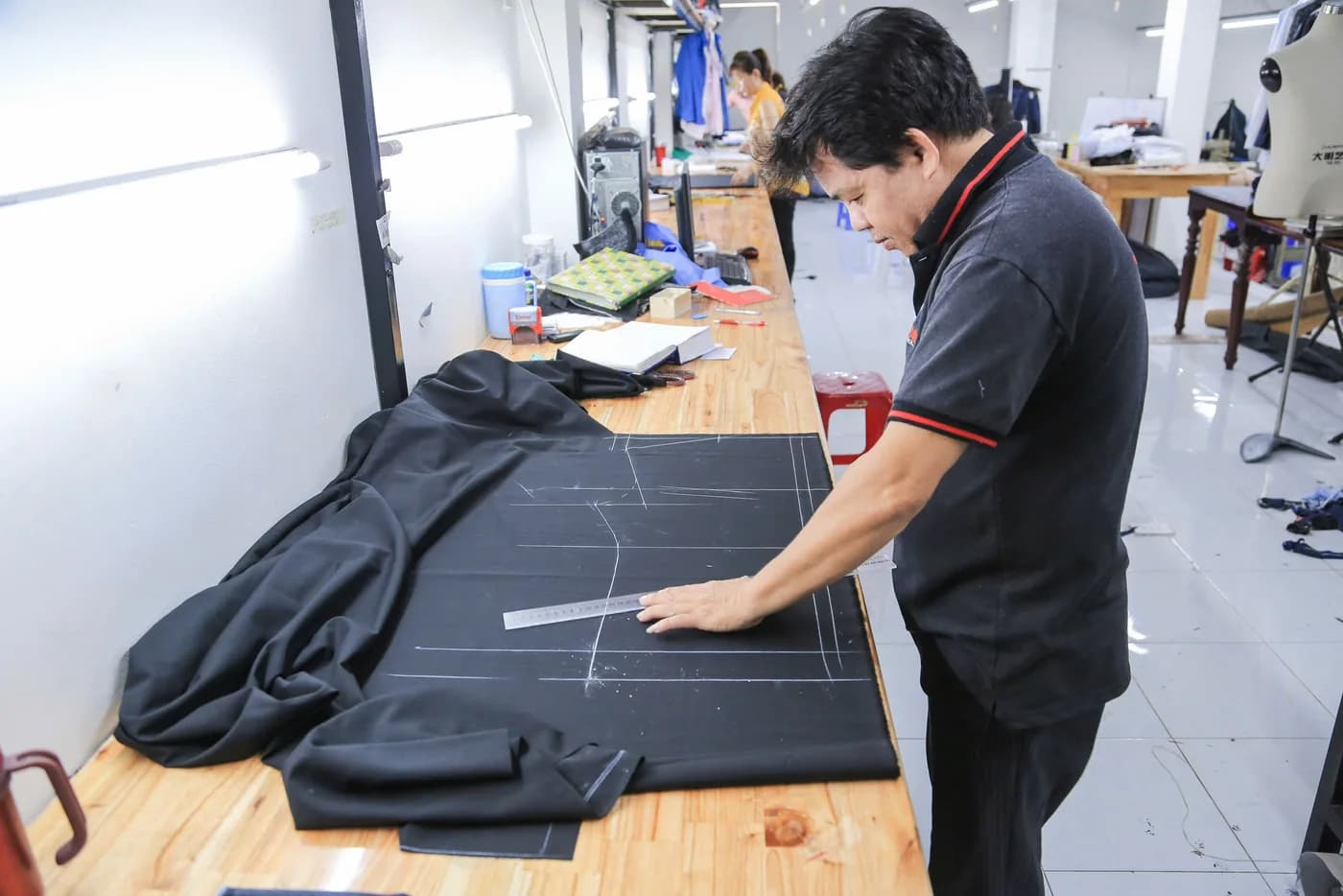
You have a lovely length of cloth, bought on a trip or given to you by a friend, and you want to know whether it is enough for a blazer. Any tailor will ask three things before answering: how wide is the cloth, how tall and heavy are you, and is it plain or checked. With those three numbers you can estimate it yourself using the two tables below.
The short answer
A single-breasted blazer usually needs about 1.7–2.3 m of 150 cm cloth, depending on height and weight; a very tall man or one over 90 kg may need about 2.5 m. Add about 0.1–0.2 m for 140 cm cloth, about 0.2–0.4 m for large checks, and 0.2–0.3 m for a double-breasted front.
Table by build
The table is for plain cloth 150 cm wide, an ordinary cut, lining not included. These are the trade's guide allowances, and the ranges overlap because every build is different, so read them as a zone, not a threshold.
| Build | Height | Weight | Single-breasted | Double-breasted |
|---|---|---|---|---|
| Small | 1.55–1.65 m | 50–60 kg | 1.7–1.9 m | 1.9–2.1 m |
| Average | 1.65–1.72 m | 60–70 kg | 1.8–2.0 m | 2.0–2.3 m |
| Fairly tall | 1.72–1.80 m | 65–78 kg | 1.9–2.2 m | 2.1–2.4 m |
| Tall and broad | 1.78–1.85 m | 78–90 kg | 2.1–2.3 m | 2.3–2.6 m |
| Very tall or very broad | Over 1.80 m | Over 90 kg | 2.3–2.6 m | 2.5–2.8 m |
Height decides the length of the body and the sleeves, the two longest pieces on the pattern. Weight decides the width: when the front and back panels get wider, two pieces no longer fit side by side across the same width of cloth, and they have to be laid end to end along the length. That is why two men both 1.75 m tall can differ by a few tenths of a metre of cloth.
If you aren't sure which build you are, compare against the men's suit size chart by height and weight. For a full suit with trousers and waistcoat, the allowance for each piece is in how many metres of fabric to make a men's suit.
When you need to add more
| Case | Add about | Why |
|---|---|---|
| 140 cm width | 0.1–0.2 m | Pieces fit together less tightly |
| 160 cm width and above | Subtract about 0.1 m | More pieces fit side by side |
| Fine stripe, small check | 0.1–0.2 m | Every piece must follow the stripe direction |
| Large check, plaid, windowpane | 0.2–0.4 m | The check must match at the back, front panels, pockets and sleeves |
| Asymmetric check, cloth with a nap such as velvet, some tweeds | 0.2–0.4 m | All pieces are cut in the same direction |
| Double-breasted | 0.2–0.3 m | The front panels overlap more widely |
| Patch pockets | 0.05–0.1 m | Extra pocket pieces; with checked cloth they must match the body |
| Linen, cotton not pre-shrunk | About 0.1 m | The cloth is usually shrunk before cutting |
If several cases apply, they add up. Say you are 1.70 m tall and 68 kg, with large-check cloth 140 cm wide and a single-breasted jacket: take 1.8–2.0 m, add 0.1–0.2 m for the narrower width and 0.2–0.4 m for the check, which comes to about 2.1–2.6 m. Add 0.1 m in reserve as in step 2 below, and having about 2.7 m on hand is safe.
When checks mean extra cloth
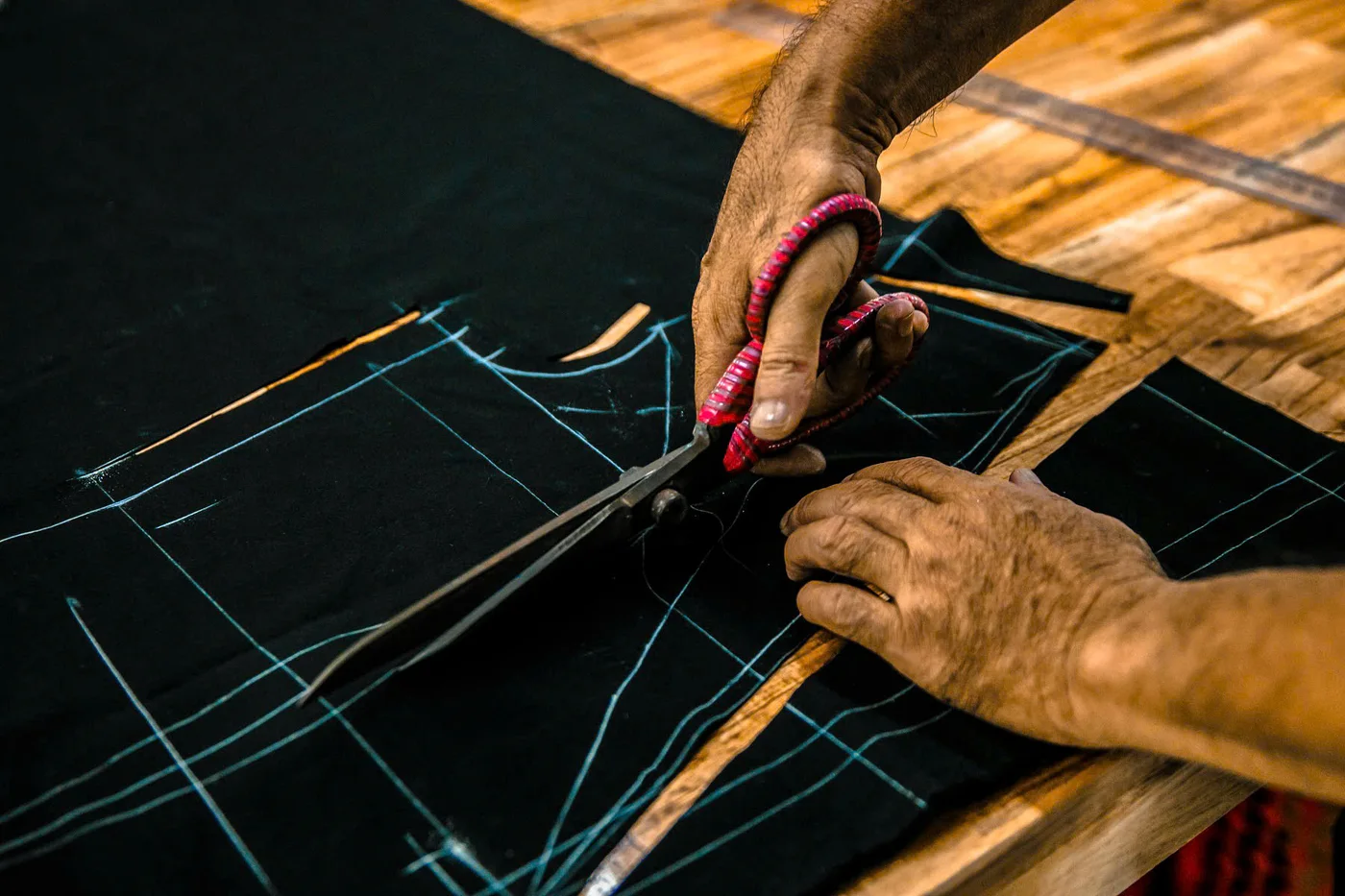
With plain cloth, any piece can sit beside any other, and the tailor lays them out like a jigsaw to avoid waste. With checked cloth each piece has to sit in exactly the right place on the pattern, and more cloth is cut away. On a blazer the tailor needs to match the check at these places:
- Centre back: the two back panels meet at the centre seam, and the checks on either side must mirror each other.
- Front panels: when the jacket is buttoned, the horizontal lines on both fronts must line up.
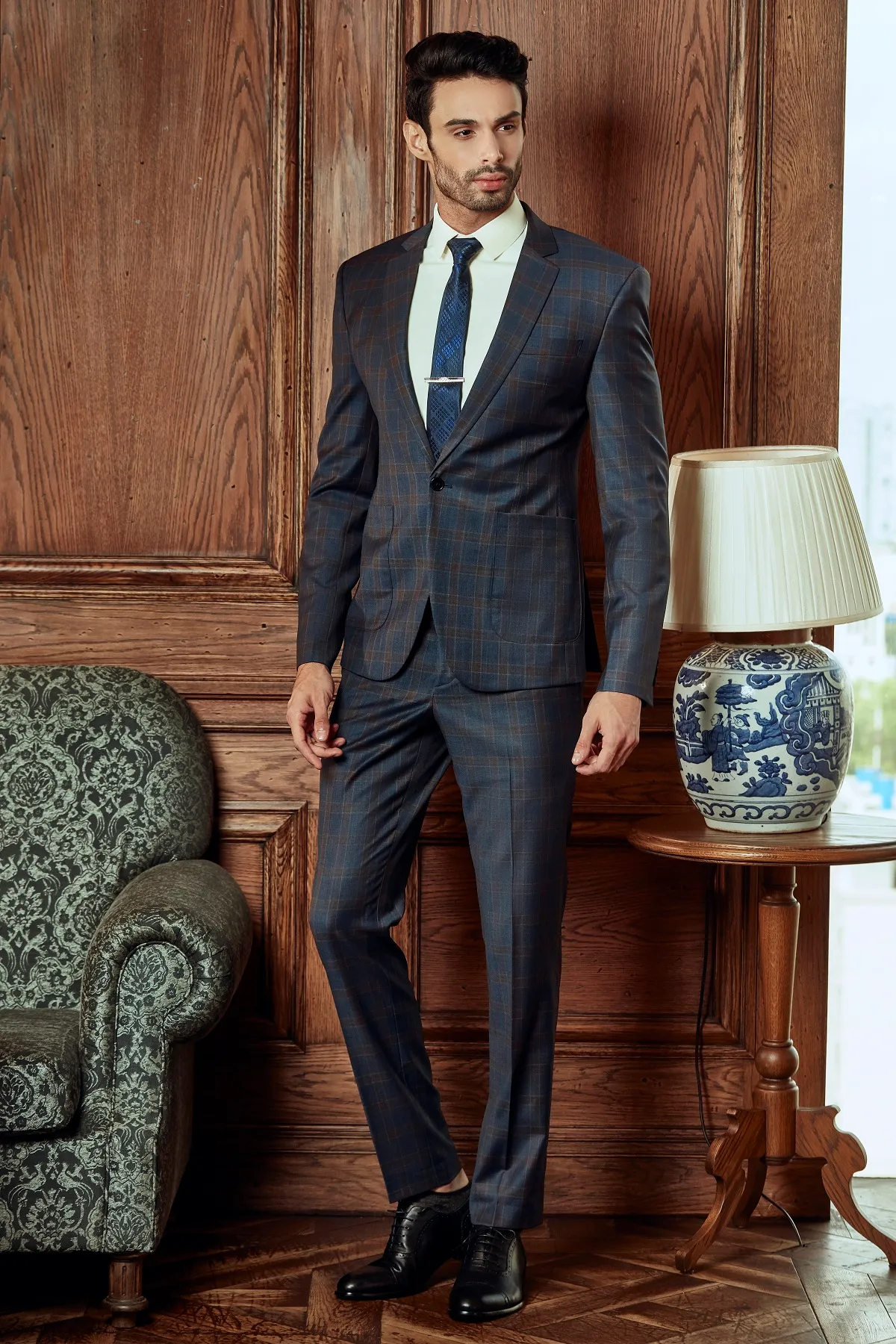
- Hip pockets, flaps, breast pocket: the check on the pocket continues the check on the body, so from a distance the pocket seems not to be there.
- Sleeves: the horizontal lines on the sleeve match the body at about chest height.
- Lapels and collar: the two lapels are symmetrical and the stripes run at the same rhythm.
The larger the check, the more cloth each shift of a piece costs. Fine stripes and small checks only need the right direction, so they add little. For a large windowpane or a multicoloured plaid, use the upper end of the allowance; and if the check is asymmetric in both directions, treat the cloth as having a nap, with every piece facing the same way.

There is a quick way to judge skill on a checked jacket: stand back a few steps, and if the hip pocket almost disappears into the body, the tailor matched the check correctly. A pocket off by half a line is still visible from a distance.
Lining and trimmings
Lining is a separate item, calculated on its own. A fully lined jacket usually needs about 1.3–1.6 m of lining. A half-lined jacket needs less and is cooler in Saigon; whether half or full lining suits depends on the cloth line, and the stylist will tell you when you choose your cloth. Canvas and interfacing, shoulder pads and buttons are trimmings, so ask the shop whether they are already counted in the making charge.
Bringing your own cloth: is it worth it
At Mon Amie, the making charge for a jacket when you bring your own cloth is VND 3.2 million, excluding 8% VAT. A single Kevinlli blazer with 40% wool, cloth included, is VND 3.6 million, a difference of VND 400,000. That doesn't buy 2 m of good cloth, so bringing your own only makes sense when the cloth is precious, sentimental, or a colour you can't find elsewhere.
Before you buy cloth outside, do three things:
- Ask the width. Measure from edge to edge, minus the selvedge on each side.
- Check the two tables above, add the cases that apply to you, then add about 0.1 m as a reserve.
- Buy extra, never to the exact length. Being 10 cm short is often worse than having half a metre too much, because cloth from the same dye lot is very hard to find again.
Bring the whole length of cloth in, not just a photo, because the width, the check direction and the right and wrong sides have to be seen on the real cloth. If you don't have cloth yet, compare the ready lines in the fabric library and the price list first.
Frequently asked questions
Is a 2 m length of cloth enough for a blazer?
With plain cloth 150 cm wide and an average build, it is usually enough for a single-breasted jacket. For a man taller than 1.78 m, cloth 140 cm wide or a large check, 2 m is likely to fall short. The surest course is to bring the cloth in so the tailor can calculate on your measurements before accepting the job.
What do I do with leftover cloth after the jacket is made?
Keep it, don't throw it away. A piece from the same lot is very useful for a patch, a replacement pocket flap or covering a button later. In a few years it is almost impossible to find that exact lot again.
Does this allowance apply to the jacket of a suit?
Yes. The jacket of a suit and a separate blazer share the same body, sleeve and lapel structure, so the same table applies. Differences come from details like patch pockets, ticket pockets or a longer skirt; a tuxedo with satin-faced lapels has the satin calculated separately.
Three numbers before you buy cloth
Cloth width, height and weight, plain or checked: with those three numbers you know how much fabric a blazer needs within a margin of a few tenths of a metre. For more certainty, book an appointment and bring the cloth in, so a stylist can take your measurements and look at the cloth before you buy any more.