
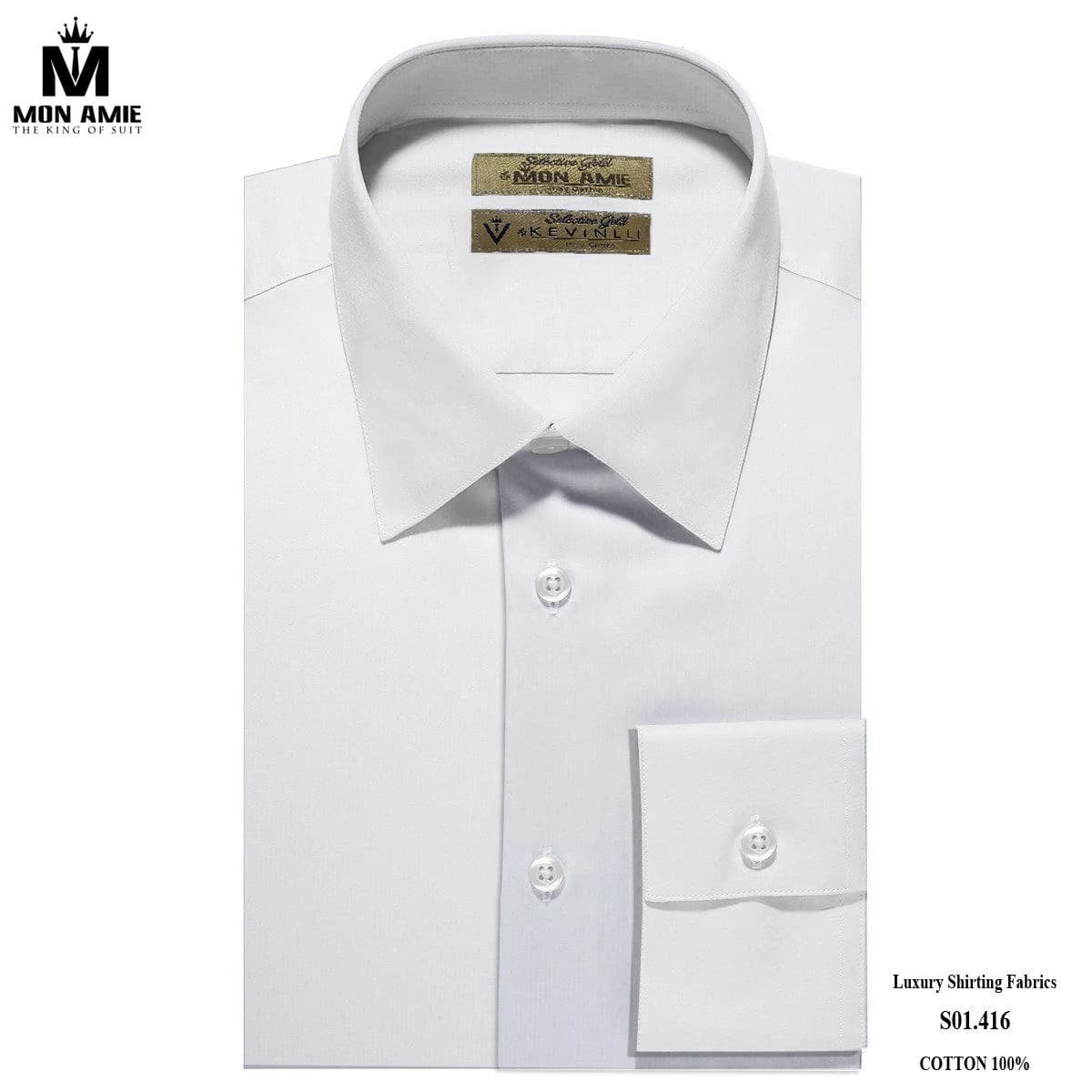
VND 850,000, VND 1.2 million and VND 1.7 million, excluding VAT, are the prices of three made-to-measure shirts at Mon Amie, which differ mainly in the fibre: cotton-modal blend, cotton-bamboo blend and 100% cotton. The 100% cotton shirt costs twice as much as the modal one. What does the difference buy, and who doesn't need to pay it?
The short answer
A cotton shirt is good for anyone who wears one under a suit and works many days a week: it breathes, the collar stands up, and it lasts through many washes, though it creases more. Bamboo blended with cotton is soft, cool to the touch and drapes well. Modal blended with cotton is smooth, slightly sheened and usually creases a little less. Mon Amie prices, excluding VAT: modal VND 850,000, bamboo VND 1.2 million, 100% cotton VND 1.7 million.
Three fibres, different from the root
- Cotton is the natural fibre of the cotton plant. The fibre is slightly bulky, absorbs moisture well and tolerates heat when ironing.
- Bamboo in shirt cloth is usually a regenerated fibre made from bamboo pulp, in the same family as viscose. The fibre is smooth, soft and absorbs a lot of moisture, but is weaker when wet.
- Modal is also a regenerated fibre, made from wood pulp. The fibre is fine and smooth, stronger than ordinary viscose, holds colour well and shrinks little.
At Mon Amie, bamboo and modal are both blended with cotton, so the shirt is softer than pure cotton while still keeping some of its crispness.
Comparison when worn
| Criterion | 100% cotton | Cotton-bamboo | Cotton-modal |
|---|---|---|---|
| Feel in the hand | Dry, crisp, a little stiff when new | Soft, cool, fluid | Smooth, silky, slightly sheened |
| In hot weather | Breathes, absorbs sweat | Absorbs a lot, clings to the body when wet | Cool, absorbs well |
| After a day sitting | Creases clearly at the elbows and back | Creases almost like cotton but the creases are soft | Usually creases a little less than cotton |
| Collar and cuffs | Stand up, hold their shape well | Softer | Softer than cotton |
| Through many washes | Durable, softer with each wash | Needs gentle washing, no wringing | Keeps its colour, shrinks little |
| Suits | Wearing under a suit, working 5 days | Hot days, those who like soft cloth | Dark colours, evening events, long days |
| Mon Amie price, excluding VAT | VND 1.7 million | VND 1.2 million | VND 850,000 |
The table compares like with like in the same cut. The weave also changes the feel: a cotton poplin is cooler than a thick cotton oxford, so when you look at samples, ask about the weave as well as the fibre.
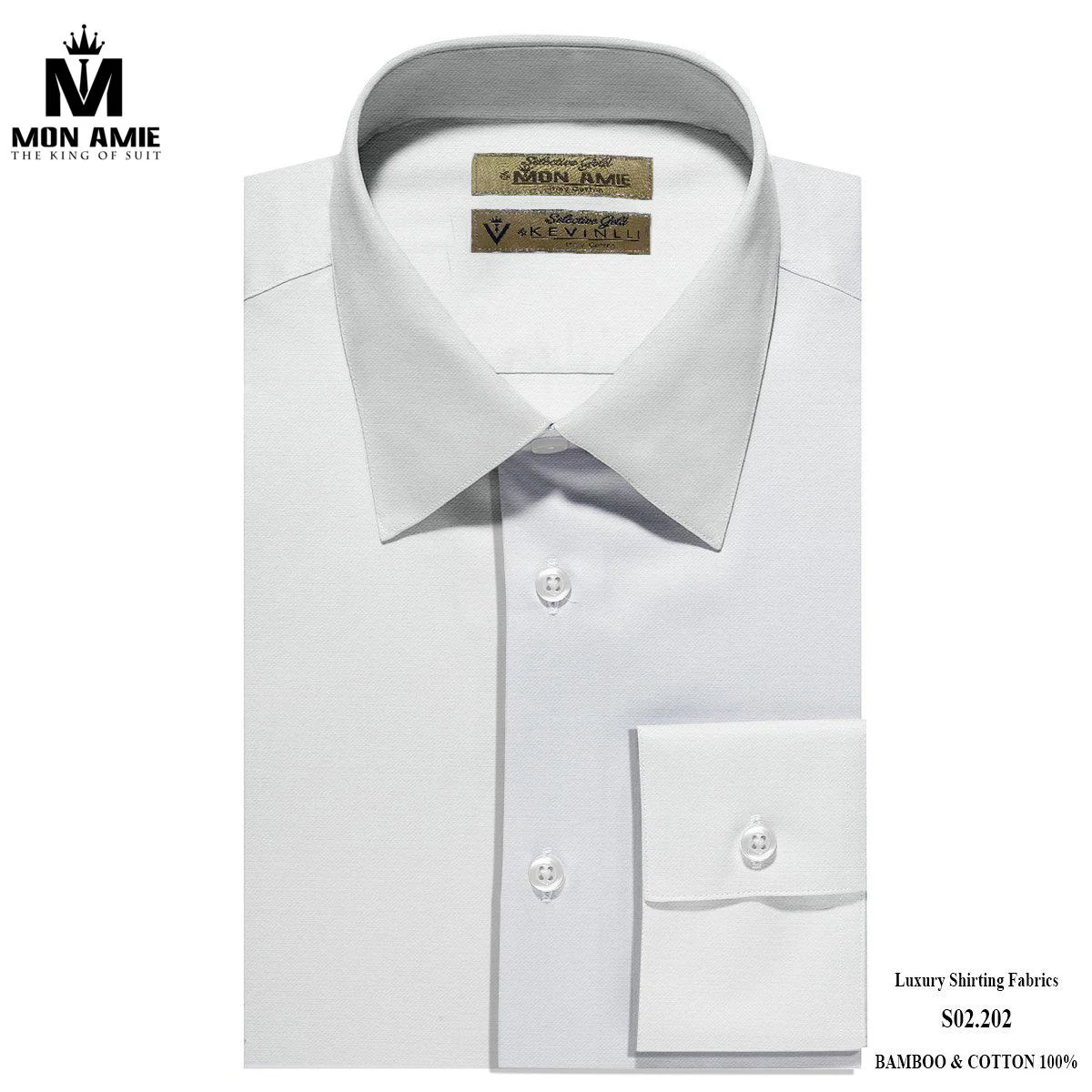
Choose 100% cotton when
- You wear the shirt under a suit and need the collar and cuffs to stand straight all day. The cuff should show 1 to 1.5 cm beyond the jacket sleeve, and cotton holds that line better, as measured in how much shirt cuff should show.
- You work five days a week, wash the shirt weekly and need it durable.
- You don't mind ironing. Cotton tolerates heat, so it irons quickly and flat.
Choose cotton-bamboo when
- You find cotton stiff and hot, and want cloth that feels soft and cool the moment you put it on.
- You wear the shirt alone, or only with a soft blazer over it.
- You are willing to wash gently, dry in the shade and not wring it.
Don't count the “antibacterial” claim that often comes with bamboo cloth as part of the shirt's value: once bamboo is dissolved and spun again into viscose, the fibre keeps almost none of the plant's original properties.
Choose cotton-modal when
- You need a dark colour such as black, red or ink blue to hold its colour for a long time.
- You are wearing it to an evening event and want a slight sheen on the cloth.
- It is a long day with a lot of sitting, you want fewer creases, and you want a made-to-measure shirt at a lower price.
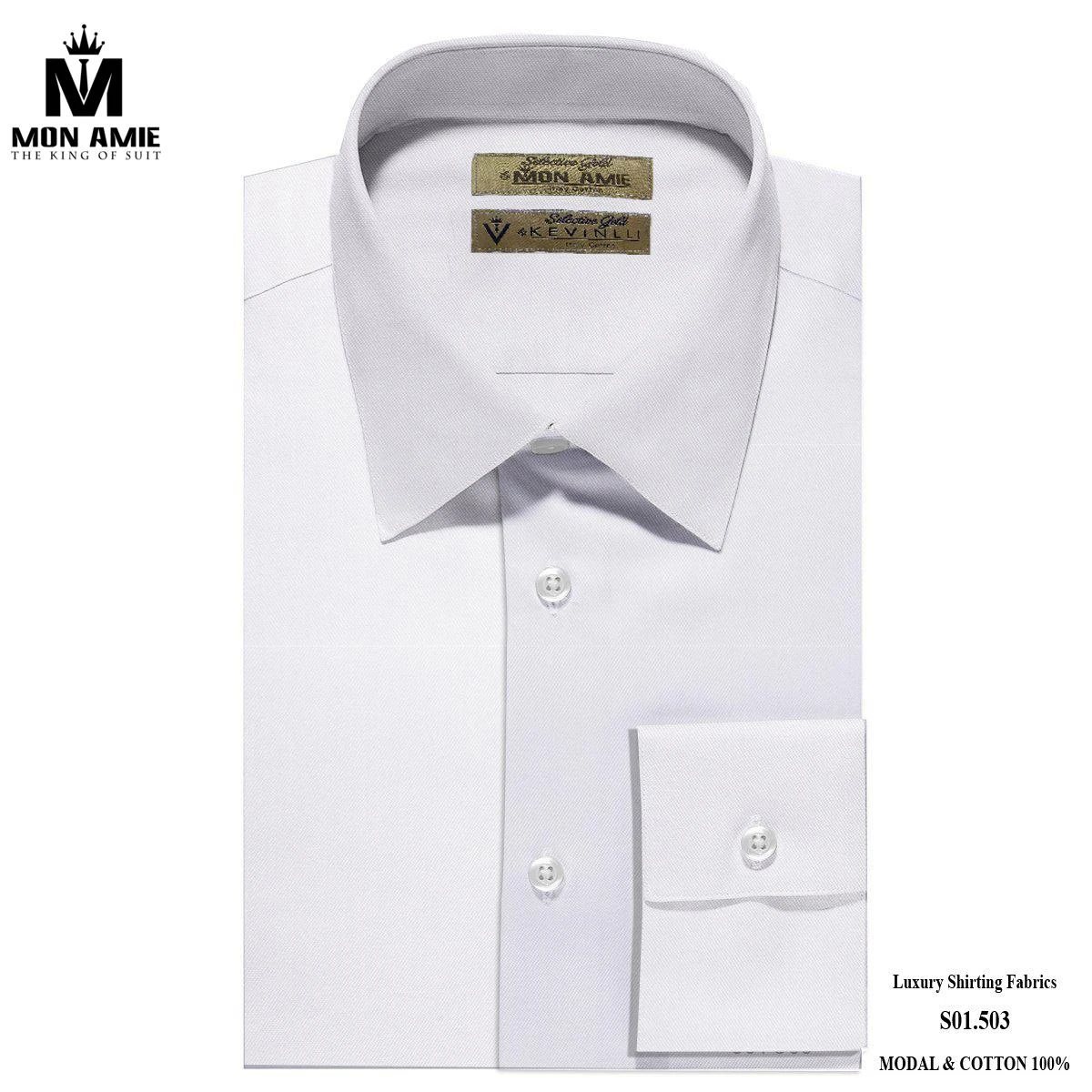
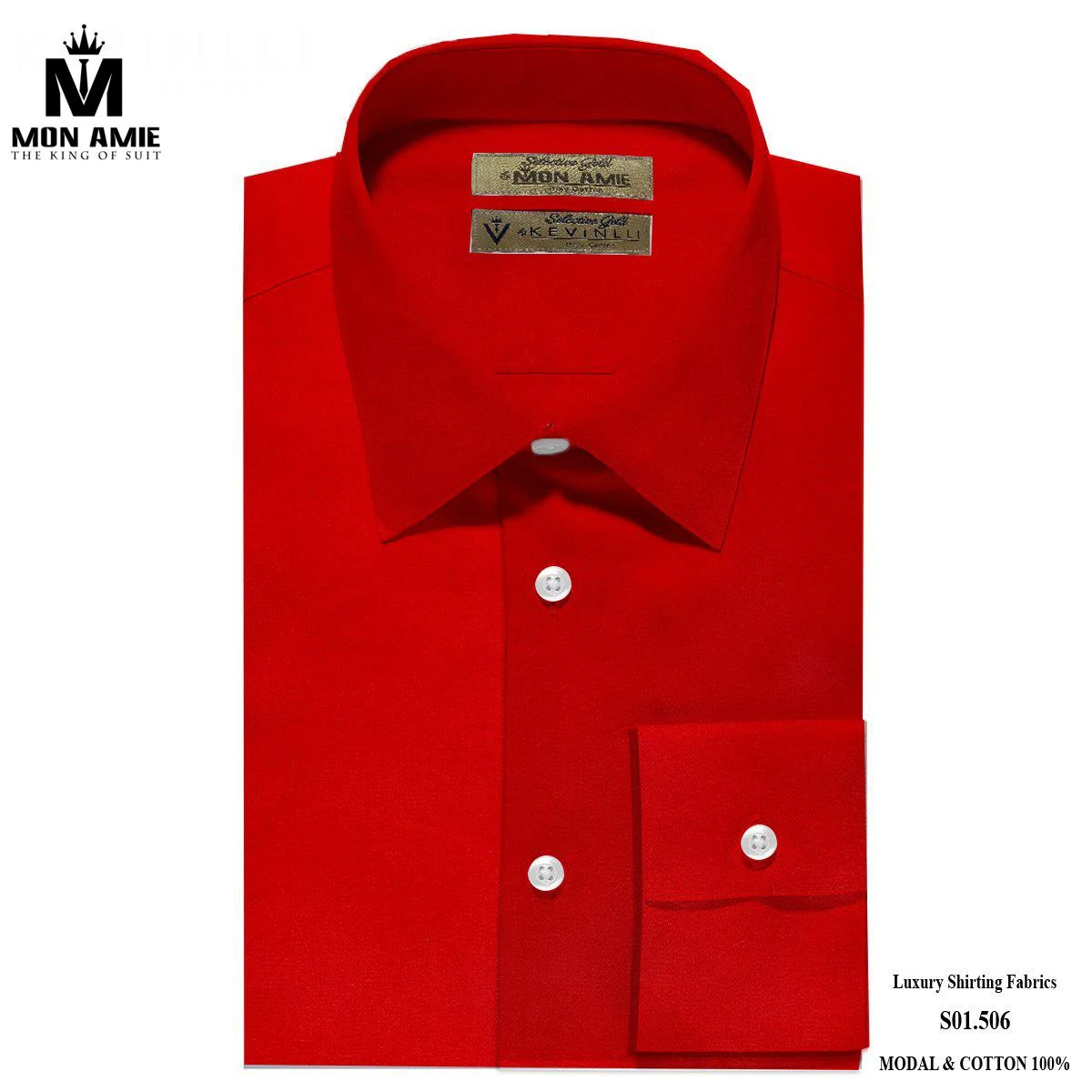
The model SM-193 shows how modal takes a deep colour: a vivid red with the cloth still smooth.
When to step up to Cotton Premium or Cotton Salford
These two lines cost VND 2.5 million, excluding VAT, VND 800,000 more than 100% cotton. How the cloth surface differs in each line is better felt at a showroom than guessed from the name. They are worth it when your wardrobe already holds a few ordinary cotton shirts and you want one for an important occasion; they are not worth it if this is your first made-to-measure shirt.
Washing and ironing each type
The three fibres tolerate water and heat differently. Wash them all on one setting and the soft shirt in the wardrobe usually fails first.
| Task | 100% cotton | Cotton-bamboo | Cotton-modal |
|---|---|---|---|
| Machine wash | Fine, normal cycle | Gentle cycle, in a mesh bag | Gentle cycle, turned inside out to hold the colour |
| Spin | Spin lightly | Don't wring, press out the water | Spin lightly |
| Drying | On a hanger, in the shade | On a hanger, in the shade, pull the placket flat | On a hanger, out of strong sun for dark colours |
| Ironing | Medium to high heat, while the shirt is still slightly damp | Low to medium heat | Medium heat, often only the collar and placket need ironing |
For any shirt, undo all the buttons before washing, and do up a few for drying so the placket hangs straight. Iron the collar from the two points inward to the middle, so creases aren't pushed to the ends of the collar.
What Mon Amie recommends
Five days a week at work, wearing a suit from three days a week: make 100% cotton the base, three shirts in white and pale blue for VND 5.1 million, excluding VAT. Add two Cotton Bamboo shirts at VND 2.4 million for the days you go without a jacket, VND 7.5 million in total for five shirts. On a tight budget, start with Cotton Modal at VND 850,000, still a shirt made to your own measurements.
All 5 showrooms have sample shirts for you to feel and look inside, so hold the three types side by side before you decide. If what worries you most is the heat, what fabric for shirts looks separately at sweat and air-conditioned rooms.
Frequently asked questions
Do cotton shirts shrink after washing?
They can shrink slightly in the first few washes, especially in hot water or a dryer. Wash in ordinary water and dry on a hanger in the shade to keep the size. Don't put a cotton shirt in a hot dryer.
How long does it take to make a shirt?
A single shirt is usually ready in 3–7 days; if you need it urgently, it can be as quick as 24 hours. Your measurements are kept, so next time you don't need to be measured from scratch, unless you have gained or lost 3 to 5 kg.
I don't know which suits me. How do I test?
Have one 100% cotton shirt and one Cotton Bamboo shirt made in the same colour, and wear them alternately for two weeks at work. By the end of the second week you will know whether you need a crisp collar or a softer feel. Whichever you reach for more often, order more of that type.
Cotton as the base, the other two as supplements
Are cotton shirts good? Good for most working days, especially under a suit; bamboo and modal add to the wardrobe for hot days, long days and deep colours. Book an appointment and visit a showroom to hold the three types, with full prices on the price list.