
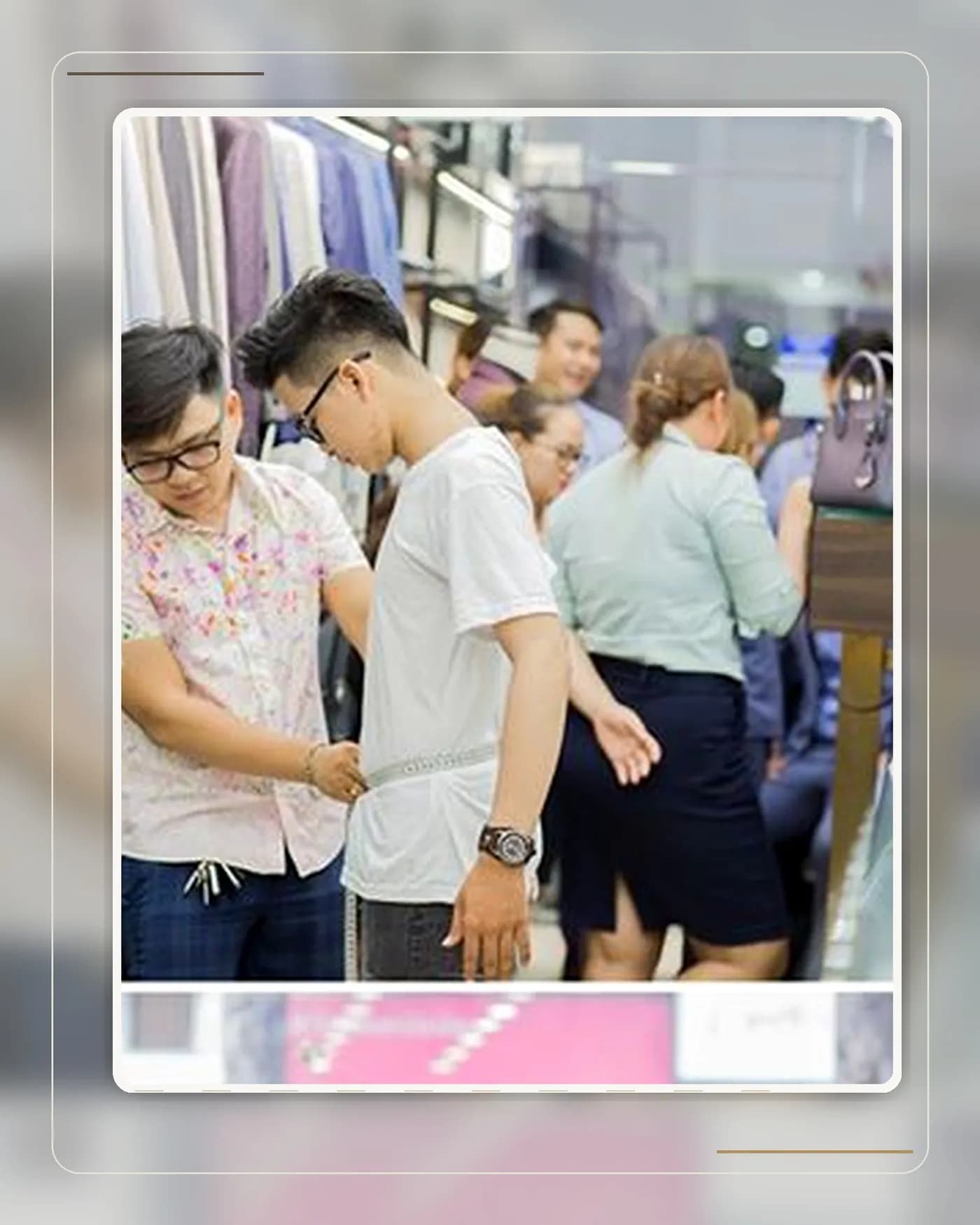
Sleeve length is a small detail, but it exposes the quality of a suit faster than almost anything else. You can wear beautiful cloth in a perfect cut, yet if the jacket sleeve swallows your shirt cuff — or the shirt spills out too far — the whole outfit loses its polish. Mon Amie will give you the exact numbers.
The short answer
The jacket sleeve should end right at the wrist bone (the small bone protruding on the little-finger side), leaving about 1–2 cm — roughly half an inch — of shirt cuff showing when you stand with arms relaxed. The shirt sleeve itself should reach the base of the thumb, with a cuff snug enough not to retreat when you move. That 1–2 cm band is the classic tailoring standard: enough to create an elegant transition between suit cloth and shirt, never so much that the jacket looks borrowed.
Why 1–2 cm is the golden number
The exposed cuff works as a bright "trim line" between jacket sleeve and hand — much like the shirt collar showing above the lapel. It gives the arm visual rhythm instead of one unbroken column of cloth.
- Less than 1 cm showing, or none: the jacket sleeve is too long — the most common flaw in off-the-rack suits, making the wearer look lost in his clothes.
- More than 2.5 cm showing: the sleeve is too short, suggesting a jacket that is tight or outgrown.
- Wearing a watch: the shirt cuff on the watch side can be cut a few millimetres longer so it sits gently over the watch — a detail a careful tailor will ask about at the very first fitting.

How to check at home
- Put on both shirt and jacket, button up, stand straight before a mirror with arms hanging naturally.
- Check where the jacket sleeve ends: exactly at the wrist bone, never over the back of the hand.
- Measure the exposed cuff with two fingers laid flat — about one and a half to two finger-widths is right.
- Extend your arm as if shaking hands and flex a few times: the cuff must stay visible in motion, not vanish inside the sleeve.
One prerequisite: the shirt sleeve must be the correct length first. If the shirt runs short, no jacket adjustment can save the proportion.

Common mistakes
- Adjusting the jacket to whichever shirt you happened to wear at the fitting, while the shirts in your wardrobe vary in sleeve length — standardise your shirt sleeves first.
- Leaving the jacket sleeve long "to be safe" — a slightly short sleeve is actually more forgivable than one covering the back of the hand.
- Forgetting that cotton shirts shrink slightly after a few washes, shifting the proportion over time.
- Checking only while standing still, never in a handshake, at a keyboard, or raising a glass — the moments when your cuffs show most in real life.

A word from Mon Amie's artisans
At Mon Amie, sleeve length is never measured once and filed away: we measure each arm separately, because most clients have arms that differ by 0.5–1 cm without ever noticing. At the fitting, the artisan will ask you to shake hands, cross your arms, sit down — the 1–2 cm rule only means something if it holds in real movement. For clients who wear a watch, the cuff on that side is always eased to the exact circumference of the watch they wear most.
Frequently asked questions
Can an off-the-rack jacket sleeve that is too long be shortened? Yes — shortening from the cuff is the most common and lowest-risk alteration. If the jacket has working buttonholes, it must be altered from the shoulder, which is more complex and costly.
Can I wear a long-sleeved jacket without a long-sleeved shirt? Not in formal settings — without the exposed cuff, the jacket sleeve looks abruptly cut off and the outfit loses its refined transition.
My arms are different lengths — what then? A tailor measures and cuts each sleeve to its own number — precisely the advantage of bespoke over ready-made suits, which assume both arms are equal.
If you want a suit that is right to the centimetre at the wrist, book an appointment with Mon Amie or read about the tailoring process first.