
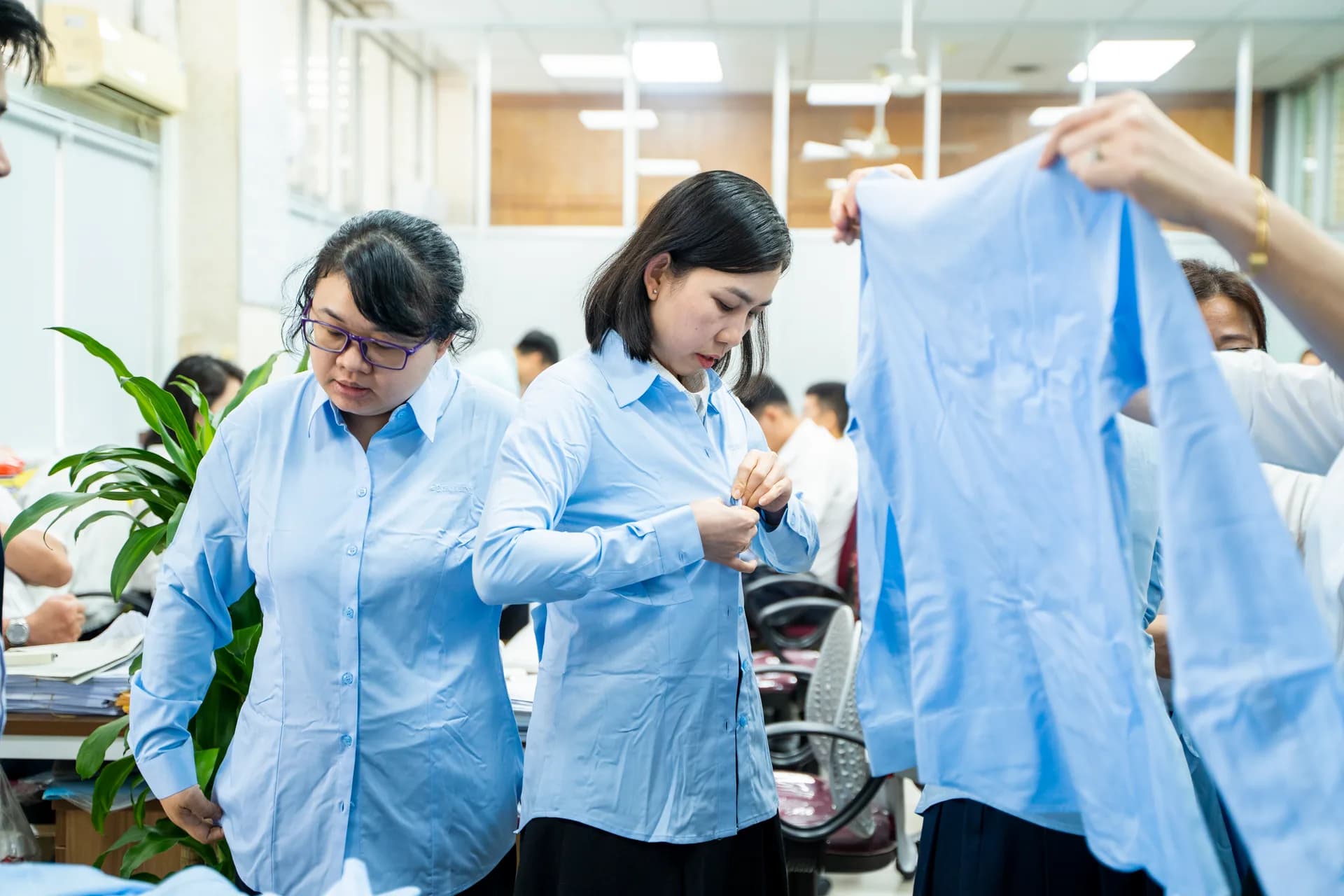
There is a story every HR professional has heard: the candidate has a crisp shirt, a polished smile and fluent answers, then stands up to reach for a pen, and the whole panel sees a pair of shorts. It sounds funny, but it holds the entire lesson of what to wear for an online interview: the camera sees only the top half, while the interviewers remember the rest for a long time.
Quick answer
For an online interview, wear a plain shirt or collared top in a neutral colour such as light blue, navy or light grey, and avoid small stripes and dense patterns because they create visual noise on camera. Add a blazer if you want to look more serious. Sit facing the light source, choose a tidy background, and still wear the trousers.
Which shirt colour looks good on camera
Webcams compress the image and adjust brightness automatically, so the colour you see in real life is not the colour the other side sees on screen. A few rules you can fairly rely on:
| Shirt colour | How it looks on camera | Notes |
|---|---|---|
| Light blue | Clean, easy on the eye, suits every skin tone | The safest choice |
| Navy | Serious, moderately deep | Works if the room is bright enough |
| Light grey, beige | Neutral, soft | Can look washed out on pale skin |
| Pure white | Easily blows out and loses collar detail | Use off-white instead |
| Black | Swallows detail, blends into a dark background | Wear a light shirt underneath |
| Red, orange, vivid green | Saturated colour, harsh on the eye | Green can also be swallowed by a virtual background |
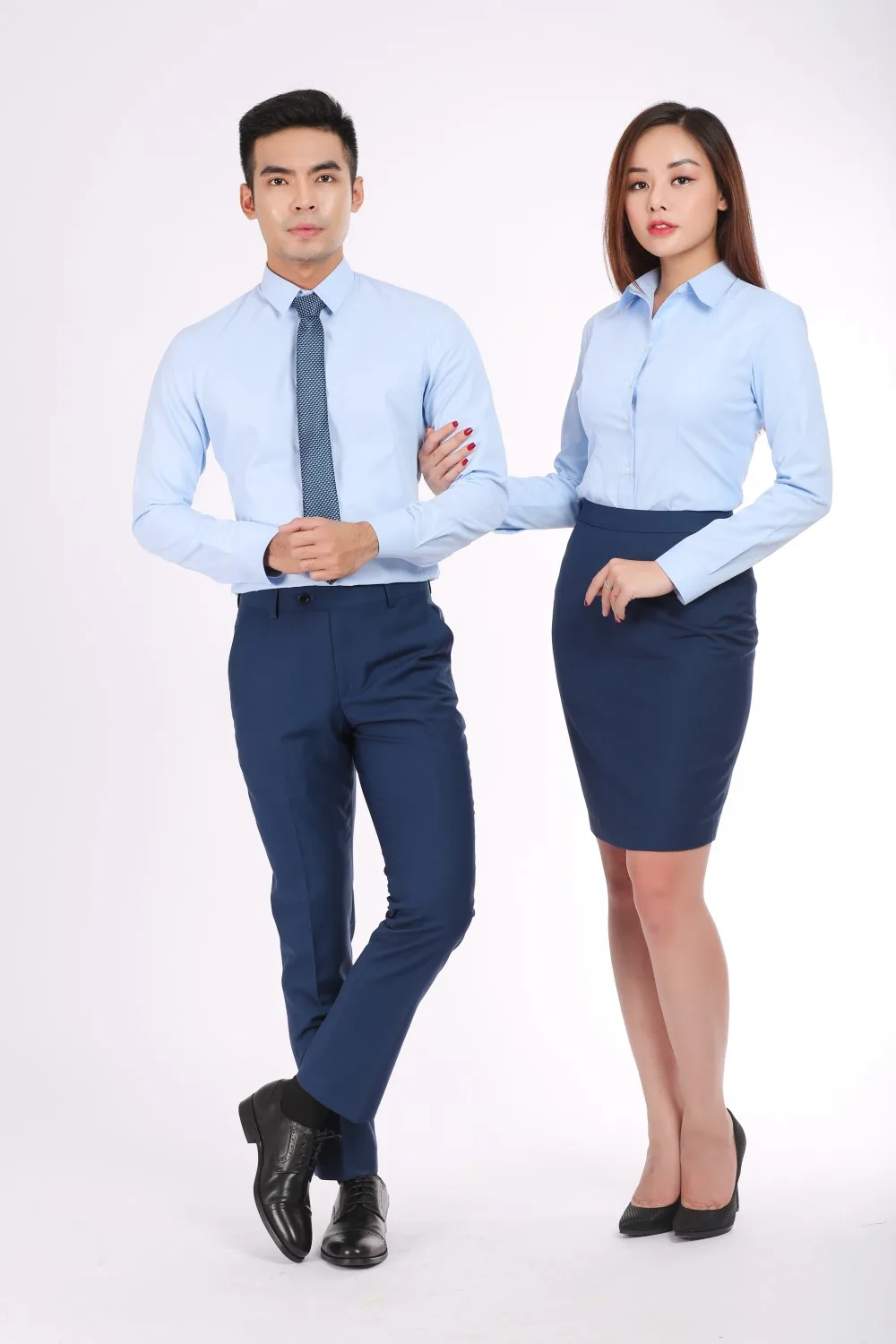
Light blue suits most situations, which is also why you see it so often in online meetings.
Which patterns cause visual noise
Cameras and video compression algorithms “hate” small, dense patterns. Tiny stripes, small checks, houndstooth or fine polka dots easily produce a flickering effect (moiré) that makes the shirt look as if it is vibrating. Avoid them on camera.
- Choose: solid colours, matte fabric, large and sparse patterns.
- Avoid: small stripes, small checks, shiny fabric that reflects the lights.
What to wear for an online interview: the top half must be impeccable
The camera usually frames you from the chest up, so every detail in this area is magnified:
- A flat collar, fully buttoned. A rumpled collar is the first thing people notice.
- The shoulders are the highlight. If you wear a blazer, the shoulders must fit yours: not drooping, not jutting out. This is the detail the camera sees most clearly, and the hardest one to hide.
- Hair and beard tidy, headphones discreet. Large, multicoloured headphones scatter attention.
- A tie depends on the industry. Banking and law should wear one. Technology and creative fields do not need to.
For a more general guide to dressing for men, you can read what to wear to a job interview as a man.
Lighting and background matter more than you think
A beautiful shirt sitting in the dark still looks poor. Three things to adjust:
- Light in front of your face. Sit facing a window, or place a desk lamp behind your laptop. Do not sit with your back to a window, or you will turn into a silhouette.
- Camera at eye level. Raise the laptop on a stack of books and avoid a camera angle from below.
- A tidy background. A plain wall or a neat bookshelf. Limit virtual backgrounds, because the edges of your hair and shoulders are easily cut out in a ragged way.
The colour of your shirt should contrast gently with the background. A light blue shirt against a white or beige wall is a harmonious pair.
Why you should still wear trousers for an online interview
Three practical reasons:
- Preventing accidents. If you have to stand up to fetch a document, end the call or open the door, you are still yourself.
- Psychology. Dressing properly from head to toe puts your body in work mode, and your voice and posture become more serious as well.
- No expensive footwear needed. Clean, pressed, dark trousers are enough.
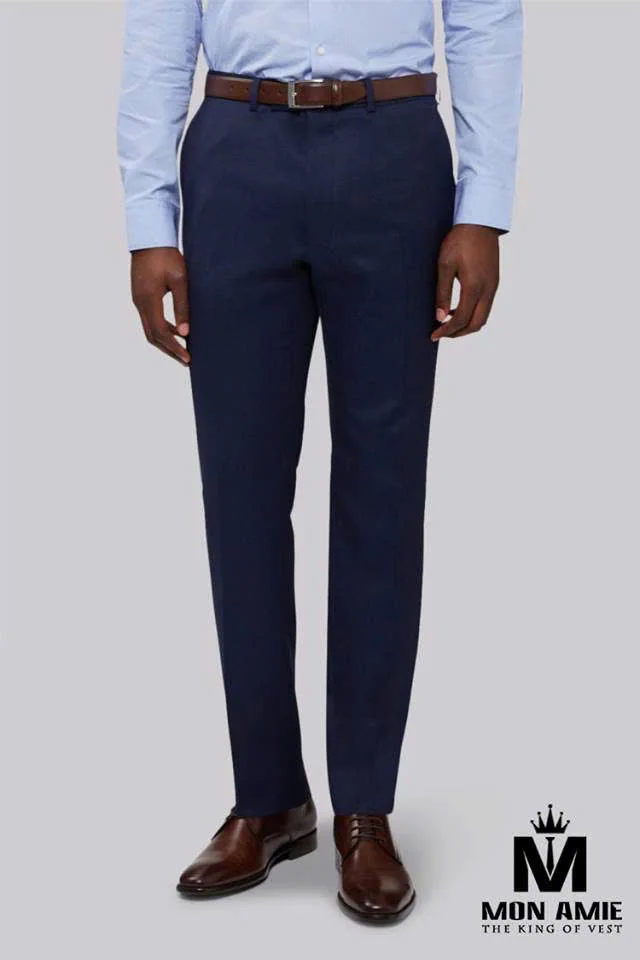
Navy or plain grey trousers with a light blue shirt is the easiest combination.
What to wear to a job interview: a table by industry
Whether the interview is online or in person, the level of formality should follow the industry:
| Industry | Suggestion |
|---|---|
| Banking, finance, law | Dark suit, white or light blue shirt, plain tie |
| Business, sales, real estate | Blazer or suit, light shirt, tie optional |
| Technology, startups | Neat shirt or polo, a light blazer if you wish |
| Media, creative | Smart casual, one moderate personal touch |
If you are unsure whether to wear a suit at all, read should you wear a suit to a job interview. For which colour suits your industry, see what colour to wear to a job interview.
Your sitting posture is part of the outfit
The shirt sits on your body, and your body sits down. A perfect shirt still wrinkles if you slouch, and a blazer that fits at the shoulder still juts up if you hunch your shoulders towards your ears. A few small adjustments make the clothes look noticeably better on camera:
- Sit up straight, lower both shoulders, and keep the shoulder line of the jacket flat.
- Pull the hem down gently before you sit, so that the collar is not pushed up.
- If you wear a blazer, button it at the start; if it fits, keep it buttoned when seated, and if it is a little snug, undo the button to ease the strain.
- Rest your hands on the desk, out of frame or with just the wrists showing.
A 10-minute checklist before the interview
- Test the camera, lighting and sound once.
- Iron the collar and check the buttons.
- Put on dark trousers and clean shoes or sandals.
- Close application windows and turn off notifications.
- Keep water, paper and a pen within reach.
Common mistakes
- Wearing a T-shirt because only the top half is on camera. Wear a collared shirt.
- Sitting with the light behind you. Your face goes dark and the collar loses definition.
- Choosing small stripes. The screen flickers unpleasantly.
- Using a glitchy virtual background. A blurry, shifting background makes you look unfocused rather than professional.
Tips from Mon Amie's master tailor
A master tailor has a habit of checking a jacket through a screenshot: if the shoulders look flat and straight and the collar hugs the neck, the jacket comes across well on camera. The camera always “scans” the shoulders first, because the shoulders frame the face. When it comes to what to wear for an online interview, if you can only invest in one item, choose a blazer or a shirt that fits at the shoulder.
Frequently asked questions
What colour should I wear to an interview?
Light blue, navy, light grey or beige. Avoid pure white, jet black and vivid colours. Plain colours look cleaner on camera than patterned ones.
Do I need a suit for a job interview?
It depends on the industry. Banking, law and high-end sales should wear a suit or blazer. For technology and creative fields, a neat shirt is enough. Whatever the industry, clothes that fit and are clean matter more than an expensive jacket.
How does dressing for an in-person interview differ from an online one?
In person, you have to pay attention to shoes, belt and the fall of the trousers, because the interviewer sees your whole body. Online, pay attention to shirt colour, pattern and lighting. But the principle of looking put together from head to toe is the same.
Do I need a tie for an online interview?
Only if the industry calls for formality, such as finance and law. If you wear one, choose a dark plain colour or a bold stripe, and avoid small patterns that cause visual noise.
Closing thoughts
An online interview removes physical distance but not the first impression, and what you wear for an online interview is the part you control completely. A shirt that fits at the shoulder, a clean colour, decent lighting and a pair of trousers you do not need to show off are enough. If your company wants to train its staff in dress culture, Mon Amie has a Dressing Etiquette workshop, and if you need a well-fitting shirt or blazer, you can book a fitting.