
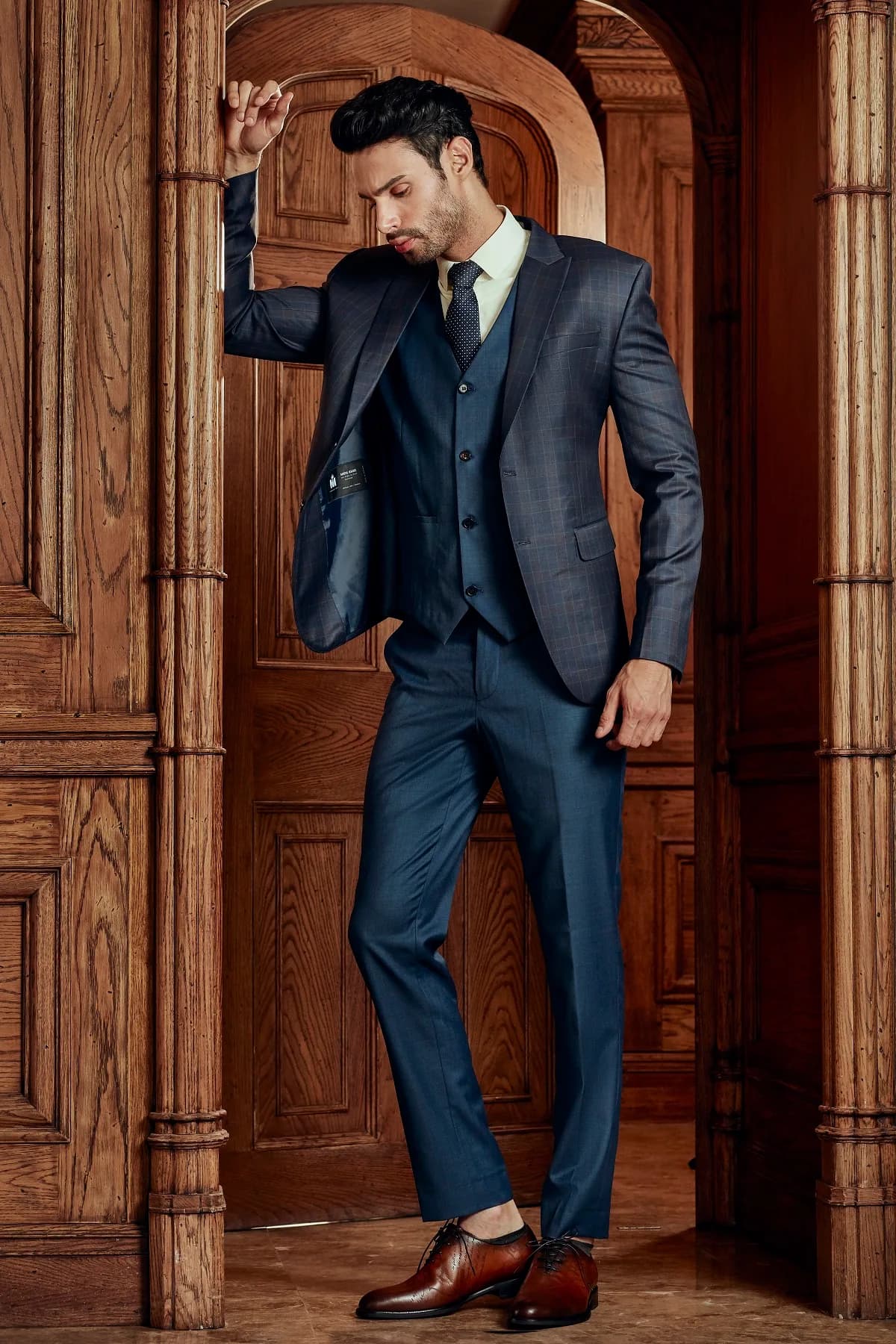
Two people walk into a meeting room, and neither has spoken yet. In the first few seconds, the other side has quietly judged: is this person careful or sloppy, in control or under pressure, trustworthy or not yet. That is why businessman style is not a frivolous matter. It is a silent summary of how you work.
Quick answer
Businessman style builds credibility when it follows seven principles: fit at the shoulder first, a restrained colour palette, cloth that speaks for itself, small details done right, the right context, understatement over show, and regular care of your clothes. Credibility comes from consistency, not from how expensive an item is.
Principle 1: Fit at the shoulder first, everything else after
The shoulder is the one detail that can hardly be altered once the jacket is made. A suit that fits at the shoulder, however plain, always looks better than an expensive one with a drooping shoulder. Check it yourself: the shoulder seam coincides with the point of your shoulder, the collar hugs the back of your neck, and the sleeve reaches the base of the thumb when your arms hang. This is why a businessman should give priority to made-to-measure: Mon Amie's bespoke takes more than 30 measurements, and those measurements are kept for life.
Principle 2: A restrained palette, a few shades are enough
A businessman builds credibility through consistency, so the wardrobe does not need many colours. An easy formula to apply:
- Foundation: navy, charcoal grey, charcoal black.
- Shirts: white, light blue, light pink.
- Accents: tie, pocket square, occasionally a bordeaux or moss green.
A rule of thumb: about 80% of the wardrobe in neutral shades, and the remaining 20% for accents. That way everything can be paired with everything else, and you do not lose time every morning.
Principle 3: Cloth speaks for you
The person across from you may not know what a Super number is, but they can see the drape, the matte surface and the creases after a few hours of sitting. Good wool drapes softly, creases little and keeps its colour. Poor cloth glares, creases easily and fades quickly.
At Mon Amie, the Signature line (VND 10 – 20 million for a complete set) with Kevinlli 80–100% wool 140s–150s, Vercelli, Luciano, Salford and Dolce & Taylor is the line chosen most often. You can see the materials in person in the cloth library or consult the price list.
Principle 4: Small details must not be wrong
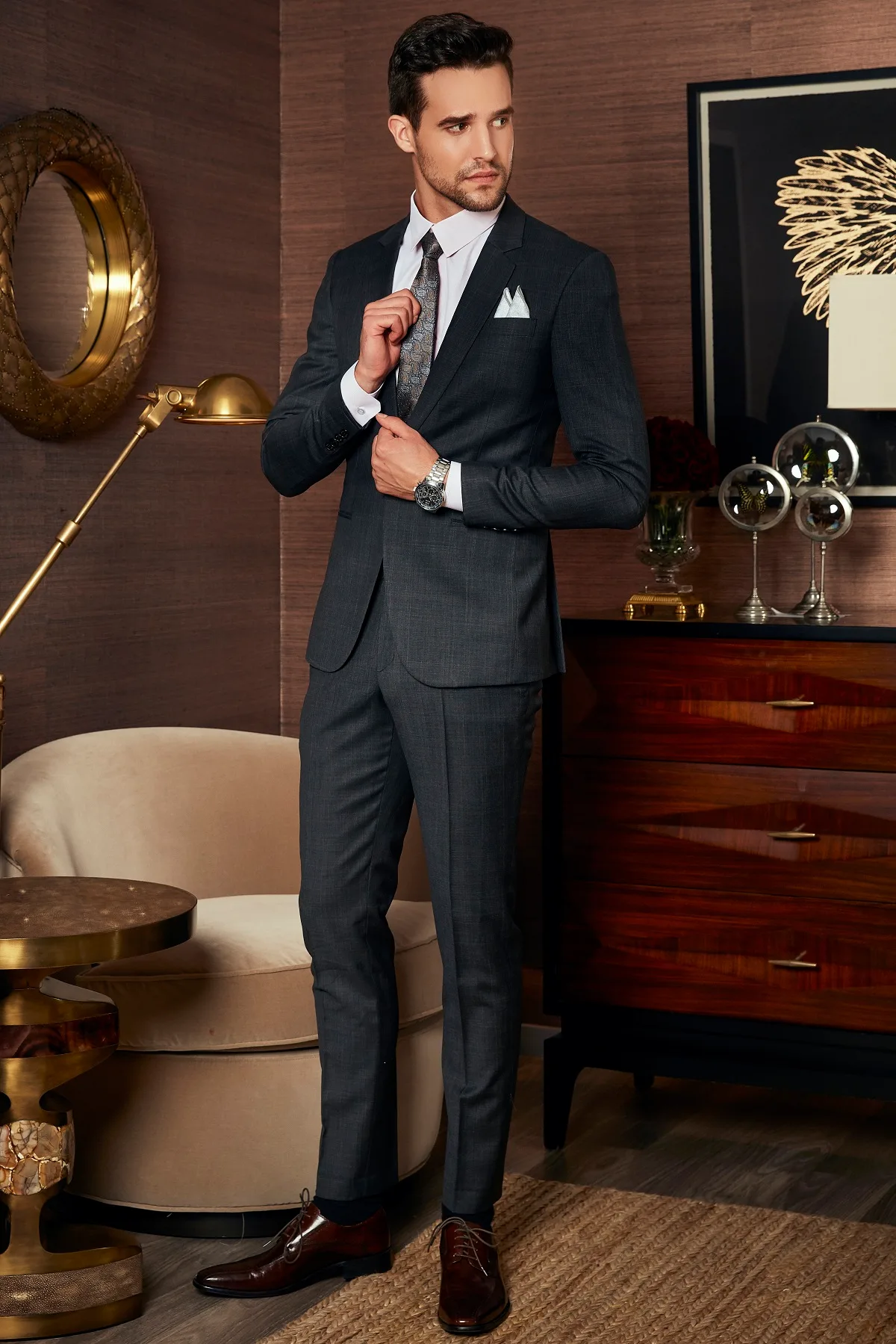
Credibility lies in what people see without comment:
- Shirt cuffs showing 1–1.5 cm below the jacket sleeve.
- Trousers touching the top of the shoe, with just one soft break, not bunched into a pile.
- Shoes and belt in the same tone, shoes polished, soles not worn unevenly.
- Socks tall enough to cover the ankle when seated.
- A tie reaching the waistband, neither too long nor too short.
- A simple watch, not too flashy.
One wrong detail can sometimes spoil an expensive suit.
Principle 5: The right context
The same person, but an internal meeting and a meeting with a partner call for two levels of formality:
| Setting | Suggestion | What to avoid |
|---|---|---|
| Daily internal meetings | Navy blazer or suit, shirt, tie optional | Being more casual than your team |
| Meeting clients, new partners | Dark suit, white or light blue shirt, tie | An overly loud pattern |
| Events, evening receptions | Charcoal black suit or tuxedo, bow tie or silk tie | Shiny cloth in the daytime |
| Business trips | A lightweight, low-crease suit jacket that is easy to mix | An elaborate suit that is hard to care for |
| Portrait photos, press interviews | A well-fitting suit in a neutral colour | Small stripes that cause visual noise on camera |
The general rule: dress one notch above the person you are meeting, never below. With your own team, be a little more polished, but not too far.
Principle 6: Understatement over show
A respected businessman's style is usually one that people struggle to describe: no big logos, no loud accessories, no noisy patterns. Credibility comes from the feeling that “this person has nothing to prove”. A well-fitting navy suit with a plain tie can say more than an outfit with an overly conspicuous pattern.
If you want a personal signature, choose a single point: a pocket square, a lapel pin or the lining of the jacket. One point is style, three points is clutter.
Principle 7: Regular care
A good suit that is creased, shoes with dust on them and untidy fingernails make all the principles above meaningless. The habits you need:
- Hang the suit on a shaped hanger after each wear, and leave a day or two before wearing it again.
- Iron it correctly. You can read how to iron a suit jacket without shiny shoulders to avoid damaging the cloth.
- Polish your shoes regularly, and use shoe trees so the toes do not crease.
- Shirts washed and pressed flat, collars clean.
Three common styles of businessman fashion
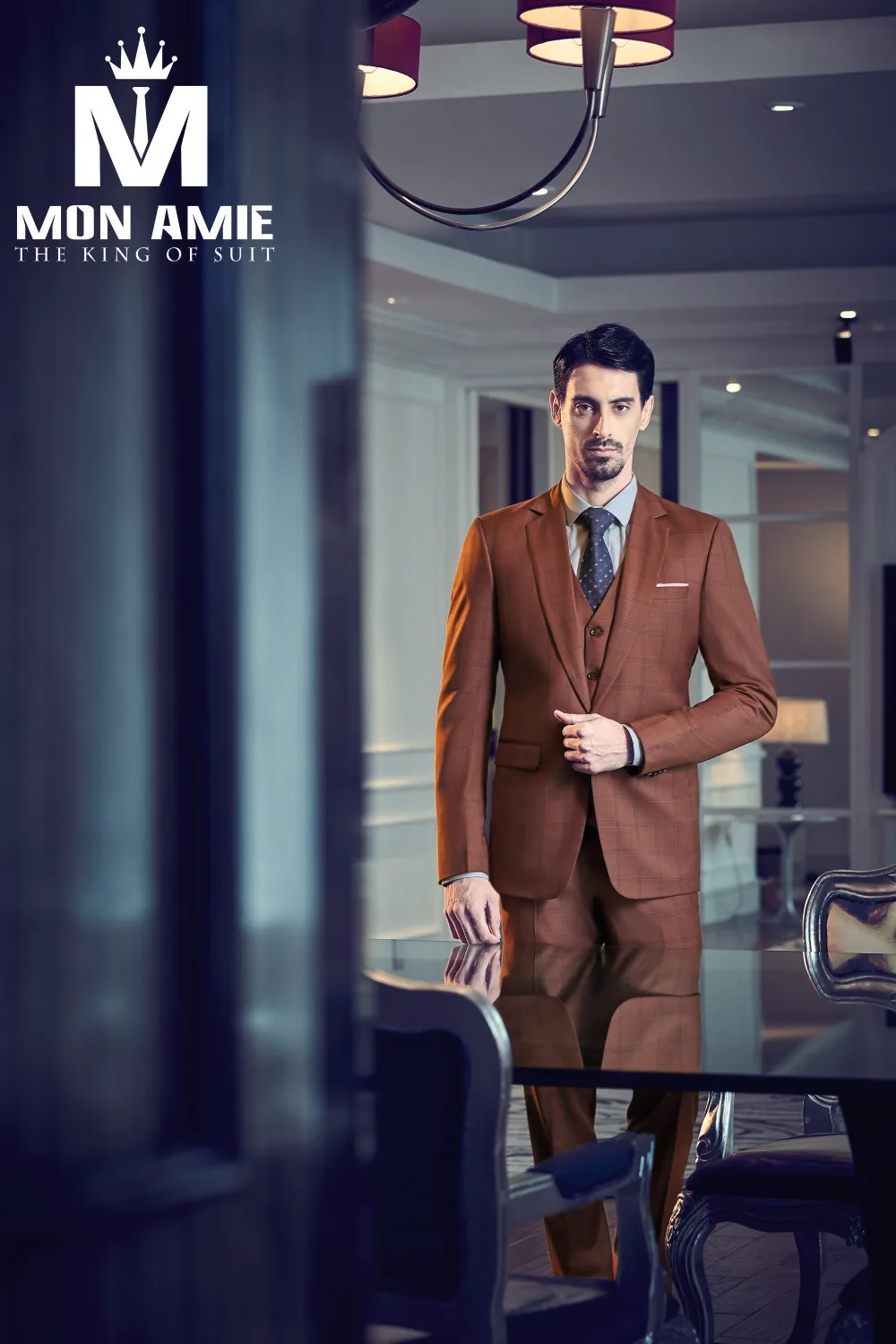
Businessman fashion is not a single mould. There are three directions you often meet:
- Classic: a navy or grey suit, a plain tie, a white shirt. Suits finance, law and real estate.
- Modern: a slim-fitting suit, smooth cloth, possibly no tie, a light blue or pink shirt. Suits technology, media and services.
- Deliberately relaxed (smart casual): a blazer not matching the trousers, a polo or an open-necked shirt. Suits creative industries and informal meetings.
Which direction you choose depends on your industry and personality, as long as you keep it consistent.
Common mistakes
- Paying more instead of fitting better. An expensive suit that is loose at the shoulders is still a suit that is loose at the shoulders.
- Too many colours, too many patterns. The whole outfit should tell one story, not three.
- Showy accessories. An oversized belt buckle, an overly elaborate watch.
- Neglecting shoes. Worn-out shoes spoil the whole suit.
- Not changing with the context. Wearing the same thing for every occasion.
Tips from Mon Amie's master tailor
The master tailor usually advises businessmen to start with two suits: a plain navy and a charcoal grey. These two suit most occasions, from meetings and clients to a light evening dinner. Once you have the foundation, add a lightly patterned suit or a separate blazer. Many businessmen do it the other way round: they buy a standout suit first, then do not know when to wear it. If you are a young businessman just starting out, you can also read young businessman style.
Frequently asked questions
What makes up a businessman's style?
Fit, a restrained palette, good materials, careful details, the right context, understatement and regular care. Of these, a good fit is the most fundamental factor.
How does a businessman's style differ from office style?
Businessman style emphasises credibility and consistency, usually with a made-to-measure suit, good cloth and few patterns. Office style is broader, depends on company rules and can be more relaxed.
How many suits should a businessman have?
Two foundation suits, navy and charcoal grey, then a third as needed: a lightly patterned one, or a charcoal black suit for evening events. That is enough to rotate, so that each suit gets a rest between wears.
Does a businessman need to follow trends?
No. Follow trends in small accessories, such as pocket squares and ties, and keep the core a classic suit that fits at the shoulder. Trends come and go; well-fitting shoulders stay.
Closing thoughts
Businessman style is not a contest of wealth but a way of showing respect to the person across from you and to your own work. If you need to build a wardrobe from scratch, Mon Amie offers bespoke tailoring and online suit design. Companies that want a consistent image for the whole team can explore the Dressing Etiquette workshop.