
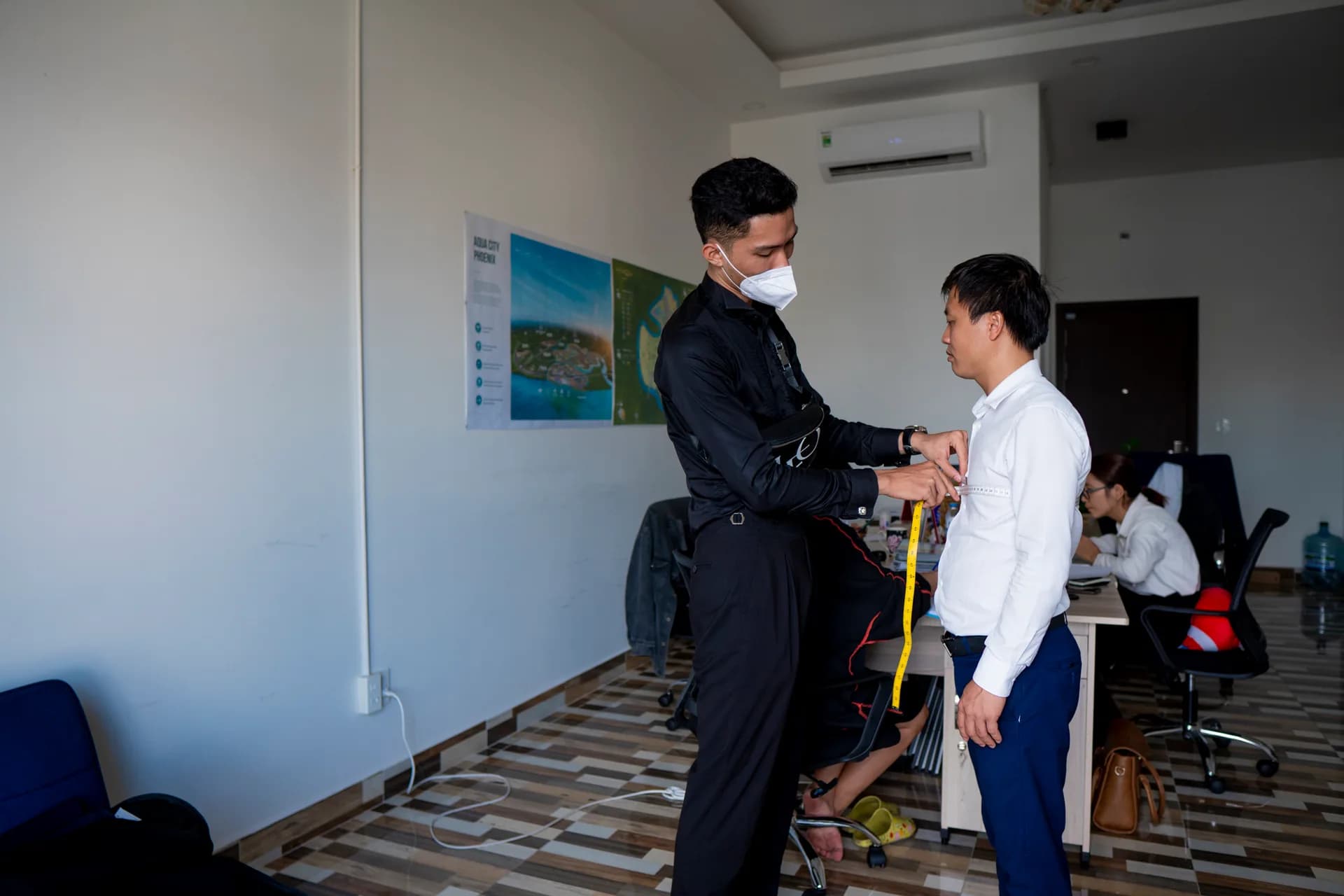
Ten at night, the evening before the interview. The wardrobe door is flung open; on the bed lie three shirts, two pairs of trousers, and a suit worn to last year's wedding that has gone a little tight. The same question circles in your head: what to wear to a job interview as a man, so that you look serious enough without being seen as overdone? The good news is that the answer follows a formula. The less welcome news is that the formula changes by industry, so this article is split into three levels for you to choose the one that fits.
Quick answer
For an interview, a man should dress one notch more formally than the company's everyday dress code. Finance, banking, law: a navy or charcoal suit, white shirt, tie. Standard office: blazer, dress trousers, shirt, tie optional. Creative industries: a soft blazer, shirt, chinos. What they all share: clean, pressed, well-fitted.
What to wear to a job interview as a man: one notch above the company's dress code
Interviewers judge you by your clothes in the first few seconds, and they rarely fault a candidate for being too well turned out. Dressing sloppily, on the other hand, is often read as not being serious. So the easy rule to remember: dress one notch above however the company dresses every day. If the company wears T-shirts, wear a shirt; if the company wears shirts, wear a blazer; if the company wears suits, wear your sharpest suit.
Look at the company's website and social media to get a sense of what staff wear. If you cannot find out, the standard office level in the table below is a safe starting point.
Three levels of men's interview dress, by industry
| Level | Industry | Outfit | Shoes and accessories |
|---|---|---|---|
| 1. Formal | Finance, banking, law, auditing, senior management roles | Full suit in navy or charcoal; white or light blue shirt; plain or fine-striped tie | Black or dark brown leather shoes; belt matching the shoes; socks matching the trousers |
| 2. Business | Administration, sales, engineering, real estate, education | Navy or grey blazer, dark dress trousers, shirt; tie depending on context | Leather shoes; leather belt; a simple watch |
| 3. Creative | Media, design, technology, startups | Soft blazer or a clean-cut jacket, shirt or premium polo, chinos | Suede or minimalist leather shoes; no tie needed |
When you are unsure which level an industry belongs to, choose level 2. From level 2 it is easy to step up to level 1 with a tie, or down to level 3 by dropping the tie and changing the shirt.
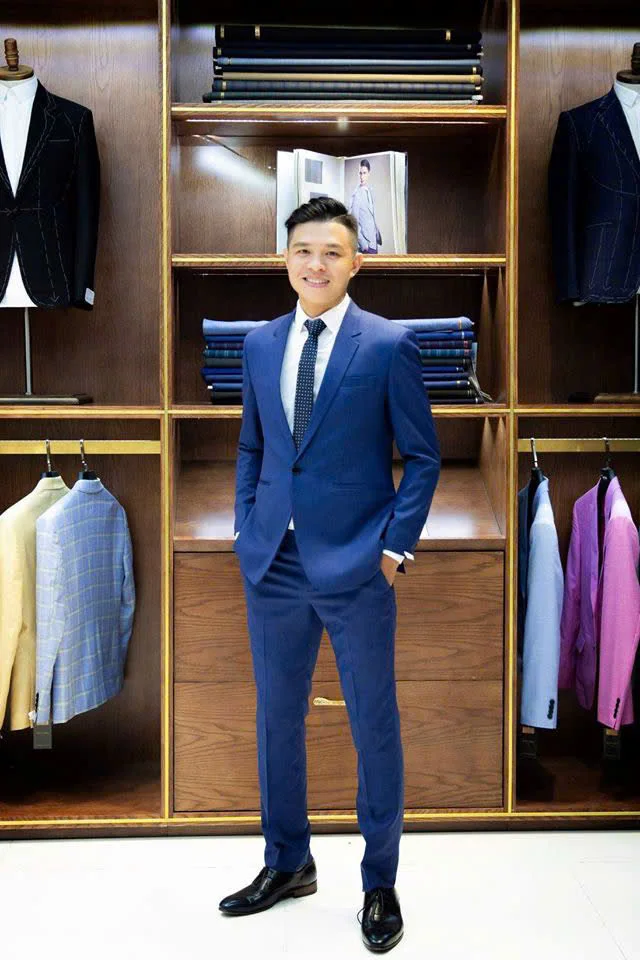
Men's interview attire: piece by piece
Shirt
White or light blue are the two safest colours and go with every suit and blazer. The shirt must be pressed flat, with a firm collar and no stains; the shirt cuff should show about 1 to 1.5 cm below the jacket sleeve. Avoid large patterns, overly bright colours, or thin fabric that shows the undershirt through.
Suit jacket or blazer
The jacket must fit through the shoulders. Excess or tight shoulders are a fault an interviewer spots immediately. If all you have is an old suit, try it on beforehand and check three points: the shoulders do not slip, the front lies flat with one button fastened, and the sleeves end at the wrist bone. Navy and charcoal are the safest colours. A black suit tends to suggest a party or a ceremony more than a workplace, so use it only when the industry truly favours it.
Trousers and shoes
Trousers in the same tone as the jacket, with a moderate leg and a hem that touches the shoe without bunching too much. Leather shoes clean and polished, heels not worn down to one side. Shoes are what people notice when they look at a candidate from the bottom up.
Accessories and small details
A belt matching the shoes, a simple watch, tidy hair, clean nails, light cologne or none at all. Choose a tie in a deep tone such as navy, smoke grey or burgundy, with a small pattern. Cartoon ties or overly loud ones easily give an impression of not being serious.
Night-before preparation checklist
Having your clothes ready the day before lets you stay calm for the more important part: the interview itself.
- Try on the whole outfit, from shoes to tie, in a full-length mirror. Sit down to see whether the jacket pulls or the trousers bunch.
- Iron the shirt and suit (or steam them). Hang them on a hanger; do not fold them into a bag.
- Check every button and seam, and any stains at the collar and underarms.
- Polish your shoes and check the heels.
- Pack spare socks and a spare shirt in your bag, in case of spilt coffee or sweat.
- Pack a slim bag: CV, documents, pen. Avoid stuffing your wallet and phone into the jacket pockets, because the jacket will bulge.
- Set your alarm earlier so there is time for a last look in the mirror, rather than a rush.
Common mistakes, from a master tailor's point of view
- Wearing something brand new that you have not tried. A newly bought shirt may be tight through the shoulders, trousers short at the hem. Always try the whole outfit on at least once before the day of the interview.
- Borrowing a friend's suit. The shoulder is the one part nobody can adjust to fit another person. A borrowed suit usually gives itself away in the simplest gestures, such as extending a hand or sitting down.
- Combining too many colours or patterns. Two main colours plus one accent is enough.
- Stuffing the jacket pockets. Phone, wallet and keys make the jacket bulge and lose its shape within minutes.
- Ignoring context. An interview at a bank and one at a start-up cannot call for the same outfit.
If you are preparing for a bank interview round, the article what to wear to a bank interview has more specific suggestions. And the question “should I wear a suit” is covered in detail in should you wear a suit to an interview.
When is it worth investing in a suit of your own?
If you are about to enter a job search for a management position, or have several interview rounds ahead, a well-fitted suit is a sensible investment. Mon Amie's made-to-measure Essential line, for a complete suit, starts from VND 4.8 million and is a standard starting point for a correct fit. You can view the price list or book a measuring appointment to have a stylist advise you. A plain navy or charcoal suit will serve from interviews through to weddings, important meetings and company events.
Frequently asked questions
What should a man wear to a job interview if he does not have a suit yet?
A white or light blue shirt, dark dress trousers, and a leather belt and shoes in the same tone. Add a neat blazer if you have one. What matters is that everything is clean, pressed and well-fitted; it does not need to be expensive.
Is a suit compulsory for men's interview attire?
No. In finance, banking and law, a suit is close to the default. Creative and tech industries usually accept a soft blazer and chinos. Observe the company's dress code and choose accordingly.
What should I wear to a job interview if the company has no clear dress code?
Choose the business level: shirt, dress trousers, leather shoes, with a blazer if you like. From this level it is easy to adjust according to the feel of the place when you walk in.
What counts as polite, appropriate dress for an interview?
A clean shirt, dark dress trousers or chinos, leather shoes, a belt matching the shoes, a simple watch and tidy hair. A blazer or suit is a plus for roles that call for a professional image.
Do I need to dress fully for an online interview?
Yes. You should still dress properly, because the camera can catch you in full if you stand up. If you want to prepare carefully, see what to wear to an online interview.
Conclusion
A successful interview depends on your ability, but a polished outfit helps you walk into the room with confidence. If you need a well-fitted suit for an important stretch, you are welcome to visit one of Mon Amie's 5 showrooms in Ho Chi Minh City, or call the hotline and Zalo on 0888.111.118.