
Picture a measuring appointment booked for seven in the evening: you leave work and head straight to the showroom in a T-shirt, jeans and flip-flops, both trouser pockets bulging with a wallet and keys. The session still goes ahead, but the tailor ends up guessing more than measuring. The five things below, to prepare before getting measured for a suit, cost you a single evening of organising, yet they decide how closely the suit will follow your body.
Quick answer
The five things to prepare before getting measured for a suit are: wear a well-fitting shirt and the dress shoes you will wear with the suit, bring a suit you like or reference photos, settle the occasion and a budget range, tell the tailor about your body habits, and book enough time for a baste fitting.
1. A well-fitting shirt and the dress shoes you will wear with the suit
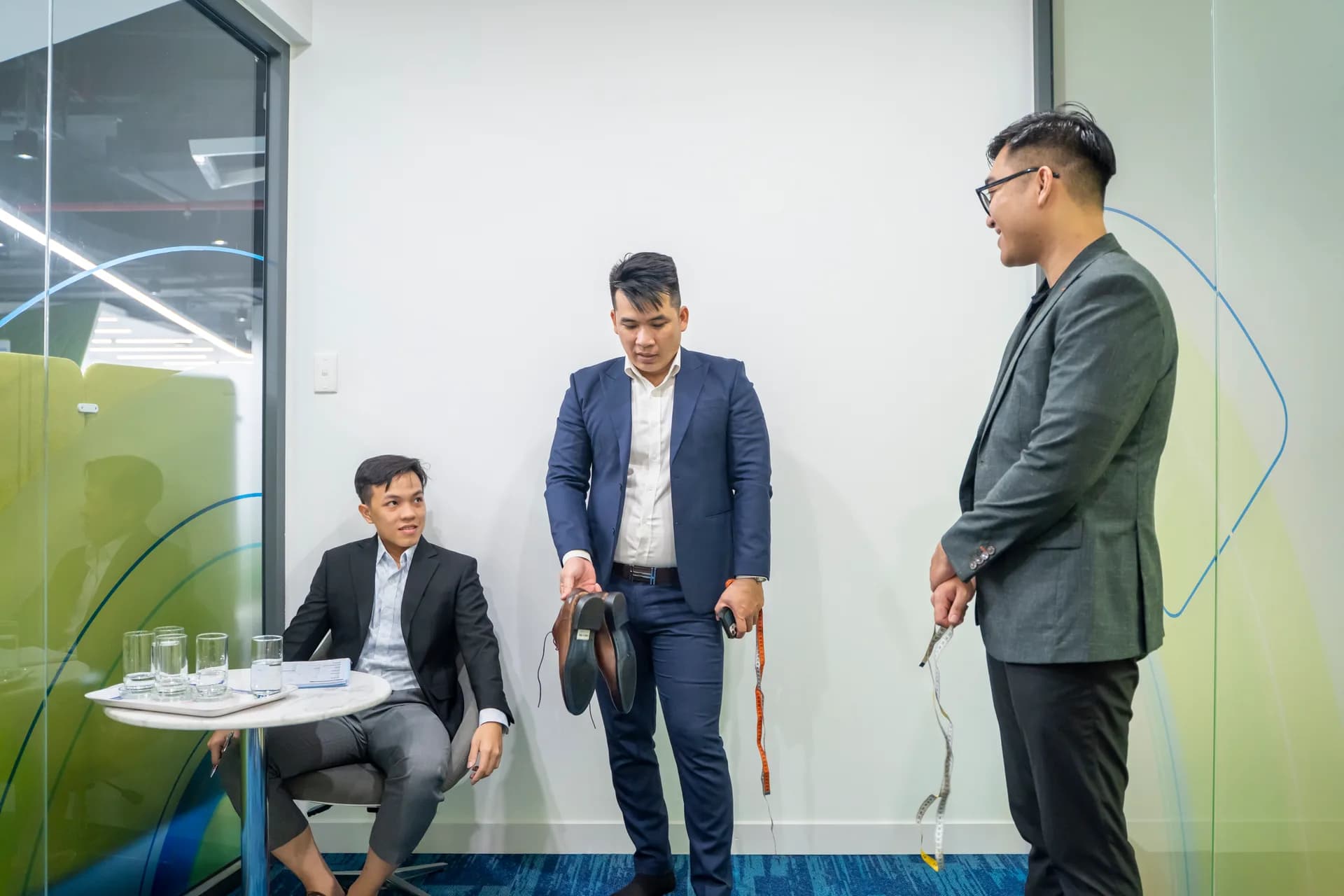
The tailor measures what you are wearing, so what you put on that day is part of the data. A thin shirt that fits at the collar and shoulders lets the chest and sleeve length be measured just as they will be in the finished suit; a thick T-shirt or a puffer jacket adds phantom centimetres to every measurement. Your shoes decide the trouser length: a heel one centimetre higher means the hem must be one centimetre longer, and a slight break at the instep only looks right when it is set on that exact pair of shoes.
So bring the dress shoes, belt and socks that will go with the suit. A common mistake is arriving in sandals or thick-soled trainers and then, when the new trousers come, finding the hems riding up over leather shoes. If it is not convenient to bring the shoes that day, message ahead so the tailor knows which pair you will wear, thin sole or thick.
2. A suit you like and a few reference photos
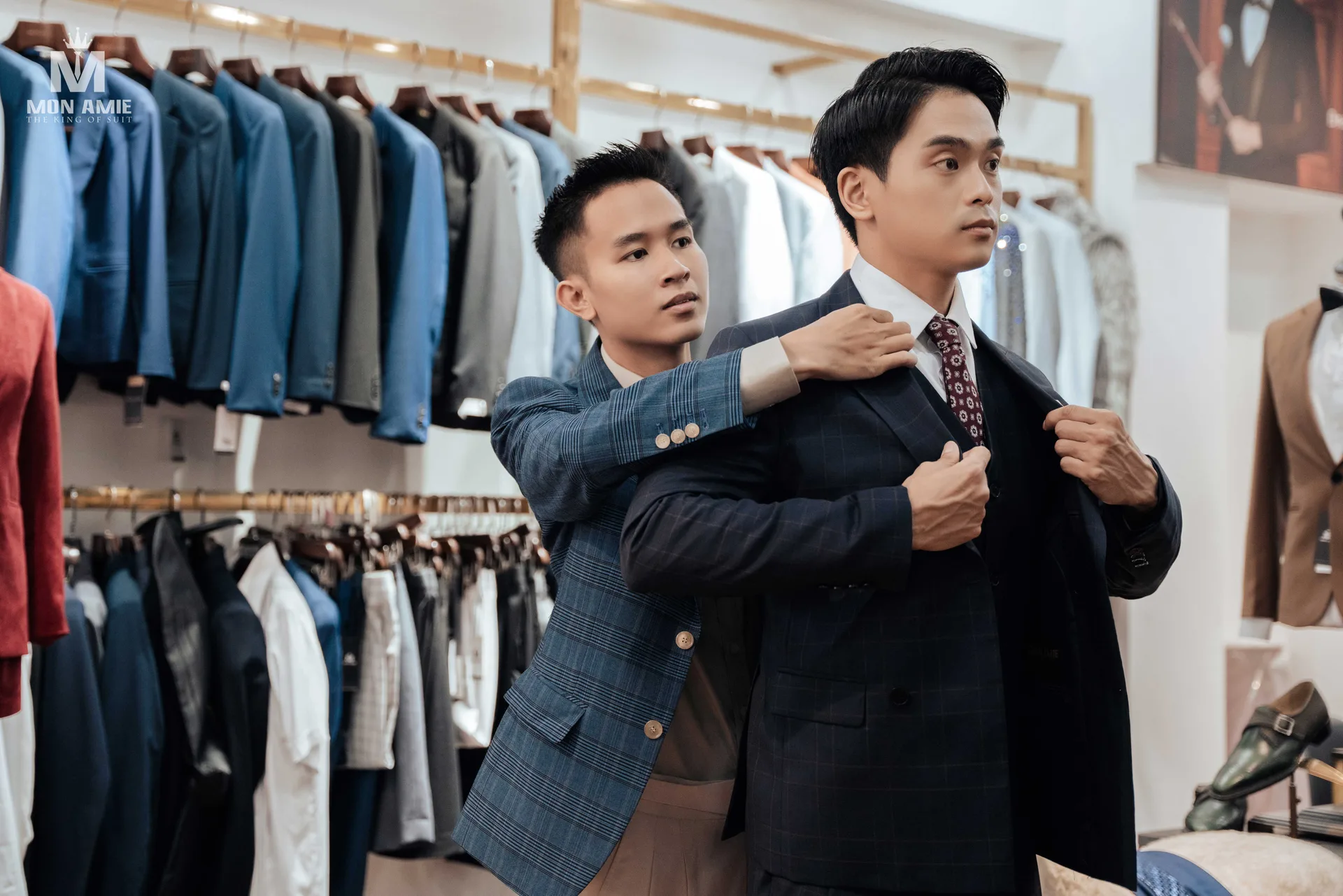
It is hard to put "a good fit" into words, but handing the tailor a suit you have worn and liked settles it: how far the jacket falls, whether the shoulder is snug or relaxed, whether the trouser leg is straight or tapered. Bringing a suit that has bothered you is just as useful, because the tailor can see whether the fault is in the shoulder, the armhole or the back of the jacket, and avoid it in the new one.
Add two or three reference photos saved on your phone: lapel style, number of buttons, pleated or flat-front trousers. A reference photo is a starting point, not a copy, because the model's build and yours are different; the tailor will point out what to keep and what to adjust. Three photos with a clear purpose help more than thirty mixed screenshots of every style.
3. The occasion, the season and a budget range
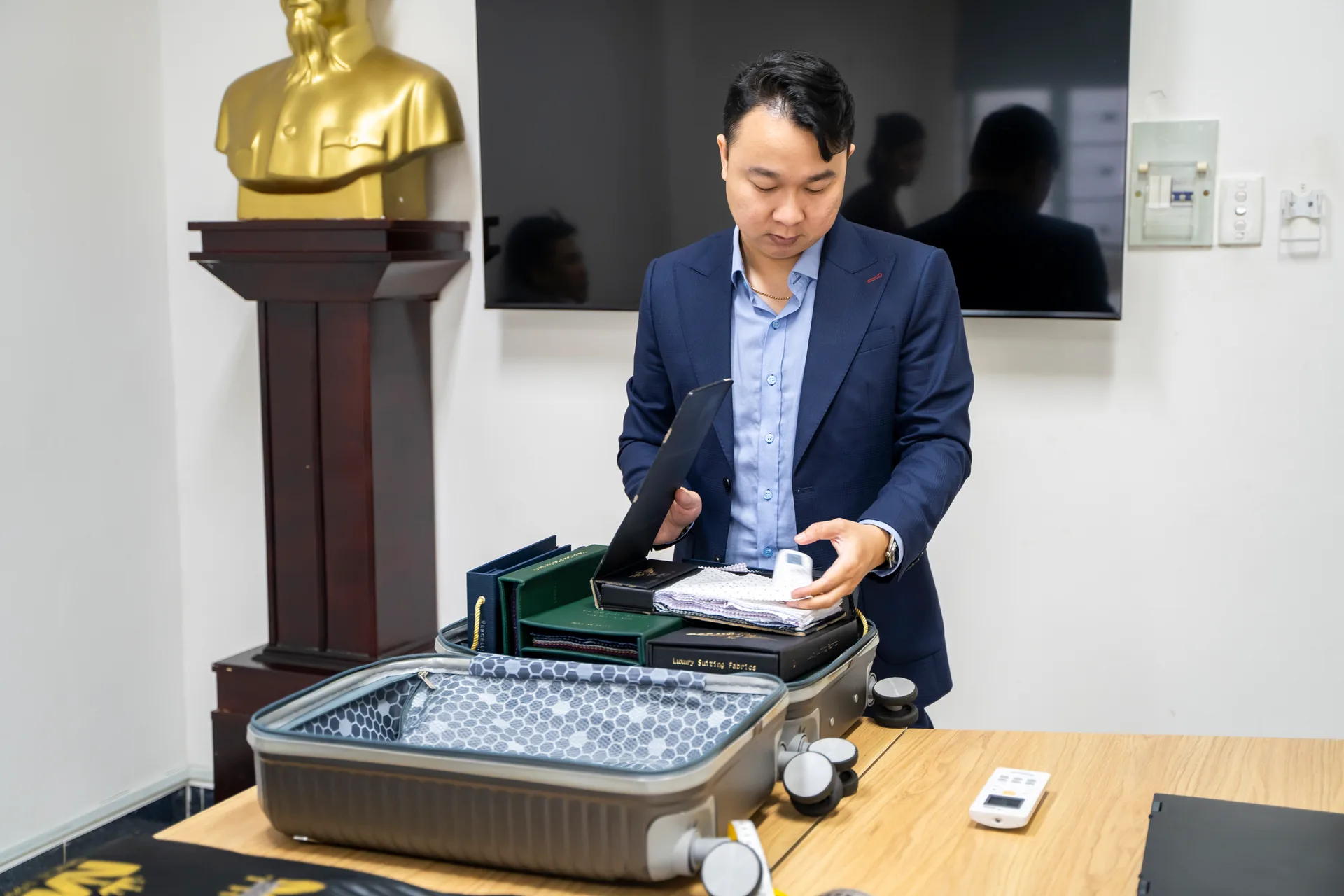
Before choosing cloth, the stylist needs to know what the suit will do: daily office wear, meetings with partners, a wedding, or one suit for several occasions. The occasion decides colour, cloth weight and construction. Saigon is hot, so a suit worn from morning to night needs a light wool; a suit for business trips to cold places needs heavier cloth.
As for budget, have a range ready to state plainly. Mon Amie divides the jacket-and-trouser set into three lines: Essential VND 4.8 – 10 million, Signature VND 10 – 20 million, Heritage above VND 20 million; the stylist confirms the exact price at the measuring. Once the stylist knows your range, only cloth within reach is shown, so no time is lost on cloth you do not intend to buy. You can browse the price list and the cloth library online beforehand so it is less overwhelming.
4. Your body habits and how you wear a suit day to day
Some things never show up on a tape measure: which hand you favour, which shoulder sits lower, whether you wear a heavy watch, whether you slip your phone into the inside pocket, whether you sit at a desk all day or walk around a lot. The master tailor will watch how you stand, but do not wait for them to notice everything. Someone who sits a lot puts different strain on the back of the jacket and the seat of the trousers than someone who stands; someone who drives a lot needs sleeves with enough room when reaching.
If your weight is changing, whether from dieting or training at the gym, say so at once so the tailor can leave room to let the suit out or choose the right moment to fix the measurements. Tell them, too, about what has bothered you in older suits: a collar that gaps, tight armholes, trousers that cling to the thigh. Mon Amie takes more than 30 measurements and keeps them for life, but measurements are only half the story; the other half is how you live in the suit.
5. Enough time in the schedule and the right way to be measured
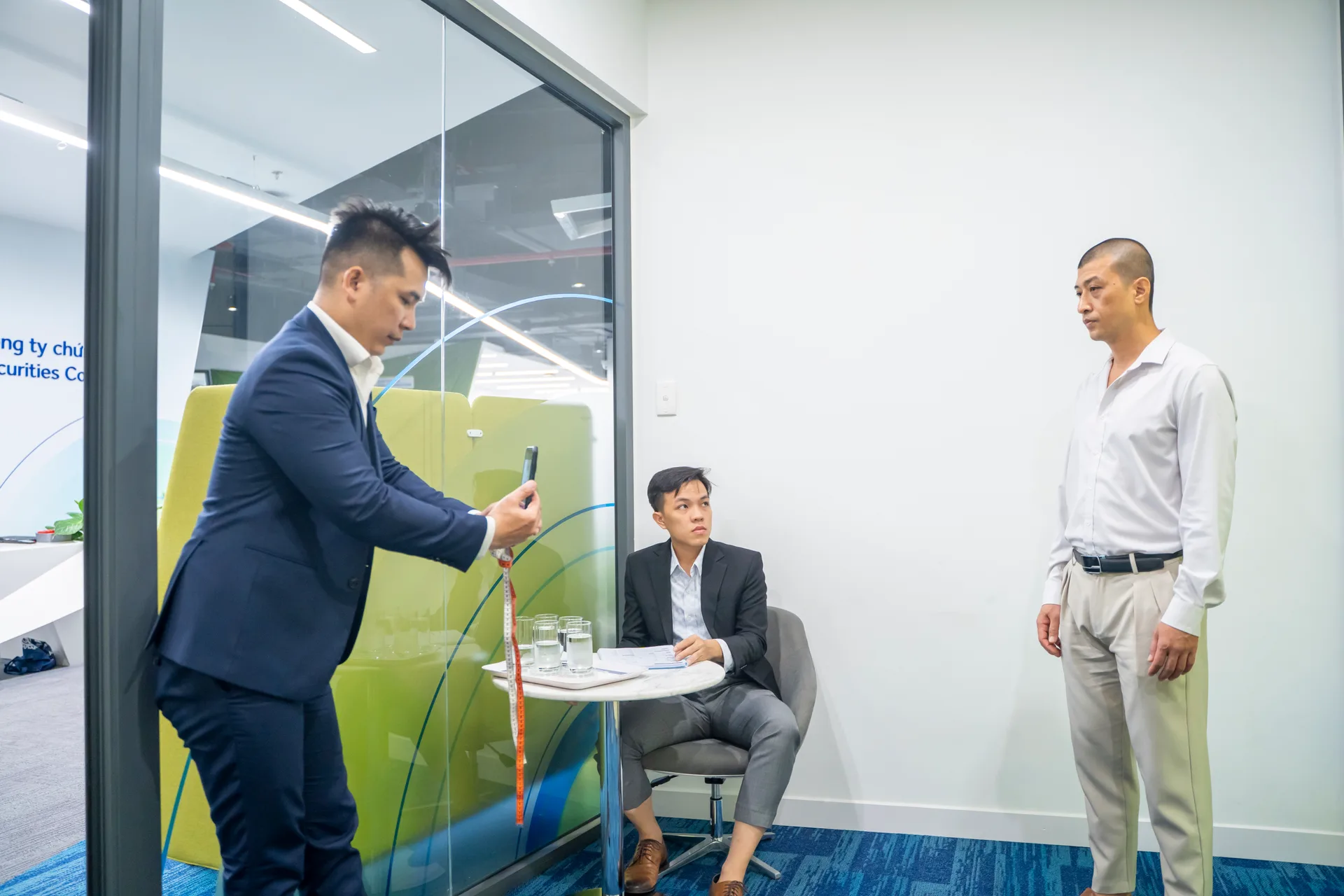
A made-to-measure suit has more steps than a single measuring: choosing cloth, taking measurements, baste fitting, adjustments, then a final fitting. If you need the suit for a fixed date, count backwards from that date and say so in the first session so the showroom can book the fittings; the specific schedule will be given at the measuring.
You can book an appointment in advance or message us on Zalo at 0888.111.118. Showrooms are open 8:30 a.m. – 9:00 p.m. daily (the 3/2 Street showroom until 9:30 p.m.), so dropping in after work still works, but book a time to avoid waiting. If you are truly busy, Mon Amie's mobile measuring team comes to your home, office or hotel in Ho Chi Minh City, and clients further away can be measured by video call. Whichever way you choose, a well-fitting shirt and a pair of dress shoes should still be at hand.
Quick summary table
| Item | Suited to | What to remember |
|---|---|---|
| 1. A well-fitting shirt and dress shoes | Everyone being measured | Measured on what you will actually wear; shoes decide trouser length |
| 2. A reference suit and photos | People who have worn suits before, people with a clear taste | Both the suit you like and the one you don't are useful |
| 3. Occasion, season, budget | People who have not settled on cloth | State a budget range to narrow the cloth |
| 4. Body habits | People who sit a lot, train at the gym, or whose weight is changing | Say what the tape measure cannot see |
| 5. Schedule and way of measuring | People with a fixed date to wear it | Count back from the wearing date; measuring at home or online is possible |
Tips from Mon Amie's master tailors
- Stand naturally and breathe evenly during the measuring. Sucking in your stomach or puffing out your chest to look "better" only skews the measurements, because you will wear the suit all day and cannot hold your breath all day.
- Empty your trouser and jacket pockets before the measuring. A wallet, phone and keys make the hips and thighs visibly bulge.
- Avoid being measured straight after a large meal or a heavy workout; your waist and chest are not at their everyday measurements then.
- Ask the tailor about extra seam allowance at the sides and the waistband of the trousers if your weight is still changing.
- Bring the same shoes to both the baste fitting and the final fitting, so the trouser hems are adjusted on the real pair.
Frequently asked questions
What should I bring to a suit measuring?
A well-fitting shirt, the dress shoes you will wear with the suit, and, if you have them, a suit you like and a few reference photos. Beyond that, all you need is a small notebook or your phone to jot down the stylist's advice on cloth and style.
Can I get measured if I don't yet know which suit style suits me?
Yes. The stylist will advise on lapel style, number of buttons and cloth colour according to your build and the occasion. All you need to say clearly is when the suit will be worn and what budget range you have in mind, and the consultation will go in the right direction.
What should I do if it's not convenient to come to the showroom?
Mon Amie offers made-to-measure at your home, office or hotel in Ho Chi Minh City, and online measuring by video call with step-by-step guidance or using measurements already on file. The preparation is the same as above: a well-fitting shirt, the right shoes, empty pockets.
Do I have to be measured again for my next suit?
Your measurements are kept for life, so the next suit is much more convenient. Only if your weight or build has changed noticeably should you have an update done so the new suit still fits snugly.
Conclusion
Preparation is not complicated; it simply gives the tailor enough information to work for the real person rather than an average measurement. When you are ready, you can book a measuring session at the showroom, or read more about the 12 standard measurement points for a suit and the fitting process to see what the tailor is doing at each step.