
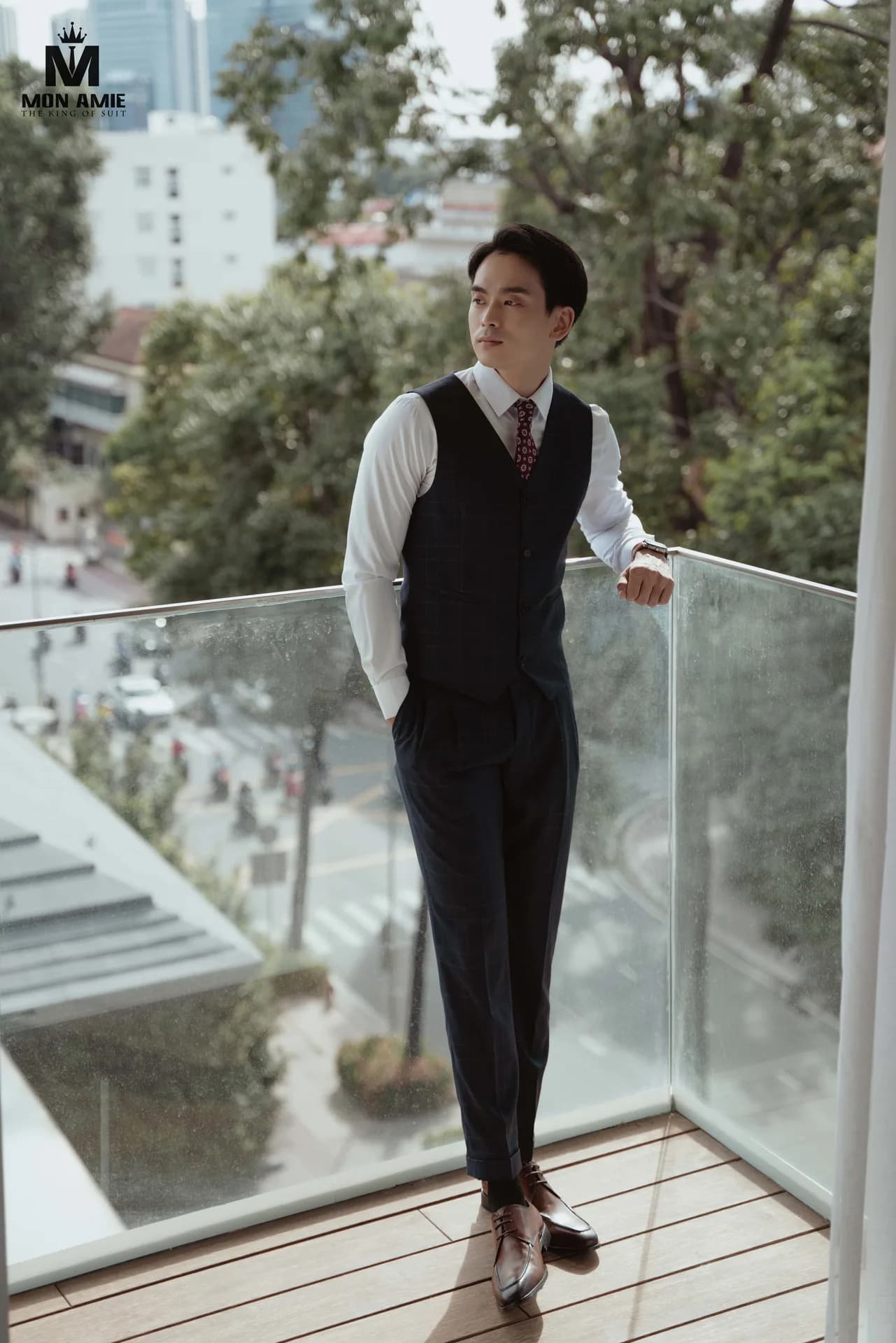
“The suits in the shop look good too, so why get one made?” is something customers often ask the stylists at Mon Amie’s showrooms. The short answer: a ready-to-wear suit is cut for an average build, and you are not an average person. Below are five reasons to choose a made-to-measure suit, put concretely, including where a ready-to-wear suit still has its place.
Quick answer
Five reasons: a made-to-measure suit fits over 30 of your own measurements, lets you choose cloth suited to climate and occasion, builds the cut through a baste fitting, lets you change the details to your taste, and keeps your measurements so that later orders are easier.
1. A fit for the real person, not the average size
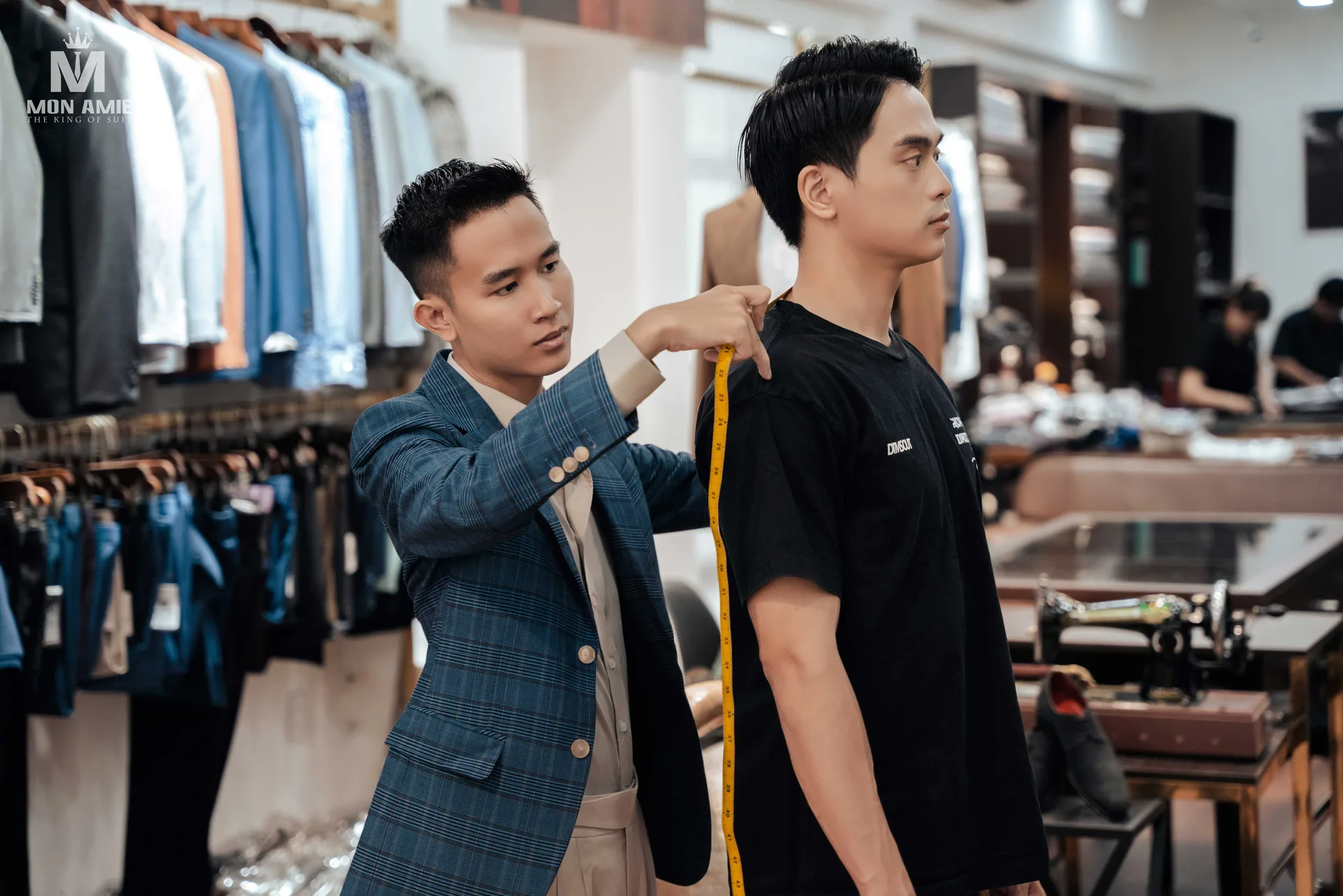
Ready-to-wear suits are divided into size runs, for example 48, 50, 52. One size has to carry thousands of builds: sloping shoulders, broad shoulders, a fuller stomach, a slight stoop, one shoulder lower than the other. Wearers usually pick the size that fits the chest and put up with a little slack at the shoulder or sleeves that run slightly long. Bespoke tailoring at Mon Amie takes more than 30 measurements and stores them for life, including ones that off-the-rack sizing has no room for. And one more thing every tailor will tell you: an alteration shop can adjust sleeves, trouser hems and the waist to a moderate degree, but the shoulders and lapels can hardly be touched. So the place where a ready-to-wear suit is hard to fit is also the place that is hard to fix. You can read more in why made-to-measure needs more than 30 measurements.
2. Choose cloth by climate, occasion and how you wear it
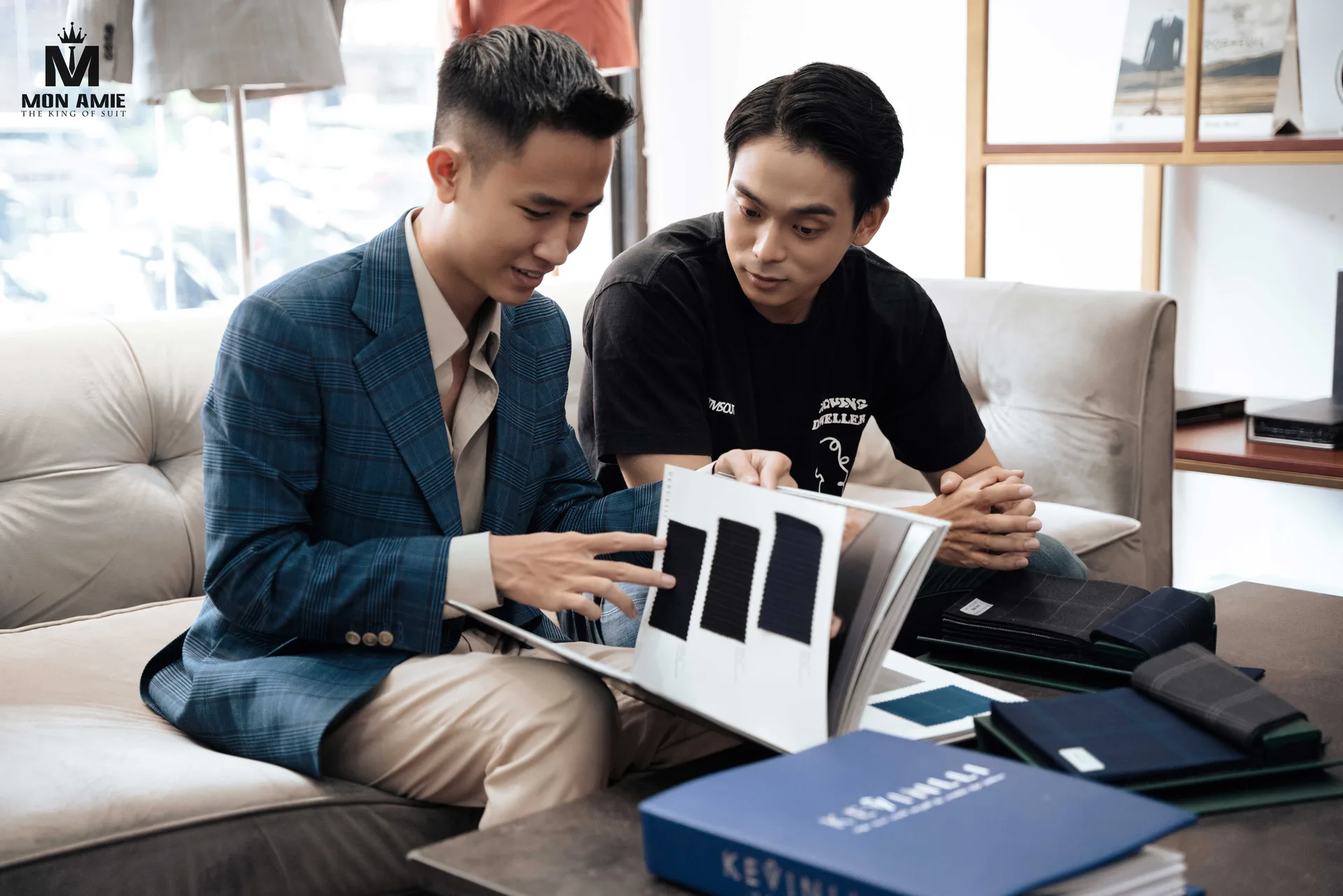
With a ready-to-wear suit, you choose from what is hanging on the rack. With made-to-measure, the cloth comes first: you decide where you will wear it and how many times a week, then choose the material. Saigon is hot and humid, so a suit for daily work should be light, breathable and hold its crease; an evening suit for a party can be heavier, with more drape. At Mon Amie, the Essential line uses Kevinlli 40–70% wool, Signature includes Kevinlli 80–100% wool along with Dolce & Taylor, Luciano, Salford and Vercelli, and Heritage is cloth from Italian and English mills such as Canonico, Holland & Sherry, Dormeuil and Scabal. Composition, weight and cloth line are all clear from the moment you choose.
3. A cut built to your build and adjusted at the baste fitting
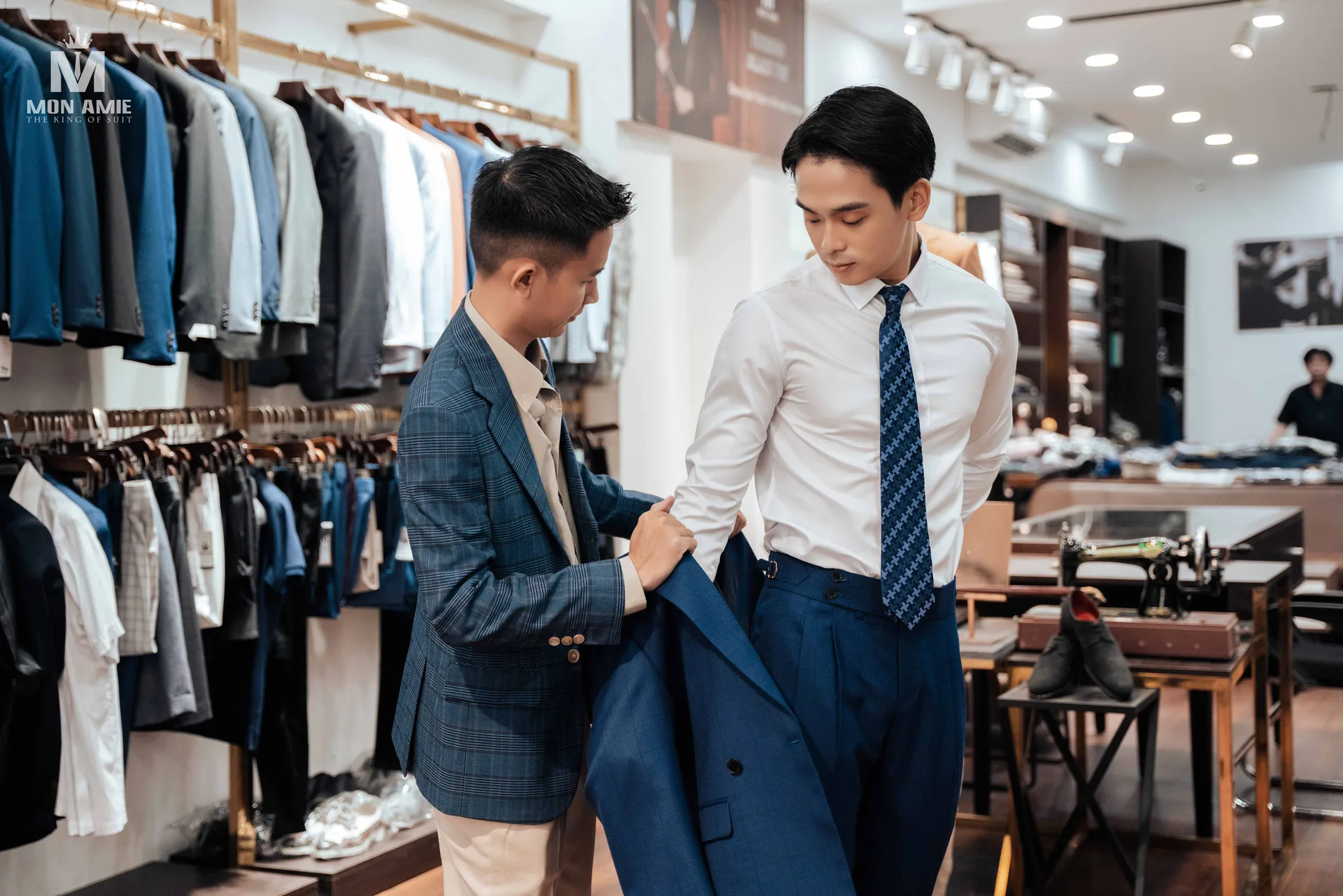
The baste is a suit assembled in rough form for you to try on before it is finished. At this session the tailor looks at whether the shoulder hugs, whether the lapel lies smooth, whether the body twists when you stand sideways, and adjusts right on your body. Unlike trying on a ready-to-wear suit, where the answer is only “fits” or “doesn’t fit”, the baste fitting is where the suit is altered to your build. Mon Amie keeps this step in the made-to-measure journey: baste fitting and adjustment until it fits, with a team of craftsmen that includes an artisan originally from Huế with more than 30 years of experience. People with a non-standard build, such as sloping shoulders, a fuller stomach, or a tall and slim frame, benefit clearly at this stage.
4. Details to your taste: lapel, buttons, pockets, lining
The same two-button suit can be two different garments simply because of the lapel. A notch lapel gives a neat office look; a peak lapel gives a more formal look, like the blue suit in the photo. With made-to-measure, you choose the lapel style, the number of buttons, the pocket style, the back vent and the lining colour, as long as they suit the wearer and the occasion. The practical meaning is bigger than the look: someone who sits in meetings needs different pockets and vent from someone who stands at a counter; someone who wears a T-shirt underneath needs a different lapel line from someone who always wears a tie. A suit that fits its owner’s way of life is less likely to sit unworn in the wardrobe.
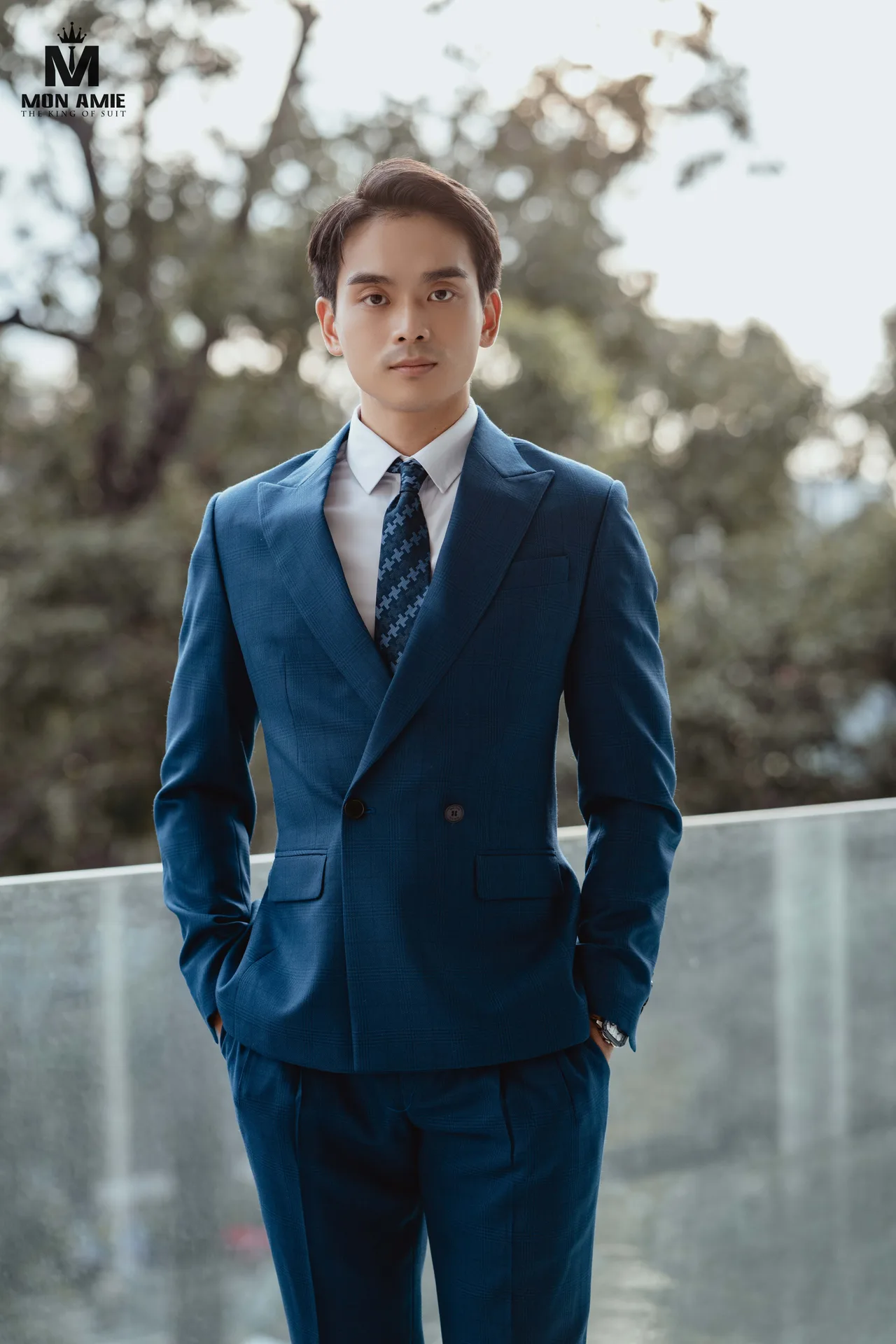
5. Measurements stored for life, long-term alterations, a lower cost per wear
A suit that fits is a suit you wear a lot, and the more you wear it, the lower the cost per wear. Mon Amie stores your measurements for life, so a second or third suit doesn’t mean measuring from scratch, and there is a long-term alteration service after collection for when your weight changes. On price, the made-to-measure price list is per complete jacket-and-trousers set: Essential from VND 4.8 to 10 million, Signature from VND 10 to 20 million, Heritage above VND 20 million. The VND 4.8 million starting price is for a two-piece Essential set before VAT, and the stylist confirms the exact price at the measuring. Weigh a made-to-measure suit against how many times you will wear it, not only against the figure on a quote.
Quick summary table
| Reason | Suited to | Point to remember |
|---|---|---|
| 1. A fit for the real person | Non-standard builds: sloping shoulders, fuller stomach, tall and slim | 30+ measurements; shoulders and lapels are hard to alter later |
| 2. Cloth by climate | People who wear a suit daily in Saigon | Ask about wool content, weight and cloth line |
| 3. A cut through the baste fitting | Anyone who wants a snug, balanced fit | Try and adjust on the body before finishing |
| 4. Details to your taste | People with their own wearing habits | Lapel, buttons, pockets, back vent and lining chosen by occasion |
| 5. Measurements stored for life | People planning several suits | Long-term alterations; price confirmed at the measuring |
Tips from Mon Amie’s master tailors
- Bring a ready-to-wear suit you already feel good in, so the tailor knows what a good fit feels like to you and can see where you would like something different.
- If your weight is changing, say so at the measuring so the tailor can leave seam allowance and plan for it.
- If you will wear it only once, such as a close friend’s wedding, suit rental is worth considering; rental prices are quoted by style when you get in touch.
- Choose the cloth line by how often you wear it: a suit for regular work should favour cloth that holds its crease; a rarely worn party suit can lean towards drape and sheen.
- Book early before an event. The showroom will give a specific schedule at the measuring, counted from the date you need to wear it.
Frequently asked questions
Is a made-to-measure suit more expensive than a ready-to-wear one?
It depends on the style and cloth line, so there is no single figure. With made-to-measure, you pay for the cloth, the tailor’s labour and the fittings that make it fit. At Mon Amie, the Essential line starts from VND 4.8 million for a complete two-piece set before VAT; the stylist confirms the exact price at the measuring.
How long does a made-to-measure suit take?
The time depends on the cloth, the style and the number of baste fittings, so the showroom gives a specific schedule as soon as you are measured. If you have a date you need to wear it, such as a wedding or a signing ceremony, say so from the start so the fittings are counted back from that date.
Can a ready-to-wear suit be altered to fit?
To a moderate degree: sleeve length, trouser hems, waist. The hard places are the shoulders and lapels, so if the shoulders already don’t fit, consider a different size or going made-to-measure from the start.
When does buying ready-to-wear or renting make sense?
When you only need to wear it once or twice, or need a suit urgently for one particular occasion. If the occasion matters and there is enough time, made-to-measure still gives a better fit. You can read when to make your own suit instead of buying a premium ready-to-wear suit to think it through more carefully.
Conclusion
Choosing made-to-measure isn’t about showing off; it is about having a suit that sits right on your shoulders and suits the way you live. If you’d like to try, book a measuring at one of Mon Amie’s five showrooms, where a stylist will advise on cloth and cut for your own occasion.