
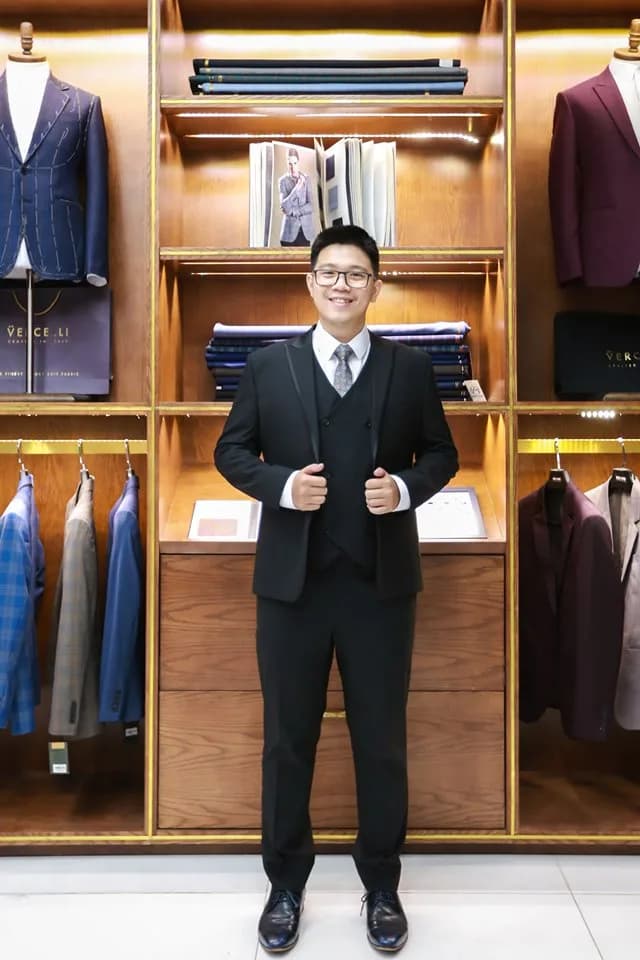
Three in the afternoon, a lawn baking at thirty-odd degrees Celsius. The groom stands for the group photo, the back of his jacket darkening with sweat, the hem creased after dozens of bows to guests. That suit was perfect in an air-conditioned room; outdoors it becomes an endurance test. A groom suit for an outdoor wedding needs three things a banquet hall never asks for: light fabric, a color that doesn't trap heat, and the ability to "lose a layer" when it's hot. The five suits below all revolve around those three points.
Quick Answer
For an outdoor wedding, the groom's suit should be light, breathable and not heat-absorbing. Five suits worth considering: a lightweight navy wool two-piece, a three-piece with a removable waistcoat, a beige or cream linen-wool blend, royal blue with a black waistcoat, and a black tuxedo for a dusk reception. Choose by the hour of the sun and the time of the photos.
1. Lightweight navy wool two-piece: the low-risk suit for unpredictable weather
Navy is dark enough not to show dirt and light enough not to absorb heat the way black does. When the outdoor weather is hard to predict, this is the low-risk suit to choose. The deciding factor is the fabric: favor thin wool with an open weave, weighing around 250 grams per meter or less; open weaves such as hopsack are cooler and crease less than thick plain weaves.
When you are measured, tell the stylist the suit will be worn outdoors so the fabric and the lightweight construction can be chosen accordingly; Mon Amie's Essential line uses Kevinlli fabrics with 40–70% wool, so there are plenty of breathable options. A common mistake is choosing a heavy fabric "to look expensive" and then not daring to take the jacket off all afternoon. For detailed navy styling, see navy groom suits and how to style them.
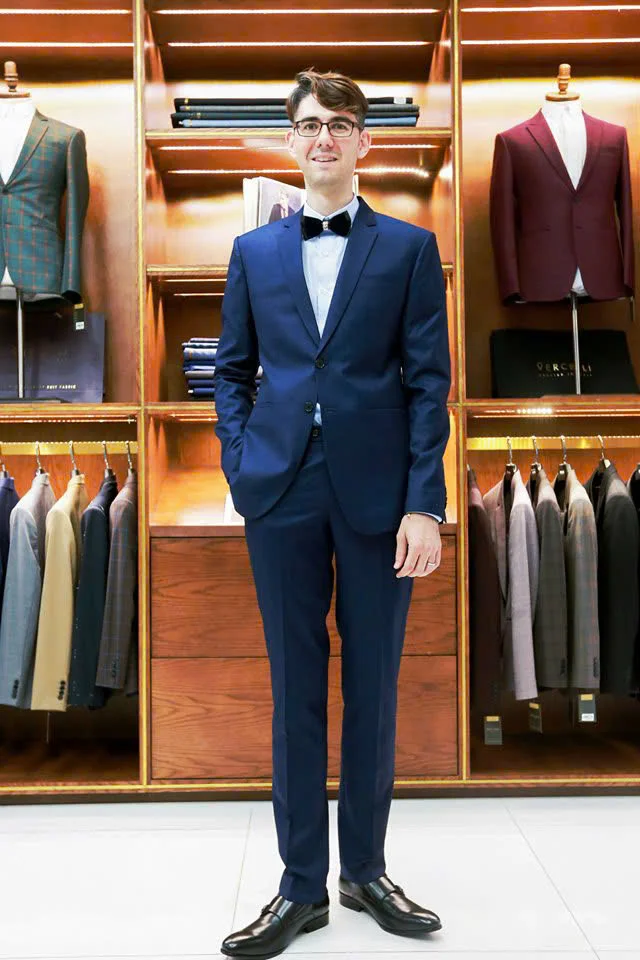
2. Three-piece with a removable waistcoat: layered but flexible
It sounds contradictory, since a three-piece is a layered suit. But it works outdoors because when it is hot you take off the jacket, and the waistcoat and shirt are still formal enough to stand for photos and greet guests. The front of the waistcoat is cut from the same fabric as the suit, while the back is usually made of a thin lining, so it is cooler than people think.
A note: the waistcoat must fit well, because a loose one balloons in the wind. Choose a breathable cotton shirt and swap the tie for a bow tie to lose one layer at the neck. When you take the jacket off, ask a family member to hold it or hang it in the shade; don't drape it over a chair in the sun, so the fabric doesn't crease and heat up.
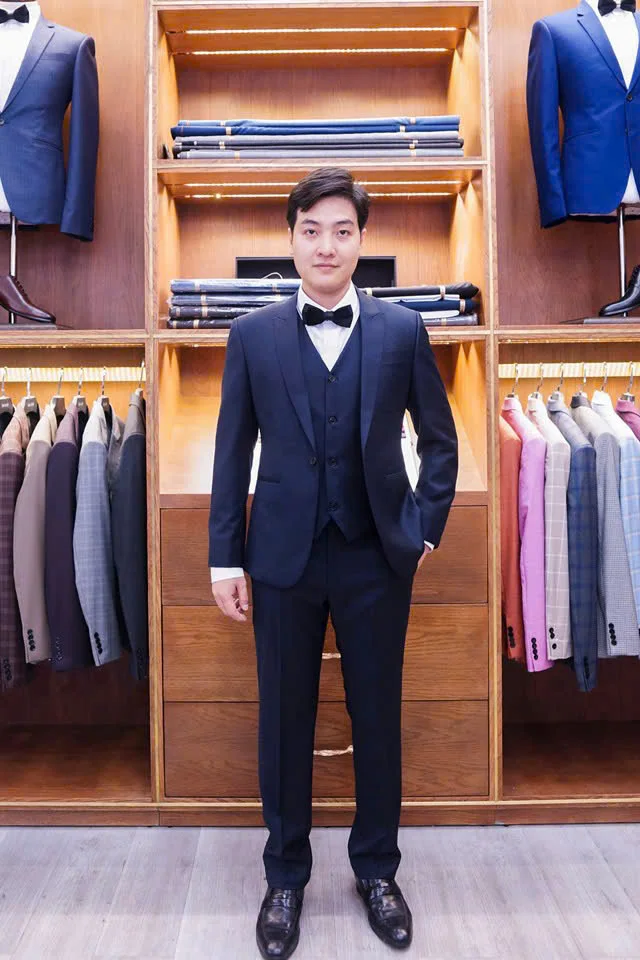
3. Beige or cream linen-wool blend: the suit for a daytime wedding
Linen is a very breathable fabric for suits, but it creases very quickly. A linen-wool blend is better balanced: still breathable, less prone to creasing than pure linen and better at holding its shape. Beige, cream and sand colors reflect heat and make afternoon sun look soft and warm in photos, suiting garden weddings, beach weddings and daytime weddings.
Light creasing is in the nature of linen; don't try to press it perfectly flat. What matters is choosing a weave thick enough that you can't see what's underneath, and pairing it with light brown shoes and a belt in the same tone. The article should the groom choose linen for an outdoor wedding weighs this fabric's pros and cons carefully, while beige and cream groom suits covers styling for sunny days.
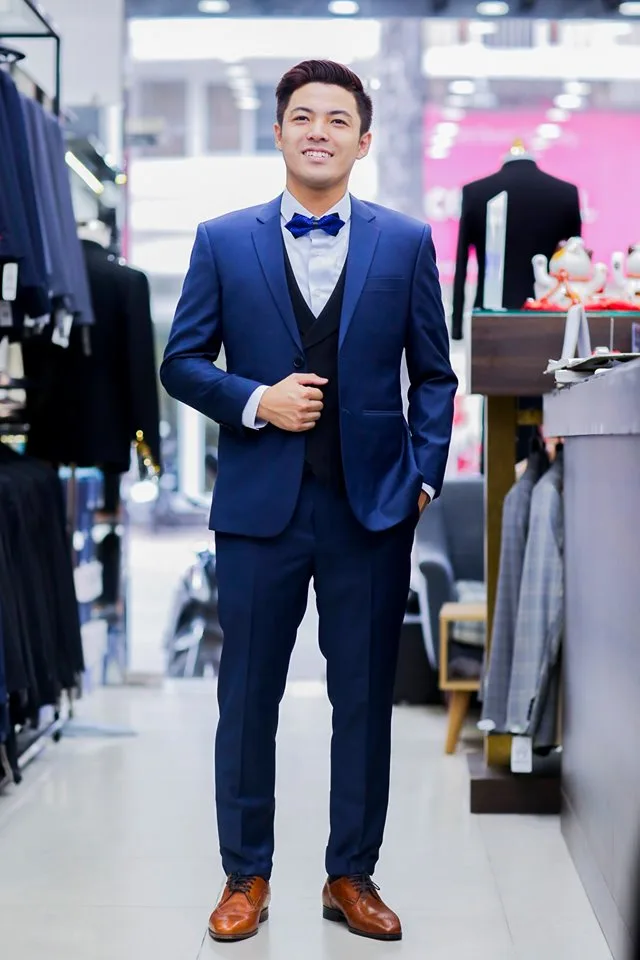
4. Royal blue with a black waistcoat: standing apart from the green backdrop
A garden wedding or a lawn with green foliage easily swallows the dark tones of a suit. Royal blue separates the groom from the background and stands out in group photos without elaborate accessories. Pair it with a black waistcoat and a black bow tie (or a blue bow tie) to tone down the brightness of the color.
A note: under harsh sun, this blue looks much brighter and more vivid than it did in the shop. Look at the fabric sample in natural light before you decide. This color also needs to match the wedding color palette, especially the colors of the flowers and the bride's dress, so the photos look intentional rather than clashing.
5. Black tuxedo for dusk receptions and string lights
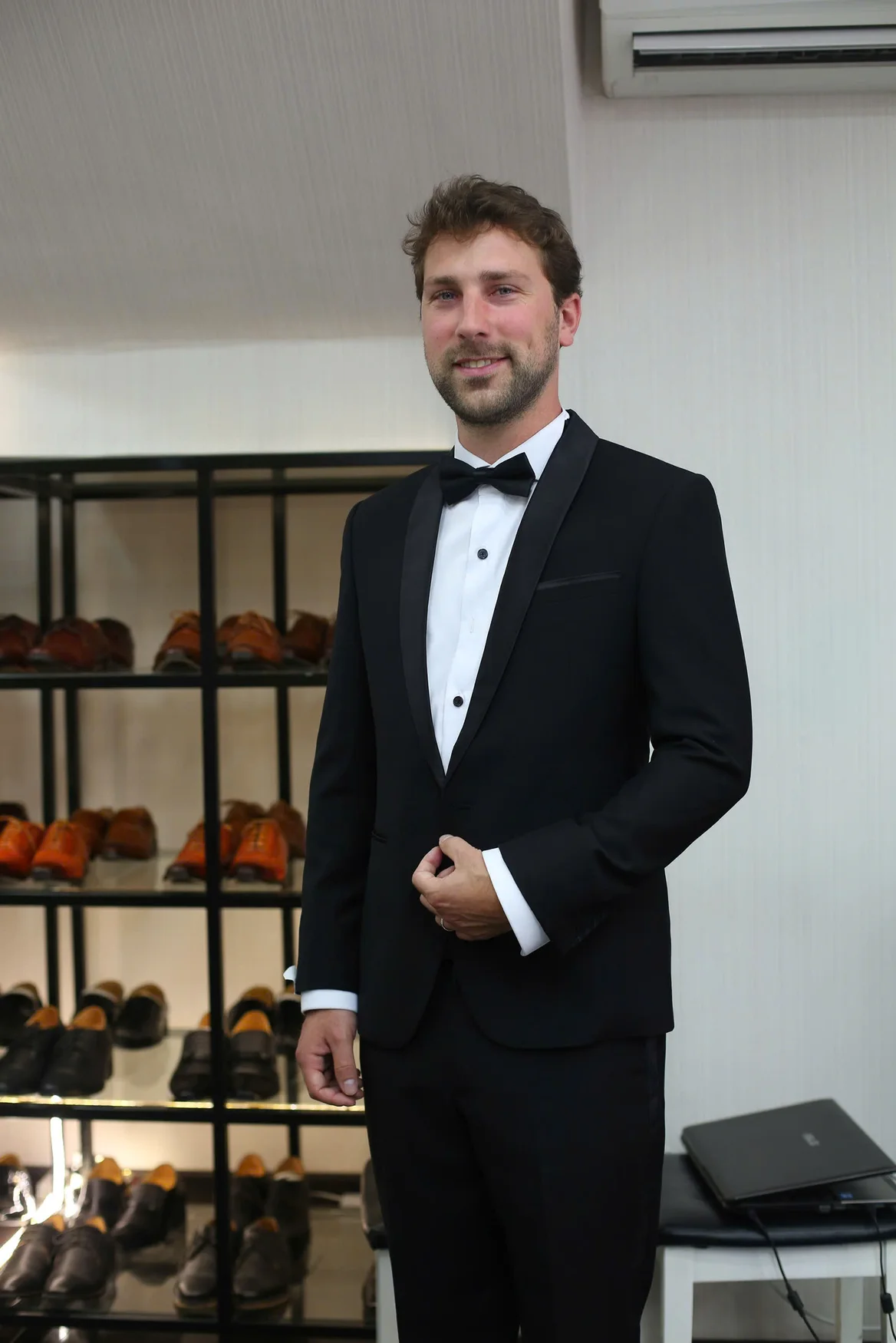
If the outdoor reception starts when the day has mellowed, then moves into the evening with string lights and lanterns, a black tuxedo is a tidy choice: satin lapels that catch the light, a black bow tie, a white pocket square, the right formal wear for the evening. A bow tie also helps in the wind, since it doesn't flap around like a tie.
Black absorbs heat strongly, so choose it only when the sun has gone down or the area has shade or a canopy; don't use it for a midday ceremony. Shiny leather shoes also need thought if the ground is damp grass or sand: the sole must have enough grip. A made-to-measure tuxedo at Mon Amie is priced by fabric line like the suits, with a separate finishing surcharge for tuxedos; the showroom will confirm the exact amount when you are measured.
Quick Summary Table
| Suit | Suits | Key point |
|---|---|---|
| 1. Lightweight navy wool two-piece | Outdoor weddings, unpredictable weather | Favor thin, open-weave fabric |
| 2. Three-piece with waistcoat | Long ceremonies, many photos | A well-fitted waistcoat; the jacket can come off |
| 3. Beige, cream linen-wool blend | Daytime garden and beach weddings | Accept light creasing; choose a medium-thick weave |
| 4. Royal blue, black waistcoat | Green backdrops, group photos | Check the color in natural light |
| 5. Black tuxedo | Late-afternoon receptions, string lights | Use only once the sun has gone down |
Tips from Mon Amie's Master Tailors
- Ask about the photo time before choosing the suit. If the photos must be taken at midday, favor light colors and light fabric; if they are taken in the afternoon, the choice is easier.
- Bring a spare shirt and a thin undershirt. A skin-toned crew-neck undershirt absorbs sweat and keeps the shirt and the suit lining clean longer.
- Fasten accessories securely. Wind makes pocket squares and lapel flowers fall off easily; a tie should have a clip.
- Get the trouser length right. The hem should touch the top of the shoe just enough, not drag on the ground, since damp grass and sand cling to trousers very quickly.
- Try the suit exactly the way you will wear it on the wedding day, with the shirt, undershirt and shoes, so you can see clearly the shirt cuffs and how breathable the back is.
Frequently Asked Questions
What fabric should a groom's suit for an outdoor wedding be?
Thin wool with an open weave, or a linen-wool blend if you accept light creasing. Avoid thick or shiny fabrics, as they are hot and show sweat easily. Light and neutral colors such as navy, beige and cream reflect heat better than black.
Should I wear a three-piece suit to an outdoor wedding?
Yes, if the waistcoat can be taken off and the fabric is breathable. A three-piece gives you two levels of formality: the full suit for photos, and when it is hot you take off the jacket and still have the waistcoat and shirt.
What suit should I wear to an outdoor wedding in the evening?
Once it is fully dark, a black tuxedo or a deep navy suit suits string lights and lanterns. Ask about the start time of the ceremony to choose between a tuxedo and a suit; the article choosing a wedding suit by venue and reception time helps you compare quickly.
Can a groom suit for an outdoor wedding be worn again after the wedding?
Yes, especially the navy two-piece or a lightweight wool three-piece: both are fine for work and for events. The linen-wool blend suits daytime occasions. A tuxedo is for formal evenings.
If you already know the venue and the ceremony time, book a measurement appointment so a stylist can choose the fabric, color and construction for that day with you. A suit chosen right for the sun, the wind and the lawn will keep the groom comfortable until the reception is cleared away.