
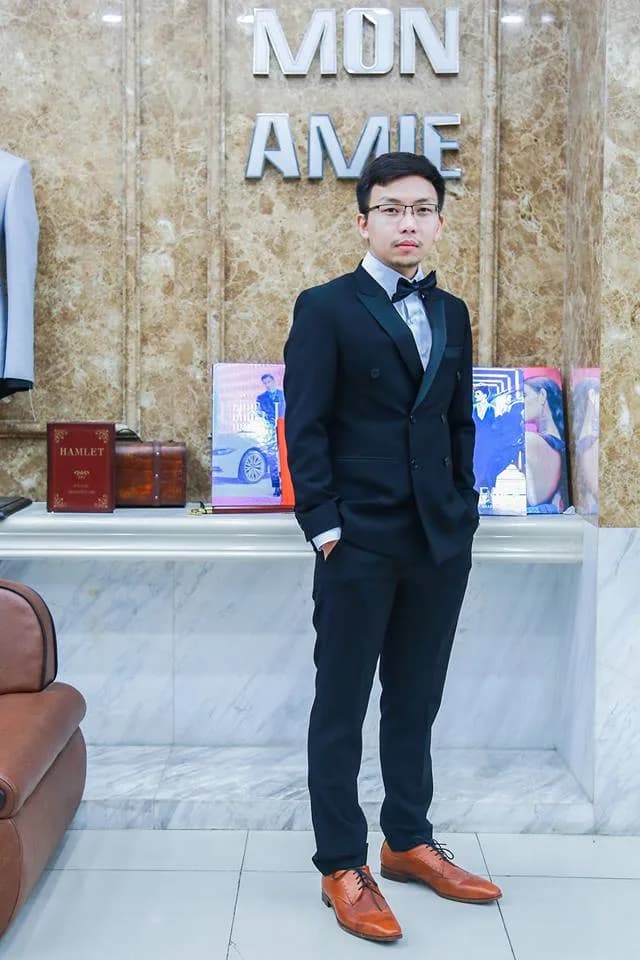
A groom walking into the showroom usually carries a photo saved on his phone and one question: "Will this look good on me?" The model already has a good figure, while you have your own shoulders, waist and height. That is why choosing a groom suit style should start from the cut, not from the photo. The five styles below cover most body shapes and most kinds of wedding.
Quick answer
Five groom suit styles worth considering are the two-piece single-breasted suit, the three-piece suit with waistcoat, the double-breasted suit, the satin-lapel tuxedo and the peak-lapel suit. For a safe pick, choose the single-breasted two-piece; for a taller, sleeker line, choose the three-piece; for formality, choose double-breasted or tuxedo.
1. Two-piece single-breasted suit: the foundation for every body shape
A single-breasted jacket with two buttons and notch lapels (the lapel has a small notch where the collar meets the lapel), worn with trousers in the same fabric. This is a groom suit that almost no one wears wrong, because it follows your frame rather than imposing a shape on it. It suits a groom of average build with balanced shoulders, and also the man who wants to wear it again to work and to parties after the wedding.
How to wear it: the jacket long enough to cover the seat, the shoulders sitting flush with the seam, and the trouser hem touching the top of the shoe with one slight break. Standing, fasten the top button and leave the bottom one undone; sitting, undo both. A common mistake is cutting the shoulders tight to look "slim", which results in diagonal creases across the chest and not being able to raise your arms in photos. With this style, fit is what decides it; colour is your choice. At Mon Amie, a two-piece suit is made from more than 30 measurements, so the shoulders and armholes are adjusted exactly to the wearer.
2. Three-piece suit with waistcoat: lengthens the line and gently hides the stomach
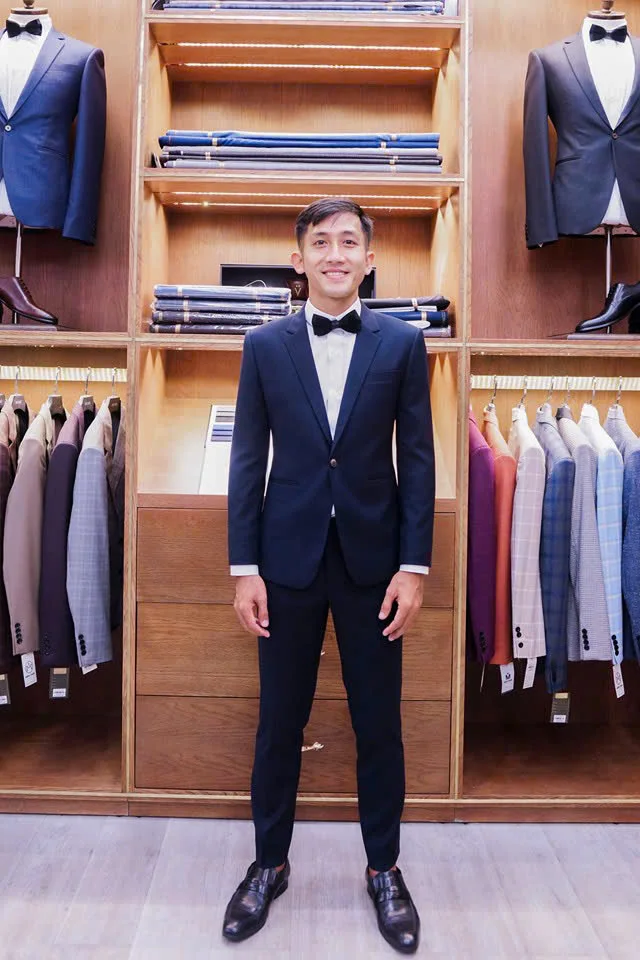
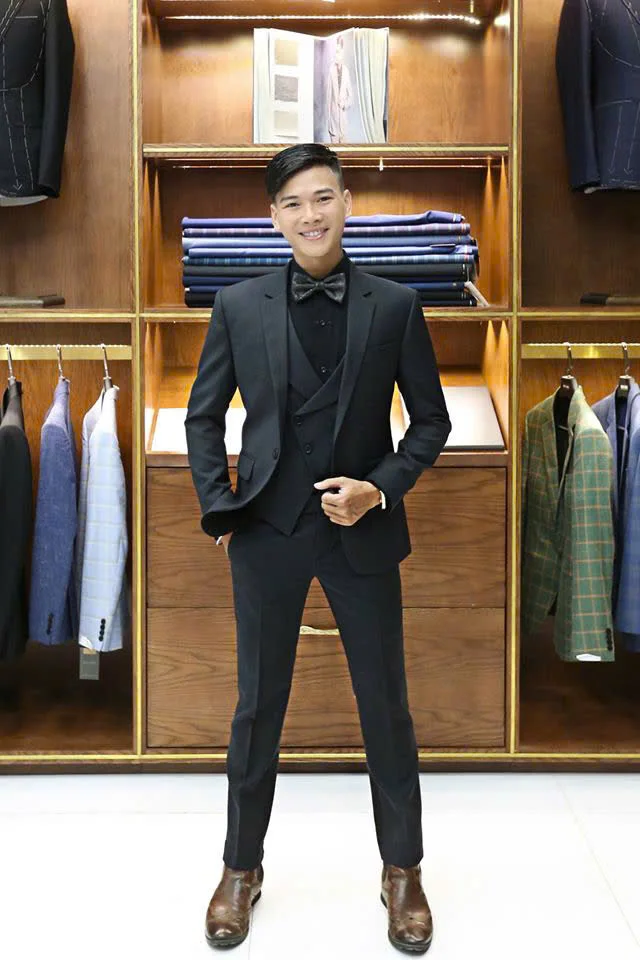
The waistcoat is a short, close-fitting layer worn between the shirt and the jacket. It creates a continuous block of colour from the collar down to the waistband, so the eye is drawn vertically and the figure looks taller and sleeker. A waistcoat also keeps the shirt from billowing at the waist, a flaw that shows up easily in wedding photos.
This style suits a tall, slim groom, since an extra layer of fabric fills out the torso. If you carry a little belly you can still wear it, provided the waistcoat is cut to fit and is not tight: a waistcoat that is too short or tight at the waist strains the buttons and creates horizontal creases. The last waistcoat button is always left undone. A big advantage at the reception is that when it gets hot, you take off the jacket and the waistcoat and shirt remain formal enough for photos and for going around the tables to greet guests.
3. Double-breasted suit: authority for tall men with broad shoulders
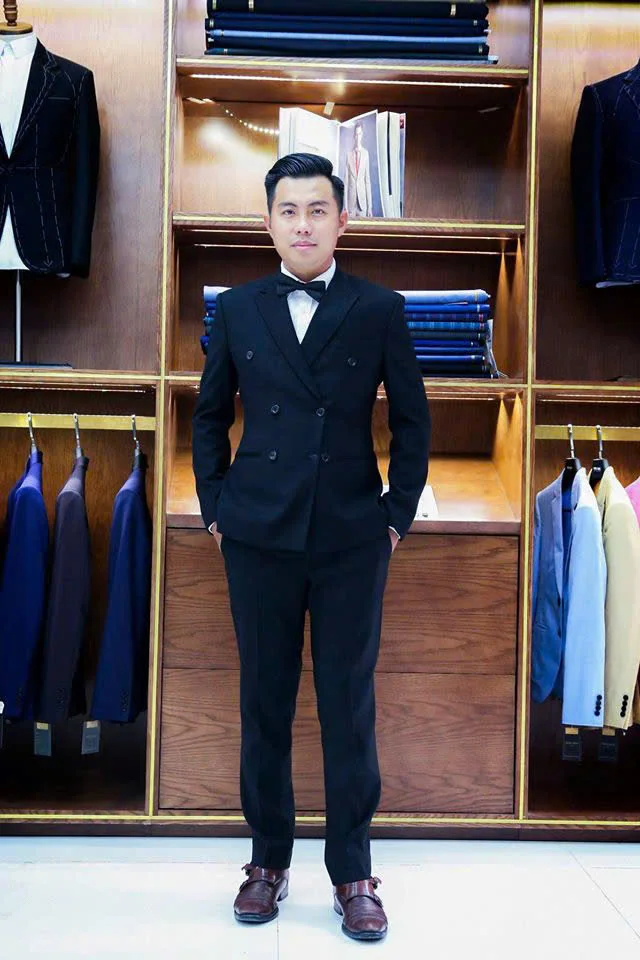
A double-breasted jacket has two parallel rows of buttons, and the fronts overlap across the chest. The common structure is six buttons with two fastening, usually called 6x2. The overlapping front adds width to the chest, so this style suits a groom who is tall, broad-shouldered and deep-chested; photographs show an authoritative, classic look suited to a church ceremony or a hotel banquet.
If you are short or carry a belly you need not skip this style, but the cut must be more careful: buttons placed high, the jacket just long enough, and peak lapels to pull the eye upward. The rule to remember is always to fasten the buttons when standing, because a double-breasted jacket left open loses all its shape. A common mistake is cutting the fronts loose for "comfort", which makes the jacket billow and swallow your figure. This style needs a fabric that holds its shape, so choose a medium weight, not too thin.
4. Satin-lapel tuxedo: formalwear for the evening
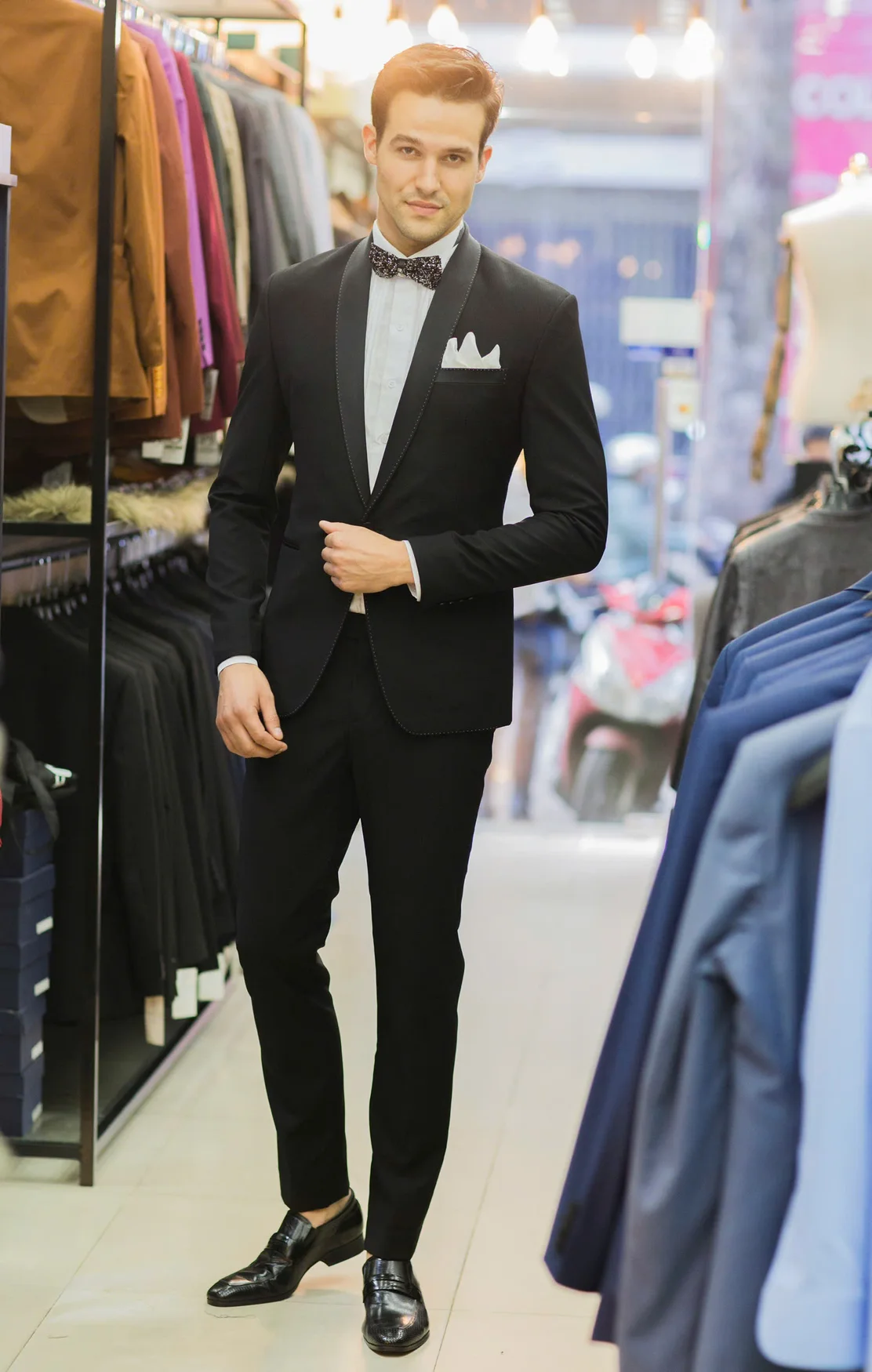
A tuxedo differs from a suit in its details: the lapels (sometimes also the buttons and pocket flaps) are faced in satin or silk, the trousers have a satin stripe running down each side, and it is worn with a bow tie instead of a necktie. It is evening formalwear, suited to hotel receptions, ballrooms or weddings with a formal dress code. Black and midnight blue are the two classic choices.
How to style it: a white shirt with a stand collar or a small wing collar, a black bow tie, a white pocket square and polished leather shoes. A common mistake is wearing a tuxedo to an outdoor lunch reception: the right outfit at the wrong hour, so it looks "overdressed". At Mon Amie, a made-to-measure tuxedo is priced by fabric line like a suit, plus a finishing surcharge of VND 2,500,000 per suit. If you are torn between the two directions, the article wedding tuxedo or regular suit goes into more detail.
5. Peak-lapel suit: lifting the shoulders for a slighter groom
The peak lapel has its tip pointing up toward the shoulder instead of being cut with a notch. This diagonal line draws the eye up and outward, so the shoulders look wider and the figure taller. For a slight groom or one with sloping shoulders, it is a style that gives a clear visual effect without the need for heavy shoulder padding.
Pair the peak lapel with a single-breasted jacket whose length just covers the seat; a lapel about 8 cm wide is right, as an oversized lapel swallows a small frame. Choose straight-leg trousers with a fitted but not tight cut, and a hem that is not too wide. The article suits for a slighter groom goes into jacket length and button placement; and if you have a fuller build, suits for a heavier-set groom shows how to keep the peak lapel while staying streamlined.
Quick summary table
| Style | Suits | Key point |
|---|---|---|
| 1. Two-piece single-breasted | Average build, wants to wear it again after the wedding | Shoulders flush, fasten the top button, leave the bottom one undone |
| 2. Three-piece with waistcoat | Tall and slim, or a slight belly | Waistcoat fits well, leave the last button undone |
| 3. Double-breasted | Tall, broad shoulders, deep chest | Always fastened, do not cut the fronts loose |
| 4. Satin-lapel tuxedo | Formal evening reception | Worn with a bow tie, right for evening hours |
| 5. Peak lapel | Slight build, sloping shoulders | Moderate lapel width, jacket not too long |
Tips from Mon Amie's master tailors
- Settle the shoulders first. The body and sleeves can still be adjusted; the shoulders are hard. For Mon Amie's artisans, originally from Huế with more than 30 years of craft experience, the shoulders are what gets the closest look at the baste fitting.
- Do not crash-diet just before your measuring. If you plan to lose weight, tell the stylist so the fitting schedule can be counted back from the wedding date, with the final measurement taken last rather than being measured first and then slimming down.
- Test it with movement, not just standing straight. Raise your arms to shoulder height, sit down, twist: the jacket should follow your movement and not ride up toward your neck.
- Let about one to one and a half centimetres of shirt cuff show beyond the jacket sleeve. This small detail makes the outfit look as though it was made for you.
- Choose just one accent. A patterned bow tie or a coloured pocket square, but not both at once.
Frequently asked questions
What makes a good-looking groom suit?
One that fits at the shoulders, suits the hour of the reception and flatters the body of the person wearing it. Colour and styling are only the outer layer; a well-fitting navy suit always looks better in photos than a trendy one that is loose at the shoulders.
What groom suit styles are there for first-time buyers?
The five familiar styles are the two-piece single-breasted, the three-piece with waistcoat, the double-breasted, the satin-lapel tuxedo and the peak lapel. First-timers should start with a two-piece or three-piece single-breasted, because they are easy to wear and easy to adjust.
What suit style should a groom with a belly choose?
Choose a two-piece or three-piece single-breasted in a plain, shape-holding, dark fabric, with a waistcoat that fits well. Avoid double-breasted with loosely cut fronts. The article on suits for a heavier-set groom has more on choosing fabric.
Should a daytime wedding and an evening wedding use different styles?
Yes. Daytime suits a two-piece or three-piece suit in a moderate colour; evening suits a tuxedo or a dark double-breasted suit, because the lighting makes satin lapels and dark colours show up very clearly in photos.
Choosing a suit style is, in the end, choosing how you want to appear on your wedding day. Once you lean toward one or two styles, you can book a measuring appointment so a stylist can try them directly on your frame. If you also need to coordinate the groomsmen, bow ties, pocket squares and cufflinks to the wedding concept, Mon Amie's Groom Styling service handles everything from the groom's suit to the accessories as a complete package.