
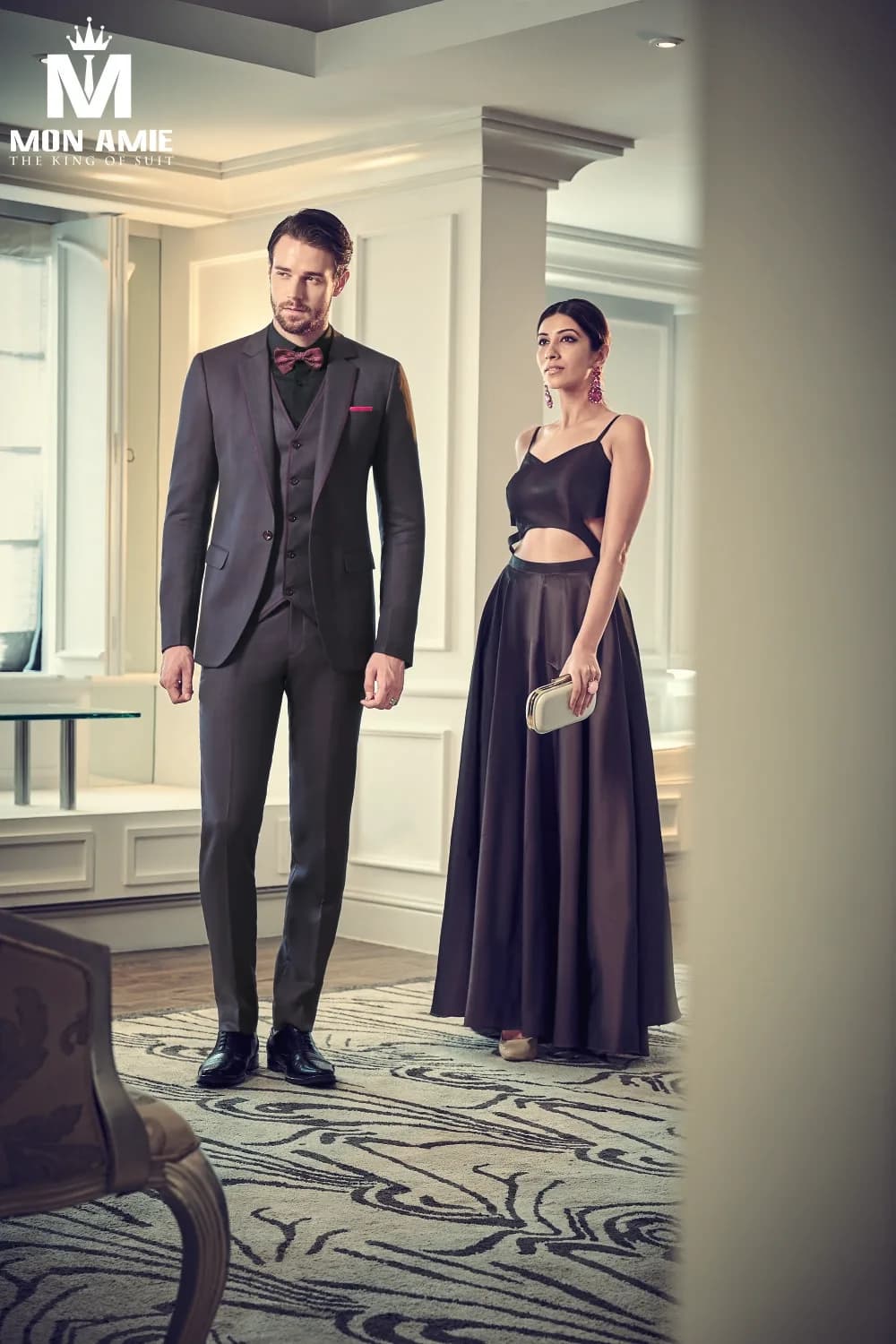
Take the same charcoal gray suit. Under the white lights of a tailor's shop it looks deep and reserved; out on the lawn at noon it brightens by a shade; in a banquet hall under warm yellow light it turns almost black. That is why a groom's suit color can't be settled from a photo on a phone. You need to weigh three things at once: the tone of the reception, your own skin tone and the color of the bride's dress. Here are five colors worth choosing, and where each one comes into its own.
Quick Answer
The five groom suit colors worth choosing are navy, coal black, charcoal gray, white-cream and royal blue. Navy suits most skin tones and every reception hour; coal black suits an evening reception; charcoal gray suits a daytime ceremony; white-cream suits outdoor receptions and deeper skin; royal blue is for the groom who wants to stand out.
1. Navy: the safe color for every skin tone
Navy is the color a stylist thinks of first when a groom doesn't yet know what to choose, because it is kind to fair skin, yellow undertones and deep skin alike. On fair skin, navy makes the face look sharper; on deeper skin, navy creates contrast with a white shirt without the harshness of black. It works for a daytime reception and an evening one, and it is an easy color to wear again after the wedding.
How to pair it: a white shirt; a bow tie or tie in black, burgundy or silver; tan-brown shoes for the daytime and black shoes for the evening. One caution: a truly deep navy can look almost black under yellow light. If it is an evening reception and you want people to see the color, choose a navy that is one step lighter.

2. Black and coal black: the color of evening receptions
On a groom's suit, black carries the meaning of formal wear: it suits hotel receptions, ballrooms and evening weddings with a dress code. Coal black has a little more depth than jet black, so it doesn't look flat in photos; the Coal Black Groom Suit SN-141 in our product range is one example of this tone. It suits fair skin and yellow undertones because the contrast is clear; on deeper skin, pair it with a very clean white shirt so the face doesn't sink into the suit.
Two cautions. First, black absorbs heat, so avoid it for an outdoor reception in strong sun. Second, some older family members pay attention to black at the ancestral ceremony, so ask their opinion before you decide. To make it less severe, a white pocket square or a patterned bow tie is enough.

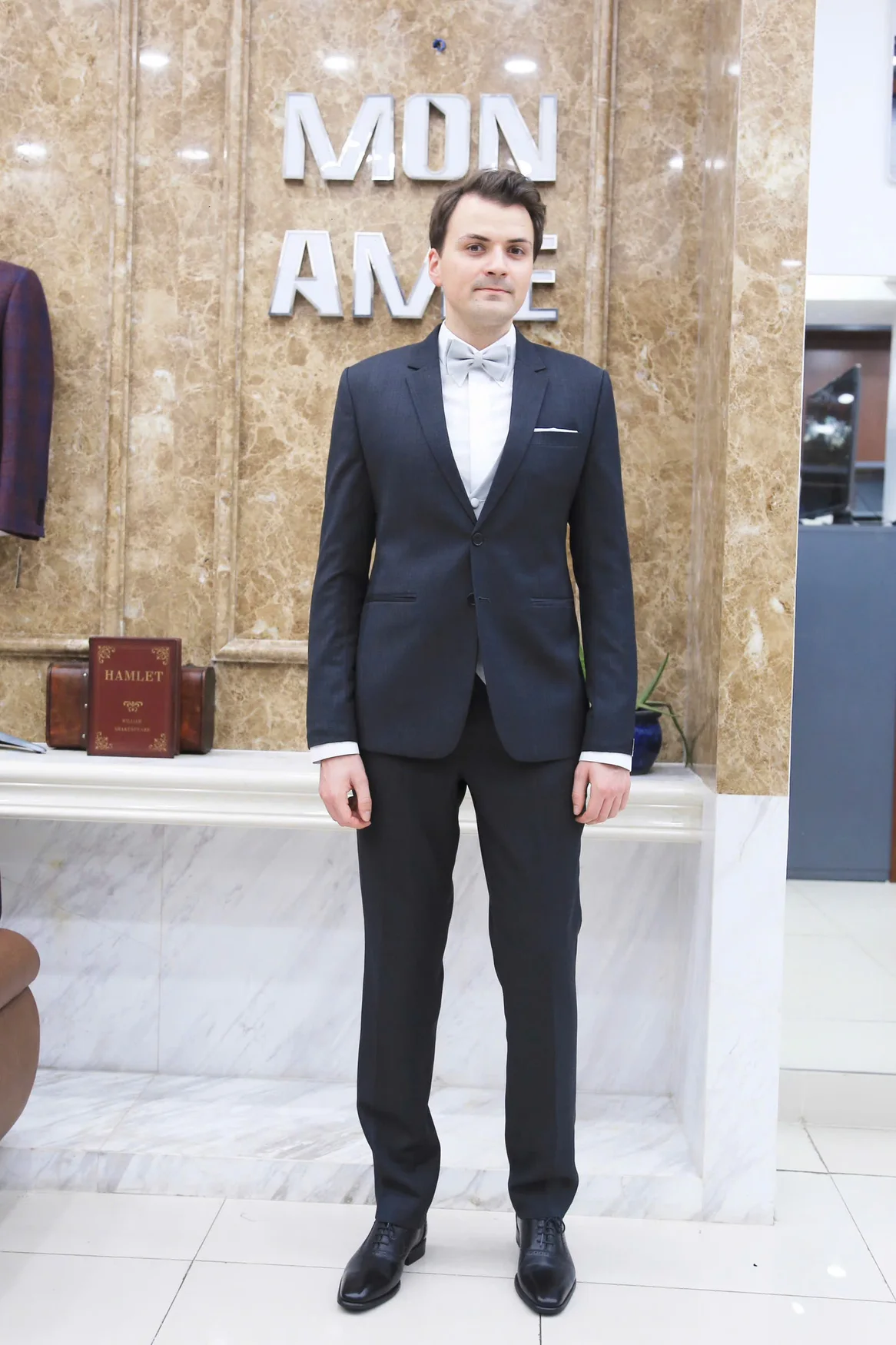
3. Charcoal gray: the color of daytime ceremonies
Charcoal gray is neutral and formal without the weight of black. It suits the ancestral ceremony, a church ceremony and a lunch reception. On fair skin and yellow undertones, charcoal gray frames the face without competing with it; on deeper skin, you need a bright white shirt and a light pocket square to create contrast.
How to pair it: a white or pale blue shirt; a silver or smoke-gray bow tie; dark brown or black shoes. Charcoal gray works well indoors, while light gray suits an outdoor reception better; the two look quite different in photos, and the article on gray groom suits: light gray or charcoal goes into the details. A side benefit: charcoal gray is perfectly fine for the office, so your wedding suit doesn't sit idle in the wardrobe.
4. White and cream: daytime receptions, sunshine and deeper skin
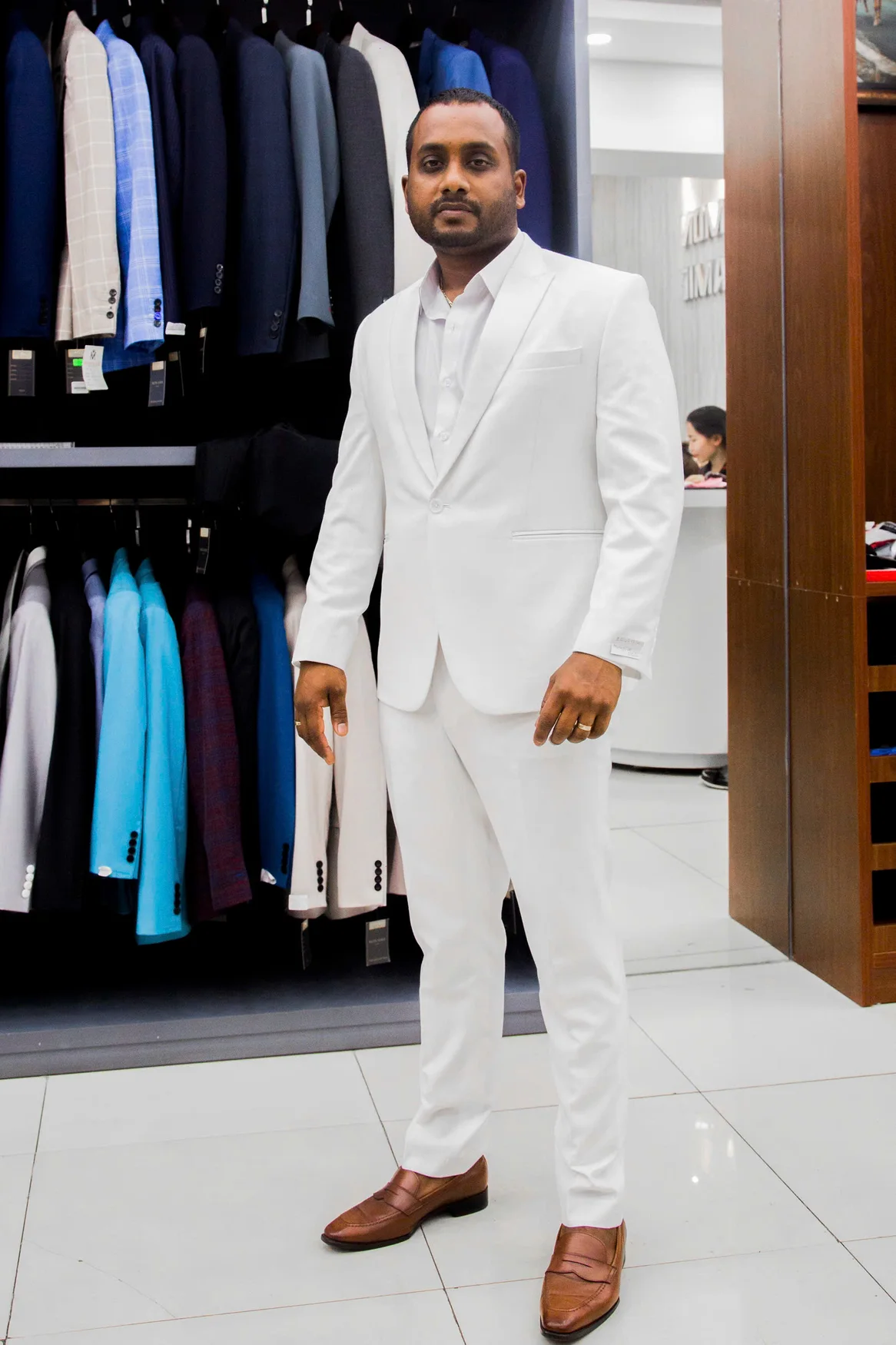
Ivory and cream feel clean and light, and suit beach weddings, garden weddings and daytime receptions. This is the color that "works" with deeper skin because it creates a distinct light-dark contrast. On fair skin, choose a warm cream rather than a cool white, so the skin doesn't look washed out in photos.
A few things to plan for: light-colored fabric shows stains and sweat easily, so pay attention to the material and the time of the photos. You should also ask about the tone of the bride's dress so the two outfits don't "blend" into each other in the pictures. Pair it with a shirt a shade off (pale cream or pale blue) and light brown shoes. Two articles, white groom suits and beige and cream groom suits, go deeper into how to style them.
5. Royal blue: when you want to stand out
Royal blue is more vivid than navy, a shade you can spot from afar in a group photo. It suits a reception with plenty of lighting, suits fair skin and yellow undertones, and suits a groom who wants to be different among groomsmen in navy or black. Pair it with a black waistcoat or a black bow tie to tone down the brightness.
This is a color with personality, so it is less flexible than navy when you wear it again; and you need to ask for the wedding color palette so it doesn't clash with the flowers or the bride's dress. If the wedding already has a clear main palette, let this blue appear only in the suit, and take the bow tie and pocket square from the shared palette.
Quick Summary Table
| Color | Suits | Key point |
|---|---|---|
| 1. Navy | Every skin tone, day and evening receptions | Can turn black under yellow light; choose one step lighter |
| 2. Black, coal black | Fair skin, yellow undertones; evening receptions | Absorbs heat; ask the family if there is an ancestral ceremony |
| 3. Charcoal gray | Fair skin, yellow undertones; daytime ceremonies | Deeper skin needs a bright shirt and pocket square |
| 4. White, cream | Deeper skin; beach and garden weddings | Shows marks easily; ask about the bride's dress tone |
| 5. Royal blue | A groom who wants to stand out | Must match the wedding color palette |
Tips from Mon Amie's Master Tailors
- Look at the real fabric, don't trust the screen. Color on a phone differs from color on cloth; take the swatch somewhere with natural light before you decide.
- Ask about the dress and flower colors before choosing the suit. The two outfits stand side by side through the whole reception, so they need to be able to "talk" to each other.
- The contrast between shirt and suit sets the feeling. Deeper skin goes with a bright white shirt; fair skin does well with an off-white shirt that doesn't glare.
- Favor a color you can still wear after the wedding. Navy and charcoal gray can go to work for years; royal blue or white-cream needs a clearer reason.
- Change the accessories, keep the suit. With the same navy suit, swapping the bow tie and pocket square gives you another occasion to wear it.
Frequently Asked Questions
What color groom suit looks good?
There is no single color that suits everyone. Navy is the safe choice for most skin tones and reception hours; coal black for an evening reception; charcoal gray for a daytime ceremony. If you also want to weigh your build, read what color suit should the groom wear.
What does a good groom suit need?
A color that suits your skin tone, a good shoulder fit, fabric that holds its shape and isn't too shiny. If the color is beautiful but the shoulders are wide or the sleeves are long, the photos still look poor; conversely, a moderate color that fits well photographs very nicely.
Does a black groom suit suit a wedding?
Yes, if it is an evening reception and it comes with formal accessories such as a bow tie and a white pocket square. For an outdoor daytime wedding, black is hotter and heavier than necessary; you can switch to navy or charcoal gray.
Are white or cream groom suits hard to wear?
Yes, because both are fairly demanding about skin tone and show marks easily. They look very good on deeper skin; fair skin should choose a warm cream. If you are still worried, look at light-colored fabric samples at the showroom and ask a stylist before you decide.
The real color has to be seen in person. You can look at fabric samples and actual colors in Mon Amie's fabric library, or visit a showroom so a stylist can try a few tones against your own face and build before you decide.