
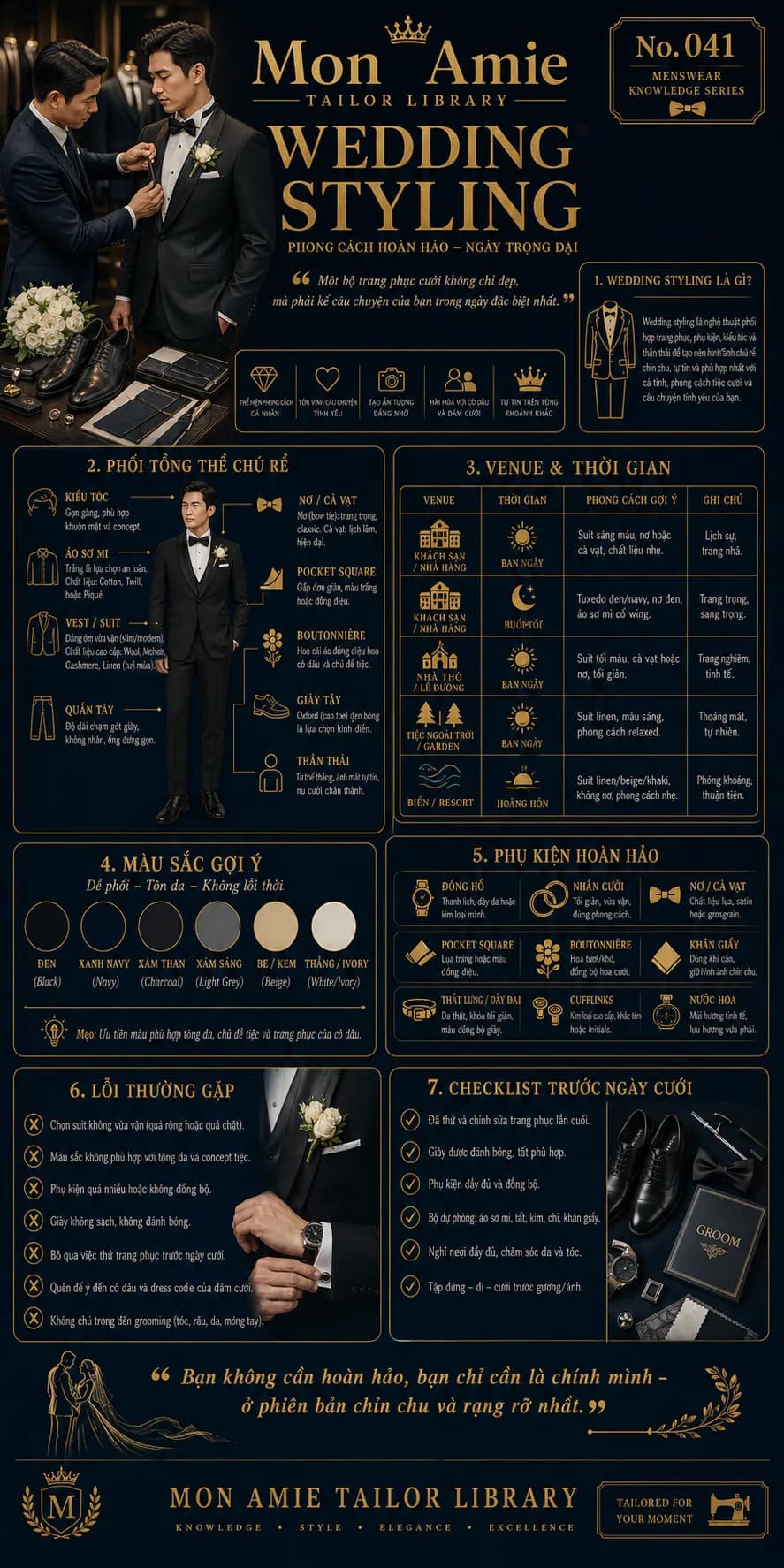
Choosing a wedding suit does not begin with cloth colour or lapel style. It begins with two questions: where the celebration takes place, and at what hour. For the same groom, the right outfit for an evening hotel ballroom looks very different from the one made for a daytime garden reception. This guide helps you choose a wedding suit that fits the occasion, rather than simply the one that looked best in the fitting room.
Why venue and timing decide the wedding suit
Light, temperature and atmosphere govern both cloth and colour. The warm lamps of an evening ballroom flatter darker shades and fabrics with a gentle sheen; daylight, by contrast, makes dark colours look heavy and feel hot. So when choosing a wedding suit, settle the venue and the hour first, and only then discuss cloth and cut.
The general principles, occasion by occasion:
- Hotel or restaurant, daytime: a light-coloured suit, bow tie or necktie, lightweight cloth — polished and refined.
- Hotel or restaurant, evening: a black or navy tuxedo, black bow tie, wing collar shirt — the highest degree of formality, and the most luxurious.
- Church or ceremony hall, daytime: a dark suit with a restrained tie or bow tie — solemn and understated.
- Outdoor or garden reception, daytime: a light-coloured linen suit in a relaxed spirit — airy and natural.
- Beach or resort, sunset: a linen suit in beige or khaki, tie optional — easy and unhurried.
You can see the pattern: the later the hour and the more formal the room, the darker and more ceremonial the outfit; the closer to nature, the lighter the cloth and the brighter the colour.
The complete groom's look: seven points that must agree
A handsome wedding suit is a whole, not a jacket. From head to foot, there are seven points to review:
- Hair: neat, suited to your face and to the tone of the celebration.
- Shirt: white is the safe choice; cotton, twill or piqué.
- Suit: a well-fitted silhouette (slim or modern); fine cloth such as wool, mohair, cashmere, or linen depending on the season.
- Trousers: breaking cleanly at the shoe, uncreased, with a clean straight leg.
- Bow tie or necktie: a bow tie for a formal, classical air; a necktie for a modern, polished one.
- Pocket square and boutonnière: a simply folded white or tonal square; the flower should echo the bride's bouquet and the floral theme of the day.
- Shoes: polished black cap toe Oxfords remain the classic answer.
And the eighth point is not worn at all: bearing. An upright posture, a confident gaze, an honest smile — that is what finishes the suit.
Wedding suit colours that flatter and never date
Six safe shades for the wedding day: black, navy, charcoal, light grey, beige and white or ivory. Black and navy belong to formal evening receptions; charcoal suits the ceremony hall; light grey and beige come into their own in daylight and outdoors; ivory is the striking option for a groom who wants to stand apart at a resort celebration.
One important note: favour the colour that suits your skin tone, the theme of the day and what the bride is wearing. A wedding suit never stands alone — it stands beside the wedding dress in every photograph.
Accessories: enough, and in agreement
- Watch: elegant, on a slim leather or metal strap.
- Wedding ring: understated, well-sized, true to your style.
- Bow tie or necktie: silk, satin or grosgrain.
- Pocket square: white silk or a tonal shade.
- Boutonnière: fresh flowers matched to the wedding blooms.
- Handkerchief: on hand when needed, to keep the picture composed.
- Belt: full-grain leather, a simple buckle, matched to the shoes.
- Cufflinks: fine metal, and you may have them engraved with your name or initials as a keepsake.
- Fragrance: refined, with moderate projection.
The principle is fewer pieces in agreement: one right watch and one right pair of cufflinks are worth more than five accessories out of tune.
Common mistakes, and a checklist before the day
The errors Mon Amie sees most often in grooms:
- A suit that does not fit — too loose or too tight.
- Colours that suit neither your complexion nor the theme of the day.
- Too many accessories, or accessories that do not agree.
- Shoes left unclean and unpolished.
- Skipping the final fitting before the wedding.
- Overlooking the bride and the wedding's dress code.
- Neglecting grooming: hair, beard, skin, nails.
A checklist for the final week:
- The outfit has been fitted and adjusted one last time.
- Shoes polished, socks appropriate.
- Accessories complete and coordinated.
- A backup kit prepared: spare shirt, socks, needle and thread, handkerchief.
- Ample rest, with care given to skin and hair.
- A few minutes practising how you stand, walk and smile before the mirror and the camera.
A word from Mon Amie's artisans
When a client asks which wedding suit colour is best, Mon Amie usually asks three questions back: where is the reception, at what hour, and what will the bride be wearing. Answer those three and the solution almost presents itself. Commission your suit at least four to six weeks ahead so there is room for a final fitting, and do not begrudge the ten minutes spent rehearsing before the mirror — in wedding photographs, bearing is worth as much as cloth.
A wedding outfit should not merely look handsome; it should tell your story on the most important day of your life. If you are preparing for that day, book an appointment with Mon Amie at one of our five showrooms in Ho Chi Minh City, or read about the tailoring process beforehand to make your first consultation more productive.