
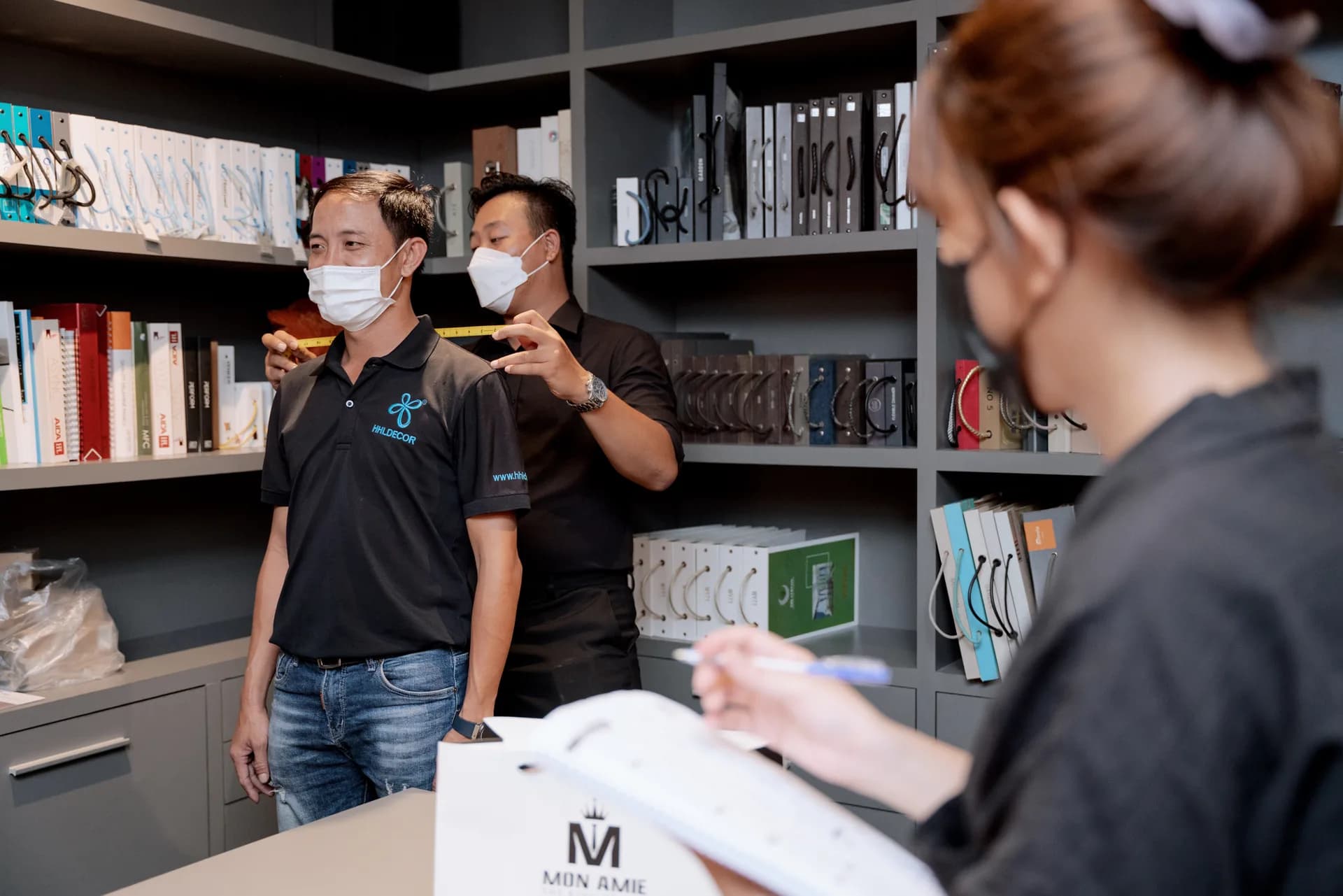
Lay two pieces of wool cloth side by side, close your eyes and run your fingertips over them. Many people in the trade can tell at once which one comes from Italy, not through any mystical secret but through the “hand” of the cloth: soft, smooth, with a gentle drape like flowing water. That is why Italian wool fabric always turns up on the wish list of anyone having a suit made. But what sets Italian cloth apart is more than a name. It comes from a specific region, an old weaving tradition and a very careful finishing process.
Quick answer
Italian wool fabric is soft, light, drapes well and has a natural lustre thanks to the weaving and finishing craft of the Biella region in northern Italy. The raw wool is usually imported from elsewhere, but Italian mills make the difference in spinning, weaving and finishing. Italian cloth suits a soft, elegant silhouette; English cloth is usually firmer.
What is Italian wool fabric?
Wool is the fibre taken from the fleece of sheep. Italian wool fabric is cloth woven from wool yarn (usually fine merino) made by Italian mills, from spinning and weaving through to finishing. Interestingly, Italy does not raise many ultra-fine merino sheep. Most of the raw wool is imported from the world's large sheep-farming regions, then brought to Italy to be turned into cloth. The strength of the Italian textile industry lies in the craft of turning fibre into cloth, not in the sheep.
Biella: home of the wool weavers
Biella lies in the Piedmont region of north-west Italy, at the foot of the Alps. It has long been known as a centre of high-end wool weaving. Many mills familiar to made-to-measure tailors have their workshops around here and in the neighbouring valleys. In weaving circles, people often mention the soft water that flows down from the mountains, well suited to the washing and finishing of wool cloth. No one has measured exactly how much the water contributes, but everyone in the trade agrees: the quality of finishing here is out of the ordinary.
The mills of this region share a few working habits:
- Careful fibre selection: a preference for fine, even wool with little coarse fibre mixed in.
- Firm-handed spinning and weaving: the cloth comes out with a flat surface, an even weave and little pilling.
- Meticulous finishing: washing, calendering and steam-pressing several times so the cloth settles and gets a soft hand and a natural lustre.

Why Italian wool is soft, light and naturally lustrous
Three factors create the characteristic feel:
- Fine yarn. The fineness of wool fibre is indicated by the “Super” rating (100s, 120s, 150s…). The higher the number, the finer the fibre and the softer and lighter the cloth.
- Close, even weave. The surface is smooth with little fuzz, and the colour looks deep.
- Careful finishing. The final stage decides the “hand”: the cloth is treated so it is not stiff or stuffy and recovers well from creases.
The natural lustre of Italian wool is a matte, deep sheen, not shiny like cloth blended with polyester. Its beauty lies in shifting subtly with the light, and from close up it has a very calm, mellow look.
Italian mills in Mon Amie's fabric library
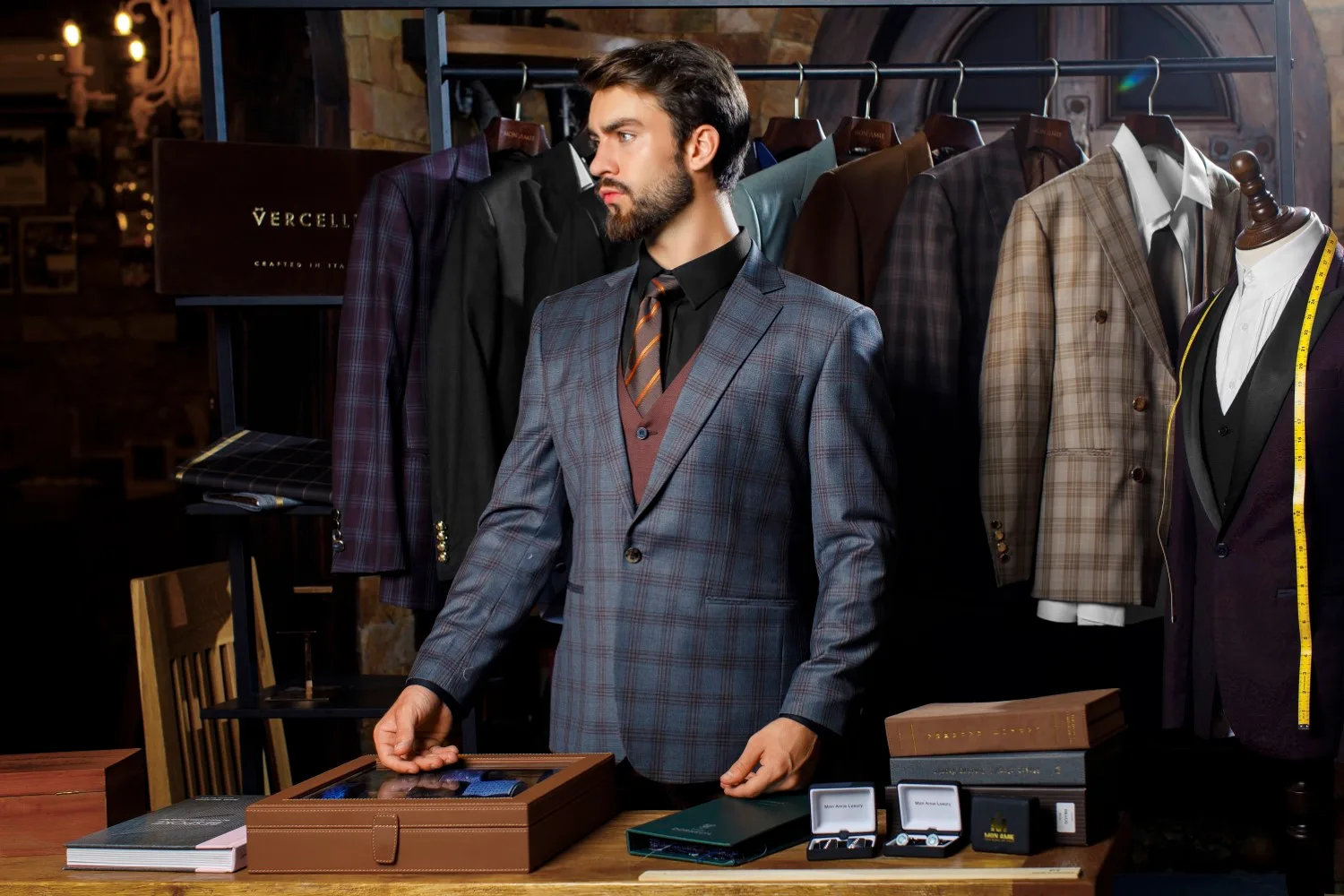
Mon Amie's fabric library includes well-known Italian mills such as Canonico and Vercelli, along with other Italian and English mills such as Holland & Sherry, Dormeuil and Scabal in the Heritage line. Beyond Mon Amie's own fabric library, names such as Loro Piana and Zegna are also Italian mills widely known in the made-to-measure world.
| Mon Amie made-to-measure line | Price for a full suit (jacket + trousers) | Typical fabrics |
|---|---|---|
| Essential | VND 4.8 – 10 million | Kevinlli 40 – 70% wool (100s – 140s) |
| Signature | VND 10 – 20 million | Kevinlli 80 – 100% wool 140s – 150s, Dolce & Taylor, Luciano, Salford, Vercelli |
| Heritage | Above VND 20 million, up to VND 60 million per suit | Canonico, Holland & Sherry, Dormeuil, Scabal |
You can look at each material in the fabric library or compare the price lines in the made-to-measure price list.
Lightweight wool for hot climates: how to choose for Saigon
Unfortunately, many people hear “Italian cloth” and assume it will be cool. In reality, whether a cloth is cool or hot depends on its thickness, weave and composition, not on its country of origin. To choose a lightweight wool fabric that suits a hot, humid climate, you should:
- Choose a light weight. Summer cloth is usually around 220 to 260 g/m (a reference range). Lighter is cooler to wear, but also creases more easily.
- Favour an open, breathable weave, such as open weaves or plain weaves with fewer threads, so air can circulate.
- Consider wool blended with linen or silk for very hot days. The added fibre makes the cloth more breathable and gives it a drier “hand”.
- Don't chase a very high Super number. The finer the fibre, the softer but also the more delicate. For everyday wear, cloth of around 110s to 130s is more durable; 140s to 150s suits occasions when you want a soft, luxurious feel.
You can read more about wool cloth for hot climates in the article What is tropical wool.
Italian cloth and English cloth: where they differ
This is a general comparison. Every mill has its own style, but broadly speaking:
| Criterion | Italian cloth | English cloth |
|---|---|---|
| Feel | Soft, draping, matte sheen | Firm in the hand, holds its shape |
| Lightness | Usually lighter | Usually more substantial |
| Style | Elegant, relaxed | Classic, formal |
| Suits | Warm climates, people who like a soft jacket | Cold seasons, people who like a structured jacket |
There is no “better” or “worse” answer. There is only the question: where do you wear your suit, for how many hours a day, and what feel do you prefer?
How to recognise good wool cloth right in the showroom
- Squeeze test: clench the cloth in your palm for a few seconds, then release. Good wool recovers almost flat on its own.
- Look at an angle under light: an even matte sheen, not glossy like polyester-blend cloth.
- Feel the face and the reverse: the face is smooth with little pilling; the reverse is closely woven with even yarns.
- Check the composition label: ask directly for the wool percentage and the Super number.
Tips from Mon Amie's master tailors
- Don't choose a cloth just because of the word “Italian”. Choose it for how it feels to wear and for your daily routine. A super-fine Italian cloth can easily disappoint if it is worn every day in Saigon's heat and sweat.
- Take the swatch over to a window to see the true colour in natural light, because showroom lighting makes colours look warmer than they really are.
- Ask the master tailor about creasing. Italian cloth is very beautiful but creases more than denser cloth; you should know in advance so you can plan how to care for it.
Frequently asked questions
What is Italian wool fabric?
It is cloth woven from sheep's wool, usually fine merino, spun, woven and finished by Italian mills. The raw wool is usually imported from elsewhere, but the quality of Italian weaving and finishing produces a soft, light hand and a characteristic sheen.
What qualities does premium suiting fabric need?
Fine, even yarn, a close weave, careful finishing, good crease recovery, colourfast dyes and a pleasant “hand”. The cloth must also suit your climate and the way you wear it. Read more in the article What is wool.
Is lightweight wool durable?
Lightweight wool is durable if it is closely woven and used properly: rotate your suits, hang them in an airy place, steam them when needed. For everyday wear, choose yarn that is not too fine. Very thin, very soft cloth looks beautiful but withstands friction less well than medium-weight cloth.
Is Italian cloth suitable for wearing in Vietnam?
Yes, if you choose the right weight and weave. A light, thin Italian cloth with an open weave, in a half-lined jacket, is very comfortable in hot, humid weather. Thick, dense Italian cloth is better kept for air-conditioned rooms or the cooler season.
A final word
Beautiful cloth only becomes a beautiful suit when it meets the right cutter, the right stitching and the right wearer. If you would like to feel the differences between cloths for yourself, you are welcome to come and experience bespoke tailoring at Mon Amie, where you can touch, look at and compare real swatches before choosing.