
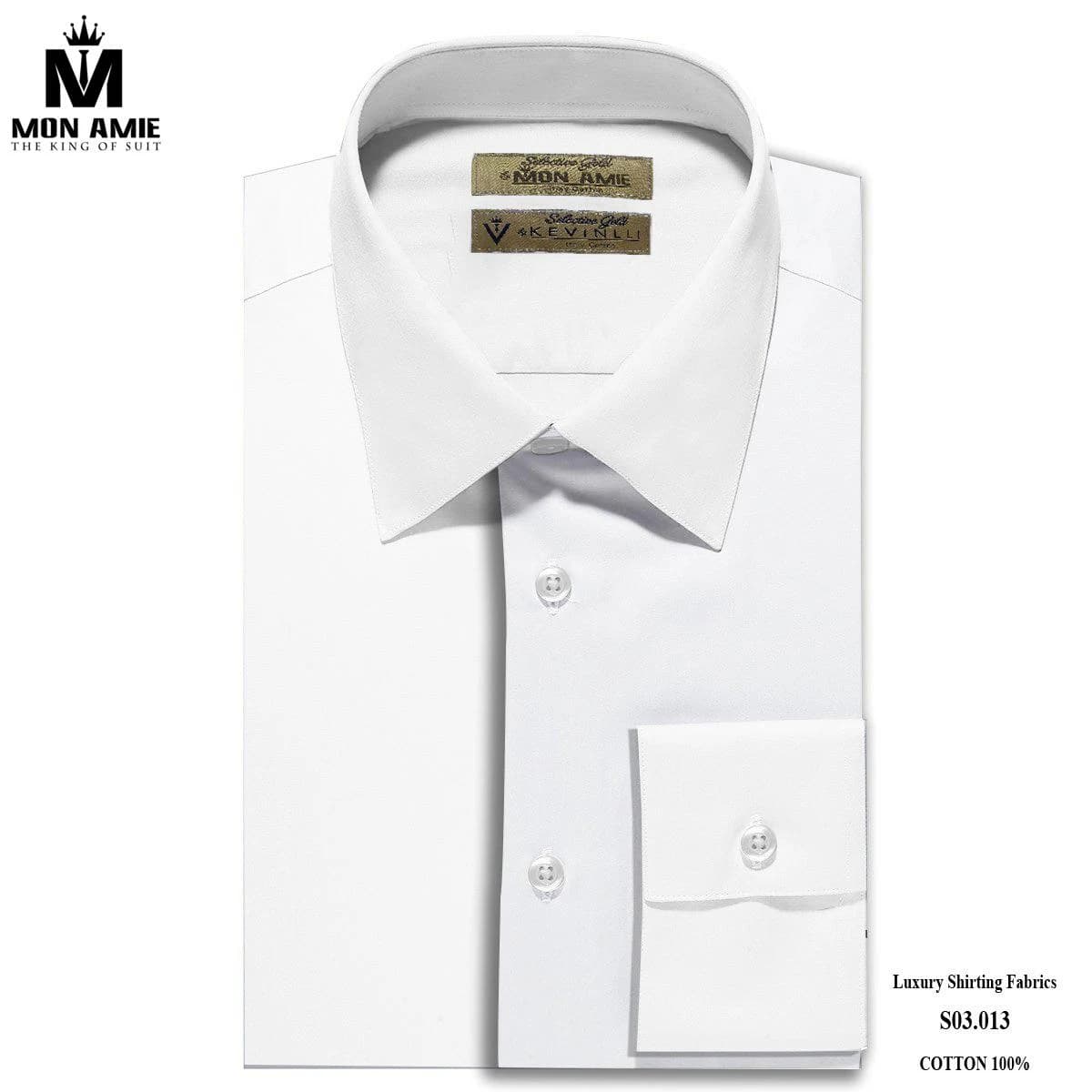
The word “premium” on a shirt label doesn't tell you where the extra money goes. When you first put it on in the morning, a good shirt and an ordinary one are hard to tell apart. The difference shows by the end of the day, or after a few machine washes: a rippled collar, a puckered placket, loose button threads. The seven details below show where the price gap lies, and which parts are worth paying for.
The short answer
A luxury men's dress shirt differs from an ordinary one in the cloth, the collar and the fit; dense stitching, mother-of-pearl buttons and a split yoke are finishing. If you wear a shirt under a suit three or more days a week, a good shirt is worth paying for. For sleeves rolled up, riding a motorbike and constant washing, an ordinary shirt that fits is enough.
Seven details side by side
The last column is Mon Amie's view of what is worth paying extra for. Not every high-end shirt has all seven details, and some details are there only for looks.
| Detail | Often seen on an ordinary shirt | Often seen on a luxury men's dress shirt | How to check | Worth paying extra? |
|---|---|---|---|---|
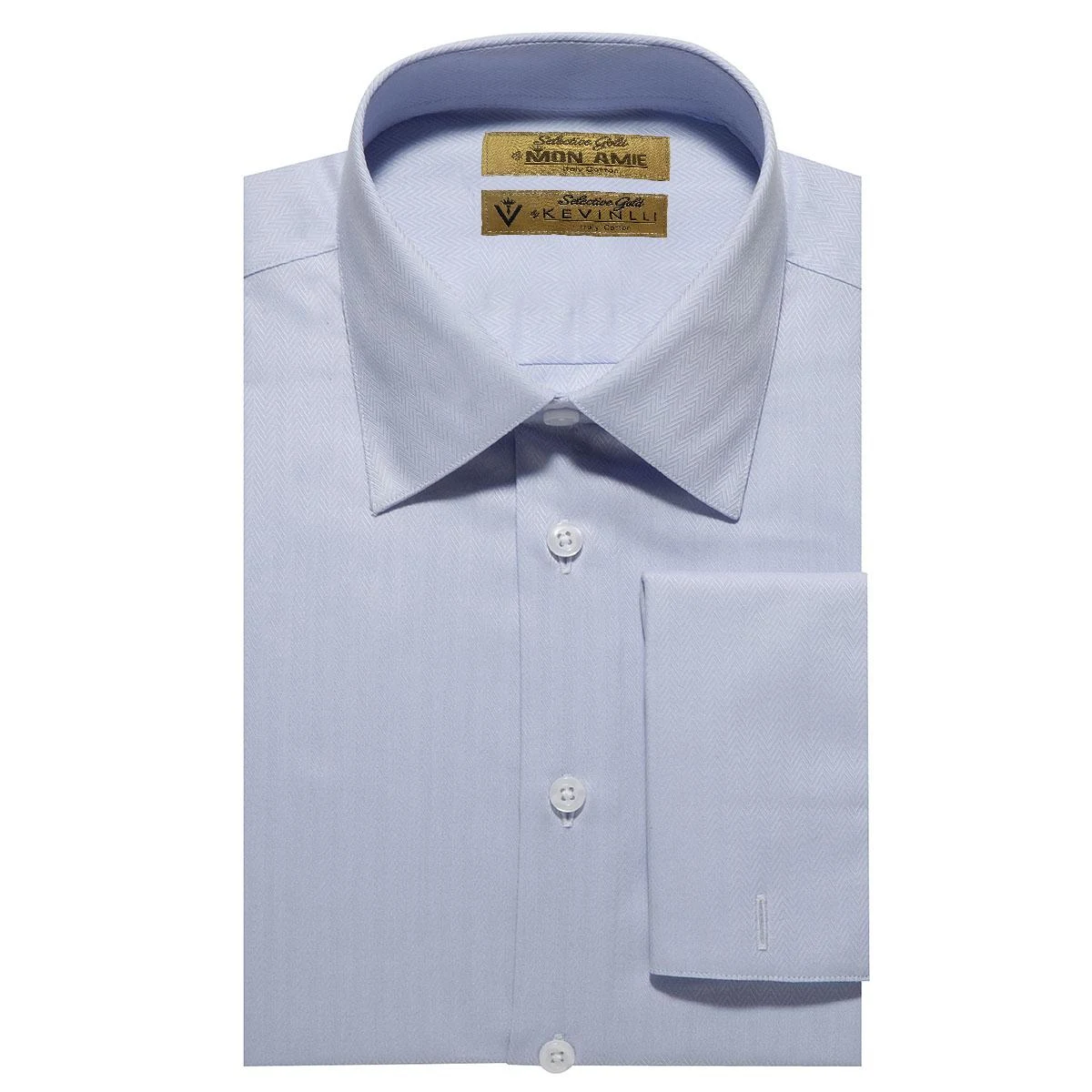
| 1. Cloth | Single-ply yarn, loose weave, a lot of synthetic fibre | Long-staple cotton, often two-ply, a smooth and firm surface | Hold it up to the light, crumple a corner for a few seconds, ask about composition | Very much |
| 2. Collar | The two collar points don't match, interlining stiff as board or limp | Symmetrical points, a collar that sits neatly under the jacket lapel | Lay the two points side by side; button the collar and slide in one to two fingers | Very much |
| 3. Stitching | Sparse stitches, side seams overlocked with the edge showing | Dense, even stitches, side seams folded to enclose the edge | Turn it inside out and look at the side seams and armholes | Depends on budget |
| 4. Buttons | Thin plastic, loosely sewn | Thick mother-of-pearl, firmly sewn, neat buttonholes with no loose threads | Touch the buttons, look at the edge of the buttonholes | Finishing |
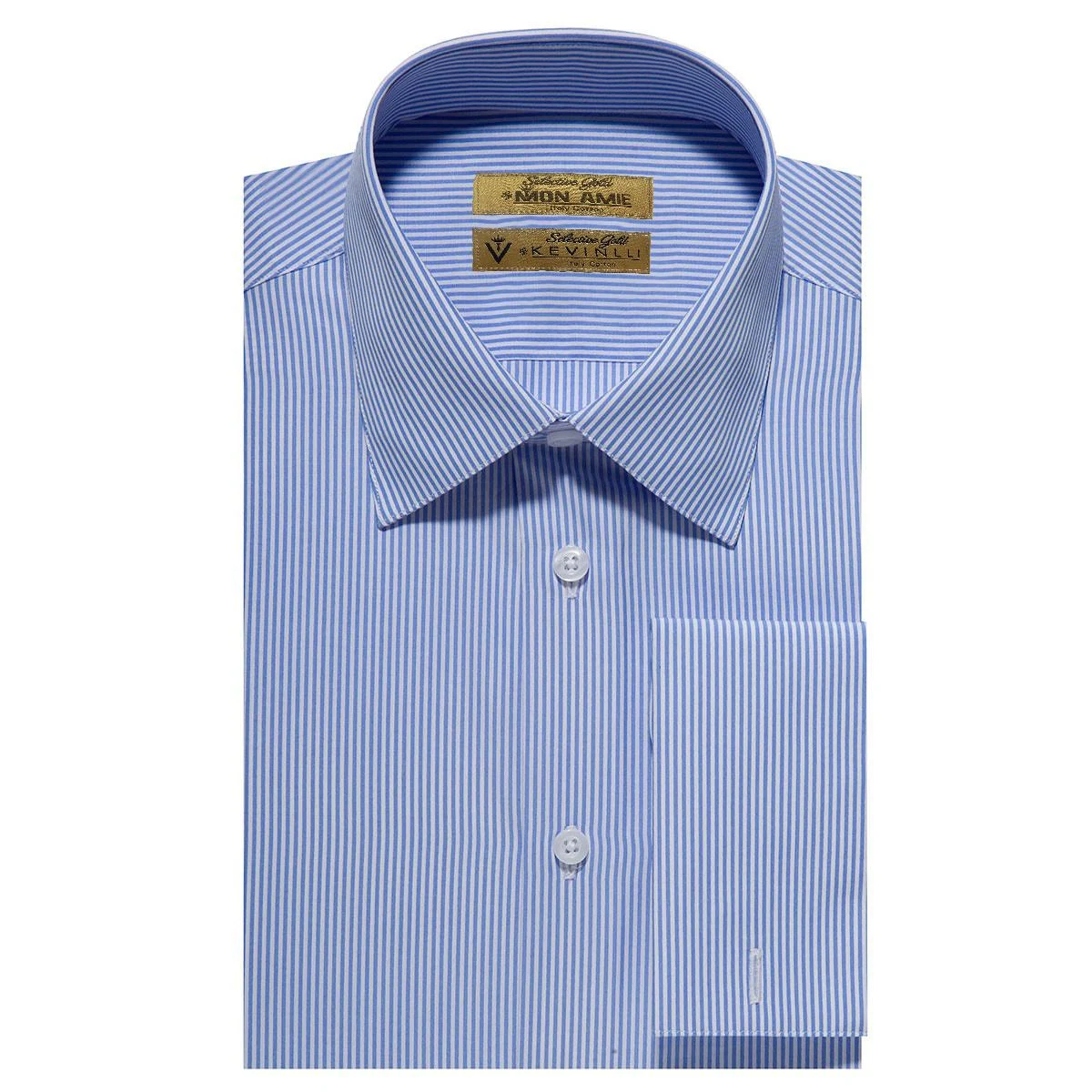
| 5. Pattern matching | Stripes at the chest pocket don't line up with the body | Stripes match at the pocket, placket and yoke | Step back and look at the chest pocket | Worth it, if it is a striped shirt |
| 6. Yoke and sleeve placket | One-piece yoke, open sleeve placket | Two-piece yoke, a small button on the sleeve placket | Look at the centre back seam, check the sleeve placket when the cuff is buttoned | Finishing |
| 7. Fit | Chosen from a few sizes S, M, L | Neck, shoulders and sleeves matched to the wearer | Sit down, raise your arms, button the collar in front of a mirror | Very much |
Three details often misunderstood
Stitch density. A carefully made shirt usually has about 7–8 stitches per centimetre on the seams that show, such as the placket and sides; a mass-market shirt is sparser, about 4–5 stitches. Dense stitching gives a flatter, neater seam, but it says more about care than about strength. A shirt with dense stitching and a crooked collar is still an uncomfortable shirt to wear.
Mother-of-pearl buttons. Real mother-of-pearl feels cooler and heavier in the hand than plastic, and the sheen differs slightly from button to button. It looks good, but it doesn't make the shirt fit better or feel cooler. When ironing, go around the buttons with the iron, because mother-of-pearl can crack under a hot iron.
Two-ply yarn and yarn count. Two-ply cloth is woven from yarn made of two fine strands twisted together, so it is firmer and pills less than single-ply yarn of the same fineness. The numbers such as 100s, 120s, 140s: the higher the number, the finer the yarn and the smoother and thinner the cloth, but it usually creases faster and needs more careful ironing. A shirt for every day at work doesn't need a very high yarn count.
Choose a luxury shirt when
- You wear a shirt under a suit three or more days a week. The collar and cuffs show all day, and the person facing you sees them first.
- You button the collar and wear a tie often. A good collar holds its shape through many washes; a poor one ripples after a few months.
- Your work involves meeting people at close range: sitting at a meeting table, signing papers, shaking hands. The cloth and the stitching get looked at more closely than you think.
- Your neck, shoulders and sleeves don't match ready-to-wear sizes. In that case spend the money on fit first, which means made-to-measure; the article on 6 things to ask when having a shirt made helps you choose where.
An ordinary shirt is enough when
- The shirt is worn untucked, with sleeves rolled up, for weekend outings.
- You ride a motorbike in the sun, sweat a lot and wash after every wear. Any shirt ages quickly at that pace, cheap or dear.
- The shirt is worn only a few times a year.
- A ready-made shirt already fits at the neck, shoulders and sleeves. An ordinary shirt that fits looks smarter than an expensive one that is loose.
On a limited budget, pay in this order
- Fit: neck, shoulders, sleeve length. If this is wrong, no other detail can rescue it.
- Cloth: the type of yarn, the weight, the shrinkage after washing.
- Collar: a collar shape that suits your face and neck and sits neatly under the jacket lapel.
- Stitching and pattern matching: worth it for striped shirts and shirts worn under a suit.
- Mother-of-pearl buttons, two-piece yoke, sleeve placket button: pay for these last, once the four above are covered.
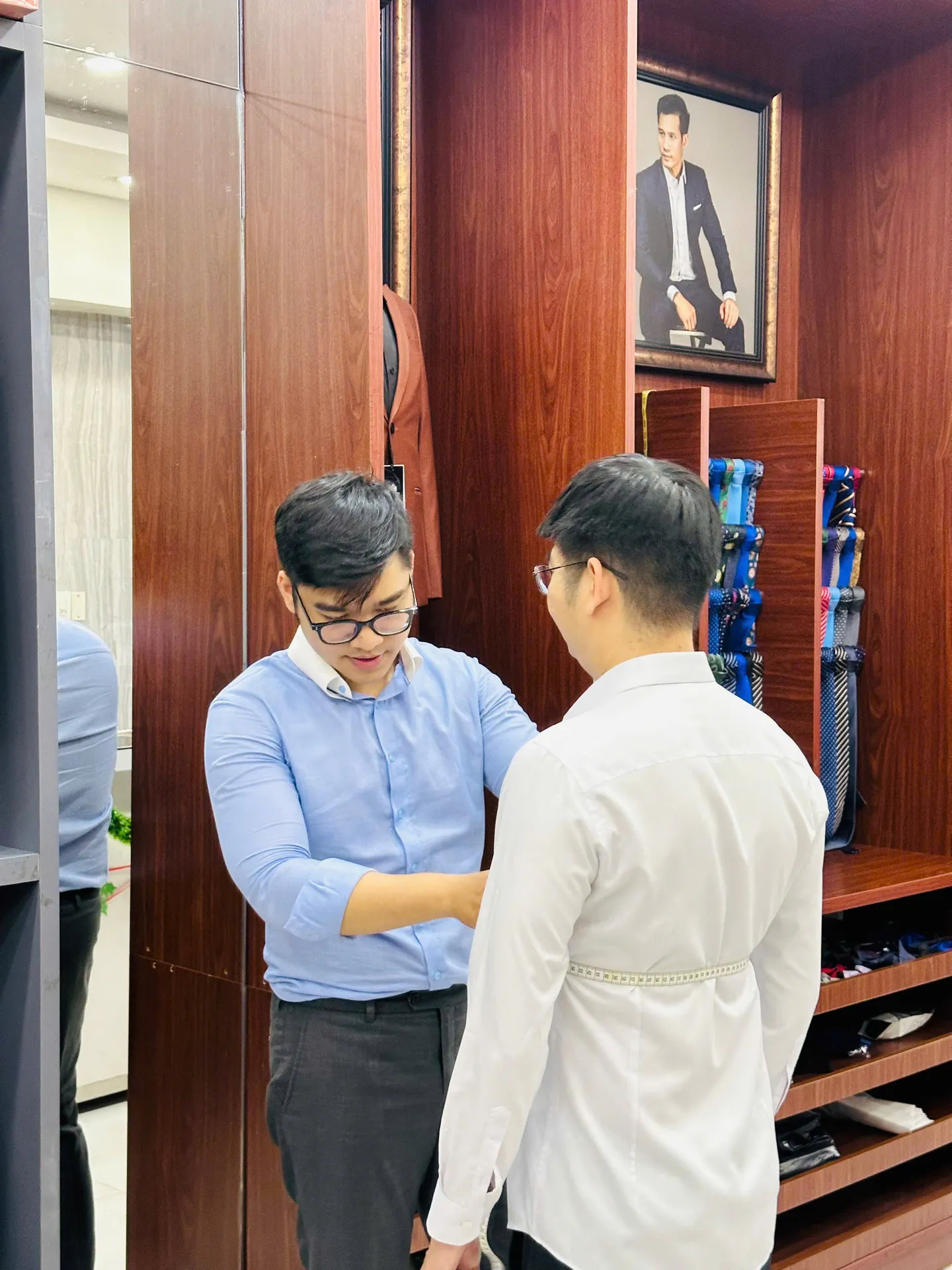
A made-to-measure shirt at Mon Amie comes in five cloth ranges: Cotton Modal VND 850,000, Cotton Bamboo VND 1.2 million, 100% Cotton VND 1.7 million, and Cotton Premium and Cotton Salford VND 2.5 million, excluding 8% VAT; details are on the price list. All 5 showrooms have sample shirts you can turn inside out to look at; ask the stylist about the shrinkage and care of each range when choosing cloth. For a shirt worn under a suit all week, Mon Amie leans toward 100% Cotton and above.
Frequently asked questions
Does a luxury shirt need hand washing?
Not necessarily. Button all the buttons, turn it inside out, put it in a wash bag, and choose a gentle cycle with cool water. Don't tumble dry hot, because the cloth shrinks and the collar tends to ripple; dry it on a hanger and iron while the cloth is still slightly damp.
Is a “non-iron” shirt a luxury one?
Not necessarily. The cloth is treated to crease less, which is convenient for busy people, but it is usually less breathable and feels stiffer than untreated cotton. In humid Ho Chi Minh City, a breathable cotton shirt ironed each morning is often more comfortable to wear all day.
Should I invest first in a white or a pale blue shirt?
White first if you wear a suit with a tie often; pale blue first if you often wear a shirt without a suit. For the white shirt on its own, 5 criteria for choosing a white shirt goes into more depth on cloth and how see-through it is.
Does a luxury shirt last longer than an ordinary one?
It usually lasts longer at the collar and the seams, but cloth with a high yarn count is thinner. A shirt lasts a long time because you have others to rotate and wash it correctly, more than because of the price.
Pay for the neck, shoulders and cloth first
Fit and cloth first, buttons and stitching after; a shirt worn under a suit all week is worth the investment, a rolled-sleeve weekend shirt is not. If you want to try having one made, book an appointment at the nearest showroom.