
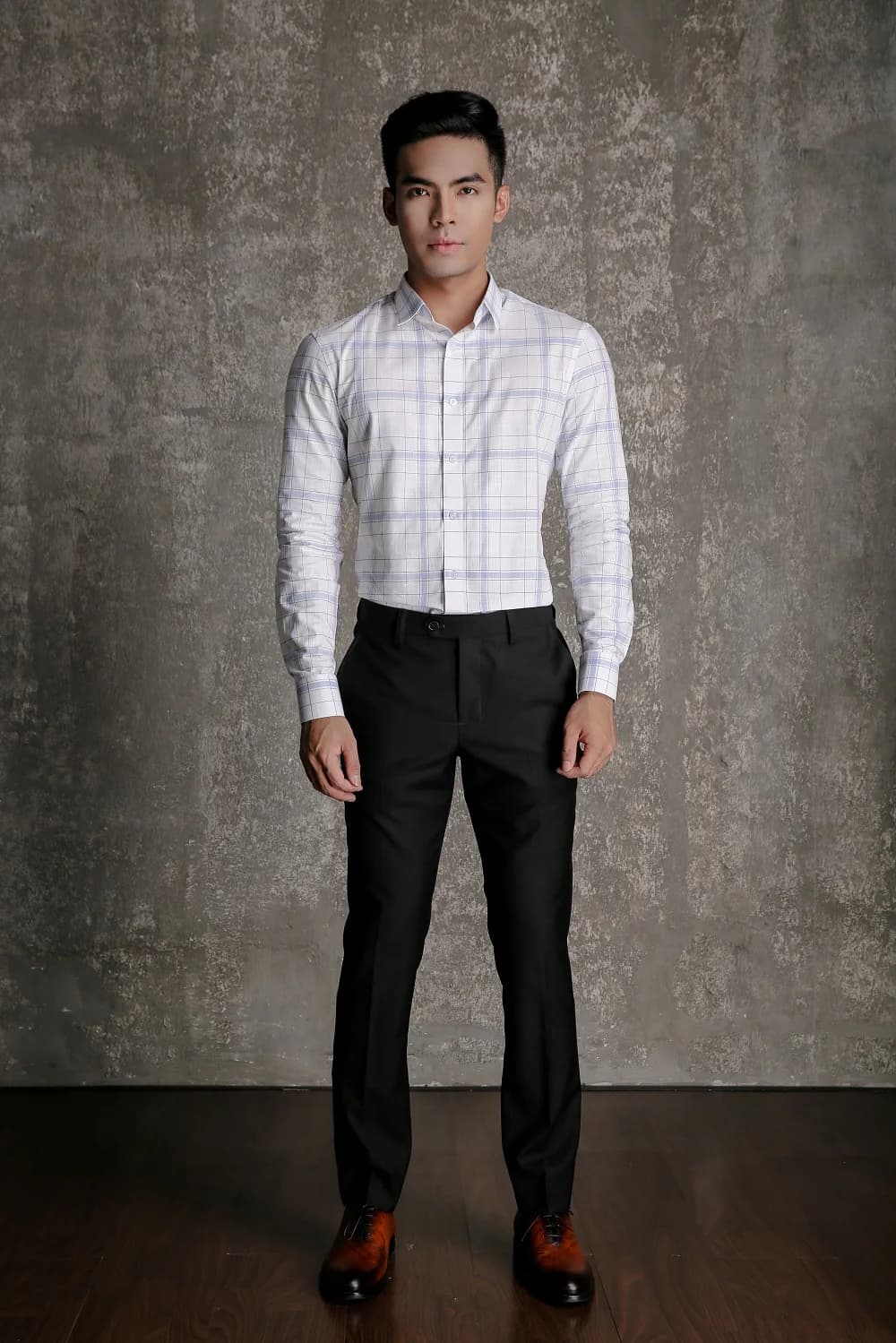
Two men who both wear size 32 may need two quite different pairs of trousers, simply because their seats and thighs differ. Your posture and three measurements, waist, seat and thigh, tell you in advance which pair will fit. Colour and cloth come later; cut comes first.
The short answer
Choose men's dress trousers by build. With a belly: a high waistband, straight leg, and no pleat or one small pleat. With large thighs and seat: a waistband that fits the seat, one pleat, a slight taper from the knee. If you are slim: a straight leg and a small pleat. If you are short: a high waistband, a tapered leg and no cuff. The hem touches the shoe with one break.
Cut by build
| Build | Waistband | Pleat | Leg | Hem | Avoid |
|---|---|---|---|---|---|
| Protruding stomach | High, at or above the navel | No pleat or one small pleat | Straight, not sharply tapered | Touching the shoe with one slight break | A low waistband slipping below the stomach, legs hugging the thigh |
| Large thighs and seat | Medium, sized by the seat measurement | One pleat | Slight taper from the knee down | Touching the shoe with one slight break | Legs clinging to the thigh, thin cloth that shows lines easily |
| Slim, slender legs | Medium | No pleat or a small pleat | Straight or moderately tapered | Touching the shoe with one break | Wide legs, double pleats, thin draping cloth that looks like swimming in the trousers |
| Short | High | No pleat or one small pleat | Slight taper | Level with the top of the shoe, no cuff | Cuffs, wide legs that pool folds over the shoe |
| Tall, long legs | Medium or slightly low | One or two pleats | Straight or moderately wide | One break; a cuff of about 3 to 4 cm is possible | Legs too tight, which make you look gangly |
| Sitting in meetings, driving all day | Medium, with a deep enough rise | One pleat | Straight | Touching the shoe with one break | Stiff cloth, legs hugging the thigh |
This table is a starting point, and every build has exceptions. A man with a protruding stomach can still suit a slight taper, as long as the waistband and rise are right.
Reading the table: five things a tailor looks at
- Waistband. A high waistband sits at or above the navel. A medium one sits below the navel and above the hip bone. A low one sits at the hip. If you have a stomach, choose a high waistband, because it sits above the fullest point, holds the stomach in and doesn't let it spill over the top.
- Pleats. A pleat is a fold at the waistband that opens when you sit, to give the thigh room. Men with large thighs who sit a lot notice the difference at once. Flat-front trousers look neater but sit tighter.
- Leg. Measure the width of the hem laid flat. Slim is about 17 to 18 cm, straight about 19 to 21 cm, wide about 22 to 24 cm.
- Rise. If the rise is too shallow, the waistband slips and pulls when you sit; if it is too deep, the trousers sag in the middle. The right rise keeps the waistband still even when you sit.
- Hem. The front touches the top of the shoe, making one slight break, and the back reaches close to the heel. Wear the exact shoes you will wear to fix the length. A trouser cuff (turn-up), where the edge of the leg is folded outward, is heavier than a plain hem and pulls the eye downward, so it suits tall men more than short ones.
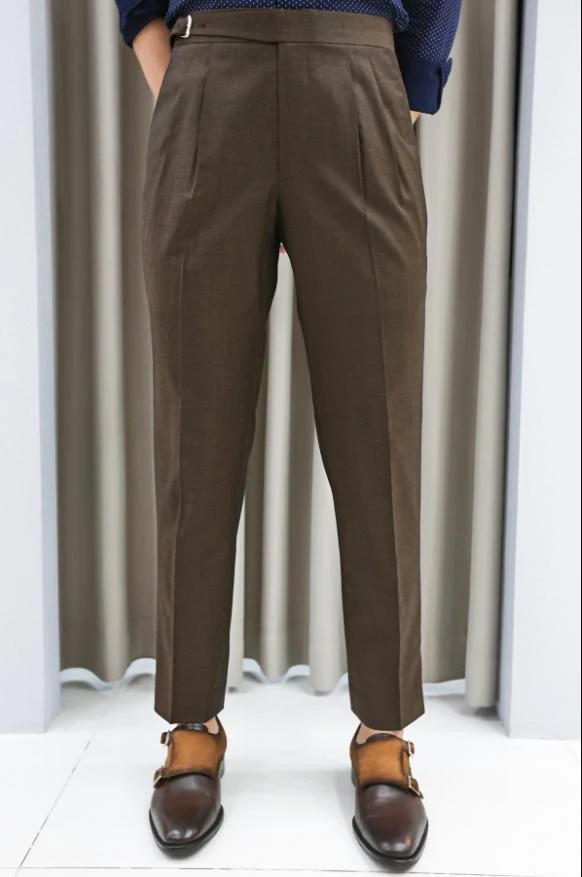
Style QT-001: olive-brown, high rise, with pleats and side adjusters.
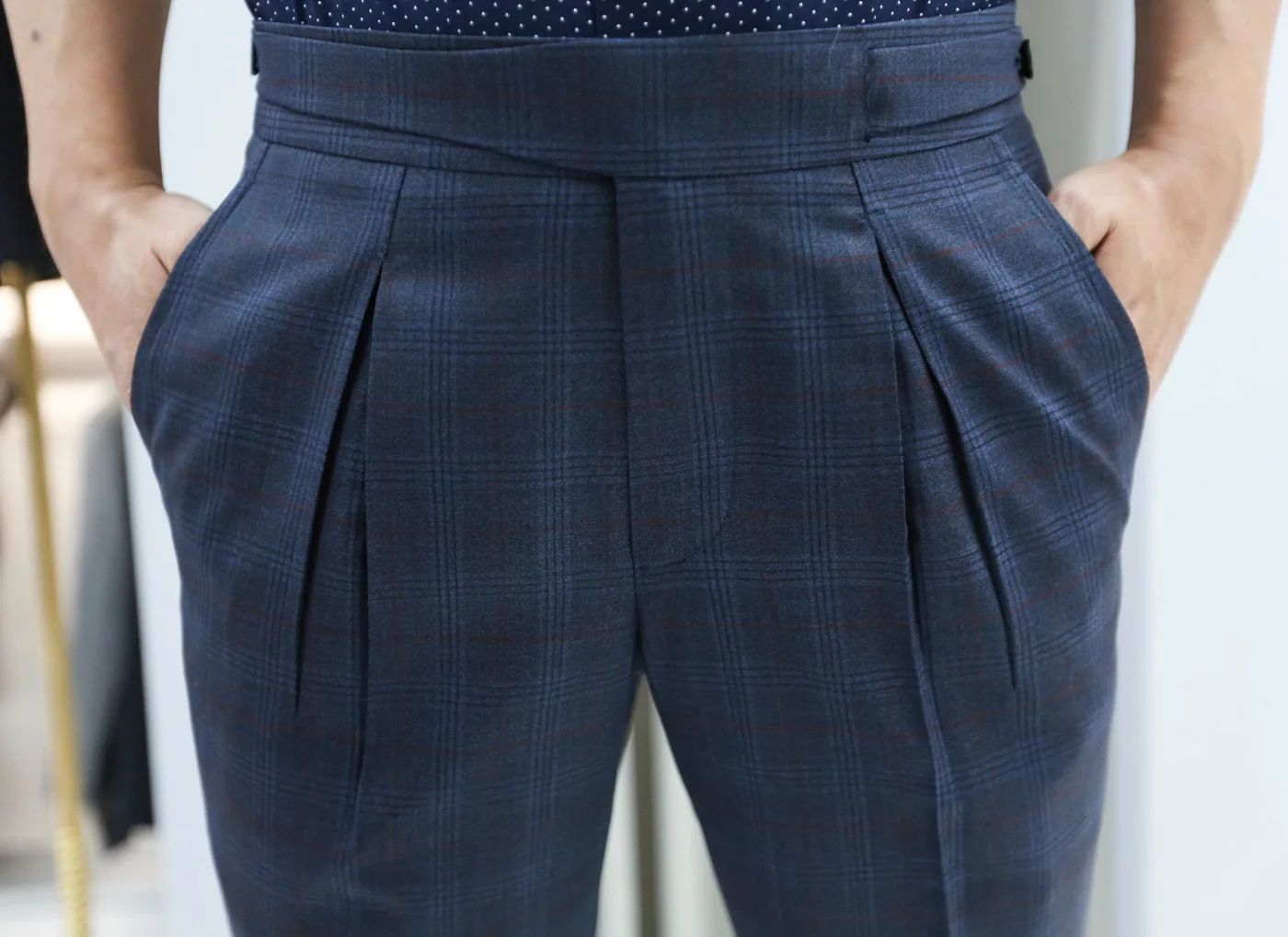
A high waistband with one deep pleat on each side.
Three builds that are often chosen wrongly
Protruding stomach. A common mistake is to choose trousers by the waist size you are used to and then let the waistband sag below the stomach. The waistband slips, the shirt gets pulled out, and the torso looks long and slumped. The fix is to raise the waistband, because going up a size only makes the seat and thighs baggier. The article on trousers for men with a belly covers this in detail.
Large thighs and seat. Take the seat measurement as the base size, then ask the tailor to take in the waistband to match your waist. Do it the other way round and the waistband fits but the thighs are strained, with horizontal creases pulling out from the crotch to either side. A slight taper from the knee keeps the lower leg neat while the upper part stays comfortable.
Slim men. Trousers that are too wide look borrowed. Choose a cloth of medium thickness so the trousers hang straight, and avoid thin, floaty cloth. A small pleat or none, a straight leg, and don't choose a wide leg if your legs are thin.
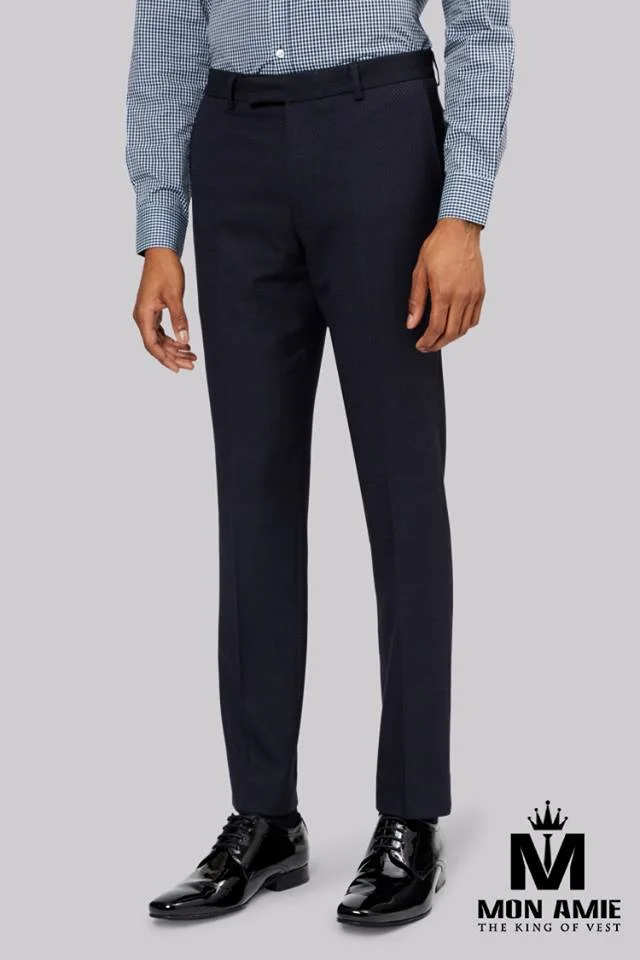
To compare straight, tapered and wide legs side by side, see the article on styles of men's dress trousers.
Three measurements you can take yourself in two minutes
Whether you are short, tall or have a protruding stomach, you can see for yourself in a mirror. The three numbers below help where the eye often guesses wrong: the seat and thigh compared with the waist.
| Measurement | Where to measure | What it tells you |
|---|---|---|
| Waist | Around where your trousers' waistband really sits when you wear them, which may differ from your natural waist | The number to compare against the seat and thigh |
| Seat | Around the fullest part of the seat, feet together | The number that decides the trouser size, especially when the seat is much larger than the waist |
| Thigh | Around the fullest part of the thigh, close to the crotch, legs slightly apart | Whether the trousers need pleats and a comfortable upper leg |
Compare the three numbers with each other. If the seat is much larger than the waist compared with most ready-made sizes, you will have to choose the size by the seat and then take in the waistband, which means it is time to think about made-to-measure. If the thigh is large relative to the seat, prioritise pleats and a deep enough rise over a tapered leg.
Buy off the rack and alter, or have men's dress trousers made
If your waist and seat measurements fall within the same ready-made size, buying off the rack and altering is enough. At Mon Amie, altering clothes bought elsewhere costs VND 100,000 to hem trousers and VND 100,000 to taper them.
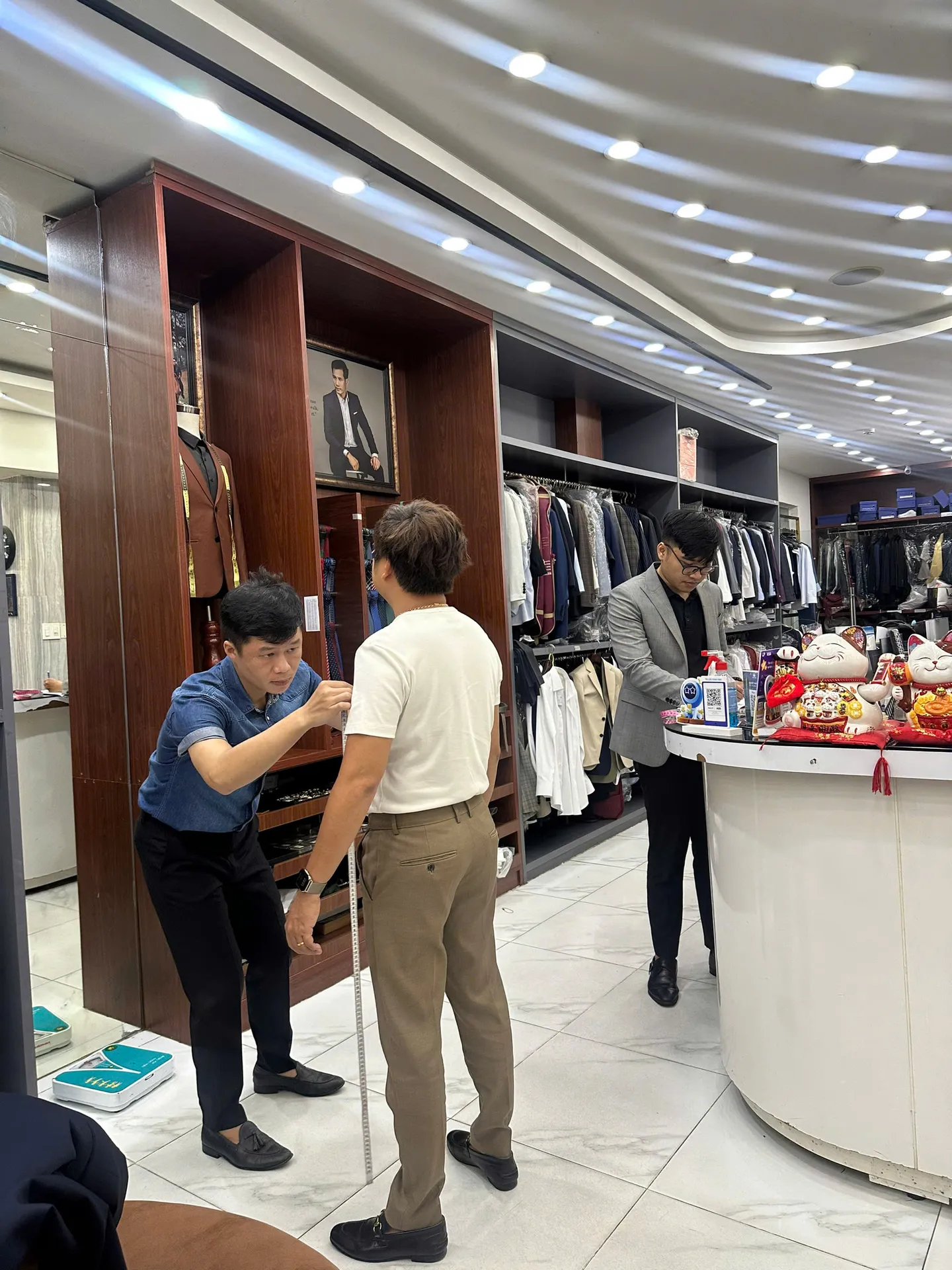
Made-to-measure suits better when:
- The seat or thigh is much larger than the waist, and altering ready-made trousers is not enough.
- The stomach is larger than the hips, and the waistband of ready-made trousers can't hold it.
- The rise and thigh don't match your proportions to your height, and hemming doesn't solve it.
- You wear dress trousers five days a week and want them to fit you exactly.
Separate trousers in the Kevinlli line are VND 1.2 to 4 million before VAT. If you have your own cloth, the making charge is VND 800,000. The cost compared with ready-made trousers is covered in the article on how much it costs to have men's trousers made and on the price list.
Trying trousers in front of the mirror: six tests
- Stand straight and fasten the waistband: there is no X crease pulling at the crotch. A crease means the rise is tight.
- Sit on a chair: the waistband doesn't slip, the thighs don't strain, the crotch doesn't bind, and the pleats open gently.
- Put your hands in the pockets: the pockets lie flat, with no gaping at the opening and no sticking out.
- Look from behind: clear vertical creases at the seat are usually spare cloth. Horizontal creases under the seat may come from tightness or from too much length in the back rise, so ask the tailor to look.
- Look at the hem with the exact shoes: the front touches the top of the shoe and the back reaches close to the heel.
- Walk a few steps: the legs don't wrap around the thighs and don't flap.
Frequently asked questions
Should a man with a belly wear trousers with pleats?
A small pleat or none is the starting point. Double pleats give extra room when sitting and help the trousers sit smoothly over the stomach, but the added cloth at the front makes the build look larger, so try both. More important than the pleat is a high waistband that holds the stomach and a rise deep enough to sit comfortably.
How long should dress trousers be with sneakers?
Shorter than trousers worn with leather shoes: the hem level with the ankle bone or just touching the top of the shoe, with no break. If you often switch between leather shoes and sneakers, fix the length by the shoes you wear more.
Do dress trousers need a belt?
If the waistband fits, use a medium-width leather belt in the same tone as the shoes. Close-fitting high-waisted trousers may need no belt at all, or can be worn with braces.
How long does it take to make a pair of trousers?
A single pair of trousers takes 3–7 days, or as little as 24 hours when urgent. If the trousers go with a suit being made, mention it so the schedule can be shared.
Which order to choose in
Choose the waistband and pleats by build first, the leg and hem after. If you want a stylist or tailor to look at how you stand and suggest the right cut, bring the shoes you wear most and book a measuring appointment.