
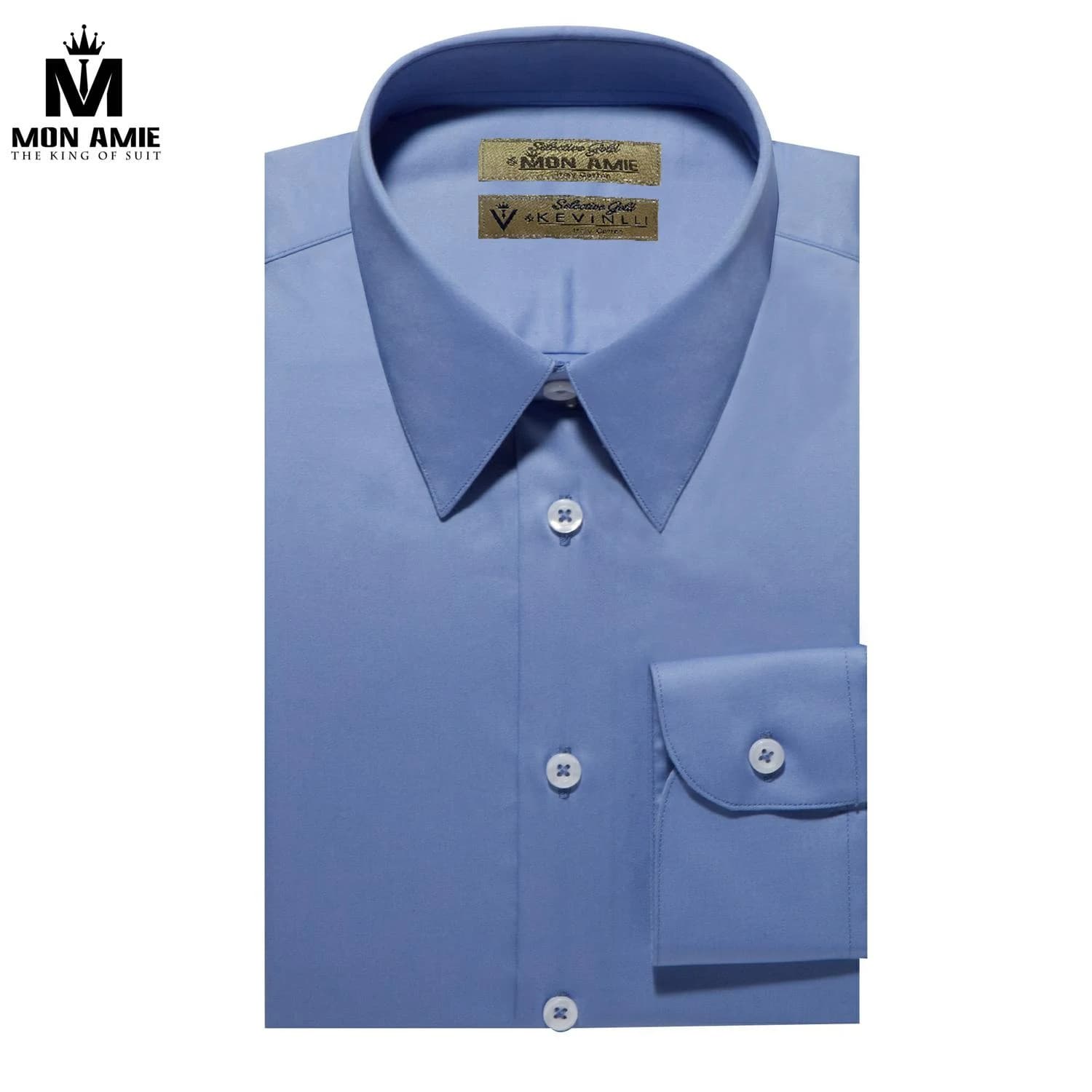
The collar on the shirt you are wearing fits nicely, as long as you don't button the top button. Button it and it chokes; leave it open and the tie slumps down. That is usually the reason people go looking for a made-to-measure men's shirt, and it is also the first question to put to a shop.
The short answer
For a made-to-measure men's shirt, go where the shop will measure the neck, wrist and shoulders separately, can tell you the fibre and shrinkage of the cloth, and will say clearly what happens when a shirt doesn't fit. All six questions below can be asked in a single visit, but the collar and the shrinkage only show after the first wash, so order one trial shirt first.
The 6 questions in one table
Take this table with you when you visit shops. The last column reminds you when to check again, since some things only the finished shirt can answer.
| What to ask | What you do in the shop | A usable answer | When to check again |
|---|---|---|---|
| 1. The collar | Watch how the neck is measured, and ask about the room when buttoned | Measured with a tape; with the collar button fastened, one to two fingers slide in | When you collect the shirt and after the first wash |
| 2. The collar stand | Say whether your neck is long or short | The person measuring looks at your neck before settling on the collar style | When you try it with a suit jacket |
| 3. The seams | Ask how the side seams and armholes are sewn | They can explain the type of seam | When you collect the shirt, turn it inside out and check the edges |
| 4. The cloth | Ask about the fibre, the shrinkage and how to wash it | They state the fibre and roughly how much it shrinks | After the first wash |
| 5. A trial shirt | Ask whether they will make just one first | A clear answer, with no pressure to order several | After a week of wearing it |
| 6. When it doesn't fit | Ask what happens if the collar is tight after washing | They describe the fix specifically | Before you order more |
1. The collar: the tape tells the truth
The person measuring should run the tape around the base of your neck, not estimate by eye. With the top button fastened, one to two fingers sliding in is right. If no finger fits, it is tight; if a whole hand slips in, it is loose and the tie will slump.
The collar also has to allow for shrinkage. A collar that fits snugly on the day you collect the shirt can choke after a few washes if the cotton has not been pre-shrunk.

2. The collar stand: the spot few people notice
The collar stand is the band of cloth that joins the collar leaf to the body of the shirt, usually about 3–4 cm tall. A long neck needs a taller stand and a short neck a lower one. Get this wrong and the collar either digs into your chin or sinks completely inside the jacket collar.
When you try the shirt, put your own suit jacket on over it. The shirt collar should rise about 1–1.5 cm above the jacket collar. If your neck is longer or shorter than usual, tell whoever is measuring beforehand.
3. The seams: ask so you know what you are paying for
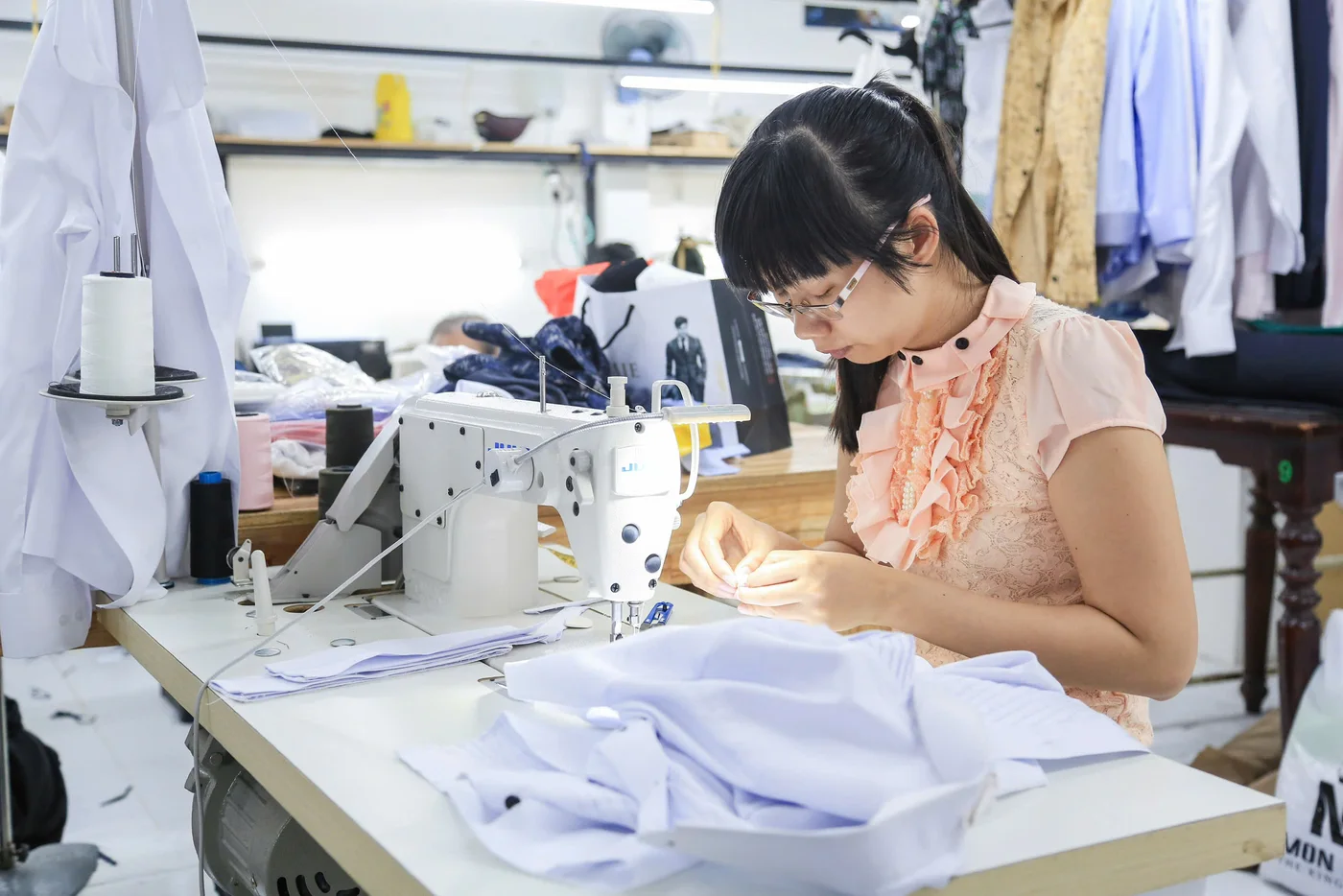
The side seams and armholes of a shirt come in two common kinds. A felled seam folds the two edges of cloth into each other and looks tidy from inside and out. An overlocked seam leaves the edge showing, and is still a widespread way of sewing. Ask which the shop uses, then when you collect the shirt, turn it inside out and see whether the edges are tidy and free of loose threads.
On striped shirts, also look at the chest pocket and the placket: stripes that match across them are a sign the tailor was willing to spend extra cloth and time.
4. The cloth: ask about the fibre and the shrinkage
The shop should be able to say what fibre the shirt is woven from. Hold a swatch up to the light to judge its thickness, and crumple a corner gently for a few seconds to see how much it creases. Before choosing a white shirt, you can also read 5 criteria for choosing a white shirt.
The question to ask: "How much does this cloth shrink after the first wash, and has the shop allowed for it?" Cotton usually shrinks about 1–3% if it has not been treated. If someone tells you "this cloth doesn't shrink and doesn't crease" when it is 100% cotton, ask again.
5. Order one trial shirt first
Don't order five at once because the price looks good. Ask whether the shop will make one shirt first, wear it to work, wash it once, and only then decide. The collar and the shrinkage only show after the first wash.
6. When it doesn't fit: ask before you need to
Ask while nothing has gone wrong: if the collar is wrong, how is it handled, how long does the fix take, and are your measurements recorded for next time. A shirt that is tight at the neck or short in the body is very hard to let out, so ask about each case specifically.
When a ready-made shirt is enough
If you try a ready-made shirt and the collar and shoulders both fit, with only the sleeves a little long, buying off the rack and shortening the sleeves is enough. A shirt size chart by weight helps you find the right size faster. A made-to-measure men's shirt is worth the money when your neck is large for your body, your arms are long, your stomach is full, or you wear shirts three or more days a week.
What Mon Amie has published about shirts
This article is written by the Mon Amie team, so the section below lists only what Mon Amie has already published. For the collar, collar stand, seams and shrinkage of each cloth line, ask the stylist when you choose cloth, using the questions above.
| Item | Mon Amie |
|---|---|
| Cloth and price | Cotton Modal VND 850,000; Cotton Bamboo VND 1.2 million; 100% Cotton VND 1.7 million; Cotton Premium and Cotton Salford VND 2.5 million. Excluding 8% VAT; see the price list |
| Bringing your own cloth | Making charge VND 800,000 per shirt |
| Measurements | Full measurements on an individual measurement card, kept for life |
| Turnaround | 3–7 days, or as little as 24 hours when urgent |
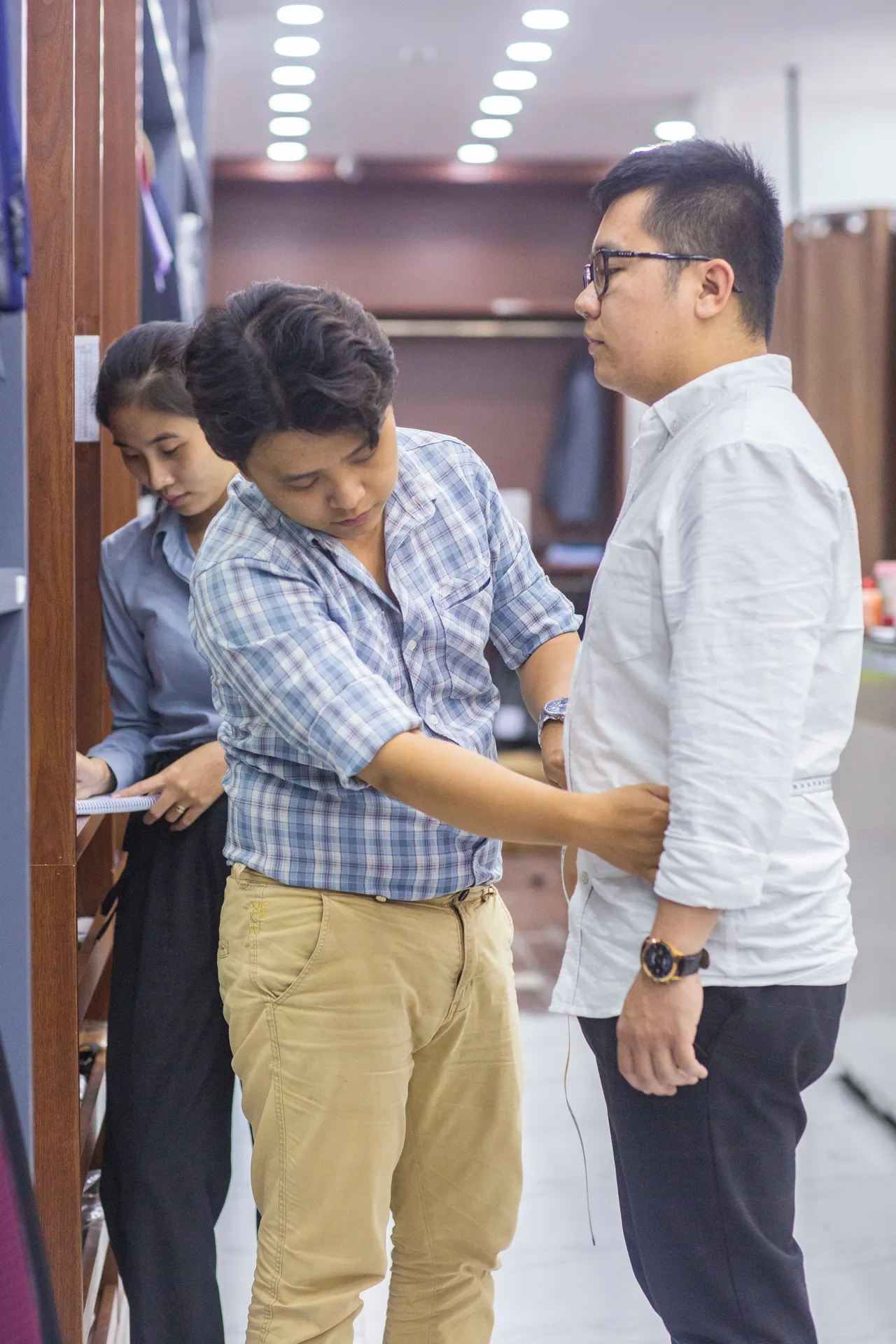
All 5 showrooms are open 8:30 a.m. – 9:30 p.m. every day, at the same prices. The workshop is at the showroom at 80–82–84 Đường 3/2, Hòa Hưng Ward, Ho Chi Minh City (0901.811.116); the addresses of the others are on the showroom page.
If you live in another province, Mon Amie has no showroom there. What works is remote tailoring, with guided video measuring on WhatsApp/Viber, or booking home tailoring at your home, office or hotel.
Frequently asked questions
Which collar style should I choose for a first order?
A regular turn-down collar with medium points works with a tie and worn open-necked alike. A round face should avoid a very wide spread, while a long face benefits from a wide spread to balance it. For a first order, avoid band collars and wing collars, since the occasions for wearing them are very narrow.
Which is cooler, 100% Cotton or Cotton Modal?
Cotton Modal is softer, drapes well and creases less in wear, with a cool feel to the touch. 100% Cotton holds its shape better, suits a suit and tie, but has to be ironed carefully. If you ride a motorbike a lot and wear a suit rarely, choose Modal; for an office desk, 100% Cotton.
How long does a made-to-measure shirt last?
It depends on how often it is washed, but collars and cuffs usually fray before the body of the shirt. Rotating three or four shirts through the week makes each one last far longer than washing two constantly. Avoid hot tumble drying, since it shrinks the cloth and damages the collar interlining.
Should a shirt have a chest pocket?
For a shirt worn under a suit, leave the pocket off so the chest stays flat. For a shirt worn alone without a jacket, one left pocket is still handy and looks relaxed. Say this at the measuring stage, because it is hard to change once the shirt is made.
Make one shirt first
Don't decide by the price list: ask all 6 questions, order one shirt, wear it and wash it once, and the collar will give you your answer. If you want to try it at Mon Amie, book an appointment and do exactly that.