
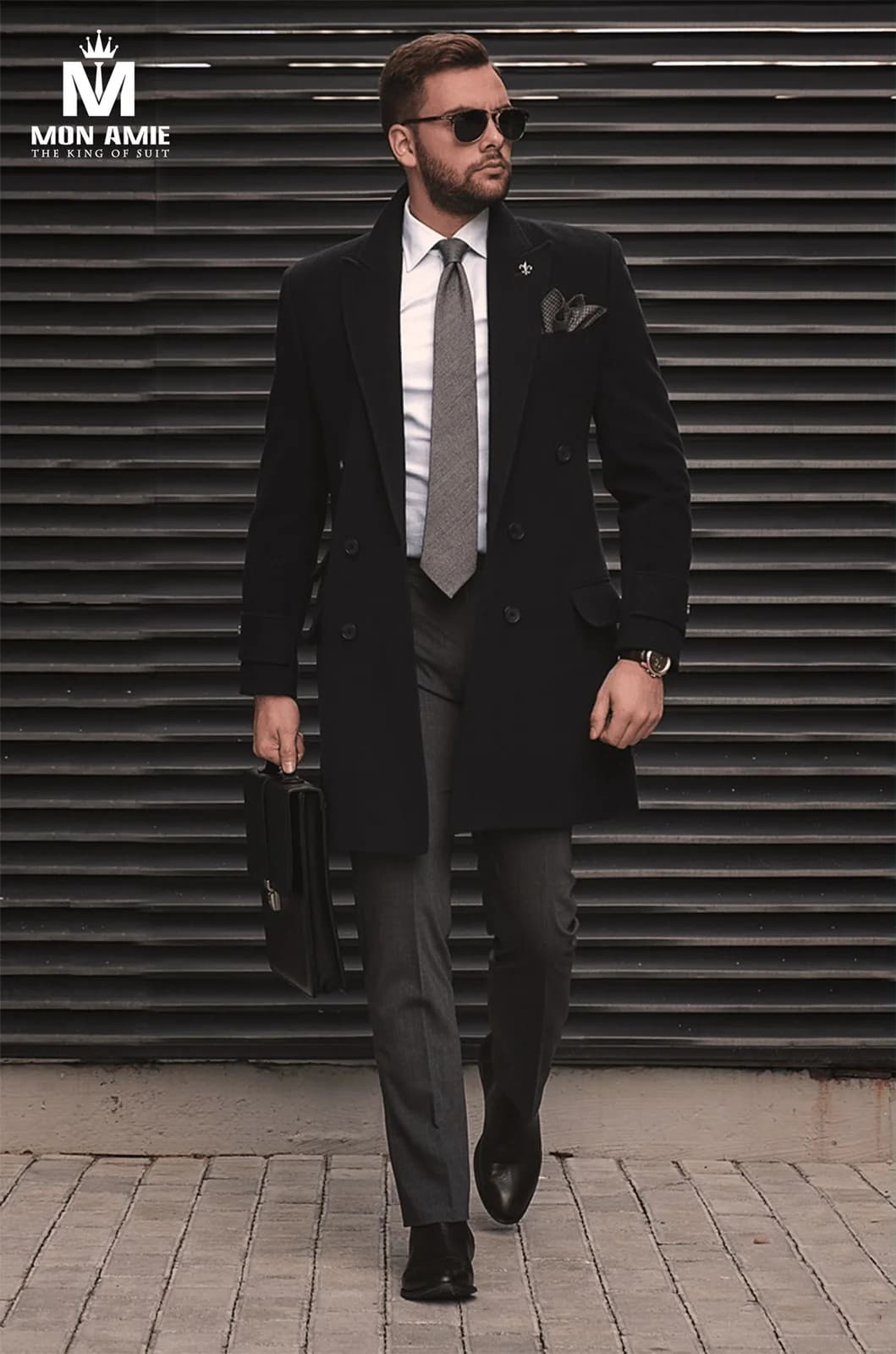
Saigon has no winter, but a year-end business trip to Hanoi, a flight to Seoul or a chilly morning in Đà Lạt will do. You pack the suitcase, look at your usual suit and wonder: what do you wear underneath and on top to stay warm without turning into a bundled-up parcel? Knowing how to layer a suit in winter is really an art of layering, and it follows very clear rules.
Quick answer
In winter, wear a suit with thin layers inside and thick layers outside: a shirt or thin turtleneck, a waistcoat or smooth knit, then the suit jacket, and finally an overcoat and scarf. Choose layers that are thin but warm, and try the suit on with the exact layers you plan to wear so nothing bunches or pulls.
The layering rule: thin inside, breathable outside
Layering does not mean piling on thick sweaters. Three basic principles:
- Thin inside, thicker as you go out. The layer against your skin is thin and breathable, the middle layer holds warmth, the outer layer blocks wind.
- Every added layer needs extra room. The suit on the outside must be a little roomier than usual so the knit underneath doesn't make it pull.
- Smooth fabrics, not fuzzy ones. Fine knit (thin merino) sits flat under a suit; thick, fuzzy wool creates bulk at the shoulders and underarms.
The most important point: try the suit on with exactly the layers you plan to wear. A suit that fits over a shirt can turn too tight once you add a sweater.
Way 1: Suit with a thin turtleneck instead of a shirt
This is the simplest and most modern combination. Swap the shirt for a thin turtleneck in a deep, muted colour, then wear the suit over it.
- Choose a smooth, thin knit: so it doesn't bulk up at the collar and shoulders.
- Colour: black, charcoal, navy, cream. A black turtleneck under a charcoal suit is a classic.
- Occasions: meeting a close partner, an evening party, relaxed days at the office.
Way 2: Suit with a knit waistcoat or thin cardigan underneath
A knit waistcoat or thin cardigan between the shirt and the suit jacket is both warm and adds depth to the outfit.
- Knit waistcoat (buttoned or pullover): grey, brown, beige, warm tones.
- Thin cardigan: buttoned up when you sit in a meeting, open when you step outside.
- Note: the hem of the knit must not hang below the hem of the jacket. If it does, choose a shorter layer.
If you want to wear a waistcoat with the same suit, read more in how to choose a men's waistcoat to wear with a suit.
Way 3: Suit with an overcoat
The overcoat is the classic outer layer of winter. Choose one that falls to about the knee, with shoulders slightly roomier than the suit jacket's so you can wear the suit underneath.
- Colour: camel, black, charcoal. Camel looks very good over a navy or grey suit.
- Buttons: single-breasted is neat; double-breasted is more formal.
- Sleeves: slightly longer than the jacket's, so the suit jacket doesn't poke out of the overcoat.
The detailed styling advice is in what to wear with a men's overcoat.
Way 4: Suit with a wool scarf
A scarf makes the outfit warmer and adds an accent. There are three ways to wear a scarf with a suit, from easiest to most polished:
- Draped (hanging long on both sides): let the two ends fall down the chest, inside the overcoat or over the suit. The easiest way.
- Looped (folded in half and pulled through): fold the scarf in two, wrap it around your neck and pull the two ends through the fold. Neat, doesn't come undone, suits the office.
- One wrap, ends left hanging: wrap once around the neck and let the ends fall to chest level. Thicker, suits cold weather.
With a suit and no overcoat, choose a thin wool or wool-silk scarf in a colour that goes with the tie or shirt. With a suit and overcoat, use a thicker scarf in a plain colour or a light check. The scarf should sit under the lapels, not lie on top of them and crumple them.
Way 5: Blazer with a crew-neck sweater and flannel trousers
When you don't need to be too formal, you can drop the tie and wear a blazer over a crew-neck sweater. Grey or dark brown flannel trousers are warmer and softer than ordinary dress trousers.
- Blazer: medium-weight wool or light tweed, in a muted colour.
- Sweater: a smooth crew neck, worn over a shirt so the shirt collar shows slightly.
- Trousers: flannel in grey, brown or dark blue.
- Shoes: derbies or brown leather boots.
Way 6: Three-piece suit with an overcoat
A three-piece suit already comes with a waistcoat in the same cloth. It adds warmth and is neater than putting a knit waistcoat on the outside. Combined with an overcoat and scarf, you have a well-put-together outfit for the coldest weather without wearing too many thick layers.

Way 7: Tweed blazer with a flannel shirt
For weekends or outdoor trips: a tweed blazer, a checked flannel shirt, a thin sweater in between, and dark chinos or khakis. This style is a little sporty, warm and comfortable while still smart. If you want to know more about tweed in Vietnam's climate, the article on wearing tweed suits in Vietnam has a few tips.
Choosing thickness so nothing bunches in cold climates
If you are heading somewhere colder, keep this in mind:
| Layer | Choose | Avoid |
|---|---|---|
| Next to the body | Thin thermal layer, thin cotton or merino | Thick cotton, which gets damp when you sweat |
| Middle layer | Smooth knit, knit waistcoat | Thick fuzzy wool, overly thick turtlenecks |
| Suit | Medium-weight wool, flannel, light tweed | Thin cloth that doesn't hold heat |
| Outer layer | Wool overcoat, long coat | Thick puffer jackets pressed over the suit, which ruin the shape |
| Accessories | Wool scarf, leather gloves, thin wool hat | A scarf so thick it hides the lapels |
The article fur-lined suit jackets for cold countries discusses linings for genuinely cold climates.
Common mistakes
- Wearing a sweater that is too thick under the suit. The jacket pulls, the shoulders bunch, and an X-shaped crease forms at the middle button.
- Trying the suit on without the layers underneath. It fits in the shop but is tight when you actually wear it.
- Wearing a puffer jacket over a suit. It crushes the shape of the shoulders and wrinkles the jacket.
- A scarf that is too big. It hides the lapels and ruins the shape of the collar.
- Forgetting warm shoes and socks. The cold comes up from below, and even a beautiful suit can't save you.
Tips from a Mon Amie master tailor
Our master tailors always advise customers heading somewhere cold: “Get measured for the suit while wearing a sweater.” This is why made-to-measure helps: when you tell the tailor beforehand that you will wear an extra knit layer, the tailor leaves extra room at the shoulders, chest and underarms while keeping the jacket's neat line. A ready-to-wear suit rarely achieves both: neat in hot weather and roomy enough for layers. If you have a trip somewhere cold coming up, book a fitting early so the tailor has time for a baste fitting and to choose suitable cloth from the fabric library.
Frequently asked questions
How do I wear a suit in winter so I stay warm and still look neat?
Use layers that are thin but warm: a thin thermal layer, a turtleneck or smooth knit waistcoat inside, a medium-weight suit, an overcoat on the outside. Avoid thick, fuzzy sweaters under the suit.
Do I need a scarf with a suit in winter?
Not required, but a thin wool scarf makes the outfit warmer and gives it an accent. With a suit and overcoat, a thicker scarf in a plain colour or a light check is enough.
How should I style a men's blazer for work in winter?
A medium-weight wool blazer, a plain shirt, a smooth crew-neck sweater, grey or brown flannel trousers. Leather derbies, and no tie if the workplace allows.
How should I wear a scarf with a suit?
Place the scarf under the lapels. The easiest ways are to let both ends hang or to fold it in half and pull it through. Choose a thin scarf with a suit and no overcoat, and a thicker one with an overcoat.
Conclusion
Knowing how to layer a suit in winter is a matter of smart layering: thin inside, warm in the middle, windproof outside, and always trying the suit on with exactly the layers you plan to wear. Well prepared, you stay warm and still look polished, in Hanoi and Seoul alike. If you need a suit made with the right room for those layers, you can look at Mon Amie's bespoke tailoring service.