

Seven in the evening, a coffee stain spreading across the lapel, and a meeting tomorrow morning. Most people's reflex is to scrub hard with a damp cloth, or to drop the whole jacket into a basin of soapy water. Either can ruin a jacket that a master tailor spent many hours shaping. Knowing how to wash a suit at home properly starts with a small question that few people ask: is this jacket allowed to be washed at home at all?
The short answer
Pure wool suits, or suits with firm interfacing, should be dry cleaned; at home, treat only individual stains and refresh with steam. Cotton, soft linen or polyester-blend suits whose label allows it can be hand-washed in cool water with a neutral soap, never wrung or twisted, and dried on a shoulder hanger.
Which suits you can wash yourself, and which must be dry cleaned
Before you mix any water, read the care label, usually sewn into the underarm seam or inside a pocket. Then check it against the table below:
| Suit type | Washing at home | The right treatment |
|---|---|---|
| Pure wool, with interfacing | Not recommended | Dry clean; at home, only steam, brushing and spot treatment |
| Three-piece suit, silk or thin lining | Not recommended | Dry clean, because the lining and interfacing shrink differently from the outer cloth |
| Thick polyester blend, no firm interfacing | Possible, if the label allows | Hand wash in cool water, dry on a shoulder hanger |
| Cotton blazer, soft linen, no shoulder padding | Possible, if the label allows | Hand wash or gentle cycle, then press again |
| Blended trousers | Usually fine | Wash separately, inside out, hang to dry clipped at the waistband |
The reason is simple: a suit jacket is a multi-layered structure of outer cloth, interfacing, shoulder padding and lining. Each layer expands and shrinks in its own way when it meets water. Wash it wrongly and the interfacing bubbles or shrinks out of line, the shoulders lose their shape, and no stitching can pull them back. So knowing how to wash a suit at home properly is, first of all, knowing when not to wash it.
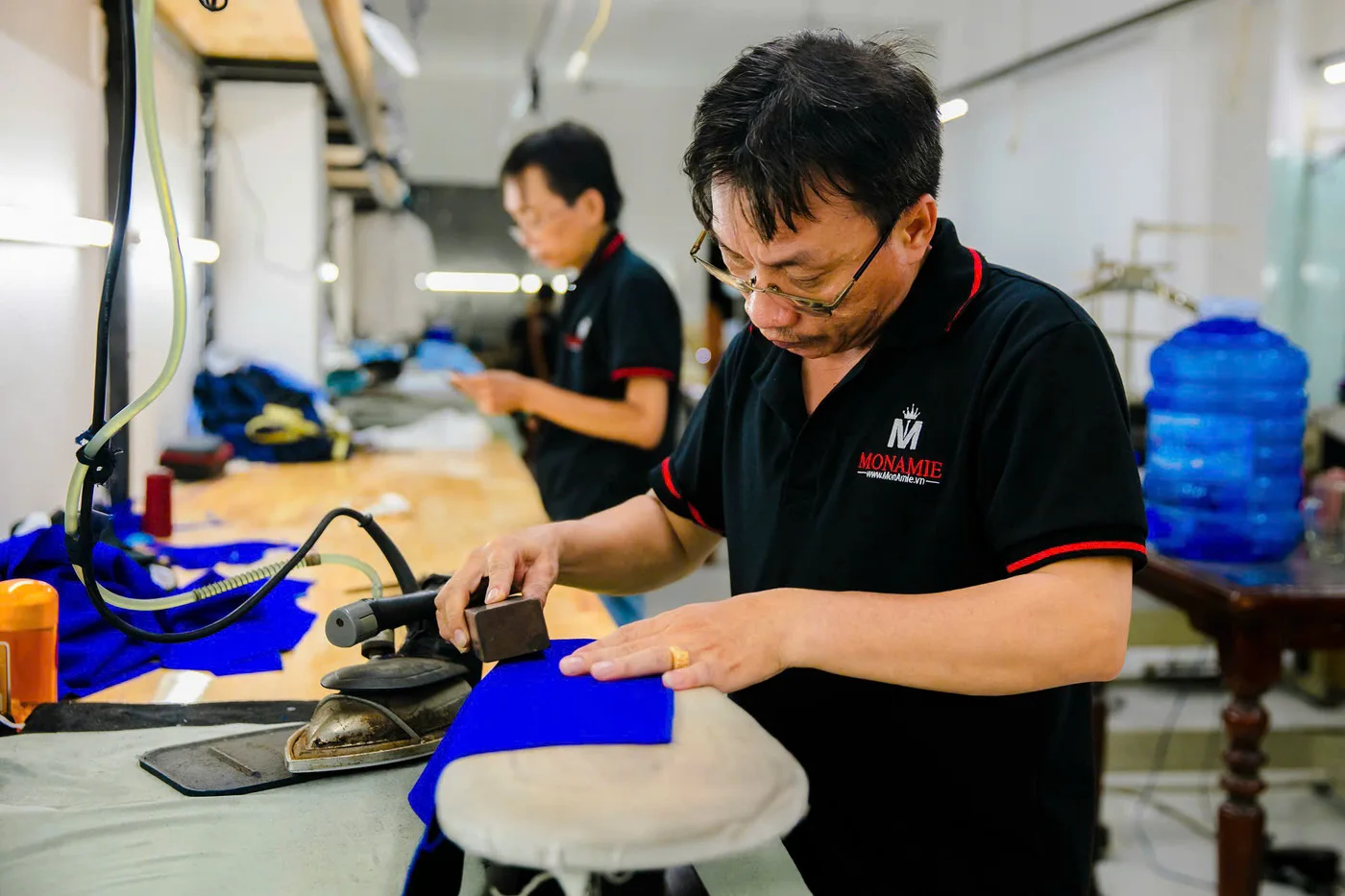
Steps for washing a suit at home (only for suits that can be washed)
- Read the label and spot-test. Dab a little diluted soap on a hidden corner inside the jacket. If the colour runs or the cloth shrinks, stop and take it to a dry cleaner.
- Treat stains first. Blot; don't rub. Oil stains and sweat marks at the collar and underarms should be covered with a diluted soap solution, left for a few minutes, then patted lightly.
- Prepare the water. Use cool water, about 30°C or lower, and dissolve a neutral soap or a detergent made for wool and delicates. Avoid strong detergent powders, bleach and hot water.
- Turn it inside out and fasten the buttons. Turning it inside out protects the face of the cloth; fastening the buttons keeps the jacket from twisting.
- Soak briefly. Soak for about 10–15 minutes, pressing gently so the water soaks in. Don't knead and don't scrub with a brush.
- Rinse thoroughly, twice. Keep rinsing until no suds remain. Don't let soap dry on the cloth, especially in the fold of the lapel.
- Blot the water out with a towel. Lay the jacket on a dry bath towel and roll it gently to absorb the water. Never wring or twist it, because twisting deforms the shoulders.
- Dry it properly. Hang it on a wide shoulder hanger in a well-ventilated spot, away from harsh sun and heat sources. Drying in direct sun fades the colour and makes the cloth brittle.
- Press lightly. While the jacket is still slightly damp, steam-press at a low temperature with a pressing cloth. Press from the wrong side on spots that tend to shine, such as the lapels and elbows.
Treating common stains before you decide to wash
Most of the time a "needs washing" moment really only needs one stain dealt with. The table below suggests how to handle common stains; before you start, test on a hidden corner inside the jacket.
| Stain | Home treatment | Note |
|---|---|---|
| Coffee, tea, soft drinks | Blot at once with a clean cloth, then pat lightly with a damp cloth | Don't rub: rubbing spreads the stain and roughens the fibres |
| Sweat, yellowing at the collar and underarms | Pat on a diluted soap solution, leave for a few minutes, then blot again | If the yellowing is long-standing, take it to a dry cleaner |
| Grease | Sprinkle talcum powder or cornstarch on the stain to absorb the oil, wait, then brush off lightly | Don't use hot water |
| Lipstick, makeup | Pat lightly with a damp cloth and diluted soap | Work from the outside in so the stain doesn't spread |
| Dried mud after rain | Let it dry completely, then brush it off with a soft brush | Don't rub while the mud is wet |
In most cases, treating a stain properly saves a whole wash, and the jacket keeps its shape longer. That is also what the master tailor wants you to remember: the wisest way to wash a suit at home is usually to wash it as little as possible.
With wool suits, "dry-clean" them through everyday care
Most good suits don't need much washing; they need to rest. A few habits are worth more than dozens of washes:
- Hang the jacket on a wide shoulder hanger after each wearing. A thin wire hanger throws the shoulders off over time.
- Let the jacket rest a day or two between wearings. Wool needs time for its fibres to recover.
- Brush off dust with a soft-bristle brush. Brush in the direction of the cloth, from top to bottom.
- Refresh with steam. Hang the jacket in the bathroom after a hot shower, or hold a steam iron a few centimetres from the cloth.
- Dry clean when you truly need to. Many tailors advise dry cleaning only a few times a year for regular wearers, because dry-cleaning chemicals also strip the cloth of its softness if overused.
For the pressing techniques that protect the shape of the shoulders, see how to press a suit without shine on the shoulders.
Common mistakes and tips from Mon Amie's master tailors
- Putting a whole wool suit in the washing machine. This is the quickest way to leave a master tailor with a repair job. To see why you should avoid it, read can a suit be machine washed.
- Wringing, or hanging a wet jacket on a small hanger. The wet cloth is heavier and pulls the shoulders longer; by the time it dries, the shoulders poke up as though the jacket belonged to someone else.
- Using hot water to get it clean faster. Hot water shrinks wool fibres and fades the colour.
- Drying in harsh sun. Navy and black fade easily, especially in wool.
- Tumble drying. A dryer shrinks the cloth and ruins the interfacing.
A master tailor's tip: if you are not sure of the cloth, don't guess. You can bring the jacket to a showroom and ask a stylist before deciding to wash it. Asking takes a few minutes, while a damaged jacket can take a week to repair, or may not be repairable at all.

Frequently asked questions
How should a men's suit be washed properly?
If it is a wool or structured suit, dry clean it. If it is a cotton suit, soft linen or a blend whose label allows it, hand wash in cool water with a neutral soap, don't wring it, and dry it on a wide shoulder hanger.
Can you wash a suit at home?
Yes, for certain fabrics, as in the table above. With a pure wool suit, you should only spot-clean and refresh with steam, and leave a full wash to a dry-cleaning service.
How do you wash a suit so it doesn't shrink or pill?
Use cool water, soak briefly, don't scrub, don't wring, and don't tumble dry. With a wool suit, limit washing in water and favour brushing and steam.
How often should a suit be washed?
There is no fixed schedule. Wash it when the jacket smells, or when stains or sweat have soaked into the cloth. People who wear a suit every day usually wash more often than those who only wear one to parties, but don't wash more than you need to.
Conclusion
Caring for a suit is more a matter of habit than of a single wash, and a suit cared for properly will keep its shape longer than you might think. If you want to ask how to care for your own cloth, you are welcome to drop by a Mon Amie showroom. Understanding the materials in the fabric library also helps you choose a suit that is easy to look after from the start, and the article what is dry cleaning for a suit jacket explains the process at the cleaner's so you can hand your jacket over with peace of mind when you need to.