
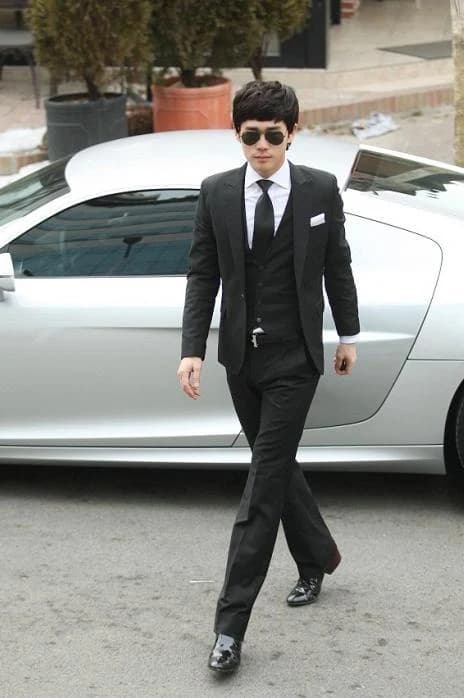
The invitation says "smart attire", and you are standing in front of the mirror with a tie in your hand. Wear it and you fear being too formal in a room of relaxed people; leave it off and you fear looking underdressed. Most cases have a clear answer once you know which situation you are in.
The short answer
A suit does not always need a tie. Wear one for interviews in finance or law, first meetings with a partner, signings, evening weddings, funerals and the stage. You can skip it for the everyday office, daytime outdoor parties, coffee meetings and creative events. If you are unsure, carry one in your pocket.
Tie or no tie: what the other person sees
| Criterion | With a tie | Without a tie |
|---|---|---|
| What the other person reads | Serious, respectful of the occasion | Relaxed, approachable |
| Risk | A little formal if the whole room is relaxed | Seen as underprepared at a formal event |
| Hot weather, standing in the sun | Hot at the neck, uncomfortable | More comfortable |
| What the shirt needs | A collar that fits snugly when buttoned | A collar that stands, with a stand high enough not to collapse under the lapel |
| Changing your mind on arrival | Take it off, roll it up, done in ten seconds | Cannot add one unless you brought it |
Changing your mind on arrival is why Mon Amie often suggests bringing a tie along: taking one off is always easier than adding one.
7 situations and the answers
| Situation | Tie | Quick note |
|---|---|---|
| 1. Attending a wedding as a guest | Depends on time and place | Wear one at an evening hotel reception; skip it at a daytime outdoor party |
| 2. A job interview | Depends on the industry | Wear one for finance, law, consulting; skip it in tech and creative fields |
| 3. The everyday office | Follow company policy | If there is no policy, you can skip it |
| 4. A first meeting with a partner, a signing | Wear one | If you know the other side dresses casually, skip it to stay in balance |
| 5. A funeral or memorial | Wear a plain dark one | If you do not have one, do not substitute a bright colour |
| 6. A year-end party, a gala | Follow the dress code | Black tie means a bow tie, not a tie |
| 7. On stage, giving a speech, receiving an award | Wear one | Photos show the neck area more clearly than real life |
1. Attending a wedding as a guest
An evening reception at a hotel or large restaurant: wear a tie in a refined colour, and avoid a bright colour that clashes with the groom's. A daytime outdoor party, a party of young friends, or an invitation that says "smart casual": you can skip it, as long as the shirt has a collar that stands and the suit fits. If you are family, a father of the bride or groom, or a groomsman, wear a tie wherever the party is.
2. A job interview
Banking, auditing, law, insurance, consulting, selling to large clients: wear one. Tech, advertising and start-up companies: a suit without a tie is enough, and even a blazer with different trousers will do. If you are unsure, look at the staff photos on the company's website and dress one notch above them.
3. The everyday office
Where there is a policy, follow it. Where there is none, most working days do not need a tie, just one in your desk drawer for an unexpected meeting with a client. If you ride a motorbike at midday, loosen the tie or take it off and knot it again when you arrive.
4. A first meeting with a partner, signing a contract
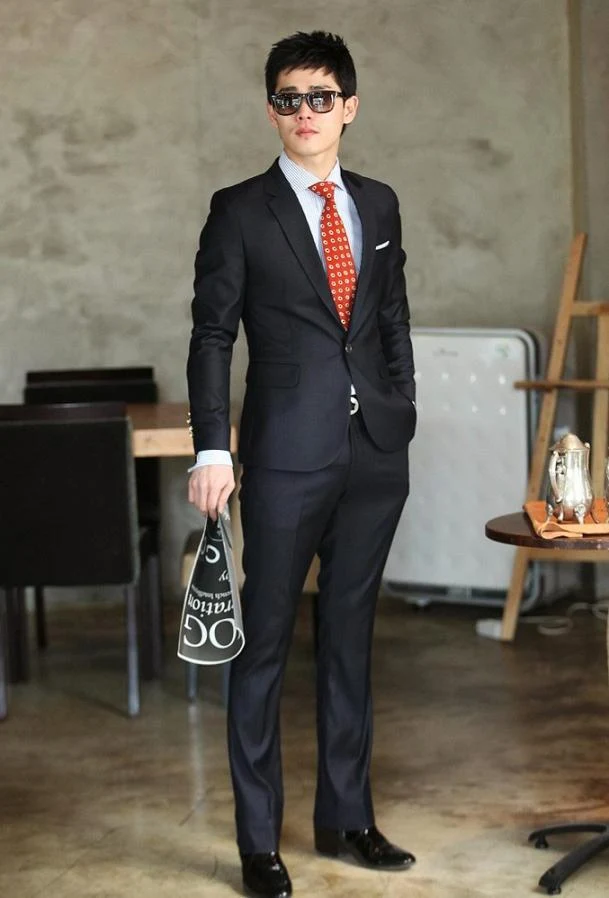
Wear one. At a first meeting, people know nothing about you except how you turn up. If you know in advance that the other side is a factory or a company that dresses casually, drop the tie so the gap is not too wide, but still wear the suit.
5. A funeral or memorial
If you wear a suit, wear a plain black or dark navy tie and a white shirt. If you have no dark tie, leave it off altogether and wear a white shirt with one button open, rather than a bright or patterned tie.
6. A year-end party or company gala
Read the dress code on the invitation:
- Black tie: a tuxedo and a black bow tie. See the tuxedo styles if you do not own one.
- Formal: a dark suit and a tie.
- Business attire: a suit, tie optional, and worth bringing along.
- Smart casual: a blazer or suit, no tie needed.
- No dress code given: look at the venue and the time. A hotel in the evening means wear one.
7. On stage, giving a speech, receiving an award
Wear one. Stage lights and half-length photographs make the neck area the easiest part of you to see. An open collar looks relaxed in person but tends to look like an empty space in a photo.

Wear a tie when
- You are the one being looked at: the host, the speaker, the groom, a family member.
- The person across from you has a say over you: an employer, a bank, a major client.
- The occasion is ceremonial: an evening wedding, a funeral, a signing.
- It is after 6 p.m. at a hotel or a smart restaurant.
Leave the tie off when
- The people around you are all dressed casually, and you are not the main figure.
- You are outdoors in the daytime, in heat, standing for a long time.
- You are wearing a blazer with different trousers, in linen or cotton. A tie with this outfit is still acceptable but not required.
- Your industry treats the tie as stiff.
Leaving off the tie does not mean leaving off the polish. The shirt needs a collar that stands, one button open, and a jacket that fits at the shoulder. The specifics are in the article wearing a suit without a tie.
What Mon Amie recommends
If you are unsure, wear it, or at least roll one up in your pocket. Roll the tie from the narrow end inward and put it in the inside pocket of the jacket or a small box in your bag. A tie is light and does not weigh down the jacket the way a phone or a wallet does. If you arrive and see the whole room wearing one, step into the restroom and knot it in a minute.
Three ties are enough to cover most of the occasions in the table: a plain or small-dot navy, an oxblood, and a silver grey. To pick colours for each suit, see the chart in the article matching suit and tie colours.
Frequently asked questions
Can I wear a three-piece suit with a waistcoat and no tie?
At a relaxed party, yes, but it is harder than with a two-piece suit. A buttoned waistcoat next to an open collar easily looks like one item is missing. If you skip the tie, choose a shirt with a properly standing collar and open exactly one button.
Can a bow tie replace a tie?
A black bow tie is for tuxedos and formal evening occasions. A coloured or patterned bow tie suits weddings and cheerful events. For work, meetings and interviews, use a tie.
How long should a tie be?
The wide end should reach about the belt buckle when you stand straight. Shorter looks stubby; past the belt looks sloppy. A tall man, or one with a larger stomach, may need a tie longer than the standard length.
Do I need a tie clip?
It is not required. If you use one, set it across the shirt between the third and fourth buttons, with the clip narrower than the tie. A clip helps when you often bend over or stand in the wind.
Bring it, then let the room decide
The question of whether a suit needs a tie usually has an answer once you know the time, the place and your role at the event. If you are having a suit made for an upcoming occasion, book an appointment and let a stylist choose the shirt and tie to go with it.