
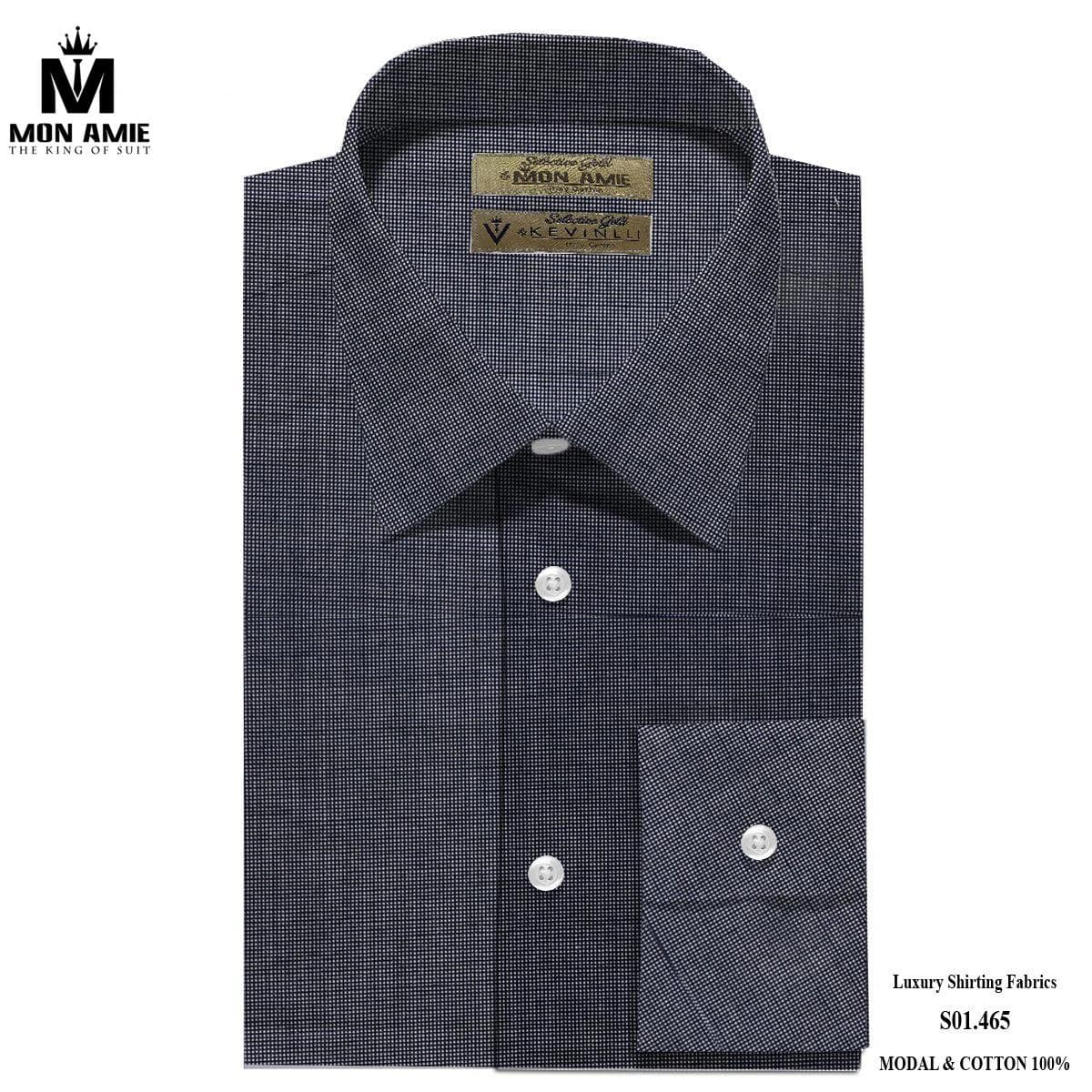
Pick up a cotton modal shirt and you notice at once that it feels softer and slicker than the cotton shirt you have on. The real question usually arrives at 5 p.m., after eight hours in a chair and two trips in and out of a car: is the shirt still flat, and does the collar still stand? The answer depends on what you wear it for.
The short answer
A cotton modal shirt is soft and cool to the touch. It still wrinkles, usually a little less than cotton or about the same depending on the blend and the weave, so you will still iron it after washing. In exchange, the cloth drapes, which means the collar and placket stand less crisply, and a close cut shows the stomach. It suits people who sit in an office. For weddings and formal events, choose 100% cotton.
What modal is
Modal is a cellulose fibre made from wood pulp, usually beech. It belongs to the same family as viscose, but it is treated to be stronger when wet and to shrink less. Woven with cotton, modal gives the cloth a smooth surface, a soft drape and good moisture absorption, while the cotton keeps some of the body and strength.
The blend ratio differs from one bolt of cloth to the next. The more modal, the softer and drapier the shirt. When you choose, ask your stylist for the blend ratio of the swatch in your hand.
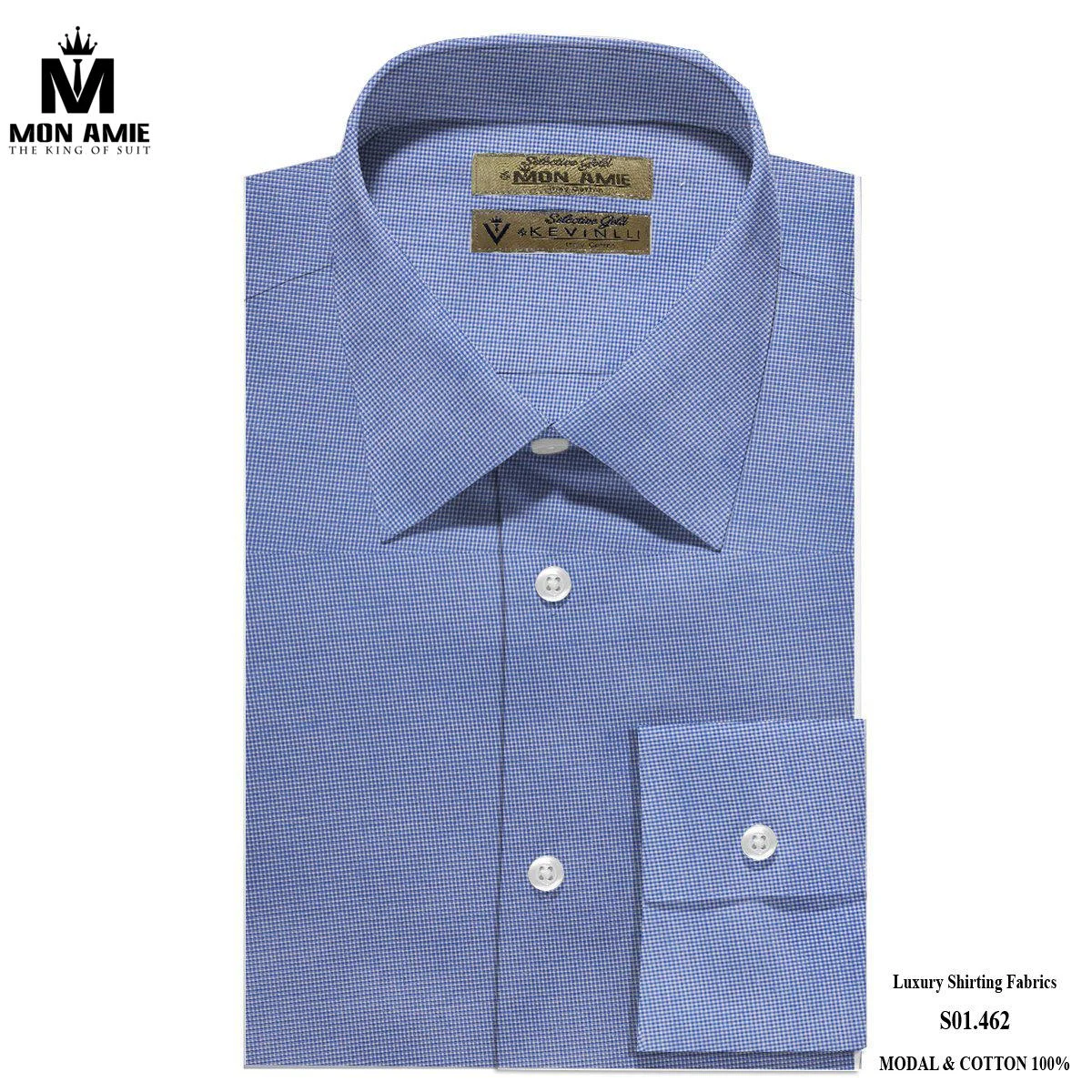
Style SM-403: a fine pin check, the kind of pattern that hides creases better than plain cloth.
Set against 100% cotton
When you order a work shirt, these two cloths are often weighed against each other. The table compares them at the same weight commonly used for shirting, based on how tailors feel them while sewing and how wearers find them after a working day.
| Criterion | Modal and cotton blend | 100% cotton |
|---|---|---|
| Hand feel | Smooth, slick, cool | Dry, firm |
| Drape | Drapes a lot, follows the body | Crisp, holds its shape |
| Wrinkling after a day of sitting | Usually a little less than cotton, or about the same, depending on the weave | Clear at the stomach and elbows; usually needs re-ironing |
| Collar and placket | Softer, depends heavily on the collar interlining | Crisp and sharp |
| Body shape showing | Shows the stomach and back rolls if cut close | Hides the body better |
| Ironing | Medium heat; too hot and the surface turns shiny | Takes higher heat |
| Made-to-measure price at Mon Amie, excluding VAT | VND 850,000 | VND 1.7 million |
Bamboo cotton, a bamboo and cotton blend, sits fairly close to modal for softness and coolness. The article is bamboo cotton as cool as the advertising says compares those two on their own.
Where it wrinkles, and how badly
After a working day, every shirt has creases in three places: the elbows, across the stomach where you fold when you sit, and the back where it rests against the chair. A modal and cotton shirt usually wrinkles a little less than 100% cotton, and some cloths are nearly equal. How big the gap is depends on the modal content and the weave, so do not choose modal simply because you think it will not crease.
- Modal and cotton blend: a smooth, drapey surface. On a dark shirt or a small pattern, the creases at the stomach and elbows usually show less.
- 100% cotton: dry, crisp cloth, with creases at the stomach clearly visible, especially on a plain white shirt. To wear it again, you usually have to iron it.
Cotton modal is not a "no-iron" cloth. After washing, you should still iron or steam at medium heat for the shirt to look as flat as the day you collected it. If you dislike ironing, look at a twill-weave shirt as well.
Choose cotton modal when
- You sit in an air-conditioned room most of the time and only step outside for short stretches.
- You want a dark or small-pattern shirt for a long working day. Modal takes deep colour well and the surface looks smooth.
- You have sensitive skin and find stiff cloth at the collar and underarms uncomfortable.
- You have a lean build and a flat stomach. The drape follows the body and looks neat.
Choose 100% cotton when
- You are wearing it under a suit jacket for a wedding, an event or a photo shoot. The collar and placket need to stay crisp all day.
- Your stomach is larger than your chest, or your back has rolls. Firm cloth conceals a little; drapey cloth clings. For help choosing a cut, see how heavier men should wear dress shirts.
- You sweat a lot or stand in the sun for long periods. Soft, drapey cloth tends to cling to the back more visibly than thick, firm cloth once it absorbs sweat.
- You like a dry, firm feel and want to wear the shirt for many years.
What Mon Amie recommends
For a first shirt order, Mon Amie suggests making two: a light-coloured cotton modal for ordinary working days, and a white 100% cotton for occasions that call for polish. After a few weeks of wearing them, you will know which one suits you before you order more.
A heavier man can still wear this cloth, as long as the shirt is not cut close. Leave the body a little fuller so the cloth drops straight down instead of following the curve of the stomach. If the shirt will mostly be worn under a suit jacket all week, Mon Amie leans toward 100% cotton, because the collar is the part the person across from you looks at most.
The Cotton Modal shirt at VND 850,000, excluding 8% VAT, is the starting price for a made-to-measure shirt at Mon Amie; the higher ranges are on the price list. If you are comparing all three, cotton, modal and bamboo, the article is a cotton dress shirt any good sets them side by side by how they feel to wear.
Keeping a modal shirt soft and true to size
- Wash in cool or warm water, turned inside out, in a laundry bag.
- Wring gently and do not tumble dry hot. High heat can shrink the cloth.
- Dry on a shoulder hanger in the shade, with the top button done up so the collar keeps its shape.
- Iron at medium heat, on the reverse side or with a cloth in between, so the surface does not turn shiny.
- Do not use bleach on coloured or blended shirts. Treat stains one spot at a time.
- Do not leave a sweat-damp shirt folded in a bag for long. It creases and picks up odour.
Frequently asked questions
Can I wear a cotton modal shirt under a suit jacket?
Yes, with an everyday work suit. The collar is softer, so choose a collar with a moderate stand so it does not collapse under the lapel. For formal occasions, 100% cotton gives a sharper collar.
Does a modal shirt shrink after washing?
Modal shrinks less than ordinary viscose, but any blended shirt can shrink slightly if you wash it in hot water or tumble dry it hot. Wash in cool water and air dry to keep the measurements.
Is modal hot when I am out in the sun?
Modal absorbs moisture well, so it is comfortable in an air-conditioned room or on a short trip outside. Standing a long time in the sun is hot in any shirt. Then a light colour and a cut that is not too close help more than the name of the cloth, as the article which fabric to choose for a shirt in Saigon's heat explains.
How long does it take to make one?
A single shirt takes 3–7 days, or 24 hours at the fastest if you are in a hurry. Your measurements are saved, so a later order does not need measuring from scratch, unless your weight has changed by 3 to 5 kg.
Choose by what you do every day
If you sit in air conditioning and like a soft, cool shirt, cotton modal is worth the money; if you need a crisp collar and a firm shape, choose 100% cotton. Come to a showroom and hold two swatches side by side, or book a measuring appointment so a stylist can advise you by your build.