
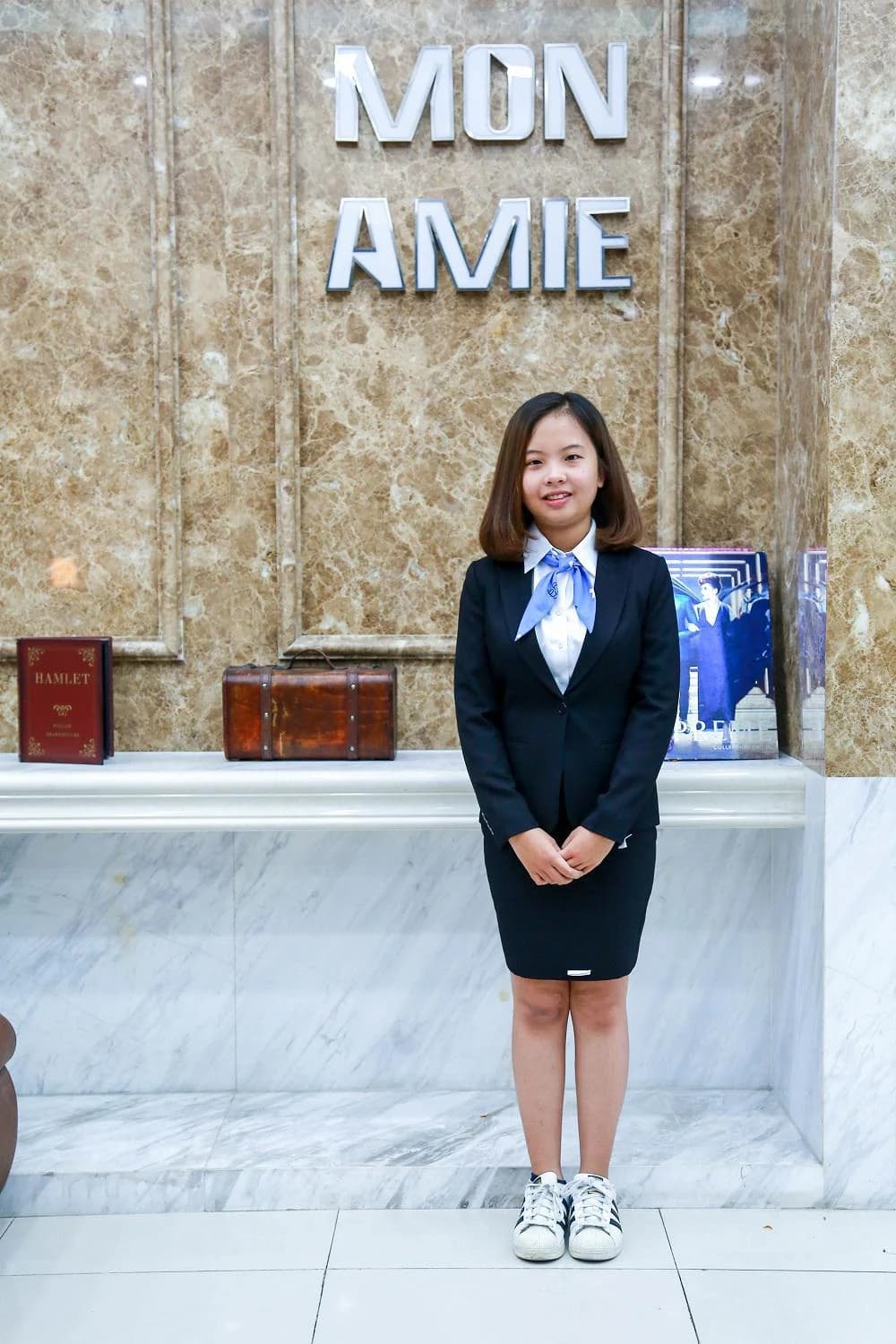
There is a common belief: short women should choose a very long jacket to “stretch” the figure. In reality, a jacket that falls almost to the knee, over legs that are already short, splits the body into two nearly equal halves, making you look shorter, not taller. Women’s suits for petite women only work when a few small details are calculated correctly: jacket length, button placement, high-waisted trousers and an unbroken line of colour.
Quick answer
If you are under 1.58 m, choose a jacket that ends at the hip bone or just past the seat, with one button fastened at a high waist position, and high-waisted trousers or a skirt in the same colour as the jacket. Straight trousers should reach the top of the shoe; wear hidden-heel shoes or shoes the colour of your legs. A single block of colour creates a vertical line, making the figure look taller and sleeker.
Core principle: lengthen the vertical line, avoid horizontal cuts
The eye reads a figure by the ratio between the upper body and the legs. For a short woman, the goal is to make the legs look longer, so every decision revolves around two things: raising the waist position and reducing horizontal cuts across the middle of the body. A belt in a contrasting colour, an inner top of a colour quite different from the trousers, or a jacket hem that stops exactly mid-thigh are all horizontal “cuts”.
Jacket length: short, mid-length or long?
This is the question behind many familiar search terms: long women’s blazer, short women’s suit jacket, mid-length women’s blazer. Each style has its own place.
| Style | Length | Suits when | Note |
|---|---|---|---|
| Short | At the waist or above the hip bone | Trousers or skirt with a very high waist | Legs look longest, but you need a slim waist |
| Mid-length | At the hip bone, slightly past the upper seat | Work, meetings, everyday events | The most balanced, easiest to wear |
| Long | Past the seat, to mid-thigh | Worn with straight trousers in the same colour | Keep a deep V neckline, one button, no longer than mid-thigh |
If you can only choose one style, choose mid-length. It keeps the golden ratio between body and legs, and it does not require the trousers to have a very high waist. The short style looks best when the trousers really reach the waist; if the trousers sit only at the hips, the gap in between shows and backfires.
With the long jacket, treat it as a “long blazer” worn as one piece with same-colour trousers. This creates a vertical line from shoulder to heel, which is very lengthening.
Button placement, lapel and shoulder
- Buttons. One button or two, fastened slightly above the natural waist. A high button position lifts the waist point and makes the legs look longer. Avoid double-breasted styles with rows of many buttons across the stomach, because they add width to the body.
- Lapel and neckline. A deeper V neckline and moderately pointed lapels. Wide, round lapels weigh down the upper body. Moderately narrow lapels look cleaner.
- Shoulder. Moderate padding, with the shoulder line at the shoulder point. Shoulders that are too wide make the head and upper body look big compared with the rest.
- Waist. Light waist darts for a curve, but not so tight that it creases.
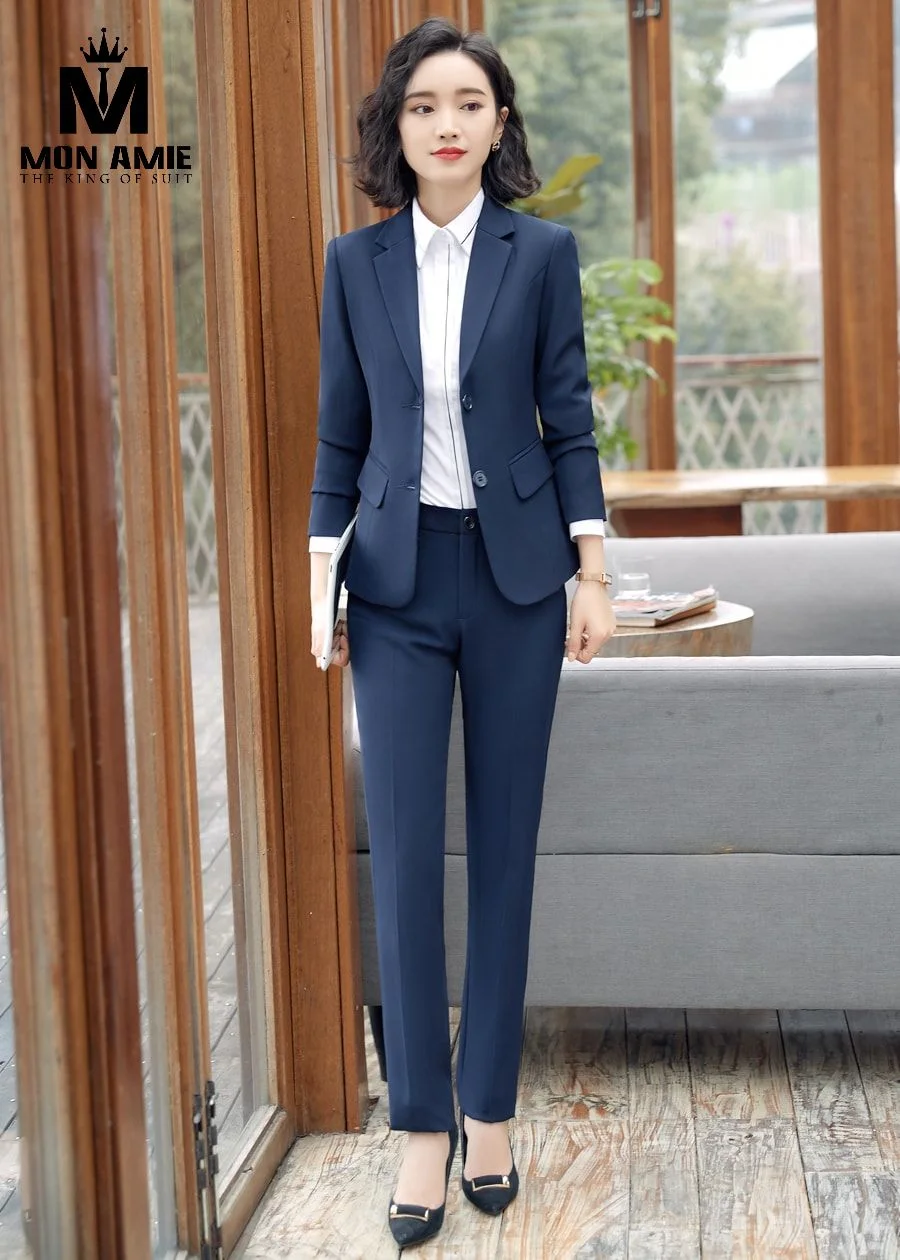
High-waisted same-colour trousers and shoes
Trousers. High-waisted trousers with a straight or lightly tapered leg are the first lifesaver. A waist at the navel lifts the waistline, and a straight leg pulls the vertical line down. The standard length touches the top of the shoe and covers almost all of the toe, showing only the tip of the shoe as you walk. Wide trousers that drag at the hem, or trousers cropped mid-calf, cut the legs into short sections.
Skirt. Choose a pencil skirt that ends at the knee or a short way above it. A skirt that falls past the calf makes the legs look shorter.
Shoes. A moderate heel of around five to seven centimetres, or a concealed platform sole, in the colour of the trousers or close to the colour of your legs. A slightly pointed toe lengthens the leg line more than a round toe. Avoid ankle-strap shoes in a contrasting colour, because that is a horizontal “cut” right where none is needed. You can also read our articles on what shoes to wear with a women’s suit and what trousers to wear with a women’s blazer.
Colour and pattern
- A single block. A jacket and trousers in one colour, or in very close tones, create the longest vertical line. Black, navy, charcoal and beige can all be used.
- Fine vertical stripes. They lengthen the figure. Horizontal stripes or large checks should be avoided, because they make the body look wider.
- Inner top. The same tone as the suit or slightly lighter, avoiding a strongly contrasting shade across the stomach.
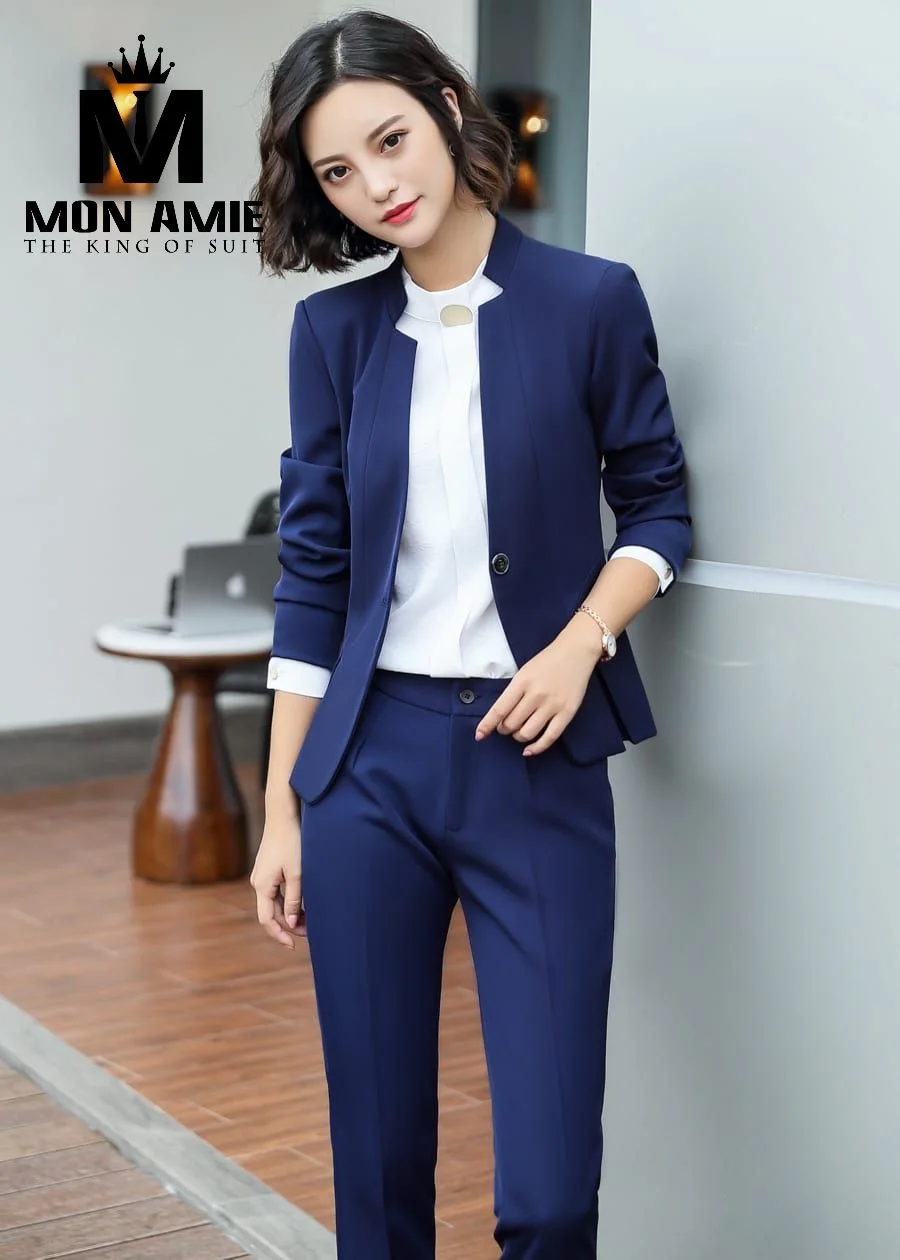
Choosing a women’s suit for a slim figure: what more is needed?
Women who are short and slim often worry that a suit will make them “drown”. This is when you should not choose a loose jacket to hide in, but a jacket that fits and holds its shape:
- Moderately substantial cloth, with enough body that the jacket holds its shape by itself, avoiding thin, limp cloth.
- Moderately padded shoulders, to create balance in the upper body.
- Light neutral colours or warm tones such as beige, cream and light brown make you look a little fuller, whereas black will make you look thinner without accessories.
- A slim belt in the same tone to define the waist, as long as it does not differ too much in colour from the trousers.
Common mistakes and tips from Mon Amie’s master tailor
- Choosing a jacket one size longer. Longer does not mean taller. The jacket must fit the shoulders and the body first.
- Wide trousers without a high waist. A wide leg with a low waist will swallow the legs.
- Trying on in flat shoes. If you normally wear heels, try on in exactly those shoes, because the trouser length depends on the heel.
- Ignoring the sleeves. Sleeves that are too long make you look smaller. A jacket sleeve ending at the wrist is the standard.
What master tailors often say about suits for petite women, especially for clients under 1.58 m: a ready-to-wear jacket is almost never the right length, because it is cut for average height. Made-to-measure allows each spec, such as jacket length, button position and trouser waist height, to be adjusted to your own body proportions.
Frequently asked questions
Can a short woman wear a long women’s suit jacket?
Yes, as long as the jacket does not go past mid-thigh, with a deep V neckline, one button, and worn with same-colour trousers to create a vertical line. If you wear a long jacket with trousers of a different colour, the figure is cut horizontally and looks shorter.
Is a short or mid-length women’s jacket better for a short woman?
Mid-length is easier to wear and suits most people. The short style makes the legs look longer, but it looks good only when the trousers or skirt have a really high waist.
How should a slim woman choose a women’s suit so she is not swallowed by it?
Choose a jacket that fits at the shoulders, in moderately substantial cloth, in beige or cream, and you may add a slim belt in the same tone. Avoid loose, baggy jackets or thin, limp cloth.
Can I wear a women’s suit with flat shoes?
Yes, but ask the tailor to cut the trousers to the length of the flat shoes, touching the top of the shoe. If trousers are made for heels and worn with flats, the hem will drag on the floor.
In closing
Suits for petite women are not something to avoid; you only need a suit cut in the right proportions for you. If you would like to try the jacket length, button position and trouser waist directly on your body, we invite you to book a measuring appointment or learn about the bespoke tailoring journey at Mon Amie. You can also read our experience of tailoring women’s suits to know what to tell the tailor.