
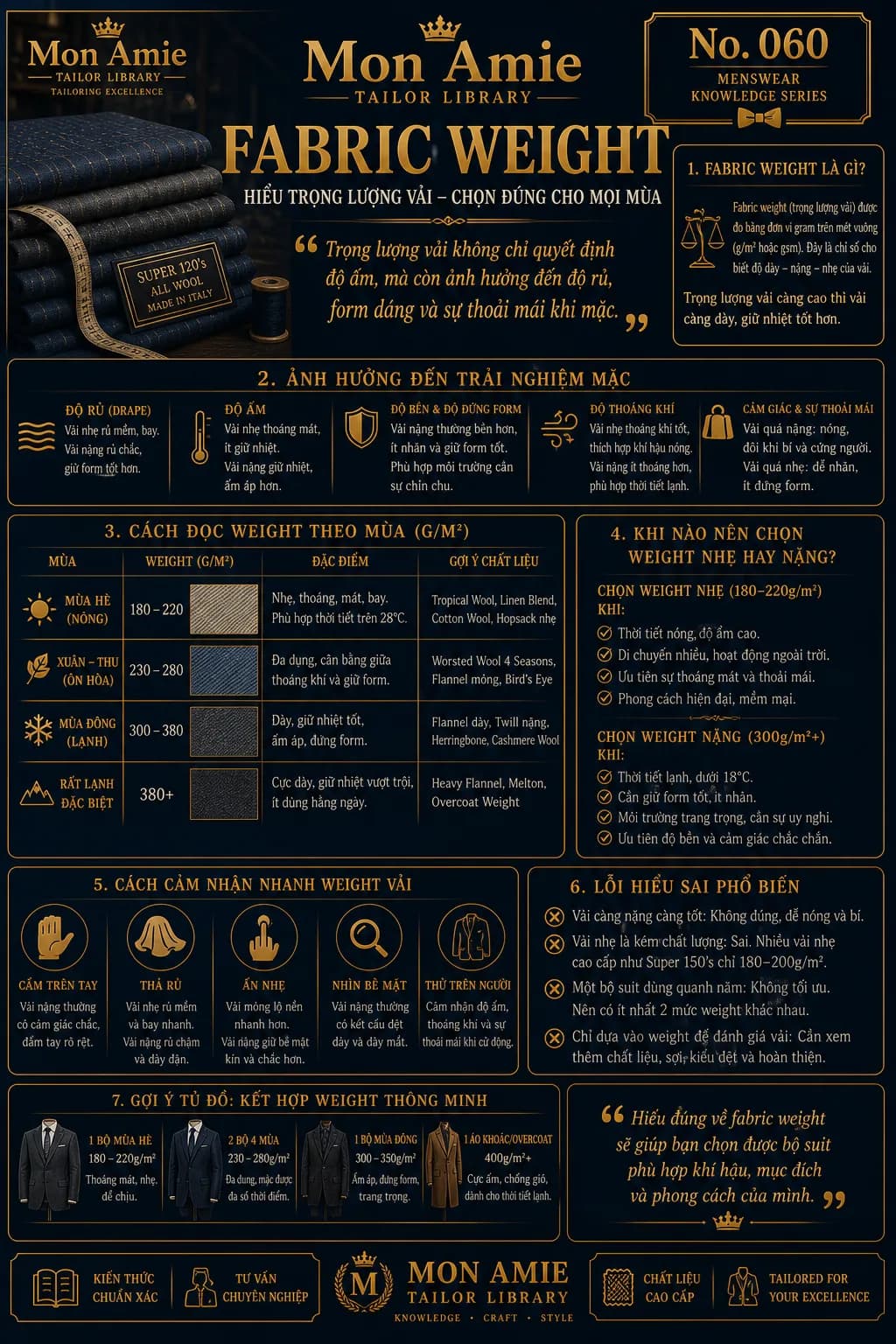
Fabric weight is measured in grams per square metre (g/m², or gsm) and tells you how thick, heavy or light a cloth is. Weight determines not only warmth but also drape, silhouette and comfort in wear. Read this figure correctly and you will choose a suit that matches your climate, your purpose and your style.
How fabric weight shapes the way a suit wears
The g/m² figure sounds technical, yet it governs almost everything you feel when you put a suit on:
- Drape: light cloth falls softly and moves; heavy cloth falls firmly and holds its shape better.
- Warmth: light cloth is airy and retains little heat; heavy cloth insulates and keeps you warmer.
- Durability and structure: heavier cloth is usually more durable, creases less and holds its line, which suits environments demanding a sharp appearance.
- Breathability: light cloth breathes well and suits hot climates; heavy cloth breathes less and belongs to cold weather.
- Overall feel: cloth that is too heavy runs warm and can feel close and stiff; cloth that is too light creases easily and lacks structure.
No single weight is best for every case — there is only the weight best suited to how you will wear the suit.
Reading fabric weight by season
This is the reference framework Mon Amie uses when advising on cloth:
- Summer and hot weather (180–220 g/m²): light, open, cool, with movement; suited to temperatures above 28°C. Suggested cloths: tropical wool, linen blends, cotton wool, light hopsack.
- Spring and autumn, temperate weather (230–280 g/m²): versatile, balanced between breathability and structure. Suggested: four-season worsted wool, light flannel, bird's eye.
- Winter and cold weather (300–380 g/m²): thick, insulating, warm and structured. Suggested: heavy flannel, heavy twill, herringbone, cashmere wool.
- Very cold, special use (above 380 g/m²): extremely dense, exceptionally warm, rarely worn day to day. Suggested: heavy flannel, melton and overcoating cloths.
In Ho Chi Minh City's year-round heat and humidity, the 180–260 g/m² range is the safe zone for most needs; heavier weights are for men who travel to cold countries often or work in deeply air-conditioned interiors.
When to choose light and when to choose heavy
Choose a light weight (180–220 g/m²) when:
- The weather is hot and humid.
- You move about a great deal, or spend time outdoors.
- Coolness and comfort are your priority.
- You favour a modern, softer style.
Choose a heavy weight (300 g/m² and above) when:
- The weather is cold, below 18°C.
- You need a suit that holds its shape and creases little.
- The setting is formal and calls for gravitas.
- You value durability and a substantial feel in wear.
Judging weight by hand when there is no figure
You will not always have the g/m² number to hand. A few direct checks:
- Hold it: heavy cloth feels firm and noticeably substantial in the hand.
- Let it fall: light cloth drops softly and moves quickly; heavy cloth falls slowly and densely.
- Press it lightly: thin cloth shows creases faster; heavy cloth keeps a closer, firmer surface.
- Look at the surface: heavy cloth usually shows a denser, tighter weave.
- Try it on: the most accurate way to judge warmth, breathability and freedom of movement.
Common misconceptions about fabric weight
- "Heavier is always better": not so — heavy cloth in a hot climate runs warm and close.
- "Light cloth means poor quality": untrue. Many fine cloths such as Super 150's weigh only 180–200 g/m².
- "One suit will serve all year": not ideal. A wardrobe should hold at least two different weights.
- "Weight alone tells you about the cloth": not enough — you must also consider the material, the fibre, the weave and the finish.
Building a wardrobe: combining weights wisely
A balanced suit wardrobe can rest on four pillars:
- One summer suit (180–220 g/m²): airy, light and comfortable on hot days.
- Two four-season suits (230–280 g/m²): versatile enough for most occasions — the first investment to make.
- One winter suit (300–350 g/m²): warm, structured and formal for year-end occasions and trips to cold countries.
- One overcoat (400 g/m² and above): exceptionally warm and wind-resistant, for cold weather.
A word from Mon Amie's artisans
For clients in Vietnam, Mon Amie usually suggests beginning with a four-season worsted wool around 240–260 g/m² — structured enough for an air-conditioned boardroom, not so warm as to trouble you while moving about. When trying cloth in the showroom, take a minute to let it fall and to hold it in your hand: whether it feels substantial or airy will tell you more than the figure on the label. And never judge a cloth by weight alone — at the same weight, a hopsack weave will be noticeably cooler than a tightly woven twill.
Understand fabric weight properly and you will choose a suit that fits your climate, your purpose and your style rather than leaving it to chance. If you would like to handle each weight from tropical wool to flannel by Canonico, Holland & Sherry or Dormeuil, we invite you to book an appointment at one of Mon Amie's five showrooms in Ho Chi Minh City, or review our pricing beforehand — a full suit from VND 4.8 million in the Kevinlli line.