

A salesperson lives on client trust, and the suit is what a client sees before you say your first word. The question is not how to stand out, but how to make the client want to listen.
The short answer
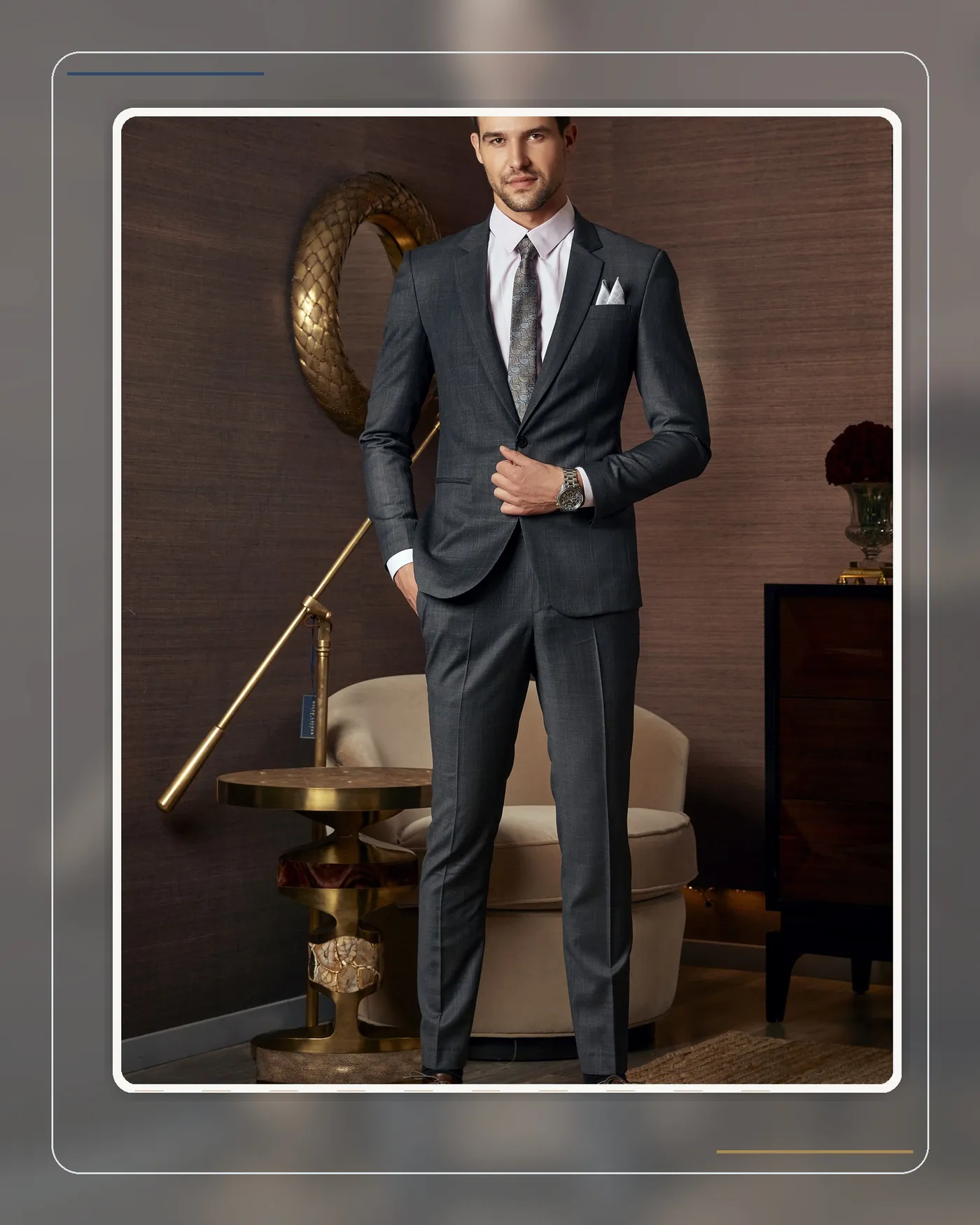
For salespeople, looking trustworthy always beats looking impressive. Prioritize confidence-building base colors (navy, charcoal), a fit that is trim yet comfortable enough to move in all day, and restrained details — so the client focuses on you and your story, not your outfit. The right decision order is: the meeting context, your body proportions, the required level of formality, and only then the accent details.
Why "trustworthy" beats "impressive"
In a sales meeting, the client is deciding whether to hand you their money or their project. A suit that is too fashion-forward — unusual color, skin-tight cut, too many accessories — suggests you care more about yourself than about them. Navy or charcoal, well fitted, sends the opposite signal: this person is stable, professional, safe to do business with.

Three things to weigh:
- Who is across the table. A first meeting with a new client calls for maximum safety; a long-term partner allows subtle texture or a faint stripe.
- Real wearing rhythm. Sales means a suit almost every day — fabric durability and how easily it pairs with different shirts matter more than novelty. Wool with good recovery wrinkles far less after a day on the road.
- Base colors first, accents later. Build navy and charcoal before expanding into patterns. Let the accent live in the tie or pocket square — things you can change for every meeting.
How to test a suit that actually works
Salespeople don't stand still. You shake hands, sit down, pull out documents, stand up to present. When trying a suit, test exactly those positions: button up and extend a handshake, sit down and check whether the trousers strain at the thigh, see if the shoulders lift when you reach forward. A suit that looks great in the mirror but binds in motion will betray you by minute ten of the meeting.
Common mistakes
- Dressing too fashionably when the client needs to see steadiness and reliability.
- Confusing elegance with showiness: watch, tie, tightness — each just slightly too much and the whole reads as "trying too hard".
- Investing in one striking suit for photos instead of two or three solid base suits to rotate through the week — sweat and constant cleaning will kill a lone suit fast.
A word from Mon Amie's artisans
Sales clients at Mon Amie are usually advised to start with two suits: one navy, one charcoal, same cut but different cloths to vary the rhythm. For men constantly on the move, we favor wool with slight stretch and a breathable half lining so the jacket holds its shape after a full day in Saigon heat. Personal accents — a colored lining, monogrammed buttons — go on the inside: you know they are there, while the client only sees a polished professional.

Frequently asked questions
How many suits does a salesperson need at minimum? Two to three base-color suits (navy, charcoal, mid-grey) in rotation cover a working week, keep your image consistent, and extend each suit's life.
Can salespeople wear light colors or bold patterns? Save them for industry events or clients you already know well; a first pitch should still be a solid base color or a very subtle stripe.
Is a tailored suit worth it over off-the-rack for sales work? Yes — sales means high frequency and constant movement, and a fit cut to your body stays comfortable all day and holds its shape far longer.
Conclusion
The best image for a salesperson is not being the flashiest person in the room — it is making the client comfortable enough to sign. Trustworthy base colors, a fit built for movement, restrained details — and let your skill do the talking.
If you would like to build a working suit wardrobe around your own schedule, book an appointment with Mon Amie or read about the tailoring process first.